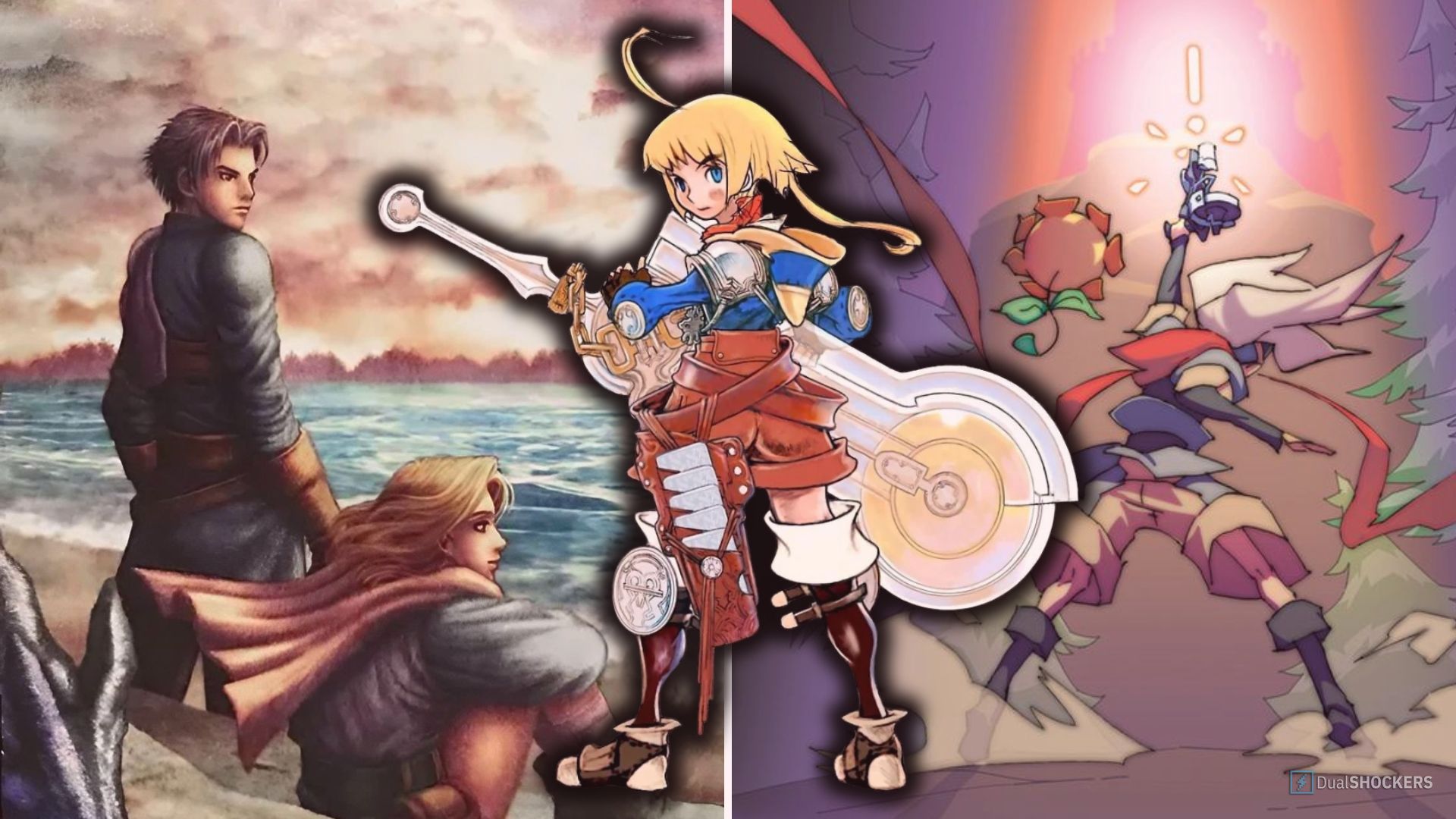
Nintendo revolutionized gaming with the Game Boy, becoming a global leader in handheld consoles. Building on that initial success, they continued to innovate, releasing popular follow-ups like the Game Boy Advance.
The Game Boy Advance was selling incredibly well, so many developers started making games for it. While some were marketed as spin-offs, they were often entirely new games. Because of this, several Japanese role-playing game (JRPG) series that didn’t appear on the PlayStation 2 found a new audience on the GBA, either to keep their classic pixel art look or because they wanted to work with Nintendo.
Many classic Game Boy Advance role-playing games are becoming available on the Nintendo Switch Online service, but some are still only playable on the original hardware. To play those, you’ll need the original console and game cartridge, or you might have to find alternative, less official ways to experience them.
10. DemiKids: Light Version / Dark Version
Family Friendly-ish Shin Megami Tensei
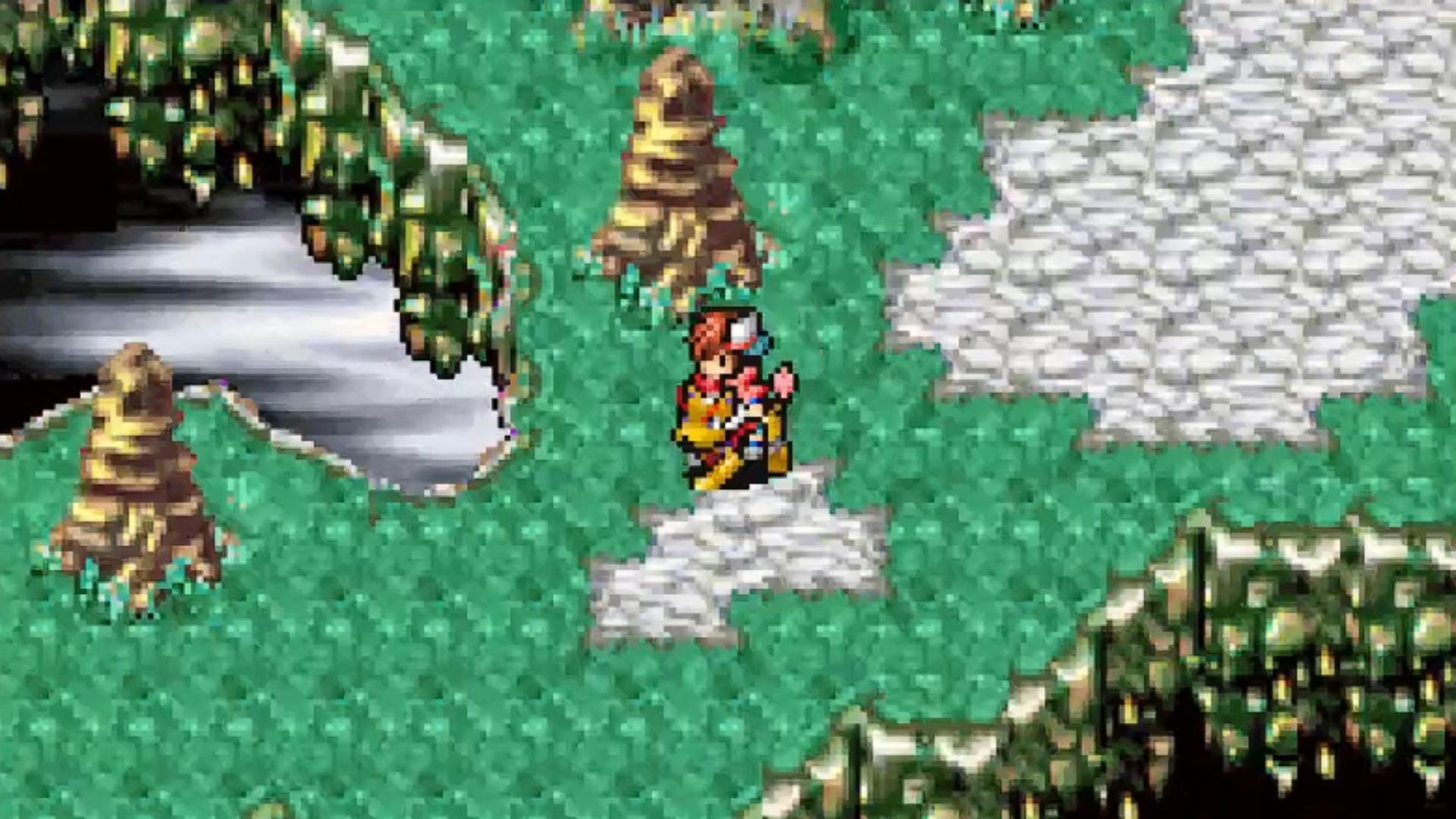
The world of Japanese role-playing games, or JRPGs, can be really confusing, especially when it comes to all the different spin-off games from the Shin Megami Tensei series. While Persona is the most well-known spin-off, there are many others, including Devil Summoner, Digital Devil Saga, Devil Survivor, and the game we’re looking at today, Shin Megami Tensei: Devil Children.
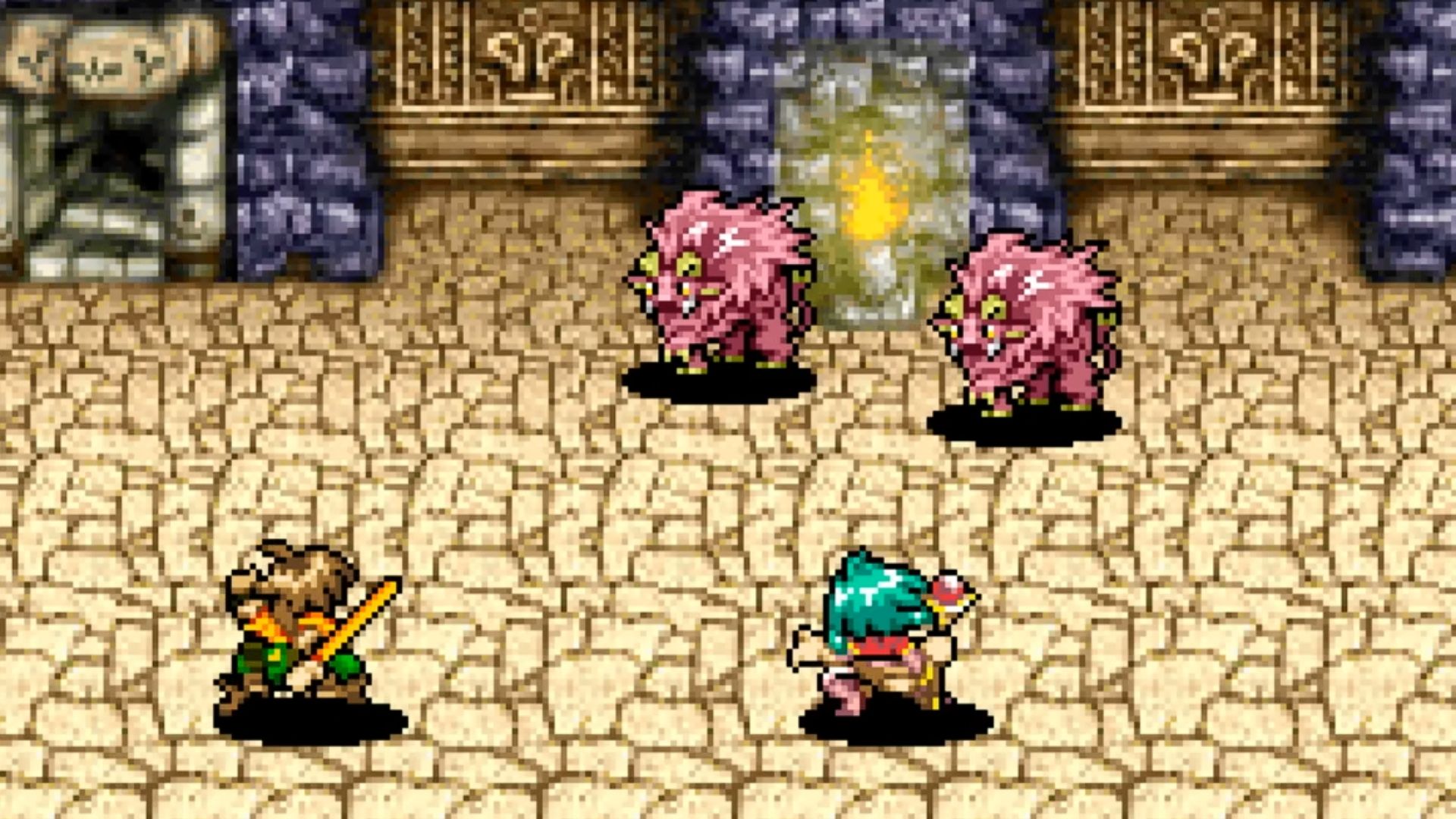
As you might guess from the name, Devil Children, often called DemiKids, is a more playful and child-focused version of the game series, even though it still involves summoning demons (and we’ve learned from K-Pop Demon Hunters that kids aren’t scared of demons!). One major change is that some monster designs were made less intense to be more suitable for younger players, so you won’t find characters like Mara in DemiKids.
The game centers around three friends – Jin, Akira, and Lena – whose discovery of a demon-summoning book launches them into an exciting adventure. DemiKids comes in two versions, Light and Dark, each with unique demons that encourage players to trade with each other using a cable link. Jin is the main character you play as in the Light Version, and Akira leads the story in the Dark Version.
9. Shining Soul
The Shining Reboot
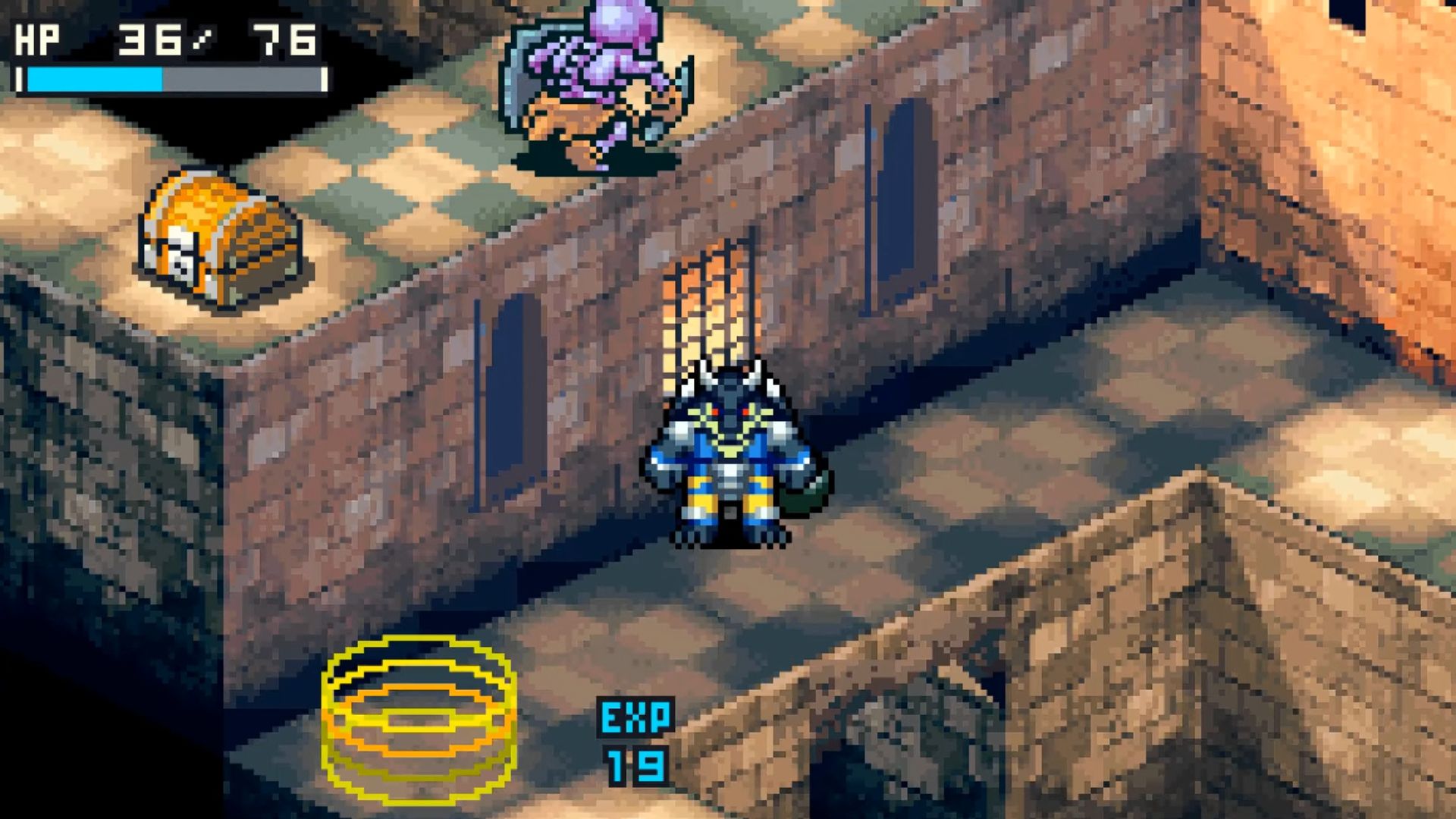
The Shining series is a long-running franchise from SEGA, starting with games on the Sega Genesis and continuing with newer titles like Shining Resonance Refrain. As the series evolved, the developers created Shining Soul, a dungeon-crawling RPG for the Game Boy Advance that essentially restarted the storyline.
So, they really changed things up with this reboot. They went from a super strategic, RPG-focused game to something way more action-packed. But don’t worry, they kept some of the classic stuff, like that awesome Dark Dragon villain. In Shining Soul, I play as a hero from the Shining Fleet – basically, I’m the only one who can take down the bad guy and save everyone!
Okay, so this game is a big departure from the tactical RPGs the series is known for. Instead of commanding a team, you directly control one character – you can pick a warrior, archer, wizard, or even a dragonute! You run around dungeons, fight monsters, level up, and grab new gear. And, being a Game Boy Advance game, it had a really cool co-op mode! You could team up with up to three friends, but everyone needed their own copy of Shining Soul to play together.
8. Rebelstar: Tactical Command
XCOM Inspired
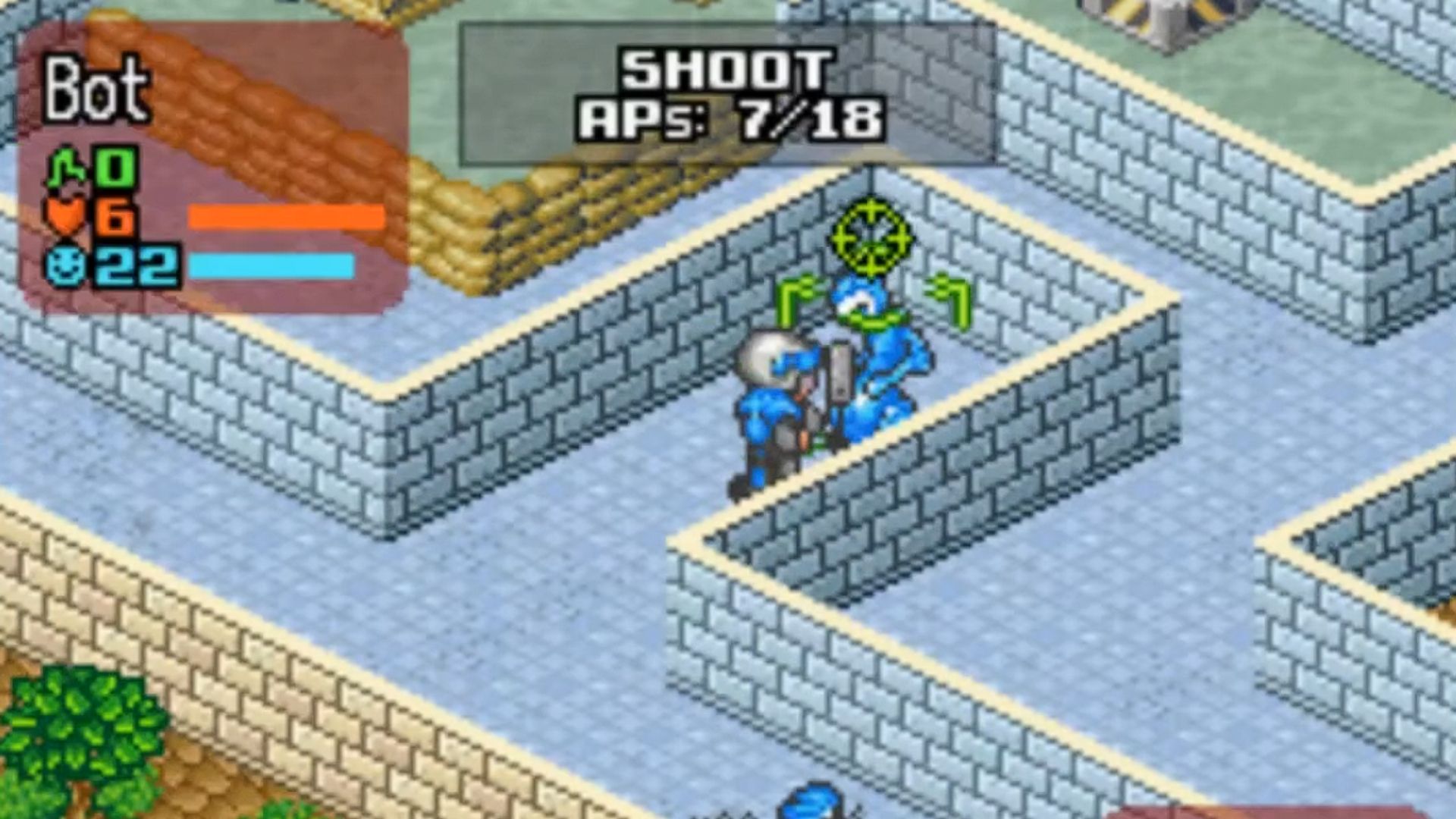
Although Rebelstar: Tactical Command isn’t a traditional Japanese Role-Playing Game (JRPG) – it was made by a British team and published by a Namco US branch – it plays and feels very much like one. Its design, story, and turn-based combat are all reminiscent of the genre. You could consider it an XCOM-style game blended with the spirit of a JRPG, and built upon the original Rebelstar strategy games.
Earth has been invaded and its people enslaved by a race of aliens called the Arelians. After losing his parents in the invasion, Jorel joins a group fighting back. He quickly becomes a leader, gathering a diverse team of rebels, each with unique skills to contribute to the resistance.
Battles take place on a grid. Before each mission, you select which characters to use and equip them with gear. Characters have Action Points (AP) that are used for everything they do, like moving and attacking. You can also put characters in Overwatch – if an enemy comes into their view, they’ll automatically open fire.
7. Boktai: The Sun Is in Your Hand
Kojima’s JRPG
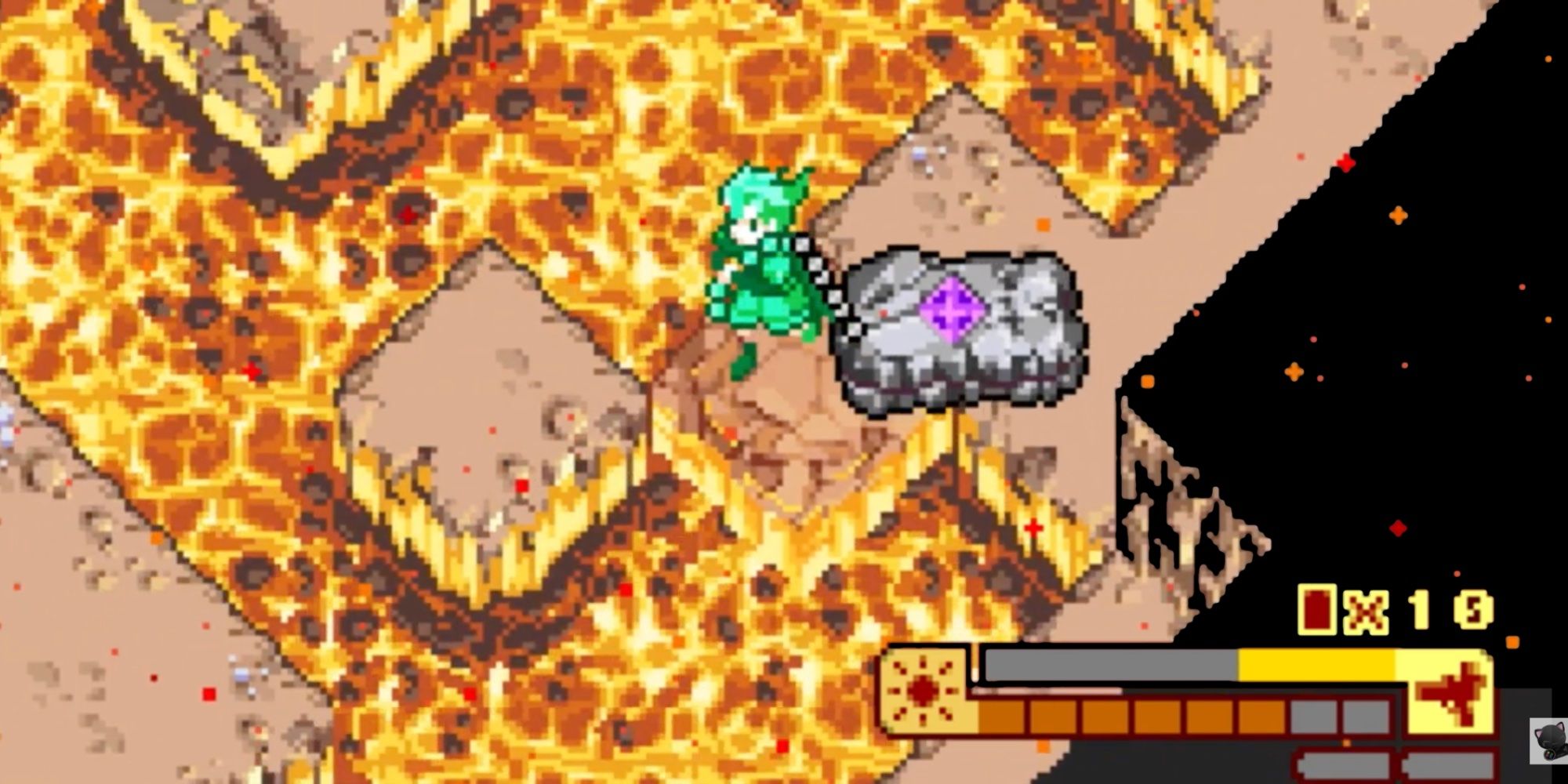
Hideo Kojima is known for games like Metal Gear and Death Stranding, but he’s also worked on other interesting titles. Years ago, he produced Boktai: The Sun Is in Your Hand, a role-playing game for the Game Boy Advance. Staying true to his creative style, Kojima included a unique feature: the game used a light sensor built into the cartridge. This allowed players to literally power up their weapons using sunlight!
Boktai feels very much like a game created by Hideo Kojima. It emphasizes sneaking around and avoiding enemies – you can hide, peek around corners, and distract them. If you run into a zombie, for example, the best strategy is to stun it with your solar gun and quietly sneak past. The game also includes lots of puzzles to solve in each area.
The game centers around Django, a mysterious boy who seems to come from a long line of famous vampire hunters. He’s on a quest to get to the City of Death and stop a global catastrophe. Considering its unique gameplay feature – a cartridge powered by the sun – it’s understandable why this game hasn’t been released on other consoles.
6. Dragon Ball Z: The Legacy of Goku
A Saiyan Adventure
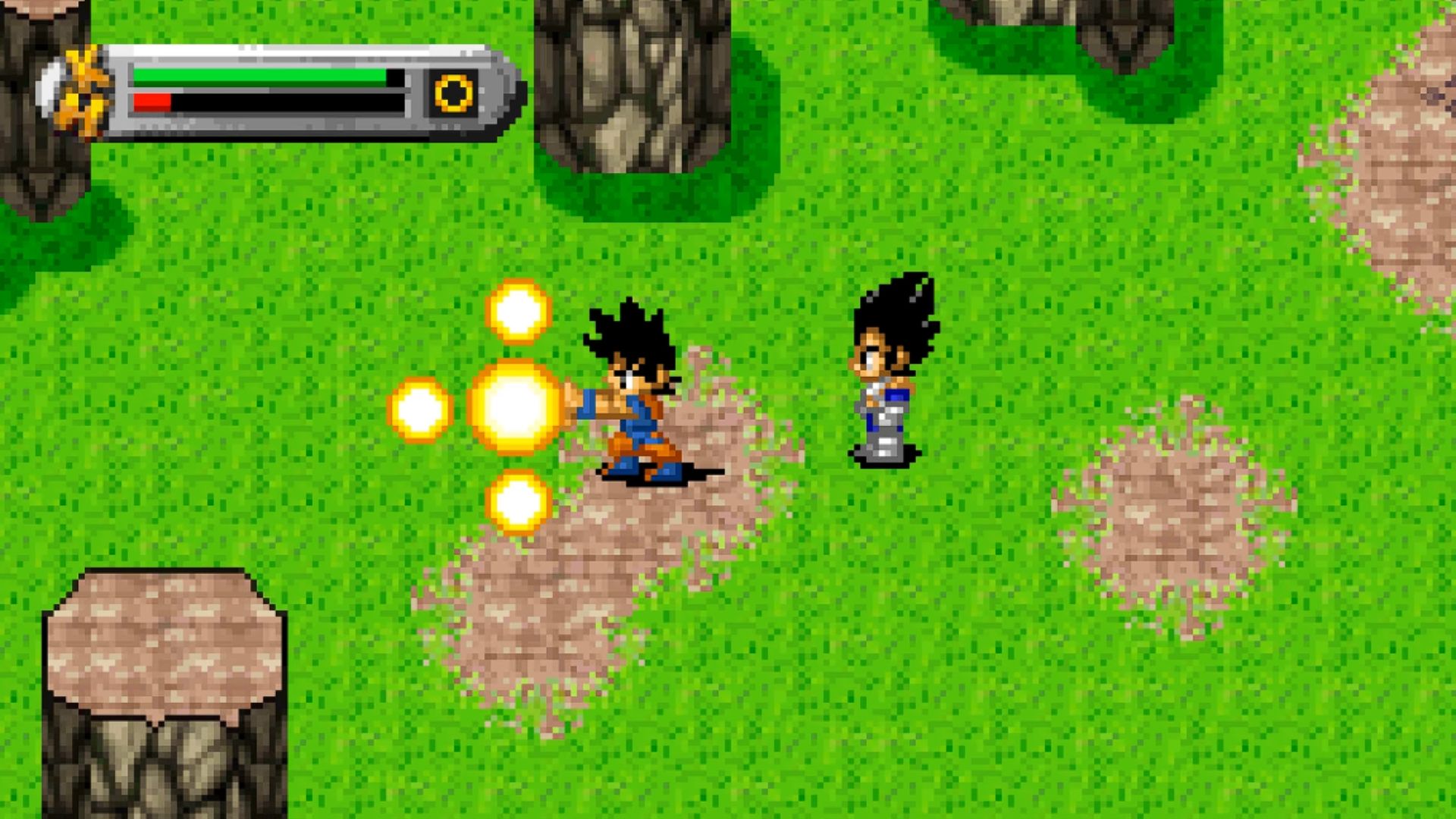
The Dragon Ball series has appeared in countless video games, and while many are different genres, there have been a few role-playing games over the years. I particularly love Dragon Ball Z: Super Saiya Densetsu for the SNES, but the Dragon Ball Z: The Legacy of Goku games are also a lot of fun.
In The Legacy of Goku, you play as Goku in an action role-playing game, experiencing the events of the Frieza Saga. The combat system is straightforward: you use buttons for physical attacks and special energy blasts. As you defeat enemies, Goku gains experience, levels up, and becomes more powerful.
The game features a complete RPG experience where you can explore towns, go inside buildings, and interact with characters. You can also open a menu to use items like Senzu Beans. While the Super Saiyan transformation is available, it’s limited to the final fight against Frieza. Later games in the series build on this, letting you transform during battles, and surprisingly, you can even play as characters other than Goku.
5. Mother 3
Trapped in Japan as Well
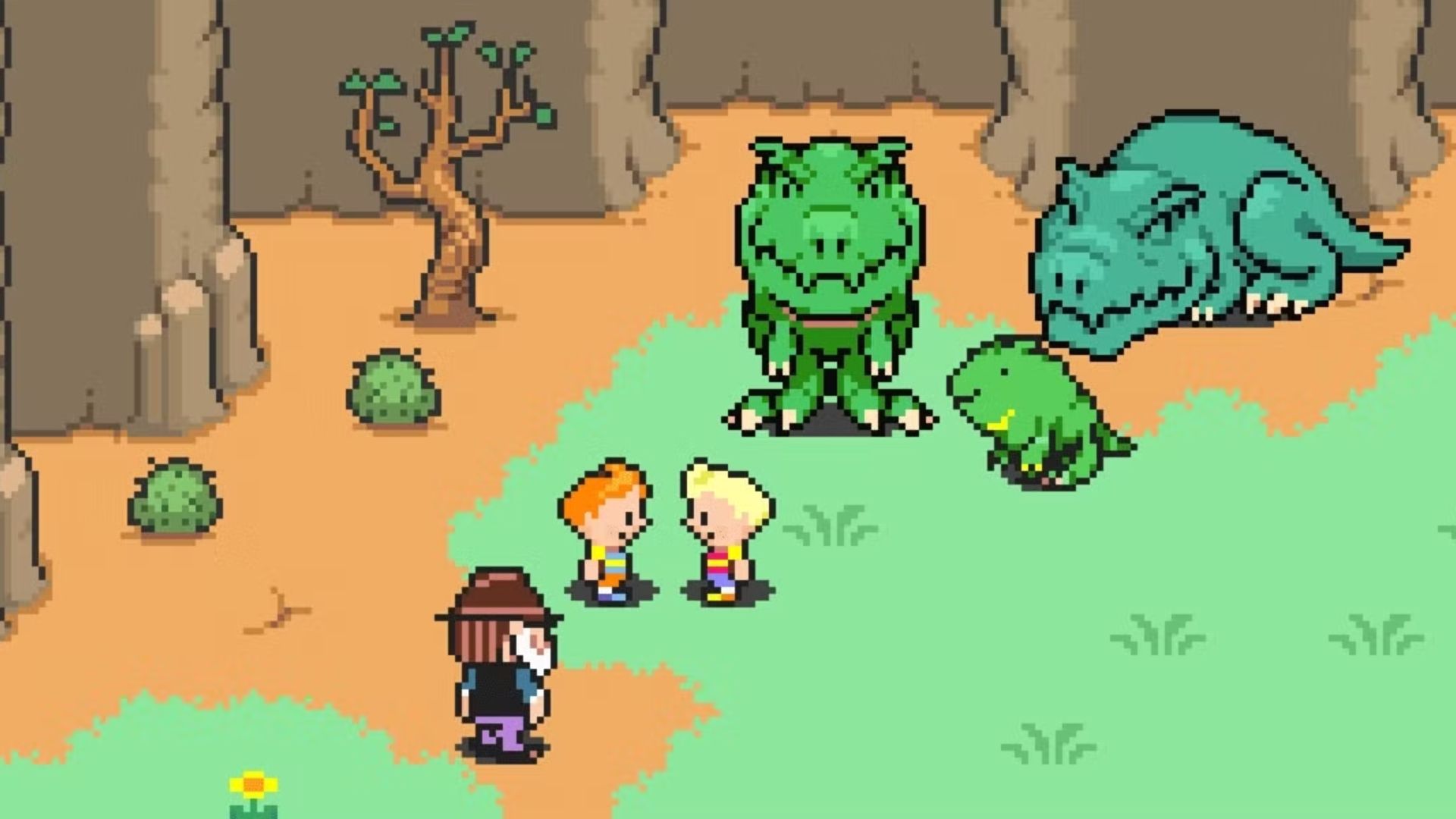
Mother 3 is a unique Japanese role-playing game originally released for the Game Boy Advance that, unfortunately, never received an official English release. While a fan translation exists, many players prefer to experience the game without using emulation, which is perfectly reasonable. It’s disappointing that Nintendo hasn’t localized the game, and with its creator, Shigesato Itoi, now retired, an official release seems unlikely.
Similar to how Mother 2, also known as EarthBound, is considered a classic SNES RPG, Mother 3 has earned that same praise among Game Boy Advance games. You play as Lucas and his unusual companions as they fight against the Pigmask Army. The game keeps the series’ unique and charming writing style, but this time the story unfolds in a fantastical world that focuses more on the characters themselves than on real-world satire.
Battles happen in turns, but now have a fun musical twist. By pressing buttons to the beat of the music, players can create long attack combos. It’s too bad this game never came out worldwide. Even though Mother 3 is now on Nintendo Switch Online, it’s only available in Japan, which is disappointing for players outside of Japan.
4. Final Fantasy Tactics Advance
The Two Sides of Marche
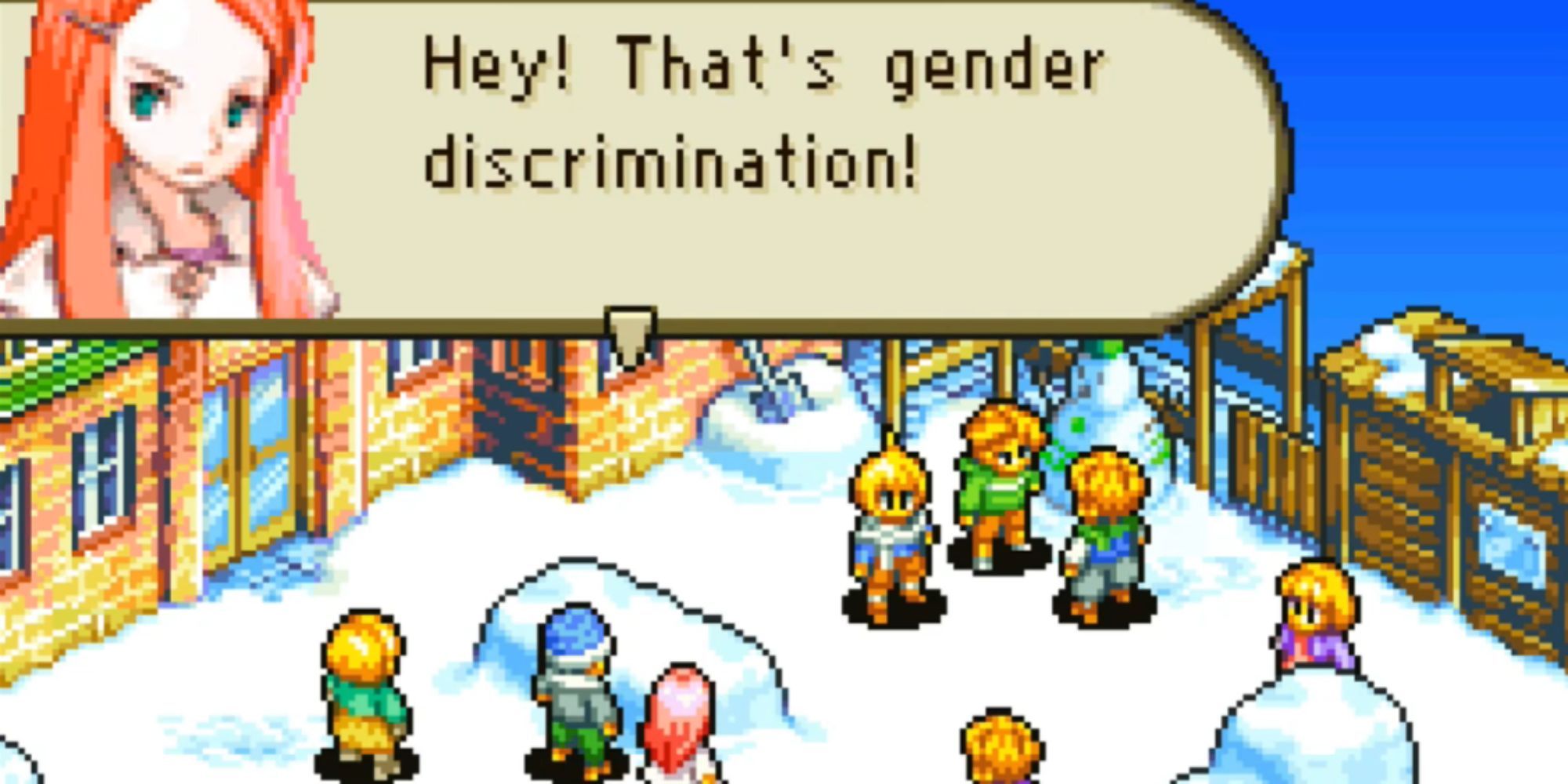
I first encountered the Final Fantasy series with the original Final Fantasy Tactics, and it quickly became a favorite. Because of that, I was excited to play Final Fantasy Tactics Advance, hoping for a similar experience in terms of gameplay, story, and overall feel. However, it turned out to be very different from what I expected.
Let me be clear: Final Fantasy Tactics Advance is a good game. While I didn’t love the Judge system, I get why it was included – it forced me to strategize and change up my team for each fight, making battles more interesting with different characters and abilities. However, the story just didn’t quite appeal to me.
In Final Fantasy Tactics Advance, the main character, Marche, is suddenly transported to the world of Ivalice, and his initial goal is to find a way back home. However, his life wasn’t very fulfilling to begin with, and neither were the lives of his friends who came with him, so the desire to return isn’t as strong as you might expect. The game also has a surprisingly lighthearted tone, which isn’t necessarily a flaw, but it doesn’t quite live up to the original Final Fantasy Tactics. It’s hard not to compare the two, given the shared name, even though comparisons aren’t always helpful.
3. Lufia: The Ruins of Lore
The Gaiden Version
| Developer | Atelier Double |
|---|---|
| Publisher | Taito (JP) Atlus (NA) |
| Release Date | May 6, 2003 |
During the Game Boy Advance years, many role-playing games (JRPGs) were released as side stories, often marked with the term “Gaiden.” These spinoffs appeared for various reasons – sometimes they offered different gameplay, or weren’t considered part of the main storyline, though even the main games weren’t always consistent. However, this isn’t the case with Lufia: The Ruins of Lore, which is actually the fourth core game in the Lufia series.
Subscribe for More GBA JRPG Finds and Retro Coverage
Lufia: The Ruins of Lore is officially part of the main Lufia series story, fitting between Lufia II: Rise of the Sinistrals and Lufia & the Fortress of Doom. Like other games in the series, it uses a traditional turn-based battle system and includes Disc Monsters – creatures you can capture and use in fights. A new feature in this game is the ability to combine these monsters with your characters to make them even stronger.
Eldin, the main character of this JRPG, is a young man following in the footsteps of his father, a legendary treasure hunter who disappeared on an adventure. He teams up with either Torma or Rami and their journey leads them to Rubius, a priestess whose struggle against a man named Ragule quickly grows into a quest to save the world.
2. Summon Night: Swordcraft Story
Becoming the Craftlord
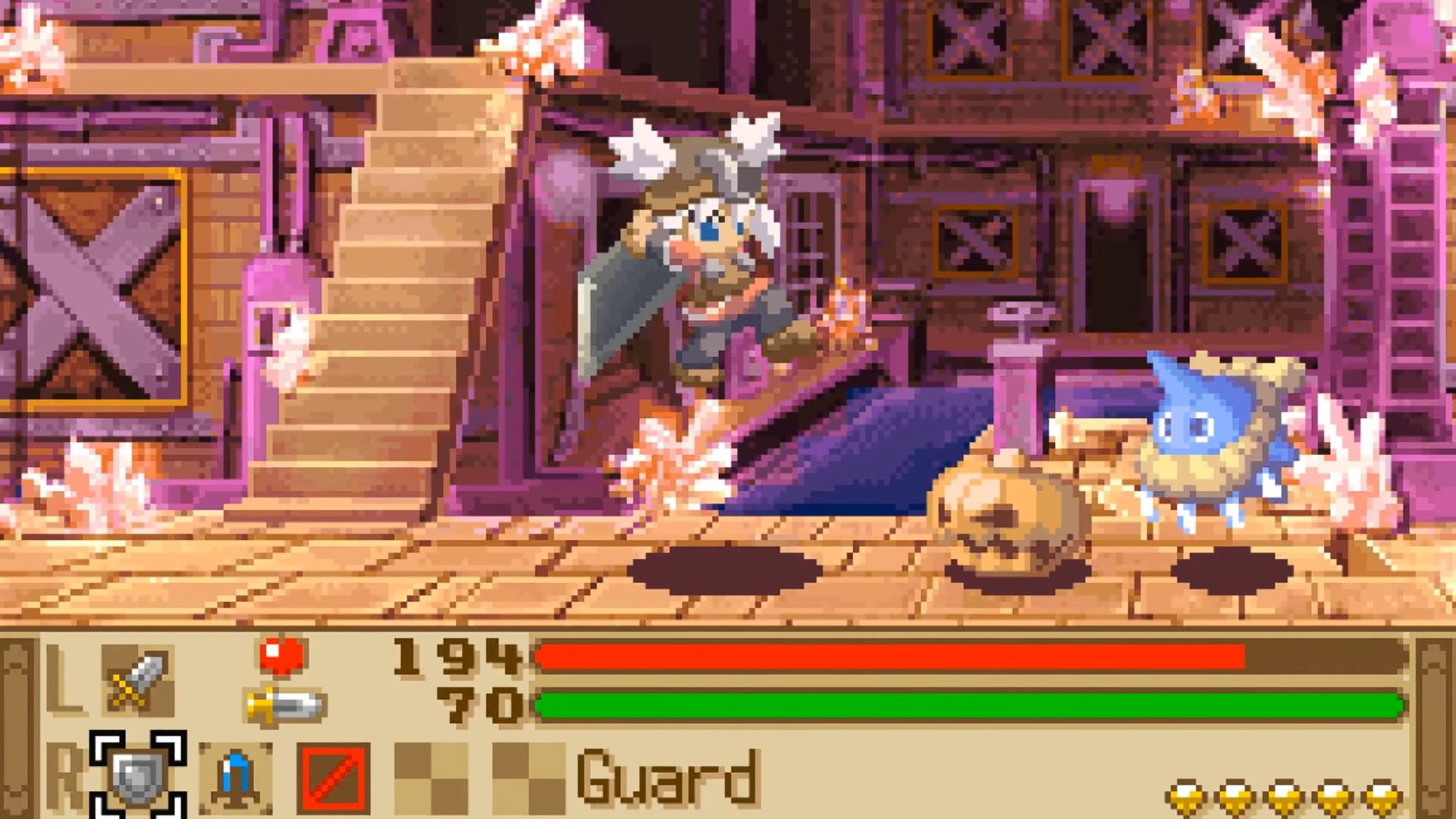
Let’s talk about another spin-off: Summon Night: Swordcraft Story. This game, based on the Summon Night tactical series, lets you choose to play as either Pratty (the female character) or Cleru (the male character). The core story is similar to the original: you play as a Craftknight striving to become the next Craftlord, and crafting is the key to achieving that goal.
Battles in Summon Night: Swordcraft Story take place in a 2D arena where you directly control the main character. You can equip and quickly change between different weapons during fights, and a Guardian Beast assists you with magical powers. But the most important part of the game is creating your own unique weapons.
To get more powerful, you need to create better weapons, and that takes both learning new skills and finding the right materials. One of the four Guardian Beasts can also help by adding magical enhancements to your gear. You’ll spend your time exploring dungeons to collect materials, then either beat challenging bosses or win tournaments. As the days pass, you’ll also advance the main story.
1. Tactics Ogre: The Knight of Lodis
The Ogre Spinoff
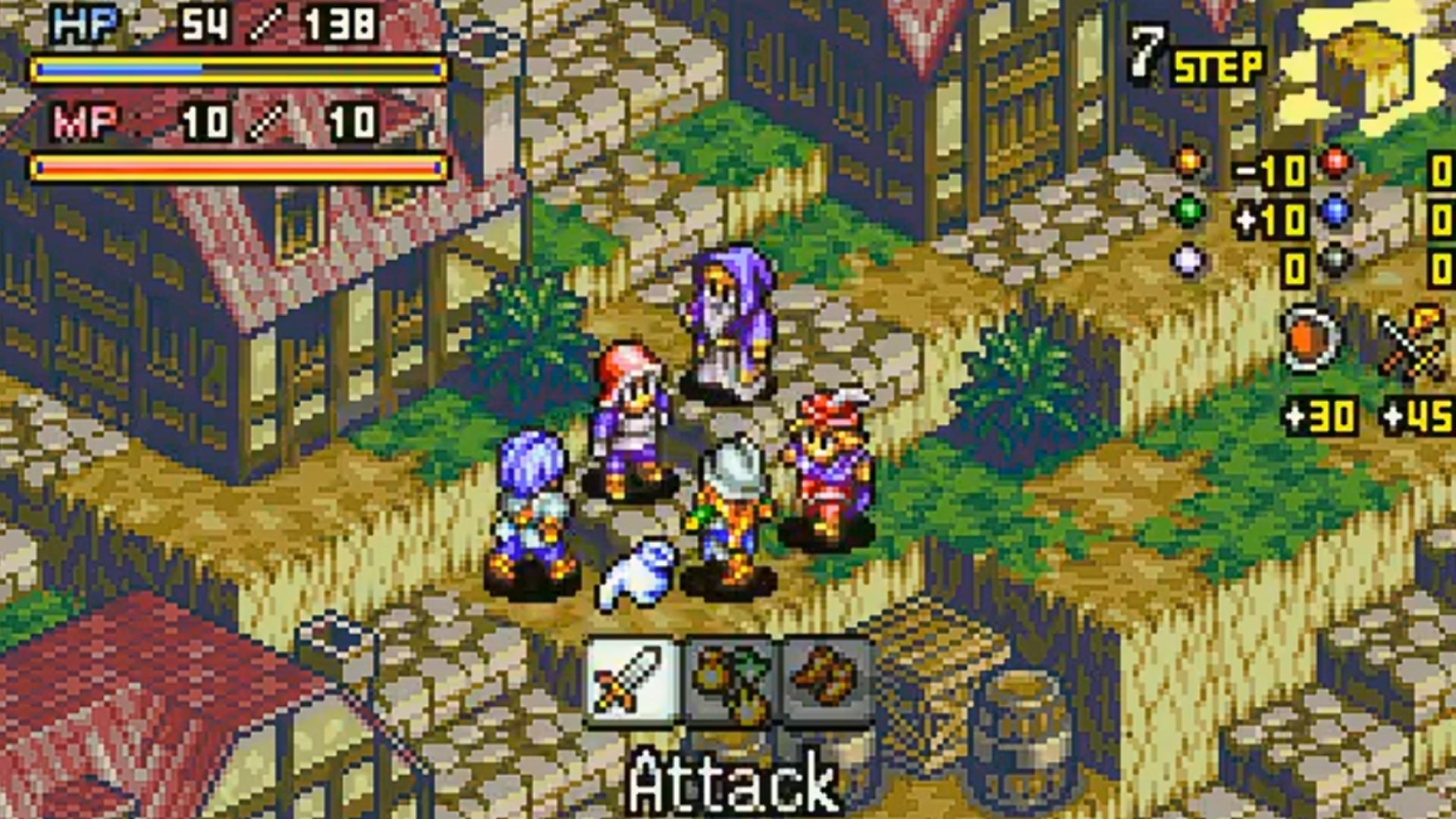
The Ogre series started with Ogre Battle and then became Tactics Ogre. Ogre Battle was a fast-paced strategy game, but Tactics Ogre is a classic turn-based Japanese RPG. In Tactics Ogre, you control units on a grid, moving and attacking strategically with each character taking their turn.
The original Tactics Ogre is considered a core game in the series and has been remade twice – once for the PSP and again for newer consoles. However, Tactics Ogre: The Knight of Lodis, which was only released on the Game Boy Advance, is seen as a side story and hasn’t been updated. It’s a shame, because I actually quite like it, even though some of its features – like getting new emblems to change character classes – can be confusing and their requirements aren’t always clear.
This game puts you in the role of Alphonse, a knight who grows unhappy with the cruel actions of his empire and gives up his title. A unique feature of Tactics Ogre: The Knight of Lodis is how you unlock different endings – there are five in total. Getting the best ending is a challenge, requiring you to finish the game in under 25 hours, which might feel rushed if you enjoy thorough exploration. Despite this, it’s a truly excellent tactical RPG, and I’d love to see it updated for modern platforms with a remaster, remake, or even a simple port.
Read More
- All Skyblazer Armor Locations in Crimson Desert
- How to Get the Sunset Reed Armor Set and Hollow Visage Sword in Crimson Desert
- All Shadow Armor Locations in Crimson Desert
- Marni Laser Helm Location & Upgrade in Crimson Desert
- All Helfryn Armor Locations in Crimson Desert
- All Golden Greed Armor Locations in Crimson Desert
- All Icewing Armor Locations in Crimson Desert
- Best Bows in Crimson Desert
- How to Beat Stonewalker Antiquum at the Gate of Truth in Crimson Desert
- Legendary White Lion Necklace Location in Crimson Desert
2026-03-18 18:42