
I used to think of Japanese role-playing games, or JRPGs, as requiring a lot of repetitive battling. Unlike Western RPGs, where you could often talk your way out of fights or find peaceful solutions, JRPGs generally moved forward only by winning battles, so grinding – repeatedly fighting to level up – felt inevitable.
Over time, as games in this style became more varied, leveling up repeatedly felt less necessary. Players could choose to fully power up their team right away, or focus on difficult end-game content that often demands high levels and the best gear.
Despite the reputation for repetitive gameplay, many modern Japanese role-playing games, or JRPGs, actually make grinding—fighting the same enemies repeatedly—fun and engaging. I’m going to highlight a few of these games. I’ll also try not to focus too much on class-based JRPGs, because learning new skills through repeated battles is naturally enjoyable in those games.
10. Bravely Second: End Layer
Chaining Battles
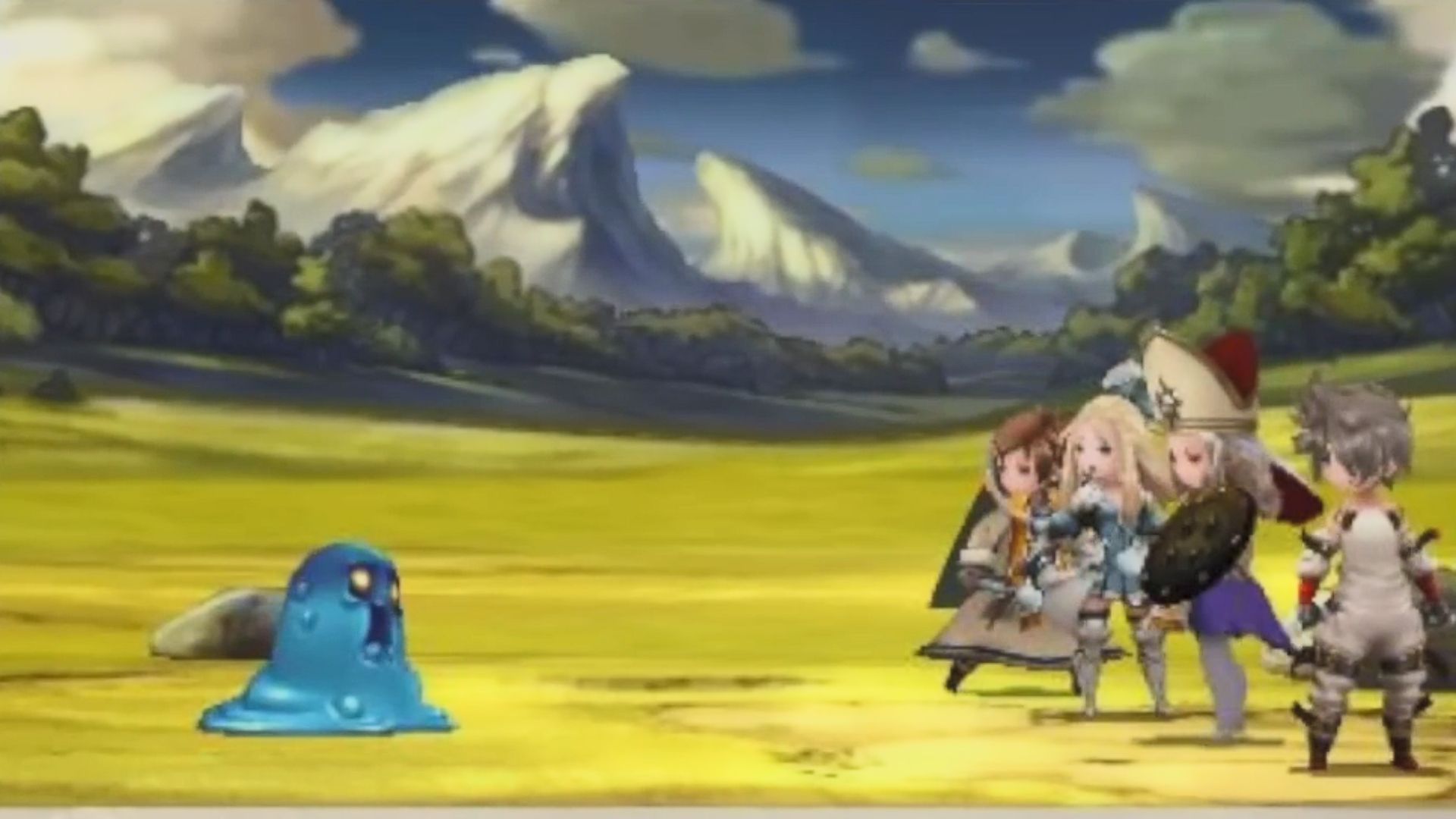
I often find myself criticizing JRPGs that use random battles. It’s a feature from older games that I don’t enjoy and still dislike seeing in newer titles. That said, I appreciate when developers try to update or reimagine random encounters in interesting ways.
This is true with Bravely Second: End Layer. I’m not referring to the feature that reduces random battles – that’s just a temporary help. In this second Bravely Default game, there’s a system where winning a battle on your first turn lets you immediately start another. You earn experience and job points from both fights, and a bonus multiplier increases with each consecutive win.
It’s easy to win fights in Bravely Second: End Layer, but the challenge comes from winning quickly. Early on, you have plenty of BP to use powerful area-of-effect attacks repeatedly. However, as you fight more battles, your BP depletes. This means every encounter becomes a puzzle: how can I beat these enemies using the least amount of resources? This actually makes leveling up fun, because the game rewards smart, strategic thinking.
9. Rogue Galaxy
Synthesizing New Weapons
Many players consider Rogue Galaxy a fantastic, underrated JRPG on the PS2, but I have a somewhat conflicted opinion. I enjoy the game and recognize its ambition, but I think it tries to do too much. While it has a lot of complex systems and features, they can sometimes feel overwhelming and become a bit tedious.
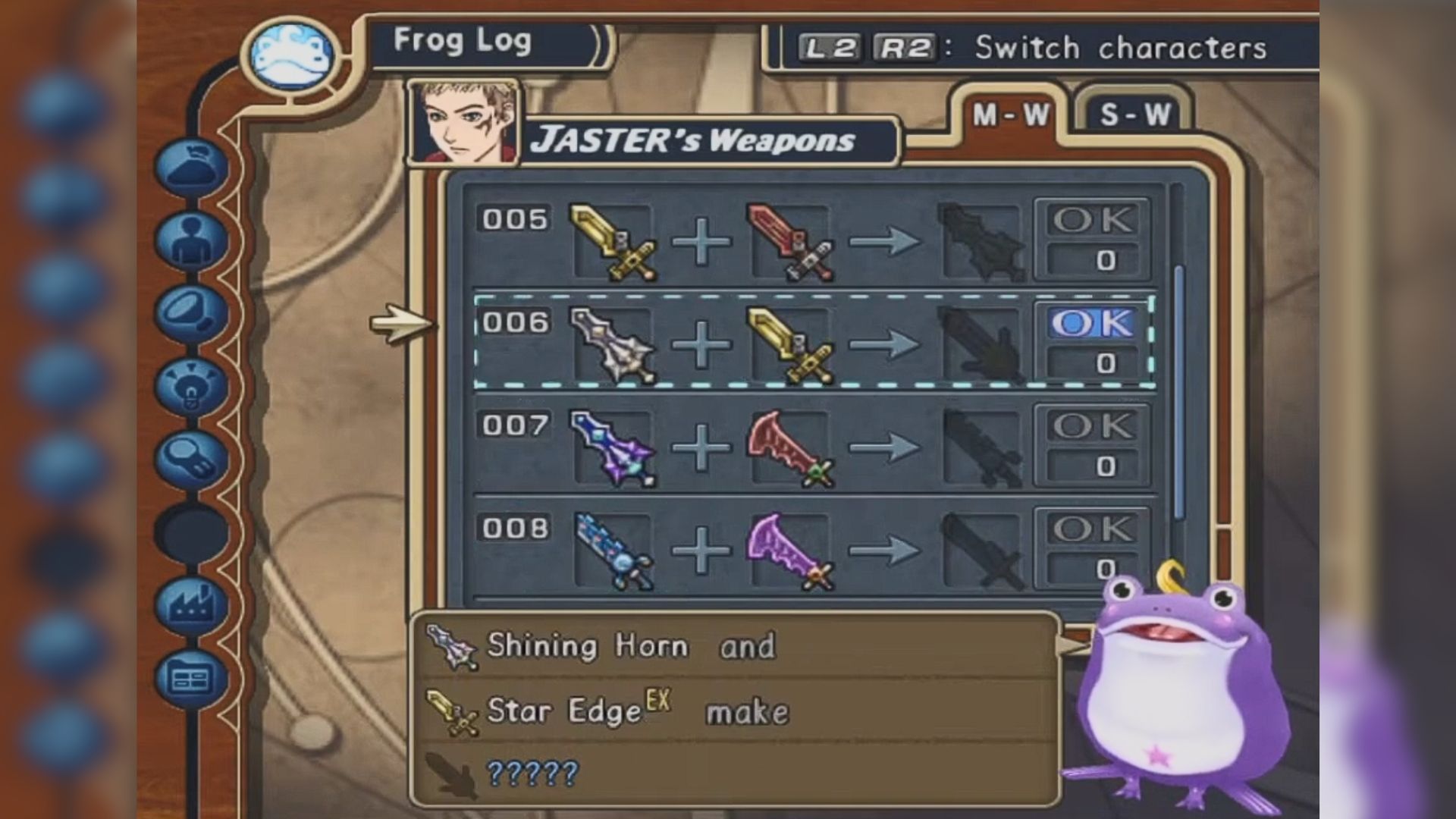
If you like to fully explore everything the game offers, be prepared to spend a lot of time repeating tasks. I won’t even mention some of the more complex systems, like the Factory or Insectron. Instead, I’ll focus on Weapon Synthesis, which is the most compelling reason to keep grinding.
In Rogue Galaxy, weapons can be upgraded through use. The more you battle with a weapon, the better it becomes. Once a weapon reaches its full potential, you can combine it with another to create an even more powerful one. This creates a compelling, but potentially endless, cycle of wanting to improve and combine weapons, which can consume a lot of your time as you chase the best gear.
8. Granblue Fantasy: Relink
Grind Is the Game
I considered including Monster Hunter on the list, but I don’t really see it as a Japanese role-playing game. Granblue Fantasy: Relink is a better fit, though, because the way you progress in both games—through repetitive gameplay—is actually quite similar.
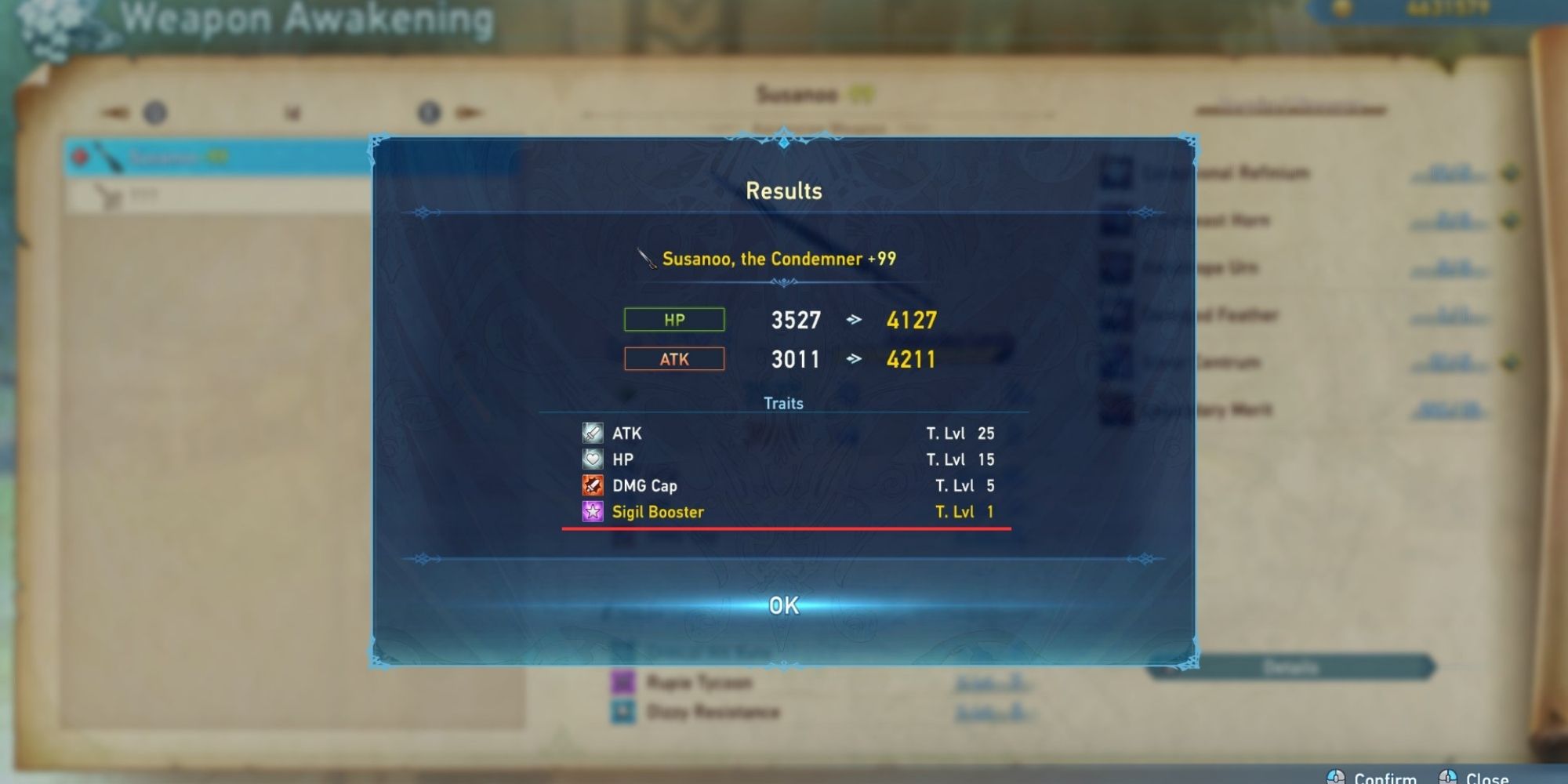
Okay, so usually I start by picking a mission that feels right for my character’s level – sometimes it’s just taking down a boss, other times it’s a more involved thing like defending an airship. Then I’ll either play through it solo with AI teammates, or jump online and team up with other players to get the job done. And at the end? Well, hopefully I get something good! It could be that rare material I’ve been farming for, or a Sigil I really need, but honestly, sometimes you get absolutely nothing, which is a little frustrating.
Having earned the platinum trophy in Granblue Fantasy: Relink, I can tell you the game requires a lot of repetitive effort. Getting the best weapon, Id’s Terminus, took me a very long time, but the game offers ways to avoid burnout – like trying out different characters, experimenting with builds, and changing up the missions. While the main story is fairly short for a JRPG, dedicated players who enjoy leveling up and improving their characters can easily spend over 100 hours in the game.
7. Final Fantasy VIII
The Drawback of the Junction System
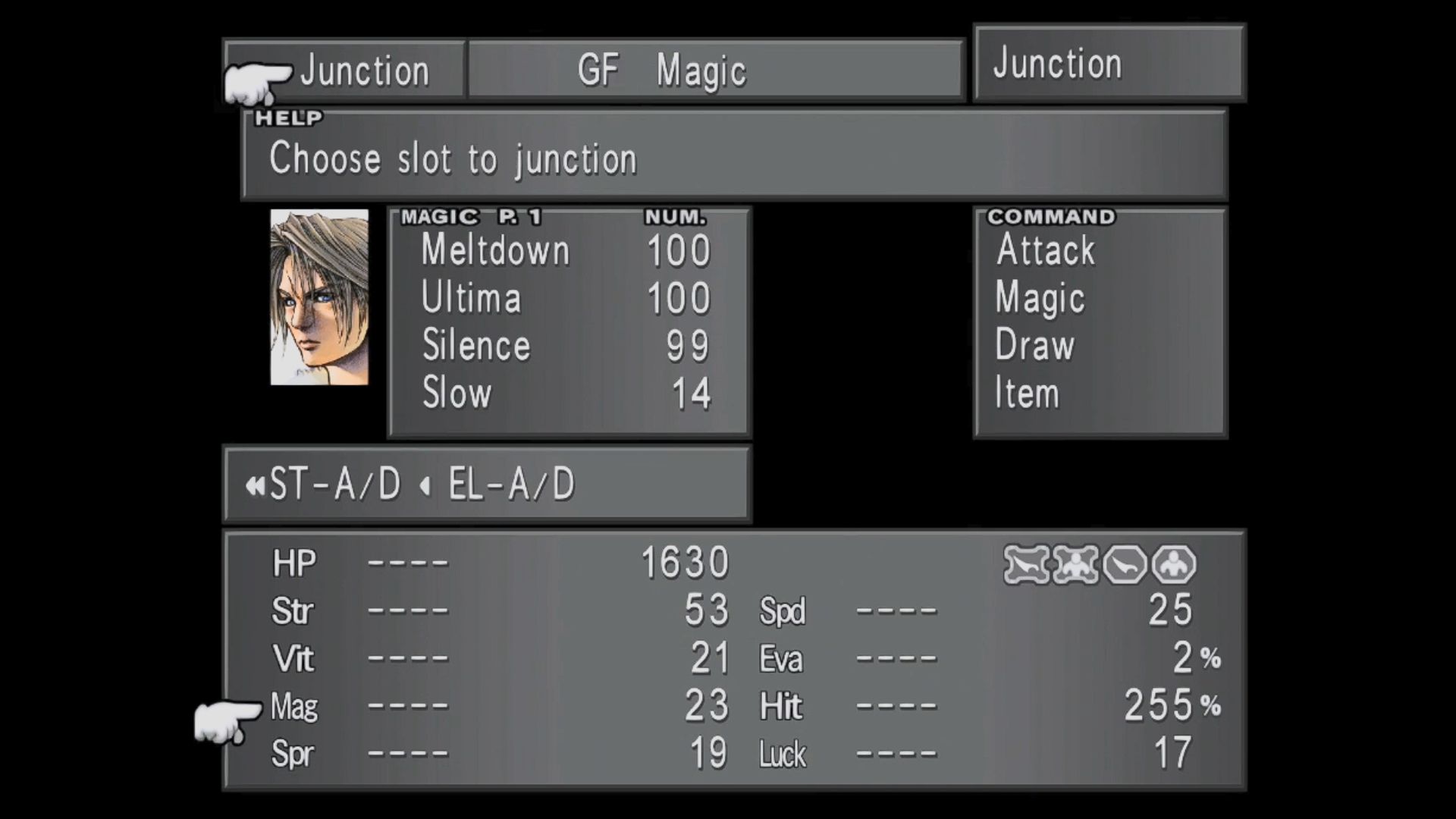
When considering which core Final Fantasy game involves the most repetitive gameplay, Final Fantasy VIII immediately stood out. Although you can grind in other titles, it’s not essential to progress. However, Final Fantasy VIII‘s Junction System feels almost required, particularly if you prefer a classic JRPG experience.
Do you collect a lot of every spell you find, or just a select few? I personally like to gather as many as possible. That way, the game stays challenging even as I get stronger and defeat enemies. Plus, there’s nothing quite as satisfying as equipping a weapon with status effects like Petrify, Death, or Sleep and easily defeating your opponents.
I know a lot of people have issues with how Final Fantasy VIII plays, but I actually enjoy the Junction System – though I’m not a fan of the Draw feature. What I like is that it’s one of the few Japanese RPGs where you can really see how your time spent leveling up affects battles and how important each stat is. That makes the grinding feel worthwhile.
6. Digimon Story: Time Stranger
Give Me More Digivolutions
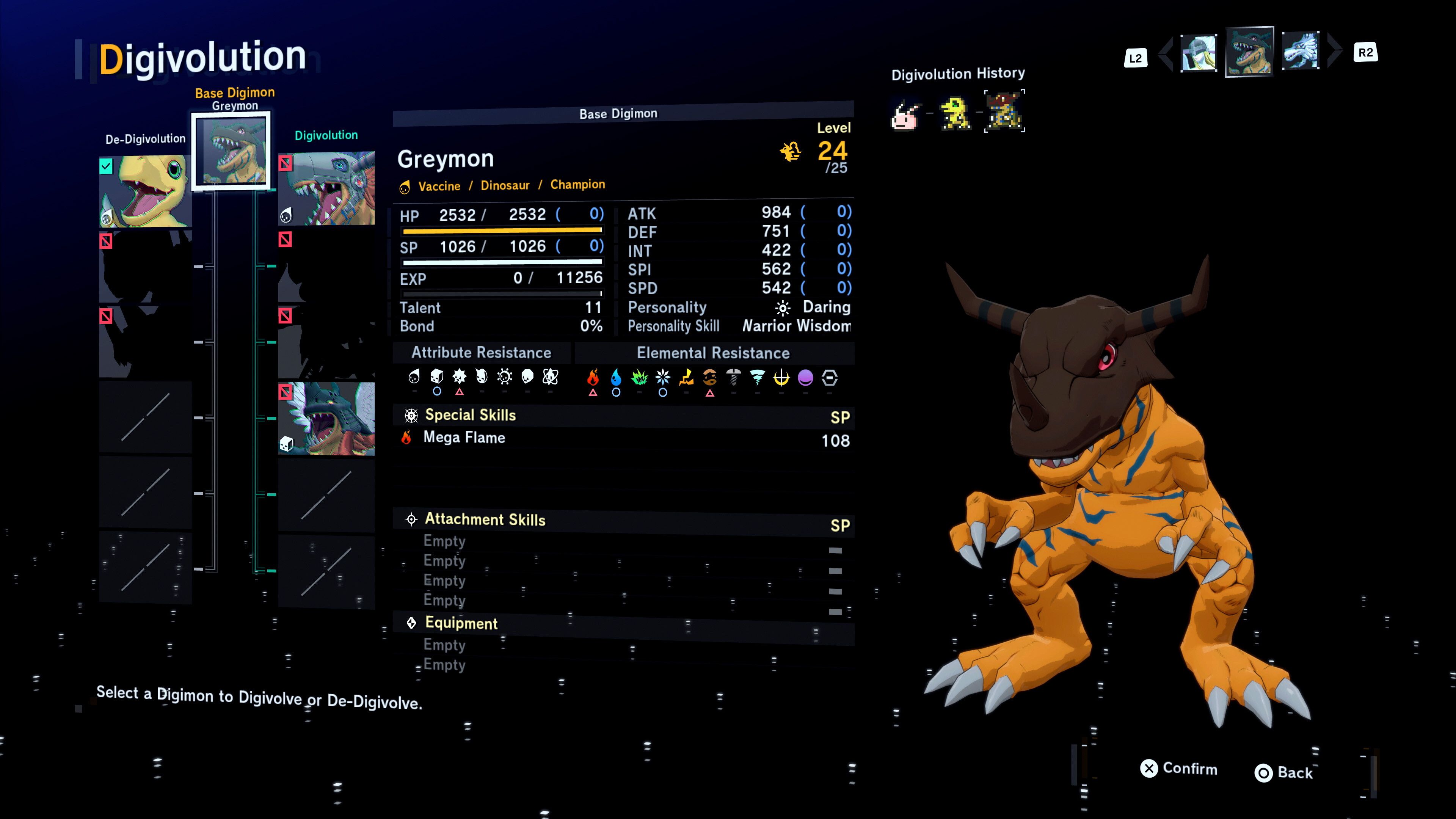
What really keeps me playing JRPGs is seeing my characters grow stronger – whether through new classes, merging them together, transformations, or, best of all, digivolutions. While many Digimon games fit the bill, I’d recommend Digimon Story: Time Stranger because it’s a really well-made game and a strong entry in the series.
Digimon Story: Time Stranger boasts a huge roster of over 450 Digimon, and for completionists, that means a lot of collecting! One interesting change from the previous game, Cyber Sleuth, is that all your stored Digimon now gain experience. In Cyber Sleuth, I used to swap my team members frequently to trigger different evolutions, but this new system feels different.
With so many Digimon to collect and battles sometimes feeling a little samey, I actually grew to like the game’s systems and especially enjoyed seeing my Digimon transform. It quickly became really addictive! I wasn’t focused on the story or taking care of my Digimon partners; I just wanted to keep evolving my team and unlocking endless new digivolutions.
5. Dragon Quest VII Reimagined
Jack of All Vocations
Some people believe turn-based RPGs are outdated and no longer popular. However, recent successful games have proven this wrong, demonstrating that players still love the genre and that it can be incredibly innovative when done well. A common focus for many turn-based games is making combat flow more smoothly and quickly.
Most turn-based RPGs offer features to make battles faster, and some, like Dragon Quest VII Reimagined, even allow you to defeat enemies without a fight if your characters are powerful enough. Being able to quickly defeat enemies in the game world while still gaining experience and leveling up your characters is a great addition to any game.
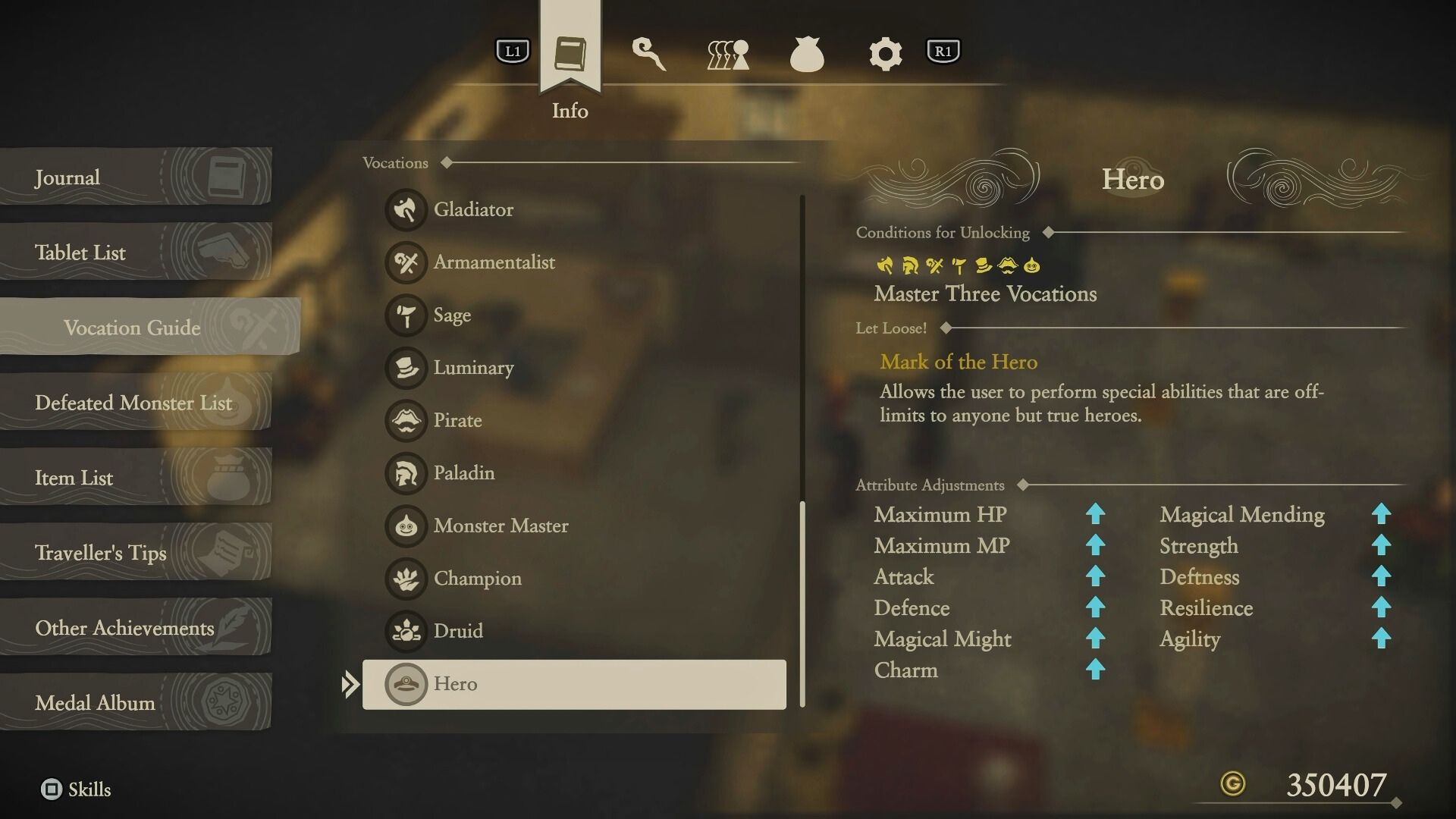
Leveling up character classes, or vocations, in Dragon Quest VII Reimagined is ultimately very rewarding. To get the advanced classes, you first need to develop the basic ones. It can get a little repetitive since you might have already experienced these classes with other characters, but you can always practice on early enemies and grind until you unlock the strongest vocations.
4. Metaphor: ReFantazio
Mastering Archetypes
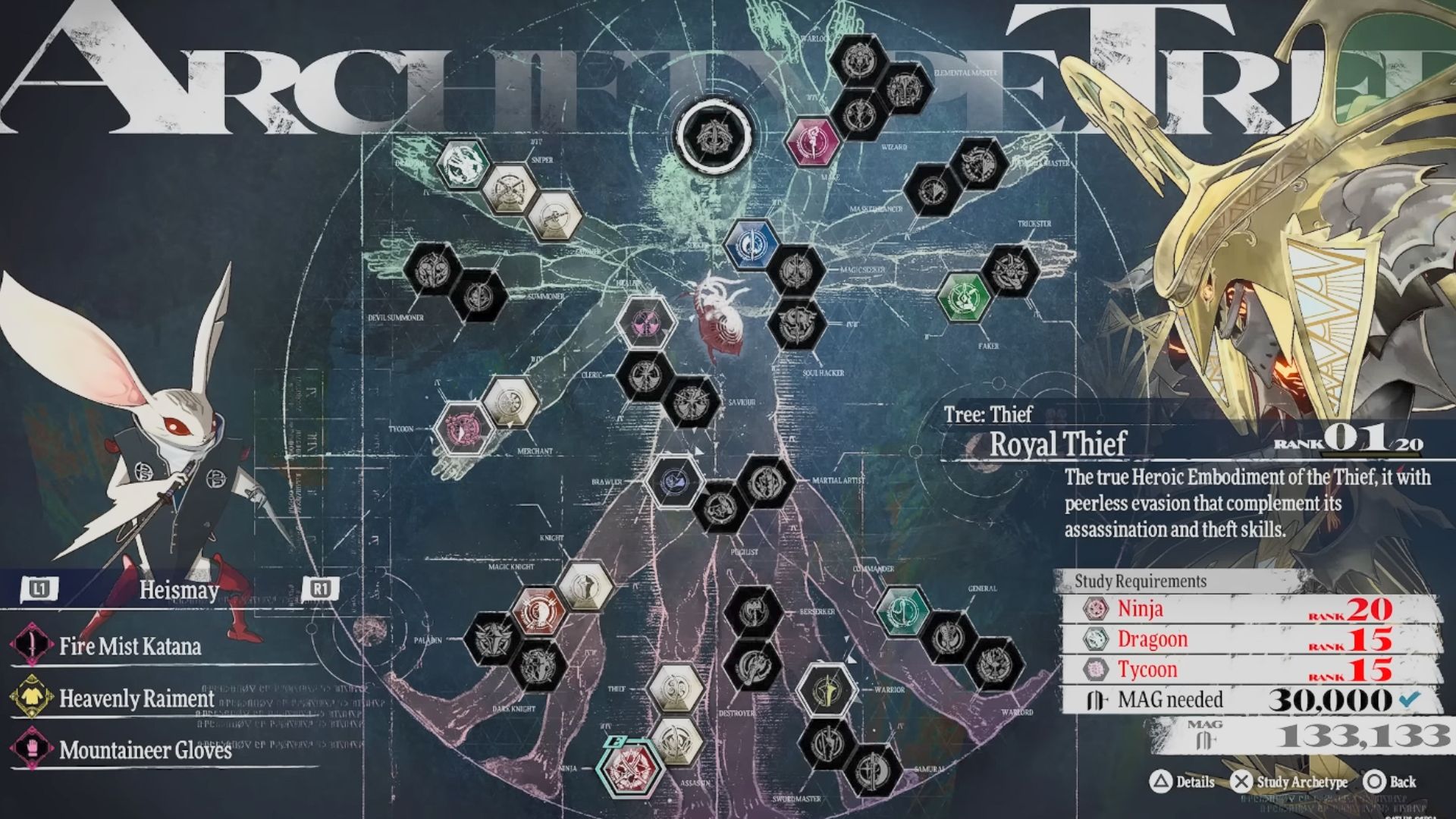
Similar to Dragon Quest VII Reimagined, Metaphor: ReFantazio lets you defeat enemies you encounter and quickly collect rewards. However, unlike that game, this JRPG offers a more flexible way to progress.
So, in Metaphor: ReFantazio, you’ve got these things called Archetypes, which are basically character classes. As you level them up, you learn new skills, but the coolest part is unlocking even better Archetypes. And when you switch between them, you don’t lose everything! You can carry over up to four skills you’ve already learned. Honestly, it makes building your characters so much fun – it’s a really deep and satisfying customization system.
I really enjoy gameplay where leveling up feels rewarding and connects well with how the game progresses. In Metaphor: ReFantazio, there’s a clear reason to spend time grinding – the benefits are fantastic. Discovering the perfect skill set for your character and then dominating enemies makes all the repetitive battles worthwhile.
3. Monster Rancher 1 & 2 DX
You Wanna Be the Very Best
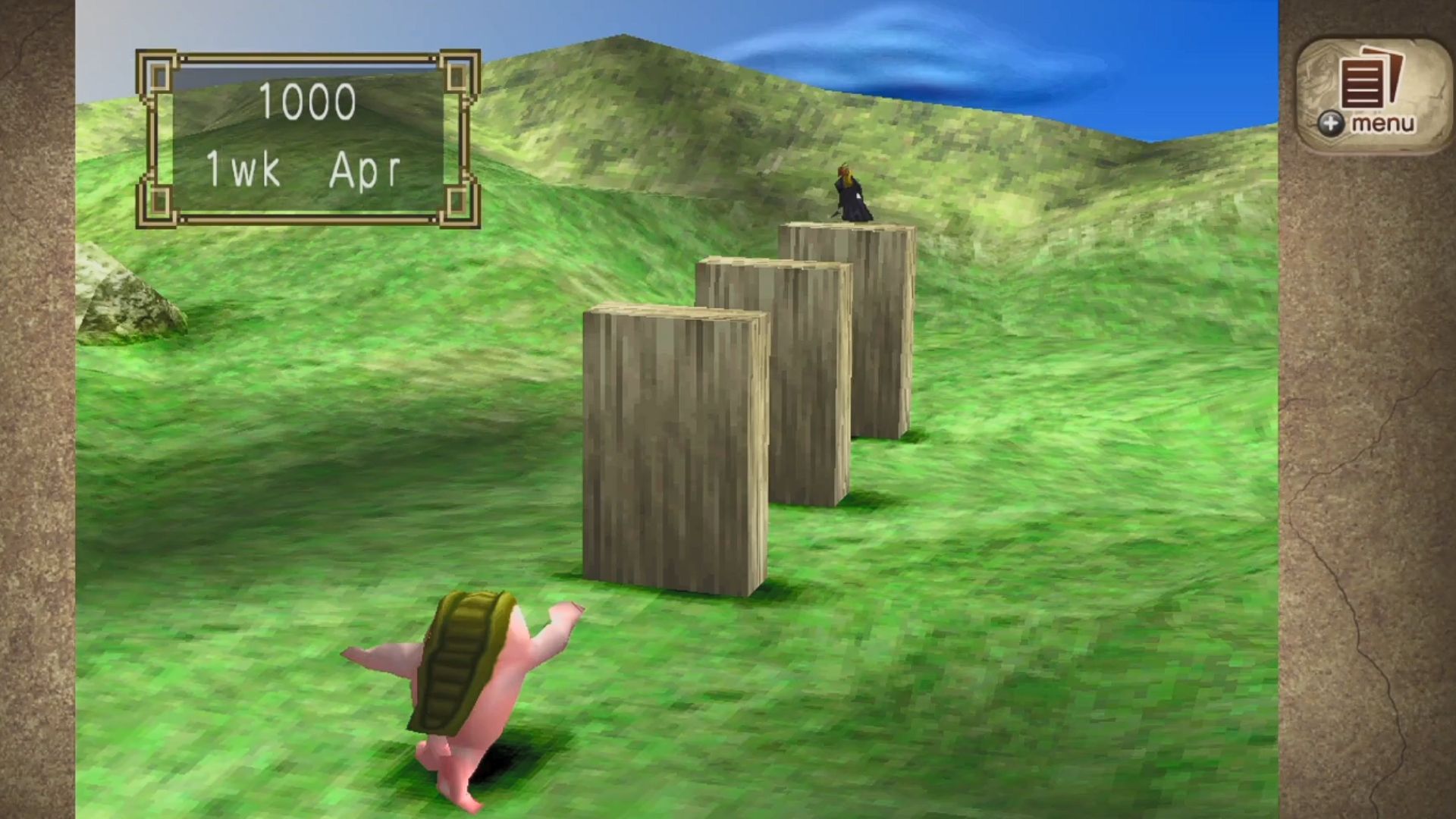
It might seem strange, but the core of Monster Rancher is all about leveling up your creatures. You train them, compete in tournaments, and send them on adventures, and honestly, the fun comes from watching their stats improve. We enjoy the process of repeatedly playing to make those numbers go up!
Subscribe to the newsletter for deeper JRPG grind guides
In the Monster Rancher series (especially Monster Rancher 1 & 2 DX), you build up your monster’s strength through daily training, improving its stats and teaching it new abilities with expeditions and practice. You then enter tournaments to climb the ranks and become a top competitor.
The best part of the game is definitely getting a new monster. I used to love spending hours trading and trying out all my old CDs – games, music, everything! Now, games have built-in music which makes things easier, but it still feels exciting every time you summon a monster, just like it used to.
2. Trails in the Sky 1st Chapter
A Sublime Gameplay
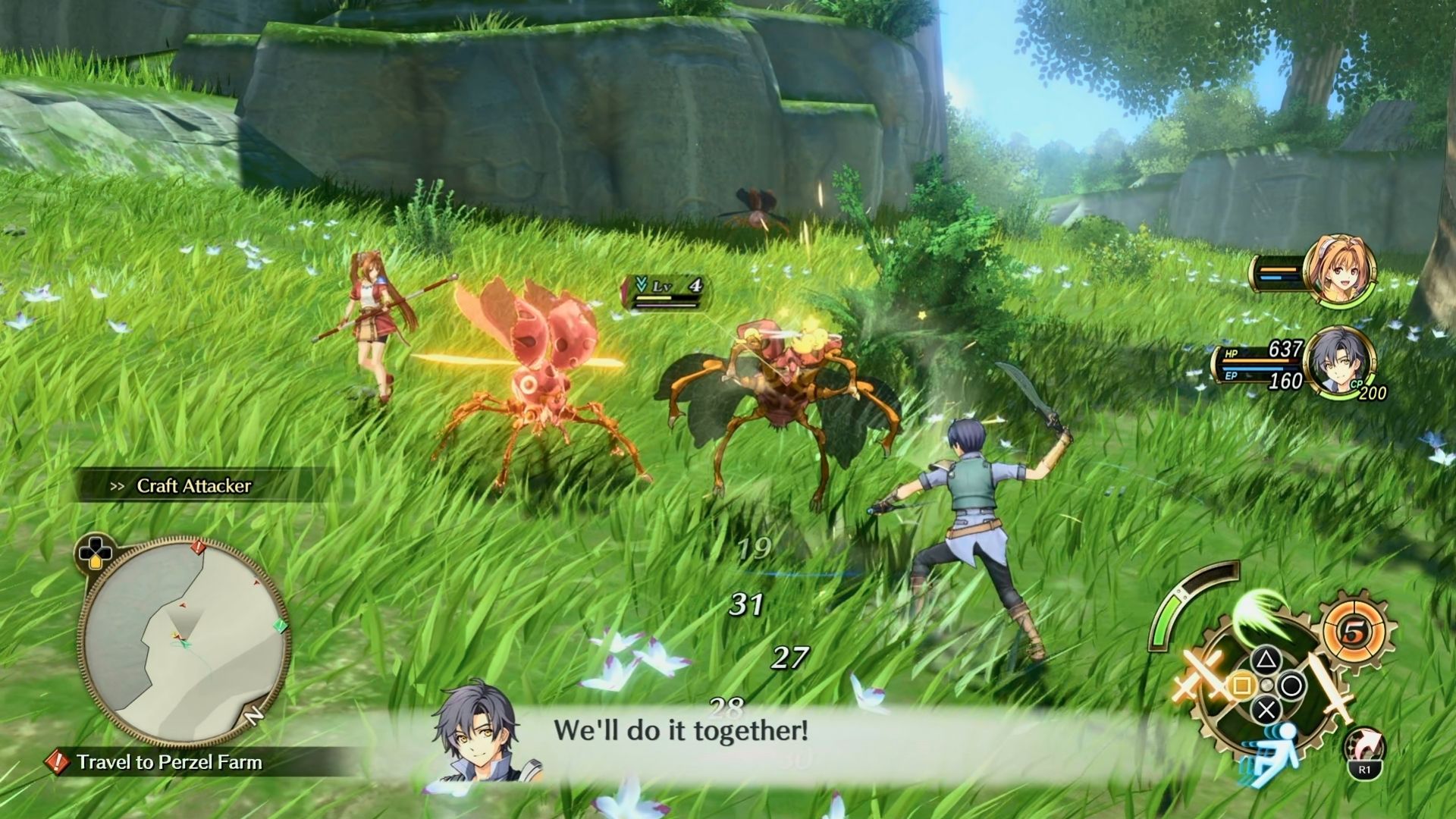
It’s a little surprising to recommend Trails in the Sky 1st Chapter because the game actually discourages excessive grinding. If your characters are much stronger than the enemies in an area, you’ll get very little experience, making it hard to level up. But in Trails in the Sky 1st Chapter, grinding isn’t just about gaining levels – there are other reasons to do it.
We also gain sepith, which lets us get new Quartz or trade for money. Plus, we can collect materials and gear from enemies, using them to cook meals or upgrade our equipment. Of course, we also earn money that we can spend right away or save for the future.
One of the best parts of Trails in the Sky 1st Chapter is its unique battle system, which mixes turn-based and real-time elements. It makes even repetitive battles enjoyable! It’s incredibly satisfying to seamlessly switch between quickly taking action and strategically using turn-based commands, especially when you start fights with a powerful attack after stunning an enemy. It’s just really rewarding!
1. Disgaea
Astronomical Numbers
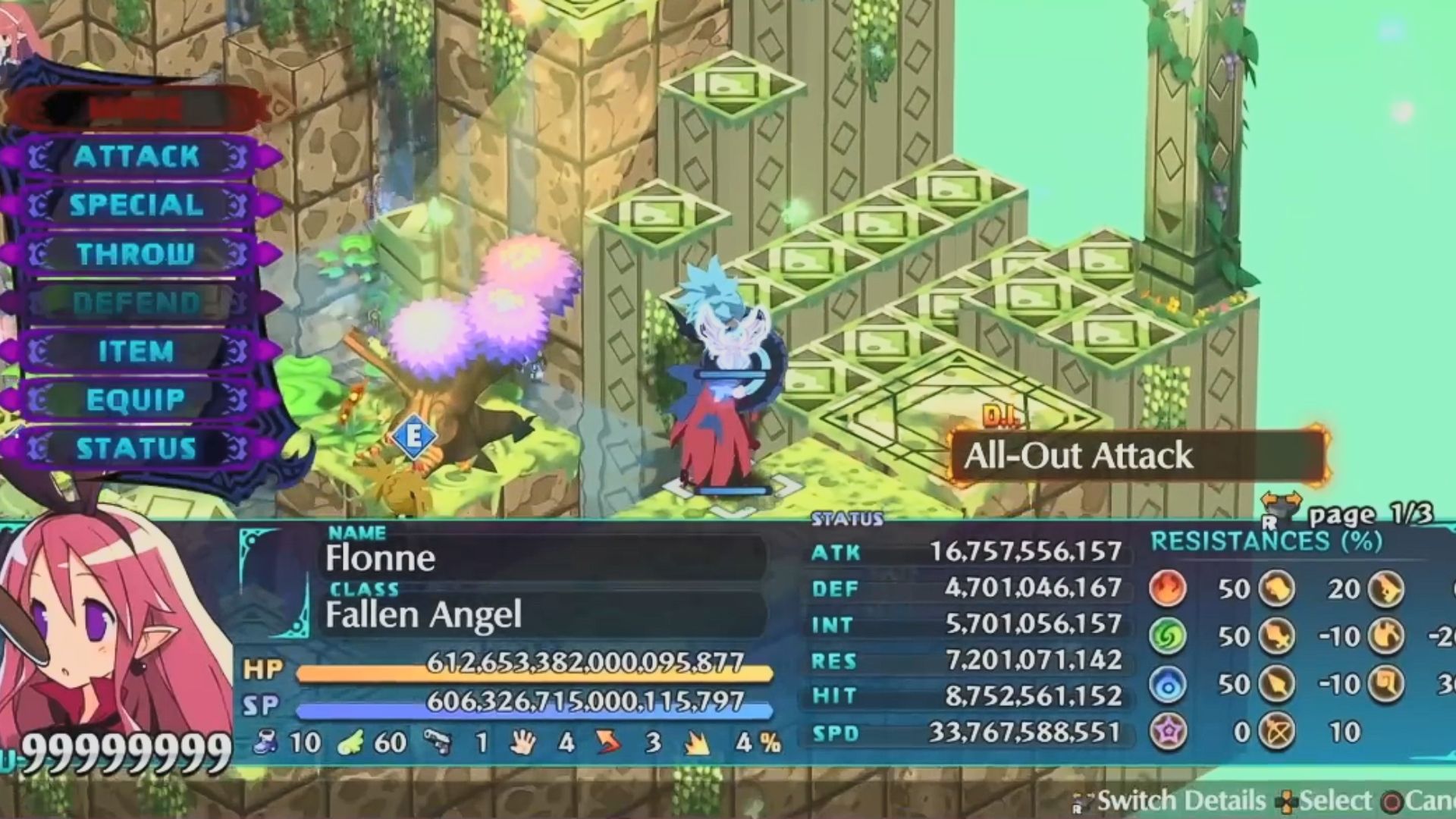
I understand that the repetitive gameplay in Disgaea, and similar strategy RPGs from Nippon Ichi, isn’t appealing to all players. If you’re mainly interested in the story and don’t care about extensive post-game content, unlocking everything, or reaching incredibly high levels, you can safely skip this. But, if you love grinding and want a game that offers endless opportunities to do so, Disgaea is perfect for you.
A core feature of the Disgaea series is the ability to level up characters far beyond the typical limit of 99. Most of the main Disgaea games let you reach level 9,999, but Disgaea 6 took it to an extreme with a level cap of 99,999,999 – which many felt was excessive. As a result, the developers lowered the level cap again in Disgaea 7.
There’s a lot to gain as you progress – not just experience, but also improvements to your weapons, class abilities, skills, and more. Don’t expect to level up slowly, one step at a time. There are many ways to quickly gain a large number of levels, which can actually make the process of improving your character feel really rewarding.
Read More
- All Shadow Armor Locations in Crimson Desert
- Sega Reveals Official Sonic Timeline: From Prehistoric to Modern Era
- Genshin Impact Dev Teases New Open-World MMO With Realistic Graphics
- The Limits of Thought: Can We Compress Reasoning in AI?
- Where to Pack and Sell Trade Goods in Crimson Desert
- ARC Raiders Boss Defends Controversial AI Usage
- Dark Marksman Armor Locations in Crimson Desert
- How to Beat Antumbra’s Sword (Sanctum of Absolution) in Crimson Desert
- Who Can You Romance In GreedFall 2: The Dying World?
- Gold Rate Forecast
2026-03-24 18:46