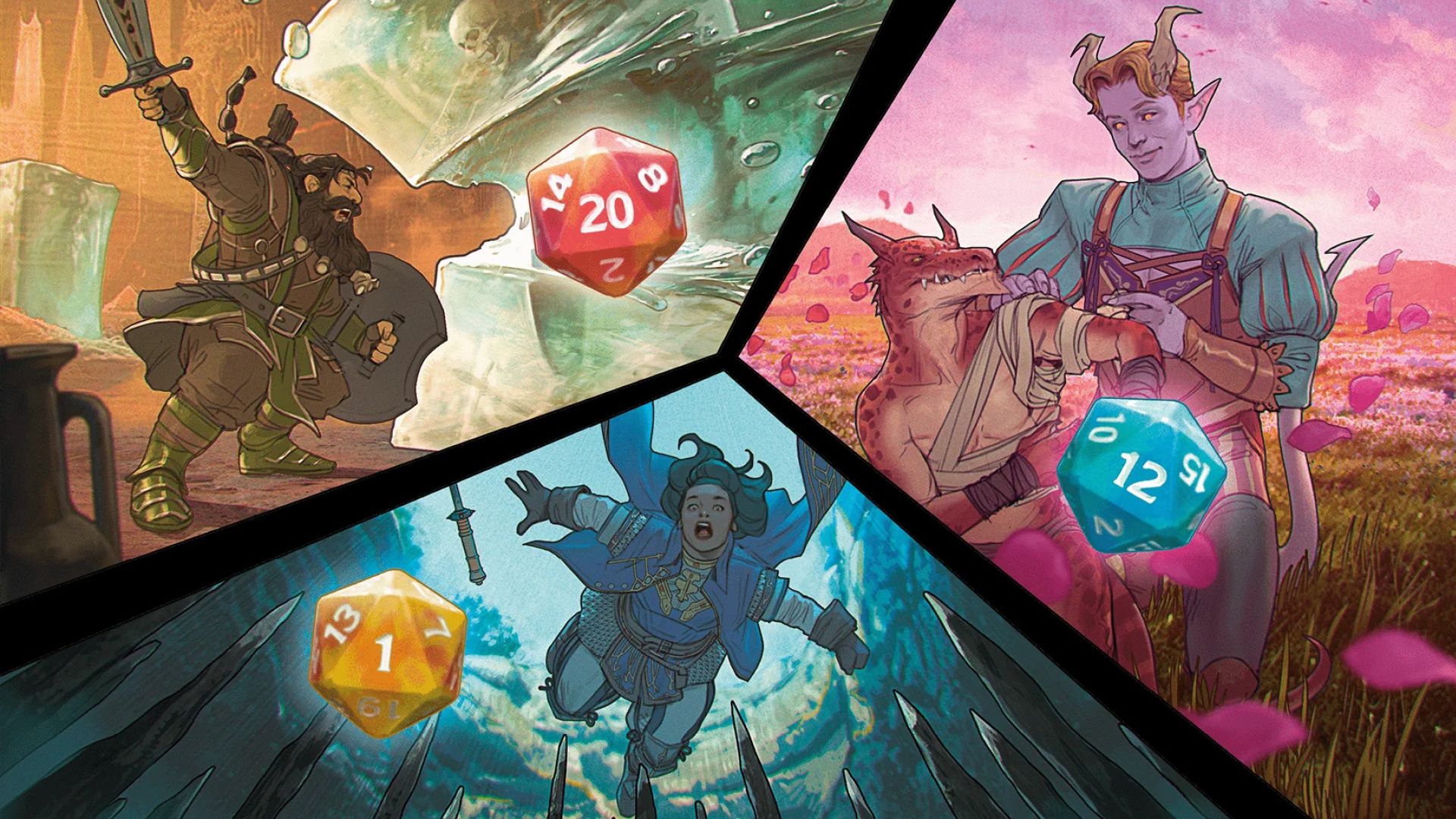
In Dungeons & Dragons, choosing your character’s class is one of the most important decisions you’ll make. Classes – like Barbarian, Fighter, Cleric, and Wizard – define how your character approaches the game’s core elements: fighting, exploring, and interacting with others. But it’s your subclass that really brings your character to life, building upon the foundation of your class to create a truly unique and interesting hero.
Some character classes in Dungeons & Dragons are naturally more powerful than others. While choices like the Life Cleric, Battlemaster Fighter, and Bladesinger Wizard are consistently strong, many others fall behind. The recent rules update in Dungeons & Dragons 2024 helped improve some weaker options, but these five still need further adjustments to be fully competitive.
This list only includes subclasses that appear in the 2024 Player’s Handbook or official Dungeons & Dragons sourcebooks published after it.
Cartographer Artificer – Eberron: Forge of the Artificer
A Decent Support Subclass Overly Reliant On a 1st-Level Concentration Spell
- Printed in Eberron: Forge of the Artificer (2025)
The Cartographer Artificer is a new character option introduced in the Eberron: Forge of the Artificer sourcebook. This subclass excels at supporting the party, offering abilities that improve everyone’s reaction time, quickly move the Artificer and their allies across the battlefield, and speed up the creation of magical Spell Scrolls.
Who’s That Character?  Identify the silhouettes before time runs out.
Results
High Score: 0 —
This Artificer subclass in Dungeons & Dragons heavily depends on the Faerie Fire spell for its main attacks, specifically with the features Illuminated Cartography and Guided Precision. This creates a problem because tying so much power to a single, 1st-level spell means the subclass becomes significantly weaker if it needs to use a different concentration spell during a fight. What makes this even worse is that Faerie Fire doesn’t become more powerful when cast at higher levels, so they don’t get any extra benefit as they gain access to stronger spells.
The reason Rangers often underperform in Dungeons & Dragons is their heavy dependence on Hunter’s Mark, a basic spell that requires constant focus.
Knowledge Domain Cleric – Forgotten Realms: Heroes of Faerun
Virtually Nonexistent Subclass Features Until 17th Level
- Printed in Dungeons and Dragons 5th Edition Player’s Handbook (2014)
- Updated in Forgotten Realms: Heroes of Faerun (2025)
Similar to the Sword Coast Adventurer’s Guide, which is often considered one of the weakest sourcebooks for 5th Edition Dungeons & Dragons, the character subclasses in Forgotten Realms: Heroes of Faerun are a mixed bag. Some, like the updated Bladesinger Wizard and the new Spellfire Sorcerer, are excellent choices. However, others, such as the Knowledge Domain Cleric, fall short.
The Knowledge Cleric domain has been updated since its original release in 2014, and although the changes technically improve its mechanics, many players feel it’s lost some of its unique character. Early on, it mainly offers expertise in a few skills, a free Divination spell through its Channel Divinity, telepathy, and proficiency in Intelligence saving throws. While the Divine Foreknowledge ability is very strong, it doesn’t become available until level 17. Since most Dungeons & Dragons campaigns end around level 12, most Knowledge Clerics will likely never get to experience its full potential.
Banneret Fighter – Forgotten Realms: Heroes of Faerun
A Poor Attempt At Salvaging One of the Weakest Subclasses In History
- Printed in Sword Coast Adventurer’s Guide (2015) as the Purple Dragon Knight
- Known as the Banneret outside the setting of Faerun
- Updated in Forgotten Realms: Heroes of Faerun (2025) as the Banneret
The Banneret Fighter in Dungeons & Dragons was designed as a new version of the Purple Dragon Knight, which originally appeared in the Sword Coast Adventure’s Guide. Unfortunately, the Banneret Fighter, like its predecessor, is widely considered one of the weakest Fighter subclasses. Both classes tried to be support characters, allowing them to share abilities like Second Wind, Action Surge, and Indomitable with allies, but also included some social skills.
The Purple Dragon Knight was originally featured as a dragon-riding warrior in early Dungeons & Dragons playtest material, before becoming officially known as the Banneret. This change was made to better align the character with the established history of the Forgotten Realms.
As a fan of Forgotten Realms, I think the Banneret subclass in Heroes of Faerun is a slight improvement over the original, but it’s not a huge leap forward. It works pretty much the same way, though they’ve added a few nice perks – like always being able to understand languages from level 3, and being immune to being charmed or frightened by level 18, which is helpful. Still, compared to other Fighter subclasses like the Battle Master or Rune Knight, the Banneret feels a bit limited. Those classes get extra abilities and resources, while the Banneret mostly just tweaks existing ones like Second Wind, Action Surge, and Indomitable. That means you’ll probably run out of steam faster playing a Banneret.
Hunter Ranger – Player’s Handbook (2024)
Weak Subclass Features That Can’t Salvage An Underwhelming Class
- Printed in Dungeons and Dragons 5th Edition Player’s Handbook (2014)
- Updated in Dungeons and Dragons 5th Edition Player’s Handbook (2024)
Rangers have consistently been one of the weaker classes in 5th Edition Dungeons & Dragons, and unfortunately, the recent 2024 rules updates haven’t addressed this. Generally, Rangers rank among the least powerful classes at most levels. However, while the core Ranger class has issues, many of its specialized subclasses are quite strong. The Gloom Stalker, Fey Wanderer, and Winter Walker are all excellent choices, and the updated Beast Master Ranger is also a solid option.
The Hunter Ranger, however, isn’t as strong. While it’s gained some flexibility by being able to switch between Hunter’s Prey and Defensive Tactics during a Short or Long Rest, these abilities aren’t very impressive compared to other Ranger subclasses. Furthermore, its 11th-level feature requires the use of Hunter’s Mark, and its 15th-level ability is just a slightly improved version of the Rogue’s Uncanny Dodge. Overall, the Hunter relies too much on the Ranger’s weaker abilities instead of offering unique strengths like the other subclasses.
Soulknife Rogue – Player’s Handbook (2024)
A Flavorful Class That Can’t Use Magic Weapons
- Printed in Tasha’s Cauldron of Everything (2020)
- Updated in Dungeons and Dragons 5th Edition Player’s Handbook (2024)
The Soulknife Rogue is a really strong character class in Dungeons and Dragons. It starts out exceptionally well, offering cool abilities like telepathy, teleportation, and even a bit of luck to avoid failing attacks or skill checks. The main drawback early on is that it doesn’t have many uses of its special psychic powers.
As the class progresses, its weaknesses become apparent. It heavily relies on Psychic Blades for attacks, which creates a significant problem for Soulknives who prefer magic weapons – it limits their abilities and effectively removes half of the subclass’s potential. This is a major disadvantage at higher levels, as it prevents them from fully utilizing powerful items, something no other Rogue subclass in Dungeons & Dragons experiences.
Read More
- All Shadow Armor Locations in Crimson Desert
- All Skyblazer Armor Locations in Crimson Desert
- How to Get the Sunset Reed Armor Set and Hollow Visage Sword in Crimson Desert
- Best Bows in Crimson Desert
- Marni Laser Helm Location & Upgrade in Crimson Desert
- All Helfryn Armor Locations in Crimson Desert
- All Golden Greed Armor Locations in Crimson Desert
- Wings of Iron Walkthrough in Crimson Desert
- How to Craft the Elegant Carmine Armor in Crimson Desert
- Keeping Large AI Models Connected Through Network Chaos
2026-02-20 15:05