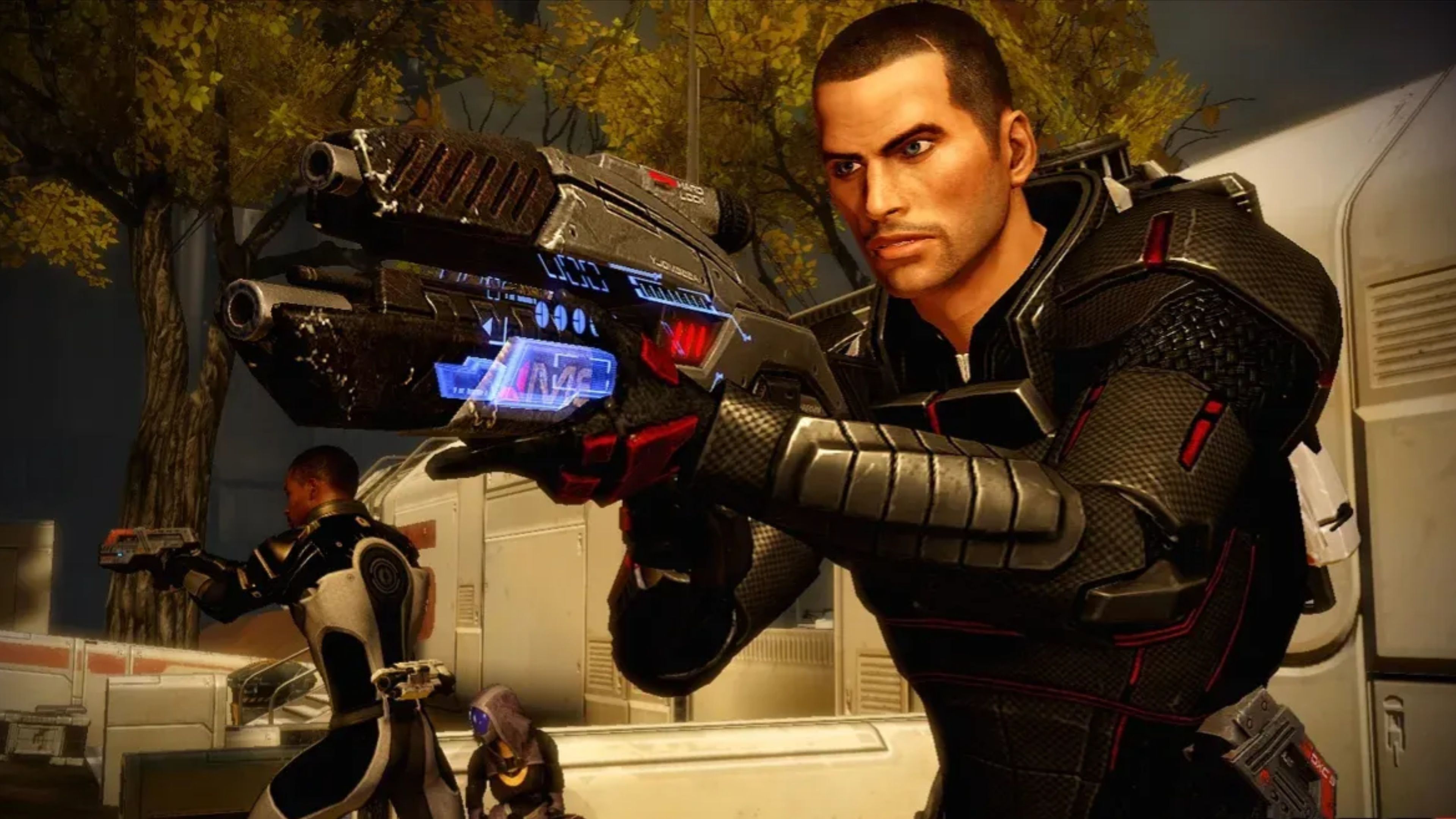
Over the past thirty years, science fiction has become a hugely creative and technologically advanced genre in video games. Game creators have built incredible worlds – from far-off planets and futuristic cities to alien societies and bleak futures – and let players explore them in a way that goes beyond what’s possible in movies or books thanks to the interactive nature of games.
The best science fiction games aren’t just about spaceships or robots. They’re defined by clever design, immersive worlds, and the overall experience they create. Over the past three decades, these games have shaped both what players want from sci-fi games and what developers aim to deliver.
Dead Space (2008)
Sci-Fi Horror Built On Smart Systems Instead Of Cheap Scares
- Award-winning sound design makes horror very real.
- Diegetic UI, environmental hazards, and procedural tension create a fully integrated, immersive horror experience that inspires modern sci-fi design.
Few sci-fi games rival Dead Space in terms of sound quality, world-building, and how effectively it creates horror. Experts and audio professionals have consistently praised the game’s masterful use of sound, silence, and atmosphere to generate fear. In 2009, Dead Space received top honors from the Game Audio Network Guild Awards, winning both Audio of the Year and Sound Design of the Year – a prestigious achievement in the field of game audio.
I really loved how Dead Space did horror. It didn’t jump scare you with stuff popping out – it built real fear through smart design. Everything worked together to keep me on edge and totally immersed. One of the coolest things was how it got rid of all the normal menus. Instead of a health bar, Isaac’s suit actually glowed when he was hurt. Ammo showed up as a little hologram near his gun. Even opening the inventory happened right there in the game world, not on a separate screen. That ‘in-world HUD’ was pretty unusual back in 2008, and it instantly made the whole setting feel so much more realistic and tense. It really pulled me in!
Deus Ex (2000)
A Cyberpunk Game That Let Players Shape the Mission
- Deep RPG systems allow multiple solutions to every challenge.
- Themes about surveillance, biotech, and power made it a landmark in sci-fi storytelling.
Even though it shows its age visually and isn’t perfectly polished, the core of Deus Ex – its ambition and the freedom it gives players – still feels fresh today. If you’re interested in seeing how video game storytelling, meaningful choices, role-playing, and action can all come together brilliantly, this is a must-play. When you start Deus Ex, you’re dropped into a cyberpunk world where you’re not led down a single path. You play as JC Denton, who isn’t a pre-defined hero, but rather a character you can shape yourself.
Unlike many games, this one doesn’t force you to follow a specific storyline or solve puzzles in a predetermined way. You have a lot of freedom to play how you want – whether that means going in with guns blazing, being stealthy, crawling through vents, hacking into systems, charming people, or simply fighting your way through. This approach is a big reason why Deus Ex is considered a landmark title in the immersive sim genre.
StarCraft (1998)
Iconic Sci-Fi Strategy Game
.jpg)
- Asymmetric factions (Terran, Zerg, Protoss) changed the RTS balance forever.
- Competitive depth helped build modern esports culture.
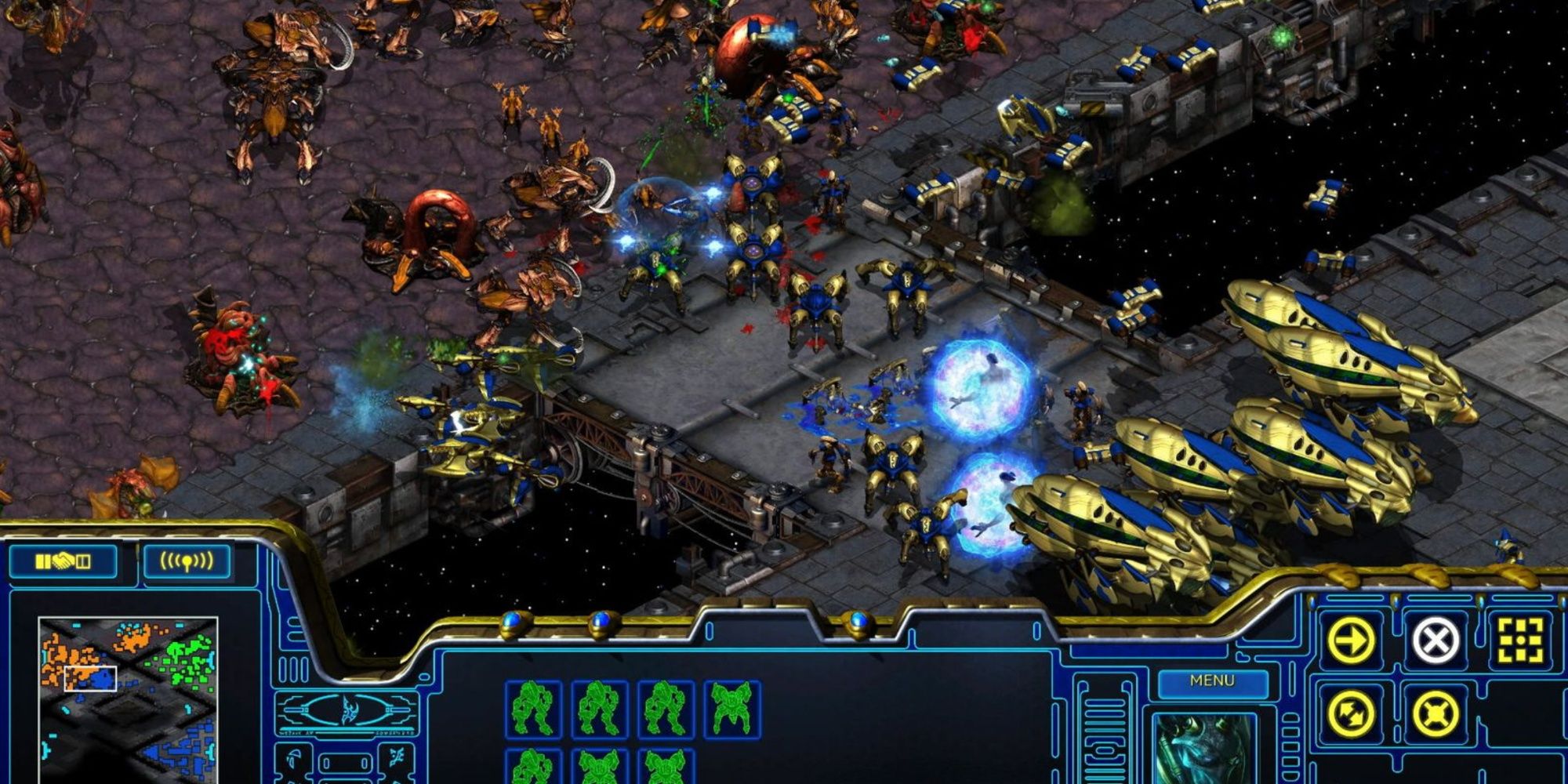
1998 was a landmark year for video games, and when StarCraft launched, it wasn’t just another strategy game for computers. It completely changed the genre, setting a new standard for science fiction war games. Unlike other games, StarCraft offered three unique factions, meaning players couldn’t rely on a single strategy. They needed to be clever, adjust to different situations, and learn completely different ways to play depending on the faction they chose.
To grasp just how popular StarCraft became, especially in South Korea, imagine internet cafes packed with players intensely focused on the game. This created a thriving gaming culture built around competition. Soon, tournaments emerged, attracting large audiences, and even getting airtime on television. People followed matches like sporting events, excited by clever tactics, skillful maneuvers, and precise control of units. In many ways, StarCraft was a pioneer, helping to establish the esports scene we know today.
Portal 2 (2011)
Proof That Smart Sci-Fi Ideas Can Be Funny, Emotional, and Inventive
- Portal mechanics evolve in surprising ways without ever confusing the player.
- Sharp writing and characters give the game an experience rarely seen in sci-fi puzzlers.
Portal 2 didn’t just offer more of the same; it truly evolved the idea of what a sequel could be. It built upon the original’s strengths – like the portal mechanics, sleek design, and smart puzzles – and added layers of complexity, humor, and ways for players to be creative.
Portal 2 demonstrates that video games don’t require intense action or grand storylines to create a memorable science fiction experience. Instead, it relies on an innovative idea, intelligent level design, humorous characters, and playful manipulation of physics. The game proved that solving puzzles can be just as exciting as shooting, and it continues to be a gold standard for imaginative game design, compelling storytelling, and pure enjoyment.
Star Wars: Knights of the Old Republic (2003)
Raised The Bar For Choice-Driven Sci-Fi RPGs
- The light/dark morality system makes every player’s decision mechanically meaningful, shaping character abilities, combat outcomes, and world interactions.
- Companion mechanics are deep and reactive, setting a standard for relationship-driven gameplay in sci-fi RPGs.
Released in 2003, Star Wars: Knights of the Old Republic was groundbreaking for giving players genuine control over the narrative in a Star Wars game. Set thousands of years before the films, during a conflict between the Republic and the Sith, the game begins with the player character having amnesia. Uncovering the truth behind their lost memories drives the story forward, culminating in a shocking reveal: the player is actually Revan, a powerful Jedi who fell to the dark side. This twist is widely considered one of the most memorable in video game history.
When it first came out, KOTOR was a huge commercial success, but its impact went far beyond just sales numbers. The way it built stories around companions and explored moral choices heavily influenced future BioWare games, as well as many other RPGs that prioritize storytelling. The game also enriched the Star Wars universe with new characters, storylines, and concepts that fans and writers continued to use for years. Even the cynical humor of HK-47 became instantly recognizable and a fan favorite.
Metroid Prime
First Metroid 3D Game in First-Person Perspective
- Kept the soul of Metroid while telling a story in a new way.
- Setting the standard for immersive first-person adventure design.
Metroid Prime was a bold move that really paid off. It successfully transitioned the classic 2D Metroid experience into a first-person perspective while preserving the core elements fans loved – like discovering secrets, revisiting areas, and paying close attention to your surroundings. The developers at Retro Studios and Nintendo intentionally designed it as an adventure game focused on exploration, rather than a typical shooting game. This allowed players to feel like they were truly investigating alien worlds, uncovering their mysteries, instead of just running and gunning.
The success of Metroid Prime proved that first-person games could offer more than just fast action. It showed that they could also focus on slow-paced exploration and challenging puzzles, inspiring other game developers to create immersive experiences that combine atmosphere, platforming, and a sense of mystery.
BioShock (2007)
Showed Sci-fi Shooters Can Be More Than Just Shooting
- Environmental storytelling and level design make the world teach players, showing how sci-fi settings can convey complex ideas without cutscenes.
- Spiritual successor of System Shock 2
When BioShock came out in 2007, as a sci-fi fan, I immediately got a System Shock 2 vibe – it felt like the spiritual successor we’d all been waiting for. What really struck me was how BioShock proved a shooter could be both smart and incredibly stylish without sacrificing fun. It wasn’t just about action; it actually made you think about things like what happens when people get too ambitious, who’s really in control, and how easily power can corrupt, all while keeping you totally hooked.
The atmosphere in games like BioShock is incredibly powerful. The Art Deco architecture, damaged interiors, and haunting music truly bring the city of Rapture to life, making it feel like a believable place with a history. The game masterfully uses environmental storytelling, so it doesn’t rely on lengthy cutscenes to explain what’s happened.
Halo: Combat Evolved
The Console Shooter Breakthrough
- Tight gunplay, two-weapon limit, and smart enemy AI reshaped console FPS design.
- Split-screen co-op and LAN battles made it a major social multiplayer title.
Halo: Combat Evolved revolutionized console first-person shooters. Before its release, these games on consoles often felt clunky or like simplified versions of PC games. Halo, however, was designed specifically for consoles, offering smooth controls, a fast-paced experience, and a great mix of action and discovery that felt brand new.
As a huge fan, I always thought one of the coolest things this game did was limit you to just two weapons. It really made you think about each fight – you couldn’t just carry everything and hope for the best! It forced you to be strategic and plan things out. And the regenerating shields? That was a game-changer too. Forget running around hunting for health packs, you could just take cover for a bit and jump right back into the action. These ideas felt so fresh back then, and honestly, a lot of shooters still use them today!
Half-Life 2 (2004)
Redefined How Sci-Fi Worlds Tell Their Stories
- Physics-based gameplay (Gravity Gun, physics puzzles) changed FPS design.
- Environmental storytelling made City 17 feel real without heavy exposition.
When it was released, Half-Life 2 significantly improved the quality of sci-fi shooter games, particularly in its use of physics, atmosphere, story, and world design. Even after over two decades, it’s remarkable how interactive the game world felt – players could manipulate almost anything they encountered. The game’s innovative Source engine allowed for a physics system where objects like boxes, barrels, and even furniture weren’t just scenery, but became active elements of gameplay.
The Gravity Gun—originally called the Zero-Point Energy Field Manipulator—revolutionized gameplay by letting players turn ordinary objects into weapons, tools, or puzzle pieces. A simple barrel could become an explosive, a plank could provide cover, and even a trash can could be used to distract enemies. This created a whole new level of player interaction. Instead of limiting players to just guns, Half-Life 2 showed that sci-fi shooters could be much more. Many games today—including action, horror, and adventure titles—now follow this model, giving players tools to experiment with, creating realistic worlds, and using the environment to tell stories instead of relying on lengthy cutscenes.
Mass Effect 2 (2010)
The Gold Standard for Character-Driven Sci-Fi Storytelling
- Choice-driven missions give real weight to relationships and the ending.
- Strong character writing sets a new standard for squad-based storytelling.
Mass Effect 2 took a more serious and intense approach compared to the original game. It simplified many gameplay elements – the weapon reloading system was updated for faster performance, shooting and taking cover felt much smoother and more enjoyable, and giving orders to your squad was easier, even during combat. These changes made battles feel quicker, more engaging, and more stressful.
The game’s final mission, often called the “suicide mission,” is incredibly memorable because it’s directly shaped by your choices throughout the entire game. This means your earlier actions have real consequences – characters can live or die based on what you did before. This level of impact makes every conversation, side quest, and interaction feel meaningful, and it’s a rare feature in video games.
Read More
- All Skyblazer Armor Locations in Crimson Desert
- How to Get the Sunset Reed Armor Set and Hollow Visage Sword in Crimson Desert
- All Shadow Armor Locations in Crimson Desert
- Marni Laser Helm Location & Upgrade in Crimson Desert
- All Golden Greed Armor Locations in Crimson Desert
- All Helfryn Armor Locations in Crimson Desert
- Best Bows in Crimson Desert
- Keeping Large AI Models Connected Through Network Chaos
- All Icewing Armor Locations in Crimson Desert
- How to Craft the Elegant Carmine Armor in Crimson Desert
2025-12-02 20:07