Before big-budget games established popular genres, there were pioneering titles that first explored the core concepts we enjoy today. While these early games weren’t as well-known as later successes, they were crucial in developing the gameplay mechanics and structures that ultimately defined entire genres.
This article isn’t about the famous, polished games that defined genres – like Doom or Grand Theft Auto 3. Instead, it focuses on the earlier, often rougher games – some were student projects, others were personal experiments, and still others were created by small teams who didn’t yet know how impactful their work would become. It showcases the games that first demonstrated a genre’s potential, paving the way for future successes.
Maze War (1973)
First-Person Shooters


- Introduced the idea of seeing the world through the character’s eyes, long before “FPS” even existed.
- Brought in early multiplayer duels that shaped how later shooters handled movement, perspective, and map layouts.
Maze War feels like a really early, experimental game, and that’s what makes it important. It was one of the first games to show the action from the player’s point of view, placing you inside a simple, wireframe maze. Most games before it showed you the action from above or behind your character, so this felt like a fresh approach.
The game Maze War was groundbreaking because it focused on movement, where you looked, and aiming directly at targets. It also included basic shooting and allowed players to see each other within the same maze. This ability to have shootouts with multiple players in a shared space essentially started the idea behind deathmatch and competitive first-person shooter (FPS) games. While later games like Wolfenstein 3D and Doom improved the FPS experience with better controls, graphics, and faster action, Maze War laid the groundwork. It demonstrated that seeing the game through a character’s eyes could be incredibly immersive, and this simple idea is what ultimately launched the first-person shooter genre.
Donkey Kong (1981)
Platformers
- Showed how jumping, climbing, and timing could drive an entire style of action game.
- Set the blueprint for stage-based obstacle layouts that later platformers built on for decades.
When Donkey Kong first appeared in arcades, game designers were still experimenting with how to create levels players could move through. While a few earlier games hinted at the idea, none of them fully combined all the necessary elements. Space Panic used stacked platforms and ladders, but lacked jumping. Crazy Climber involved scaling a building while avoiding obstacles, but also didn’t have a jump button or levels. Even Apple Panic, building on Space Panic, offered multiple levels to navigate without the fun of timed jumps. These games were on the right track, but they hadn’t yet perfected the movement style that would become standard for the genre.
Donkey Kong revolutionized gaming by focusing on jumping as the core mechanic. Previous platform games required players to assess distances, anticipate dangers, and react quickly, but Donkey Kong combined these elements in a unique way. Although Super Mario Bros. later perfected the 2D platforming formula, Donkey Kong laid the groundwork for it.
Utopia (1981)
A Precursor To Modern City-Builders
- Utopia lets players choose a number of rounds (up to 50) and a time limit per round (between 30 and 120 seconds).
- Players managed islands by placing and upgrading buildings, steering boats, and balancing population, food, and income within timed rounds.
I recently checked out Utopia, and honestly, it’s way more influential than people realize! It feels like the granddaddy of city-building and strategy games – you can really see where ideas for games like SimCity and Civilization started. Basically, it’s a two-player game where you each manage a little island, building up farms, houses, and a small fleet of boats. Before you even start playing, you decide how long the game will last – you set the number of rounds (between 1 and 50) and how much time you have for each round (anywhere from 30 to 120 seconds). It’s surprisingly strategic!
Early strategy games like Hamurabi (1968) and The Sumerian Game (1964), which ran on mainframes or used text, focused on managing resources and growing populations. However, Utopia brought these concepts to life with graphics, making it a truly interactive and competitive experience for players on home consoles.
Kung-Fu Master (1984)
Beat-Em-Up
- Focused on side-scrolling hand-to-hand combat where enemies rush in from both sides.
- Inspired the wave-based progression that later beat-em-ups adopted as their main rhythm.
While games like Streets of Rage and Final Fight popularized side-scrolling beat-em-ups in arcades, Kung-Fu Master was the original game to define the genre. Released in 1984, it put players in fast-paced, side-scrolling levels where they were attacked by waves of enemies. Players had to fight through each stage, avoid enemy attacks, and ultimately defeat a boss. This mix of constant action, fighting multiple enemies at once, and increasing difficulty felt innovative at the time.
Before Kung-Fu Master, fighting games like Karateka usually focused on simple one-on-one fights or quick challenges. Kung-Fu Master changed things by creating a fighting game with levels you progressed through, making it feel like you were in a martial arts movie – not just playing a single fight.
Karate Champ (1984)
Fighting Games
- Introduced a duel-focused structure built around precision inputs and clean scoring.
- Set up the idea of competitive one-on-one matches that later fighters expanded with deeper move sets.
While many know Street Fighter as a hugely popular fighting game, fewer realize it built upon the foundation laid by Karate Champ. Instead of large levels or hordes of enemies, Karate Champ focused on one-on-one combat, making the duel itself the main event. Players competed in best-of-three matches, winning by mastering timing, accuracy, and the ability to anticipate their opponent’s moves.
Karate Champ introduced a surprisingly strategic approach to fighting games, proving that skill could be more important than just rapidly pressing buttons. Though it doesn’t stand out compared to the fighting games of the early ’90s, it was a key building block for the genre. Later games took inspiration from its round-based structure and emphasis on balance, and then expanded on those ideas with features like combos, diverse characters, and special moves. However, most developers moved away from Karate Champ’s unique two-joystick control system – a change that was likely a good thing.
Neverwinter Nights (1991)
Graphical MMORPG
- First multiplayer online RPG to display graphics
- Connected players in a shared online world where quests, chat, and combat all happened in real time.
As a long-time RPG fan, I remember being absolutely blown away when Neverwinter Nights came to AOL back in 1991. It really showed everyone what a graphical online RPG could be – a huge world shared by hundreds of players! Now, text-based games like MUD1 were around before that, and they let you explore and battle by typing commands, but it wasn’t the same. MUD1 is often called the first MMORPG prototype, but it was mostly limited to universities and wasn’t easy for regular people to get into. Neverwinter Nights was different. It launched on AOL, which meant anyone with a subscription could dive into a vibrant, visual fantasy world with actual animated combat and even multiplayer quests – pretty basic by today’s standards, but revolutionary at the time!
With Neverwinter Nights, developers began to see the potential of large-scale online worlds. Games like Ultima Online, EverQuest, and eventually World of Warcraft built on this foundation, offering larger environments, more complex gameplay, and updated technology. However, the key elements of the genre – a persistent online world where players could improve their characters, cooperate, and experience adventures together – were already in place.
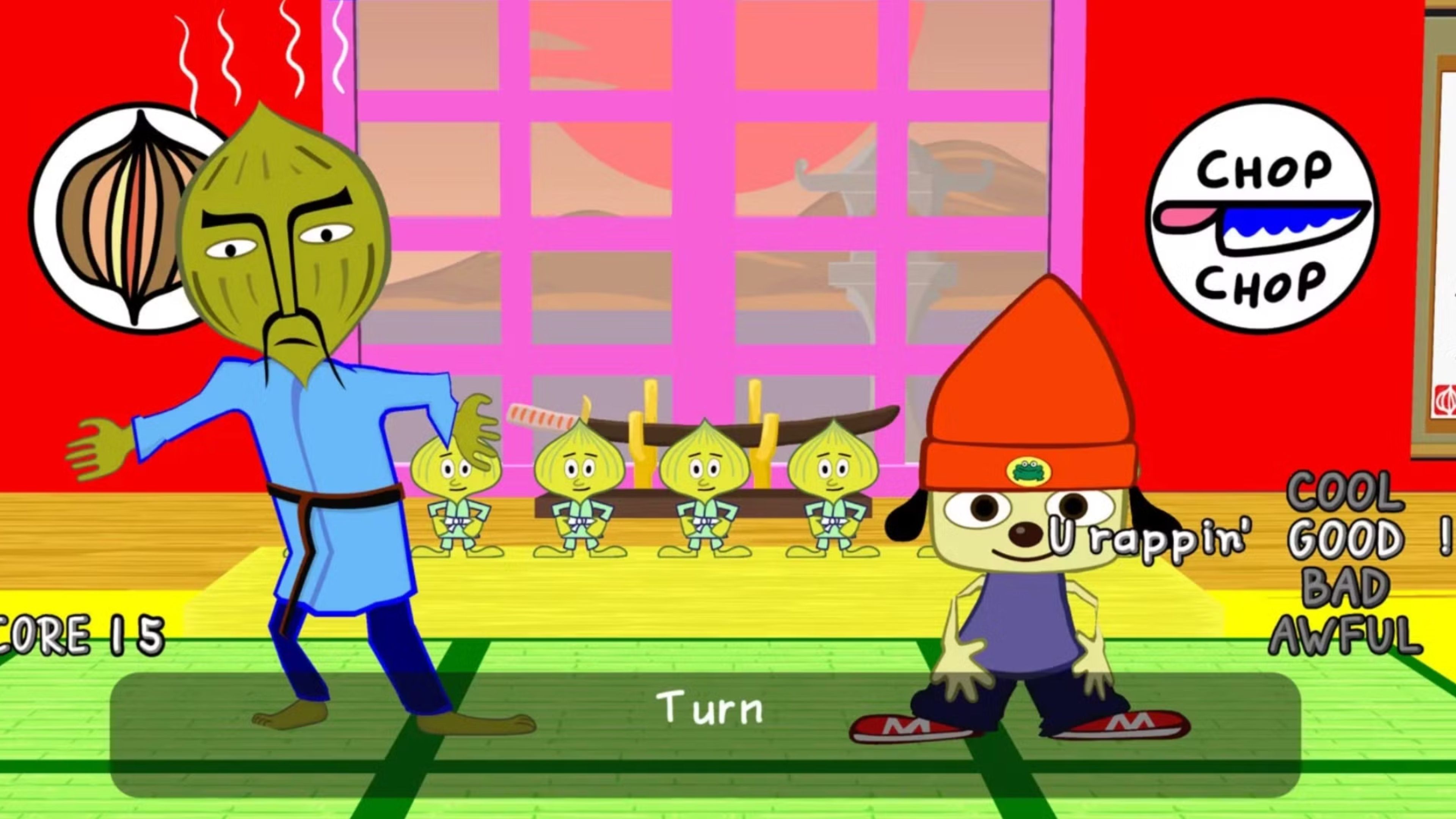
PaRappa the Rapper (1996)
Rhythm Games
- Turned button-timing into a core mechanic synced tightly to music and lyrics.
- Proved rhythm-based gameplay could stand on its own instead of being a side mode.
When PaRappa the Rapper launched, it immediately stood out with its unique style and catchy music. While other music games existed before, they often relied on plastic instruments or were just small parts of bigger games. These earlier titles rarely focused solely on rhythm, and when they did, they were pretty basic. PaRappa revolutionized the genre by making music the central focus of the gameplay.
As a player, it was amazing! You weren’t just playing a rhythm game, you were actually rapping along with the characters, hitting the buttons perfectly in time with the music. The songs felt super responsive to what you did, and honestly, it felt like the timing and the flow of the music was the whole point of the game – it wasn’t just something added on top.
Aeon of Strife (1998)
MOBA
- It introduced hero-focused gameplay with lanes, AI waves, and steady progression, forming the basic structure of modern MOBAs.
- Inspired DotA, League of Legends, and other MOBA giants.
I first discovered Aeon of Strife as a custom map for StarCraft, and it totally blew my mind. It wasn’t about building a base like usual; instead, you controlled one powerful hero and fought with AI-controlled troops. You leveled up your hero, chose skills, and worked with your team to push down lanes. It wasn’t a complete game on its own, but it felt incredibly fresh. It had this really cool competitive feel focused on making your hero stronger, coordinating with teammates, and constantly applying pressure in the lanes. Looking back, it’s clear that this combination of ideas ended up becoming the foundation for the entire MOBA genre – it’s like the DNA of all those games!
The game initially sparked the creation of Defense of the Ancients (DotA) within Warcraft 3. DotA then expanded on the original concept, adding features like item customization, more complex heroes, and better competitive fairness. This, in turn, led directly to the development of popular games like League of Legends, Dota 2, Smite, and essentially launched the entire modern MOBA genre.
Read More
- All Skyblazer Armor Locations in Crimson Desert
- How to Get the Sunset Reed Armor Set and Hollow Visage Sword in Crimson Desert
- All Shadow Armor Locations in Crimson Desert
- Marni Laser Helm Location & Upgrade in Crimson Desert
- All Golden Greed Armor Locations in Crimson Desert
- All Helfryn Armor Locations in Crimson Desert
- Best Bows in Crimson Desert
- Keeping Large AI Models Connected Through Network Chaos
- How to Craft the Elegant Carmine Armor in Crimson Desert
- All Icewing Armor Locations in Crimson Desert
2025-12-03 05:36