It’s common for games to include base building, where players create and improve structures. Ball x Pit did this particularly well, adding it as a fun activity between gameplay runs. Some games go further, asking players to build entire cities. And beyond that, the most ambitious games challenge players to develop a complete culture.
In large strategy games, players often build and manage settlements, helping their populations grow. This can lead to peaceful development or aggressive expansion. These games are usually quite complex, with many different systems to learn and manage, like dealing with natural disasters and carefully using limited resources. Here are a few examples of games that offer this kind of experience.
Civilization 7
A New Way Of Building And Continuing A Culture
The Civilization series of games is all about building and growing a civilization to achieve a specific win condition. If you want a military victory, you’ll need to conquer the capital cities of all other civilizations. For a science victory, you’ll need to be the first to reach major scientific milestones, like building a colony on Mars. However you choose to play, most Civilization games begin similarly: with your first settler searching for the perfect location to found your first city.
As you build your cities and develop new technologies and cultures, your civilization will evolve based on the choices you make. You can choose to expand with many small towns or focus on a few large, advanced ones. You can prioritize a powerful military, or focus on spreading your influence through religion. Different cities can specialize in producing goods, or focus on growing food. In Civilization 7, each new era will allow you to adopt a new civilization, symbolizing the passage of time, while your empire continues to grow and thrive.
Crusader Kings 3
Grand Strategy On A Sizable Scale
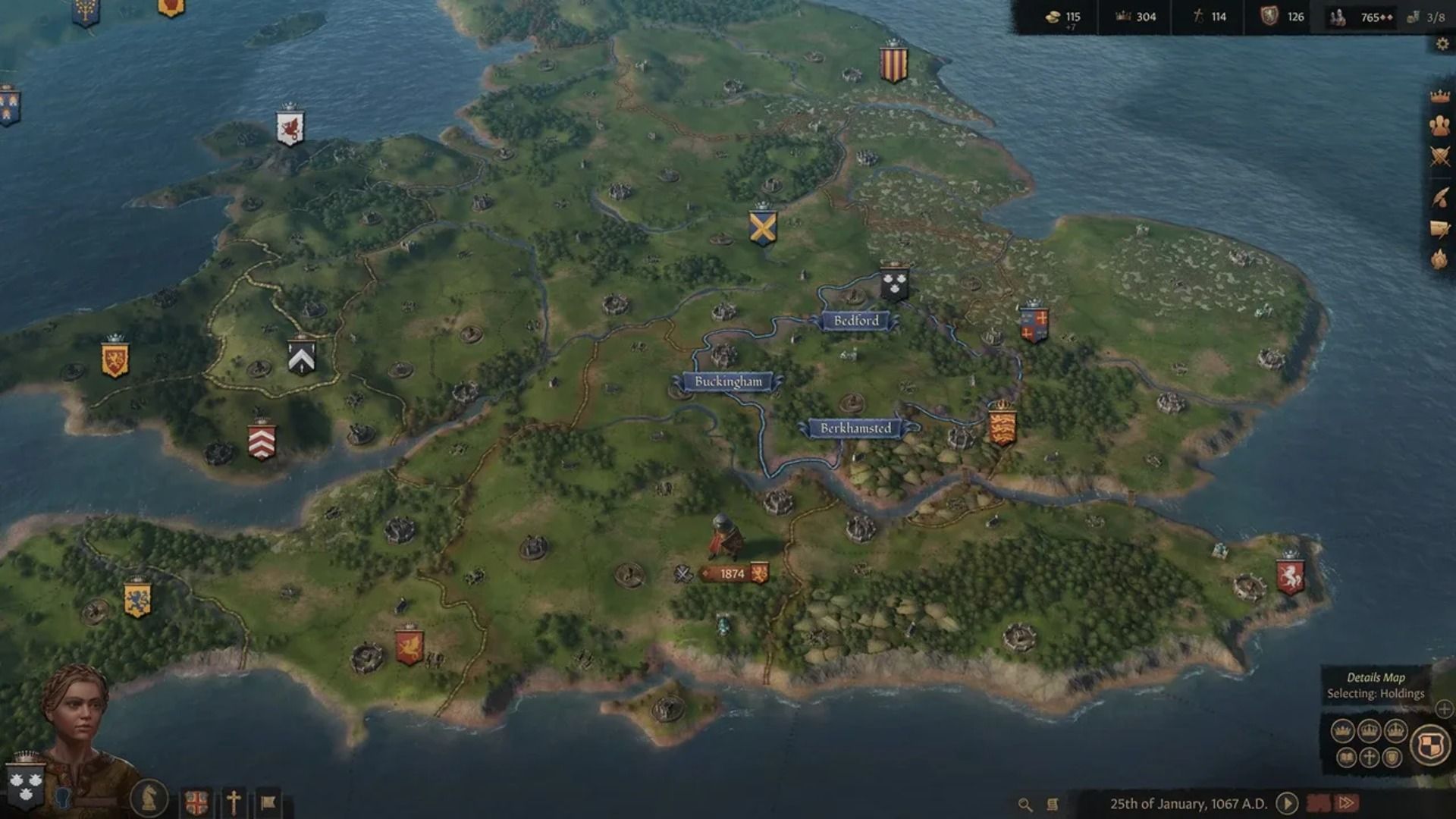
The Medieval era is a popular setting for strategy games, and the Crusader Kings series is a fan favorite. Crusader Kings 3 combines aspects of games like Total War and Civilization, with battles and events like assassinations happening directly on a detailed world map. The core goal is to build a powerful dynasty, leveraging the skills and relationships of your leaders and key figures within your realm.
Ruling a medieval kingdom in this game involves a lot of detailed management. Future updates will add options like designing your throne room to impress visitors and a ‘Grandeur’ system to attract influential figures to your cause. It’s a game for players who enjoy carefully controlling every aspect of their realm – from the religious beliefs of important characters to the taxes collected from different regions. Essentially, you have a vast medieval world to govern and shape.
Humankind
Exploring The Nature Of Humanity
Humankind is very similar to the Civilization series, featuring a world map where you expand your empire. Moving units around the map works much like the familiar ‘hex’ system in Civilization – if you’ve played that game for a long time, you’ll quickly understand how it works. However, Humankind also introduces some new and unique features that make it stand out.
Players generally want to expand their territory, but like the Roman Empire discovered, more land often means more problems. Without strong relationships – both with neighbors and your own population – your growth can be met with resistance. When conflicts do happen, positioning your units strategically is key to gaining an advantage.
Songs Of Syx
Tiny But Mighty
Unlike many grand strategy games, Songs of Syx stands out with its retro pixel art style. Players of the Civilization series are familiar with City-States as helpful additions, offering benefits to those who control them. However, Songs of Syx lets you create your own city-states and build them into powerful entities.
Instead of picking a specific civilization, players choose a race (or a random one), which sets the stage for how they’ll play. For example, humans are good at farming and are intelligent, so you’ll want to build and strategize around those strengths. You then choose a title like ‘The Leader’ or ‘The Negotiator’ to further shape your playstyle. After that, it’s about managing your territory and expanding, with helpful tooltips explaining what each area offers. Songs of Syx has a lot of depth, but once you understand the systems, you can build vast lands and command massive armies – potentially numbering in the thousands.
Stellaris
Develop An Interstellar Empire
I’ve noticed a lot of strategy games let you build empires, and some of the really cool ones take those empires all the way through history – starting way back in ancient times and continuing right up to the present day! But then you have games like Stellaris from Paradox, which take a totally different approach and send you off into the future, building a galactic empire among the stars.
The game challenges you to build a powerful empire in space, and it’s immediately apparent that it’s a deeply complex experience. Different alien species excel in different areas, influencing what roles they can fill, and choosing the right empire-wide policies (called Civics) is crucial – for example, a ‘Police State’ policy can help keep your population content. As you expand, trade, and research advanced technology, traveling between planets becomes as simple as moving units on a map. However, you’ll need to pay close attention to many intricate systems. Your chosen policies can even become unavailable if your empire’s values change, demanding constant attention and strategic planning. Every aspect of your civilization, from basic research to uncovering ancient technologies, requires careful consideration.
Distant Worlds 2
The Vastness Of Space
Many strategy game players enjoy a high level of complexity, valuing deep gameplay and the ability to experiment with numerous systems. Distant Worlds 2 caters to this preference, allowing players to customize almost everything before starting – from the size of the galaxy and research speed, to pirate activity and nebula density. Each playable race has unique victory conditions, but players can also win through economic dominance or territorial control.
The game begins on your species’ home world, which has special characteristics. From there, you’ll explore nearby star systems looking for planets to claim and grow your empire. Taking control of new planets is the main goal, offering fast and significant rewards, but it takes time to develop the infrastructure to expand. Effectively using your current resources and consistently working towards long-term goals are crucial for success. Each species has its own strengths – for instance, the Boskara excel at weapon research and benefit from aggressive expansion. While grand strategy games can sometimes be challenging, there’s always plenty to keep you engaged.
Northgard
Survive The Harsh Viking Age
Like many strategy games, Northgard is set in the past and lets you choose to lead one of several Viking clans. Each clan has unique strengths – for example, the Wolf Clan is strong in combat when expanding into new lands, while the Stag Clan excels at gathering resources. These clans grow based on unique relics and lore, but the game allows you to play how you want, without forcing a specific strategy.
In Northgard, you can build a variety of structures beyond just a base, but each region has building limits, so you’ll need to use your land and resources wisely. The game also features a story mode for players who prefer a structured experience, and you can compete against other clans online for control. While it’s not as expansive as some major strategy games, Northgard provides a thoughtfully designed and balanced strategy experience with plenty to offer.
Populous: The Beginning
The Beginning Of Something Incredible
The 1998 game Populous: The Beginning is a beloved classic that introduced many players to the strategy genre. The feeling of starting from nothing and growing a thriving civilization is truly special. While not the very first Populous game, it was the one that let players control an avatar within the game world, much like the creature in Black & White. This feature set it apart and helped define the series.
The ultimate aim isn’t just dominance on Earth, but across the entire galaxy. Progress centers around expanding your influence by building structures to gather resources, bolster your community, and meet their needs. To advance, you’ll need to overcome other groups on the planet, which means growing faster and strategically overpowering them. Your character will play a key role in this, using a powerful magic system to support your people or directly combat your rivals, depending on the spells you choose.
Read More
- All Skyblazer Armor Locations in Crimson Desert
- One Piece Chapter 1180 Release Date And Where To Read
- How to Get the Sunset Reed Armor Set and Hollow Visage Sword in Crimson Desert
- All Shadow Armor Locations in Crimson Desert
- All Golden Greed Armor Locations in Crimson Desert
- How to Beat Stonewalker Antiquum at the Gate of Truth in Crimson Desert
- Cassius Morten Armor Set Locations in Crimson Desert
- Grime 2 Map Unlock Guide: Find Seals & Fast Travel
- Marni Laser Helm Location & Upgrade in Crimson Desert
- Amber Alert Secrets & CDs In Crime Scene Cleaner Act 2
2025-12-09 14:47