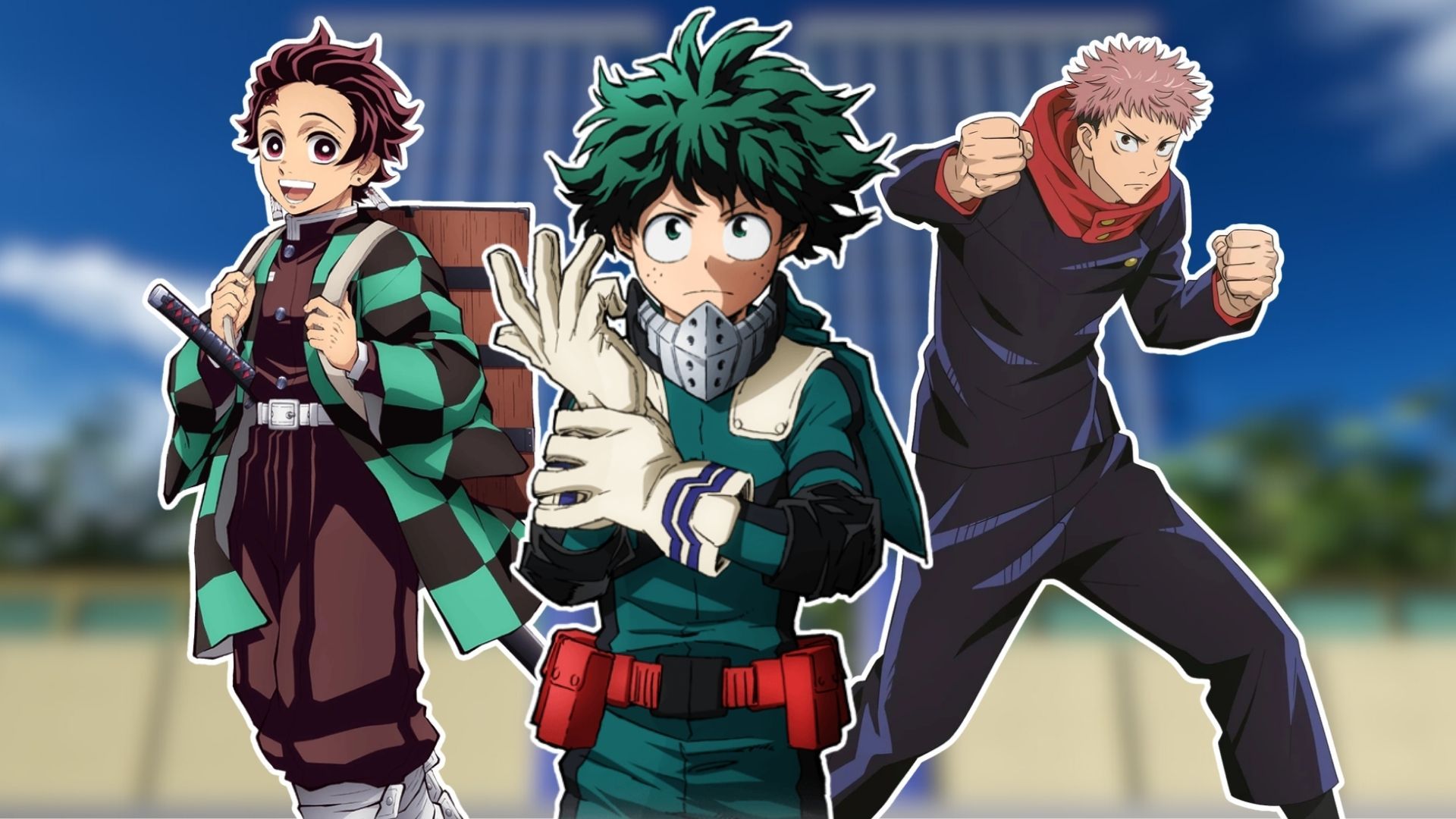
After nearly a decade on television, the My Hero Academia anime has concluded, solidifying its place as a highly popular and impactful shonen series. Adapted from Kohei Horikoshi’s original manga, this superhero story has connected with viewers worldwide, and with good reason.
The big question is: what makes My Hero Academia so popular and influential? While many anime in the action-adventure genre are overlooked, this one truly excels in several ways. Here are eight of the most important reasons why it stands out.
A Kind, Smart, And Complex Main Character
Izuku Midoriya Is Not A Run-Of-The-Mill Shonen Protagonist
Many action-packed anime heroes, or ‘battle shonen’ protagonists, fit into one of two common molds. They’re either a bit clueless and impulsive, but well-intentioned – think characters like Goku, Naruto, and Luffy – or they’re exceptionally kind but lack depth, such as Tanjiro and Itadori. While My Hero Academia‘s main character, Izuku Midoriya (also known as Deku), appears to fit the second type – and actually helped make that archetype popular – he’s surprisingly more nuanced and engaging than he first seems.
Deku is a remarkably intelligent and compassionate character, and when the anime debuted, this felt fresh and new. However, the story gradually reveals a more complex side – he’s also impulsive and pushes himself too hard, often to the point of self-sacrifice. This desire to save everyone frequently leads to both physical and emotional pain. Despite the fantastical setting, Deku is deeply relatable, and his growth as a character is exceptional, surpassing what many other heroes in similar stories achieve.
Subverts Expectations
My Hero Academia Is Not As Generic As It May Initially Seem
Released in 2016, My Hero Academia drew inspiration from the long tradition of action-packed anime and manga that came before it. While the story uses many familiar elements of the genre, it also cleverly twists those expectations, a nuance that many viewers unfortunately missed.
Characters like Katsuki Bakugo and Endeavor are great examples of how My Hero Academia handles complexity. Bakugo starts as a brash rival, but instead of simply changing, he grows into a better version of himself while still maintaining his core personality. Similarly, Endeavor is initially presented as an abusive figure, but the show doesn’t stop there – it explores the consequences of his actions and his efforts to make amends. This mature and nuanced approach to storytelling is what sets the anime apart from many other action-focused shows.
Visuals That Are On Par With The Source Material
The Animation Is As Beautiful As The Art From The Original Manga
Anime adaptations of popular shonen manga can vary greatly in quality. Some, like Demon Slayer, have stunning animation that even improves upon the original manga. Others, such as Tokyo Ghoul or One Punch Man, are visually disappointing, making the manga a better choice. It’s unusual to find a shonen anime that looks as good as its manga source, but My Hero Academia is a well-known example of one that does.
Kohei Horikoshi is a remarkably skilled manga artist, and his work on My Hero Academia is full of incredibly detailed illustrations that brilliantly capture the characters’ movements. The studio Bones, which created the anime adaptation, did a fantastic job bringing these drawings to life. While the anime understandably isn’t as detailed as the manga due to the differences between the two formats, its animation is exceptionally smooth, cinematic, and well-choreographed, earning it a reputation as one of the best in the industry.
A Perfectly Balanced Power System
Quirks Are Neither Too Simple Nor Too Complex
The power systems in action-packed anime like shonen can vary wildly. Some are very simple to understand, such as the Ki energy in Dragon Ball or the breathing techniques from Demon Slayer. Others, like the Nen system in Hunter x Hunter or the Cursed Techniques in Jujutsu Kaisen, are overly complex and difficult to follow. However, the Quirks in My Hero Academia strike a perfect balance. They initially appear straightforward, but as the story unfolds, viewers discover layers of complexity without feeling lost or confused.
People are born with unique abilities called Quirks – these can range from controlling elements and transforming body parts, to mimicking animal characteristics. These powers aren’t fixed; they can be strengthened and developed through training, much like building a muscle, potentially unlocking entirely new skills. Adding to this is the Quirk Singularity Theory, which has significant implications for the series’ overall story and world.
The Most Heroic And Inspirational Music
My Hero Academia Has One Of The Best Anime Soundtracks Of All Time
Beyond its fantastic animation, voice acting, and storytelling, My Hero Academia really shines because of its music. The show’s soundtrack, primarily created by Yuki Hayashi, is widely considered one of the greatest original scores ever made for anime.
I’m absolutely obsessed with the music in this show! While the background music perfectly enhances all the funny and emotional scenes, it’s the action tracks that really get me going. Songs like ‘You Say Run’ and ‘HERO A’ are just so epic and inspiring – they genuinely give me chills, and I see everyone online feeling the same way! Plus, can we talk about how My Hero Academia has fourteen different opening themes? And honestly, they’re all incredible and totally worth a listen, even if you’re not watching the show!
It’s Perfect For Fans Of Western Superheroes
The Timing Of My Hero Academia’s Release Couldn’t Have Been Better
I still remember when My Hero Academia first came out in 2016! It was such a great time for superhero stories, with the Marvel Cinematic Universe absolutely dominating everything. Western superheroes were huge, and a lot of us who’d seen all the Marvel and DC movies were really looking for something similar in anime. My Hero Academia felt like exactly that – a fresh, exciting new series that was easy for anyone to jump into and immediately love. It really captured the mainstream audience at the perfect moment!
I’ve noticed a clear influence of American comic books in My Hero Academia, and it seems completely deliberate. Kohei Horikoshi, the creator, has openly talked about being a fan of Marvel and DC heroes like Spider-Man and Batman, and drawing inspiration from them. What sets My Hero Academia apart from other superhero anime is that it looks to Western sources for its style. Many other anime in the shonen genre either aren’t focused on superheroes, or they tend to celebrate Japanese heroes like Kamen Rider and Super Sentai. My Hero Academia, though, feels like it’s aiming for something with wider, more international appeal.
A High-Quality Spin-Off Series
Vigilantes Is Nearly On The Same Level As The Original My Hero Academia Anime
It’s rare for a spin-off anime to reach the same level of success as the original, especially in the action-packed ‘battle shonen’ genre. Some spin-offs, like Attack on Titan: Junior High and Rock Lee & His Ninja Pals, are intentionally lighthearted and comedic. However, many sequels, such as Boruto and Yashahime: Princess Half-Demon, have disappointed fans.
While many spin-offs don’t live up to the original, My Hero Academia: Vigilantes is a standout exception. Some fans actually prefer it to My Hero Academia! Based on the manga by Hideyuki Furuhashi and Betten Court (with supervision from Horikoshi), Vigilantes follows a team of unlicensed heroes who fight crime and work to dismantle a dangerous trafficking ring. It offers a grittier, more realistic look at the My Hero Academia universe, expands on characters and storylines that felt underdeveloped in the main series, and feels genuinely new and exciting.
Elevated The Manga’s Ending
The Anime’s Ending Was Universally Beloved
After the final chapter of the My Hero Academia manga was released in 2023, many fans expressed disappointment with the ending. Some found the last story arcs confusing and felt that Deku’s journey didn’t have a satisfying conclusion. However, when the anime adapted the ending in late 2025, the reaction from viewers was much more positive.
The ending of the My Hero Academia anime sparked far less controversy than the manga’s conclusion. Several factors likely contributed to this difference. The anime’s use of animation, music, and voice acting effectively heightened the emotional impact of crucial scenes. Additionally, the studio Bones made helpful changes to the story, reinforcing its themes and overall narrative. Interestingly, manga fans didn’t embrace the ending until an extra chapter (431) was released months later. Anime viewers, however, generally loved it immediately, even though this extra chapter won’t be adapted into an animated OVA titled My Hero Academia: MORE until May 2026.
Read More
- Re:Zero Season 4, Episode 6 Release Date & Time
- NTE Drift Guide (& Best Car Mods for Drifting)
- How to Get the Wunderbarrage in Totenreich (BO7 Zombies)
- How to Beat Turbines in ARC Raiders
- All Aswang Evidence & Weaknesses in Phasmophobia
- How to Get Necrolei Cyst & Strong Acid in Subnautica 2
- Diablo 4 Best Loot Filter Codes
- Alan Wake Event in Phasmophobia, Explained
- Brent Oil Forecast
- How to Craft Repair Tools in Subnautica 2
2026-01-13 20:36