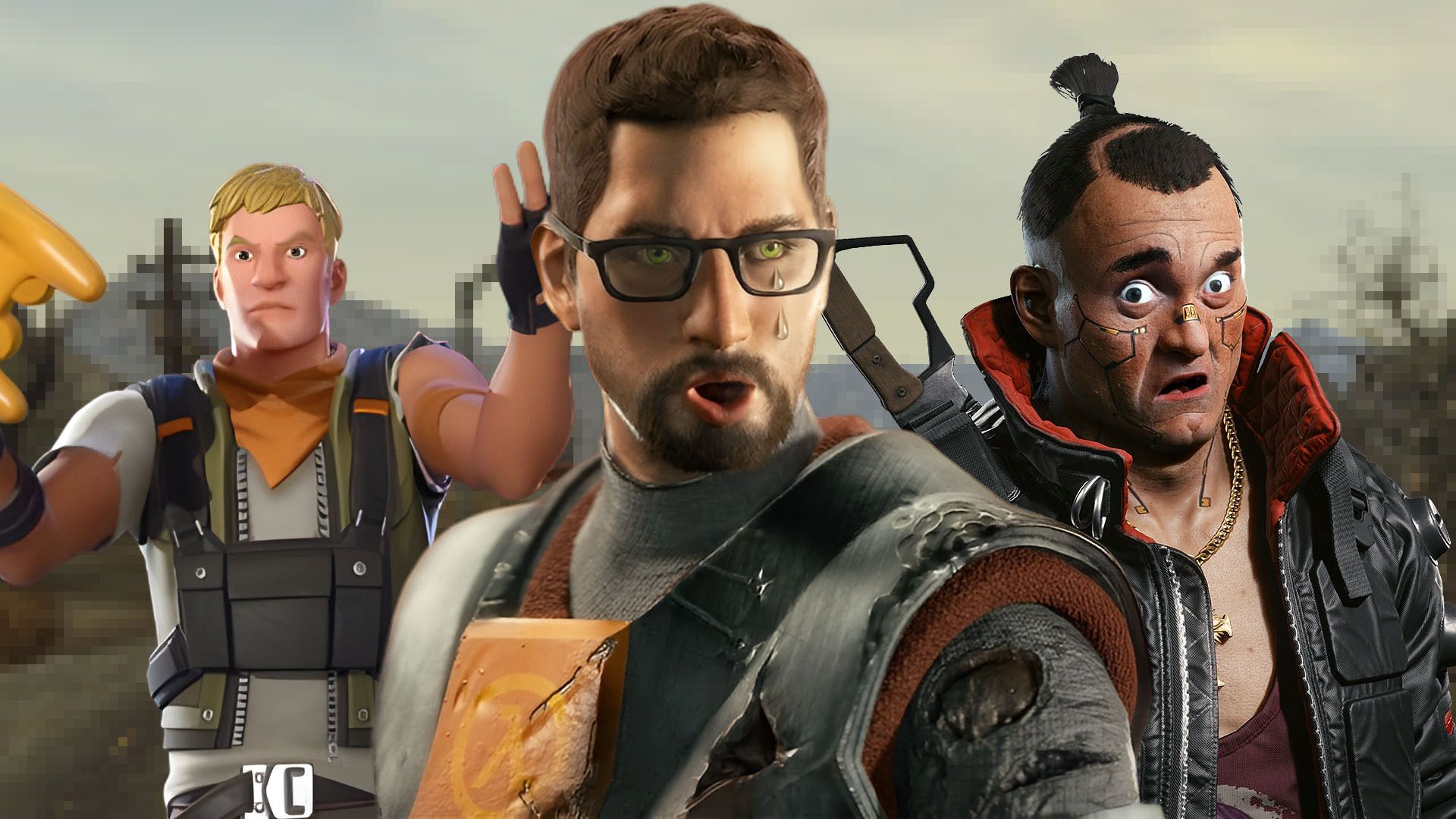
The world is changing rapidly, and that’s impacting the tech and gaming industries. Economic shifts and the rise of AI are influencing how game studios and publishers operate, and ultimately, how we experience games. While the industry is facing challenges and adjusting to these changes, there’s also some good news. We’re seeing more support for independent game developers as players become increasingly dissatisfied with big-budget, mainstream titles.
Gaming is a fantastic hobby with tons of great games, but lately there’s been a lot to frustrate players. These frustrations range from major issues like how games are monetized to smaller annoyances, such as unskippable cutscenes. Let’s explore what gamers are collectively getting tired of seeing in video games and the industry as a whole.
Bullet Sponge Enemies At High Difficulty
Artificial Difficulty Is Uninspiring
We’ve all been there: a game feels too simple, so we try making it harder. But often, increasing the difficulty doesn’t make enemies more intelligent – it just gives them a lot more health. This turns fights into drawn-out, boring sessions where you just have to hit things repeatedly and use more items to survive, with no real need for clever tactics.
Okay, so I’m not exactly a pro gamer – I usually play on easier settings! But when I do challenge myself, I really love it when enemies feel smart and actually use everything they’ve got. And honestly, Baldur’s Gate 3 does a great job of that. I tried Honour Mode, and wow, the enemies will absolutely try to trick you and aren’t afraid to use every single ability. They do get extra health, yeah, but it’s the little things – like bosses getting extra actions and just being generally more aggressive – that really make the difference and you feel it in every fight.
Slow-walking Next To NPCs
The Awkwardness Of Having To Match Their Pace
It’s a small frustration, but most gamers have probably felt it: you’re asked to follow an NPC during a quest, but they move so slowly you constantly have to slow down or stop. It’s even more annoying when games deliberately limit your speed to force you to stay behind them.
Often during these parts of games, I find myself hoping they’d just show everything as a cutscene – as long as I don’t have to actively play. Otherwise, I wish the characters walking with me would just hurry up and keep pace! Many games already make companions speed up to match your movement, so it seems like a simple fix for quest NPCs too. I’m not a developer, though, so I’m sure there are technical reasons why it’s not always possible.
Long Development Times
A Double-Edged Sword
Over the past decade or so, we’ve seen many highly anticipated games take years – or even seem stuck in – development. Titles like The Elder Scrolls 6, Fallout 5, Half-Life 3, and GTA 6 are prime examples. While it’s definitely crucial for games to be fully polished before release – as we saw with the issues surrounding Cyberpunk 2077 – the length of time these games spend in development is still surprisingly long.
Fans often wait years for even a glimpse of gameplay, a trailer, or solid information about a beloved game. Considering how much time passes, it’s strange to think about where fans will be in their lives when the game finally arrives – some may have moved on with their lives, finished school, or started families. While certain games are sure to draw back even lapsed players, there’s a danger that a very long wait could diminish a series’ popularity. However, I’m confident this won’t happen with the most hyped titles, and I still believe it’s a good thing that developers are taking their time to create a polished game, while also keeping players informed through social media and interviews.
Too Many Launchers
Why Do We Need This Many, Again?
Having a single company dominate any market isn’t ideal, and with so many different game launchers now, it’s worth questioning what they’re trying to achieve. It’s frustrating to be forced to download another program just to play a specific game. Games from Blizzard, the Sims series, and Fortnite are particularly known for requiring their own launchers.
It’s frustrating when so much extra software clutters your computer, especially if you only need it for a couple of games. This trend of needing multiple launchers doesn’t seem likely to stop, particularly for online games, but hopefully we’ll eventually be able to play all our games through just one or two main platforms.
Large, Empty Worlds
The Biggest Open-World Environments Are Not Always The Best
Open world games became incredibly popular, leading many developers to create huge game worlds. While a large world isn’t inherently bad, many recent games haven’t filled those worlds with meaningful content. Too often, games promote their large maps without offering players a reason to explore them. We might be seeing a change, with more games opting for focused, story-driven experiences or smaller, interconnected areas instead.
Players generally don’t mind exploring smaller, carefully designed worlds if the story and gameplay are strong. Truly vast, endless worlds tend to only work well in games focused on building and crafting, like Minecraft. Starfield is a prime example of how automatically generated worlds often clash with what players expect from a role-playing game.
Repeatable, Samey Quests
They Feel Like A Chore, Not An Experience
Many large video games include tasks like collecting items, completing simple errands, or repeating the same quest in different areas. These are often called ‘busywork’ – things you do if you want a break or need to gather resources. While they can be enjoyable at first, they quickly become repetitive when they’re just the same task repeated in different locations.
When I think of endlessly repeatable quests, the radiant quests in Skyrim immediately come to mind – you can just keep doing them over and over. Even the NCPD alerts in Cyberpunk, while exciting at first, become repetitive pretty quickly. Generally, you’re not required to do these side quests, but I’d love to see developers come up with more creative or original ideas for them.
Games Releasing In An Unfinished State
Maybe We Do Need Long Development Times After All
As a PC gamer, I’ve been really frustrated over the last ten years with how many major games launch with serious performance issues. They often run poorly on PC, and it usually falls to fans and modders to fix the optimization problems in the weeks after release. Sometimes, the only solution is to wait months for official patches and fixes. It’s gotten to the point where I expect to wait six months, or even years, before a new game will actually run well on my computer. Because of this, I’ve started buying new releases on PS5, but even that doesn’t always guarantee a smooth experience.
It’s concerning that PC parts are becoming less affordable, especially with RAM prices increasing so much. This likely means more gamers will turn to consoles to play the games they’re most excited about. We can also expect fewer pre-orders and quieter launches for PC games, as players are increasingly wary of new releases and frustrated with high prices – we’ll discuss that more shortly.
Long, Unskippable, And Unpausable Cutscenes
Suddenly, We’re At The Movies
I enjoy a well-made cutscene and always watch them when I first play a game. However, games should let you pause them, especially longer ones like end sequences or big reveals that players won’t want to miss. It’s frustrating to have to search for a cutscene online just because you got interrupted.
The unskippable cutscenes are a major frustration, especially when they repeat after each death – like when facing bosses such as Yunalesca. These repetitive moments can discourage players from starting a new game or New Game Plus if they know they’ll be forced to watch the same scenes again and again.
Rising Video Game Prices
New Releases Are A Luxury
Lately, gamers have been talking a lot about rising prices, especially for big-budget, new games. This, combined with issues like poor performance and optimization – particularly on PCs – is making people hesitant to pre-order games. To make matters worse, we’re seeing a trend called ‘shrinkflation,’ where game content doesn’t seem to match the cost, meaning you’re getting less for your money.
Many new game releases are now costing up to $90, almost $100, which is forcing players to choose between entertainment and essential expenses like groceries. While these high prices are frustrating, they’re also drawing more attention to less expensive indie games, increased sales, and subscription services like Game Pass, offering alternative ways to access new titles.
Limited-Time Events And Manufactured FOMO
You Had To Be There
Many online games use limited-time events to keep players engaged. These events offer exclusive items like outfits or weapons, creating a sense of urgency – play during the event, or miss out! While some might see it as a tactic to maintain excitement and prevent lulls in activity, it’s become almost standard practice for games that are constantly updated and maintained.
However, this approach is really frustrating for players who don’t have a lot of free time. Not everyone can play every day, and using this to create a fear of missing out understandably makes players feel like their time and money aren’t valued. It can genuinely feel like a game is taking over your life when you’re pressured to constantly participate in events and challenges to get everything on offer.
Read More
- Forza Horizon 6: Find the Ohtani Treasure Chest Location
- NTE Drift Guide (& Best Car Mods for Drifting)
- LEGO Batman Legacy of the Dark Knight Batcave Minikits & WayneTech Caches
- Sega’s “Super Game” is Said to Release Next Month, But Nothing is Known About It
- How to Open Locked Door in Tenryu River in Nioh 3 (Dirty Key)
- Skyblivion Gets Encouraging Development Update
- New Steam Game is Like Pokemon If It Were a Sci-fi Shooter
- Dead as Disco Best Songs (Clear Beats & Stable BPMs)
- Asmongold reveals shocking detail about how much money he makes
- GameRant Daily Crossword (February 10, 2026)
2026-01-18 14:40