Author: Denis Avetisyan
A novel quantum neural network architecture demonstrates improved anomaly detection in smart grid systems, offering enhanced resilience against increasingly sophisticated cyber threats.
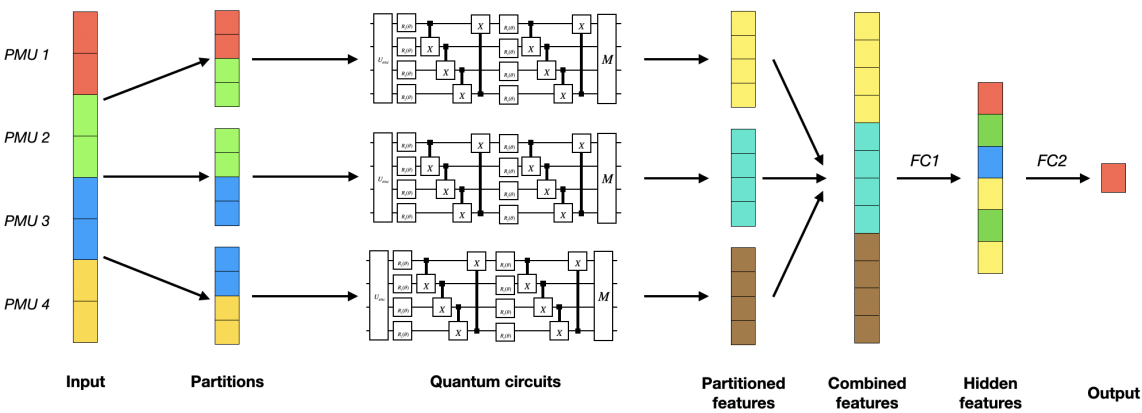
This review details QUPID, a partitioned quantum neural network leveraging complex-valued data and differential privacy to achieve robust anomaly detection and adversarial robustness in smart grid applications.
While smart grid infrastructures offer revolutionized energy distribution, their increasing complexity demands more robust anomaly detection methods resilient to both systemic failures and malicious cyber-physical attacks. This work introduces ‘QUPID: A Partitioned Quantum Neural Network for Anomaly Detection in Smart Grid’, a novel partitioned quantum neural network demonstrating superior performance to traditional machine learning models in identifying anomalies. By leveraging quantum-enhanced feature representations and a scalable partitioning framework, QUPID not only improves detection accuracy but also exhibits enhanced robustness against adversarial manipulation and integrates differential privacy. Could this approach pave the way for truly secure and reliable smart grid operations in an increasingly interconnected world?
The Evolving Threat Landscape of Modern Smart Grids
Modern smart grids, while promising increased efficiency and reliability, present a growing attack surface for malicious actors and are increasingly susceptible to disruptive anomalies. These systems, characterized by intricate networks of sensors, actuators, and communication channels, are designed to dynamically optimize power delivery; however, this complexity introduces vulnerabilities. Anomalies – ranging from equipment failures and cyber intrusions to unpredictable demand surges – can propagate rapidly through the grid, potentially causing cascading failures, widespread blackouts, and significant economic damage. The integration of renewable energy sources and distributed generation further complicates matters, introducing intermittent and less predictable data streams that exacerbate the challenge of identifying and isolating these disruptive events. Consequently, maintaining the stability and security of modern power infrastructure requires proactive and sophisticated anomaly detection capabilities.
Conventional machine learning techniques, frequently employed for identifying unusual patterns in smart grid data, often falter when faced with the sheer complexity of these modern systems. The data generated by smart grids is not only vast in volume – representing countless sensors and devices – but also exists in a high-dimensional space, making it difficult for algorithms to discern genuine threats from normal operational fluctuations. Furthermore, the nature of cyberattacks is constantly changing; adversaries are adept at crafting new and sophisticated attack vectors that bypass previously effective detection methods. This creates a perpetual challenge, as models trained on historical data may quickly become obsolete when confronted with previously unseen anomalies, highlighting the need for more adaptive and intelligent anomaly detection strategies capable of learning and evolving alongside emerging threats.
The uninterrupted operation of critical infrastructure, encompassing power grids, water treatment facilities, and communication networks, is fundamentally reliant on the swift and accurate identification of anomalous activity. These systems, increasingly interconnected and digitized, present expanding surfaces for both unintentional failures and malicious cyberattacks; therefore, conventional anomaly detection techniques are proving inadequate. A shift towards more robust and adaptive approaches is not merely beneficial, but essential for preserving system reliability and preventing cascading failures that could have widespread societal and economic consequences. This demands methodologies capable of learning from evolving data patterns, accommodating system complexities, and effectively distinguishing between benign variations and genuine threats – a continuous process of refinement and innovation is paramount to safeguarding these vital networks.
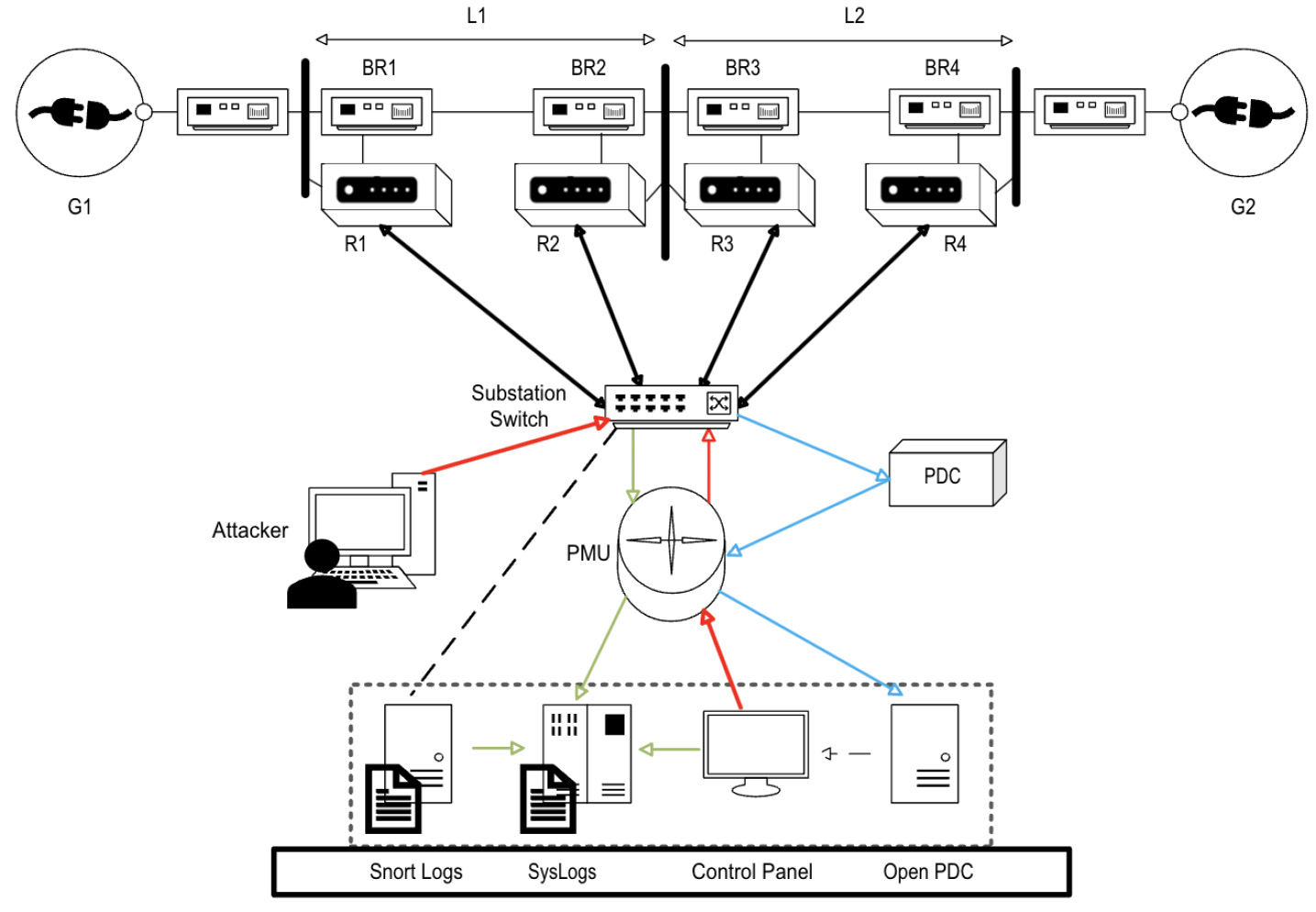
QUPID: A Quantum-Inspired Architecture for Enhanced Anomaly Detection
QUPID represents a departure from conventional anomaly detection techniques applied to smart grid data, which often struggle with the high dimensionality and complex correlations inherent in these systems. Traditional machine learning algorithms can be computationally expensive and may fail to generalize effectively to unseen anomalies. QUPID addresses these limitations by leveraging the principles of quantum computation to create a neural network architecture specifically tailored for smart grid applications. This quantum approach allows for the potential to process and analyze data in ways that are intractable for classical computers, ultimately improving the accuracy and efficiency of anomaly detection, and enabling faster responses to potential grid disturbances.
QUPID’s partitioning scheme addresses the computational challenges inherent in smart grid anomaly detection by dividing the input data into smaller, more manageable subsets. This approach reduces the overall computational complexity from O(n^2) to O(n), where ‘n’ represents the number of data points, significantly improving processing speed for large datasets. By distributing the computational load across these partitions, QUPID achieves enhanced scalability, allowing it to effectively analyze complex smart grid data with a greater number of variables and data points without substantial increases in processing time or resource requirements. This partitioning also facilitates parallel processing, further contributing to improved efficiency and faster anomaly detection.
QUPID employs Amplitude Encoding to translate classical smart grid data – such as voltage, current, and frequency measurements – into quantum states, where the amplitude of each state represents the data’s value; this allows for a more compact representation of high-dimensional data compared to classical methods. The encoded data is then processed by Variational Quantum Circuits (VQCs), parameterized quantum circuits designed to learn complex patterns through iterative optimization. These VQCs utilize adjustable quantum gates, and their parameters are optimized using classical optimization algorithms to minimize a cost function related to anomaly detection. This combination of Amplitude Encoding and VQCs facilitates the identification of subtle anomalies and improves pattern recognition capabilities compared to traditional machine learning approaches for smart grid data analysis.
Fortifying Resilience: Defending Against Sophisticated Adversarial Attacks
Anomaly detection systems are susceptible to adversarial attacks, where malicious actors intentionally craft data points designed to evade detection or trigger false positives, compromising system integrity. These attacks exploit vulnerabilities in the detection algorithms, potentially leading to significant operational and security failures. QUPID mitigates this threat through the implementation of novel defense mechanisms. These techniques focus on increasing the robustness of the anomaly detection process against subtle, carefully constructed perturbations in input data, ensuring reliable performance even under adversarial conditions. Specifically, QUPID employs methods to identify and neutralize adversarial examples, reducing their impact on detection accuracy and maintaining the overall security of the system.
R-QUPID enhances anomaly detection system resilience by incorporating quantum noise via the Depolarizing Channel. This channel introduces controlled randomness to the detection process, effectively perturbing input data and disrupting adversarial attacks designed to exploit deterministic system behavior. The Depolarizing Channel operates by randomly flipping bits within the input with a defined probability, thereby reducing the effectiveness of precisely crafted adversarial examples. This technique introduces a quantifiable level of noise, making it significantly more difficult for attackers to consistently evade detection without being flagged by the increased uncertainty inherent in the system’s responses. The level of noise introduced is a configurable parameter, allowing for a trade-off between robustness and detection accuracy.
R-QUPID incorporates an extension of Differential Privacy (DP) to safeguard the confidentiality of data used in smart grid anomaly detection. This implementation ensures that the participation of any single data point has a limited effect on the output of the anomaly detection system, thereby preventing the identification of individual contributions and protecting sensitive information such as energy consumption patterns or device statuses. The DP mechanism adds calibrated noise to the detection process; the level of noise is carefully controlled to satisfy a specified privacy parameter ε, while simultaneously minimizing the impact on the overall accuracy of anomaly detection. This approach enables data utility for security applications without compromising the privacy of individual smart grid components or consumers.
Towards a Resilient Future: Validation and Expanding the Horizon
Rigorous evaluation of QUPID, utilizing the widely recognized ICS Dataset, substantiates its enhanced capabilities in identifying anomalous activity within smart grid systems when contrasted with conventional machine learning approaches. Results indicate QUPID achieves an accuracy rate reaching up to 81%, consistently exceeding the performance of baseline models by approximately 10% across various simulated scenarios. This improvement signifies a substantial advancement in the reliable detection of cyber threats and operational irregularities, potentially bolstering the resilience and security of critical energy infrastructure. The demonstrated accuracy provides a strong foundation for QUPID’s practical application in safeguarding smart grids against evolving challenges.
The effectiveness of QUPID in identifying malicious activity within smart grid data is notably demonstrated by its consistently high Area Under the Receiver Operating Characteristic Curve (ROC-AUC) scores. This metric quantifies a model’s ability to distinguish between normal and anomalous system behavior, and QUPID’s superior performance suggests a more refined discrimination capability than traditional machine learning approaches. Crucially, this advantage is particularly pronounced when dealing with imbalanced datasets – a common characteristic of smart grid security, where legitimate operations far outnumber attacks. This resilience to data imbalance means QUPID minimizes false negatives, offering a more reliable detection rate and reducing the risk of overlooking critical security breaches, even when attacks are rare events.
Evaluations across fifteen distinct scenarios reveal QUPID’s robust capabilities in identifying critical anomalies within smart grid data; it achieved the highest recall in a majority – ten of the tested situations – indicating a superior ability to correctly identify positive instances of malicious activity. Importantly, this performance isn’t diminished by imbalanced datasets, a common challenge in intrusion detection, as evidenced by consistently higher Matthews Correlation Coefficient (MCC) and G-Mean values. Even when subjected to adversarial attacks, specifically Fast Gradient Sign Method (FGSM) and Projected Gradient Descent (PGD), the resilient variant, R-QUPID, maintains approximately 81% accuracy – a significant improvement of 5-10% over existing baseline models and suggesting a strong defense against intentional manipulation of input data.
Continued development of QUPID centers on harnessing the potential of near-term quantum computing to further enhance its capabilities. While currently executable on classical hardware, optimization for quantum devices promises accelerated processing and the ability to tackle increasingly complex anomaly detection challenges within smart grid infrastructure. This includes expanding QUPID’s threat detection repertoire to encompass novel attack vectors and vulnerabilities as they emerge – a critical necessity given the evolving cybersecurity landscape. Researchers aim to integrate advanced machine learning techniques and real-time data analytics, allowing QUPID to not only identify anomalies but also predict potential disruptions and proactively bolster grid resilience against both conventional and quantum-enabled threats.
The development of QUPID exemplifies a systemic approach to anomaly detection, mirroring the belief that a holistic understanding is crucial for effective design. This partitioned quantum neural network doesn’t merely address the what of identifying anomalies in smart grids, but also the how – integrating quantum and classical noise to fortify against adversarial attacks. As Donald Davies observed, “Simplicity is a prerequisite for reliability.” QUPID’s architecture, while leveraging complex quantum principles, is fundamentally built on partitioning – a clear simplification that enhances both robustness and the potential for scalable implementation within critical infrastructure. The system’s success stems from recognizing that structure dictates behavior, and a carefully considered structure is essential for managing complexity.
Future Currents
The promise of quantum machine learning lies not simply in accelerating existing algorithms, but in fundamentally reshaping how systems perceive and respond to complexity. QUPID’s partitioned architecture offers a glimpse of that potential, demonstrating resilience against adversarial manipulation-a critical concern for infrastructure dependent on data integrity. However, the boundaries of these partitions, while currently effective, remain largely empirical. Systems break along invisible boundaries-if one cannot see them, pain is coming. Future work must focus on a theoretical understanding of why this partitioning succeeds, moving beyond performance metrics to establish principles of robust quantum system design.
The current reliance on classical noise for adversarial training, while pragmatic, hints at a deeper limitation. True quantum robustness should arise from the inherent properties of the quantum state itself, not from mimicking classical defenses. Exploring the interplay between quantum entanglement, superposition, and system partitioning-how information flow is constrained and protected-will be crucial. The differential privacy aspect, though present, is similarly a classical overlay; integrating privacy directly into the quantum circuit architecture remains a significant challenge.
Ultimately, the question is not merely “can a quantum neural network detect anomalies?” but “can it anticipate them?” The ability to model not just known threats, but the potential for unforeseen disruptions, demands a shift from reactive to predictive security. This requires moving beyond pattern recognition to true system-level understanding – recognizing that structure dictates behavior, and vulnerabilities are often hidden in the architecture itself.
Original article: https://arxiv.org/pdf/2601.11500.pdf
Contact the author: https://www.linkedin.com/in/avetisyan/
See also:
- Forza Horizon 6: Find the Ohtani Treasure Chest Location
- LEGO Batman Legacy of the Dark Knight Batcave Minikits & WayneTech Caches
- NTE Drift Guide (& Best Car Mods for Drifting)
- Diablo 4 Best Loot Filter Codes
- Boruto: Ikemoto Has Already Hinted At Sasuke’s New Eye After Return
- USD RUB PREDICTION
- Cookie Run Kingdom Timeline of Fate Update Guide
- Top 10 Must-Watch Isekai Anime on Crunchyroll Revealed!
- Deltarune Chapter 1 100% Walkthrough: Complete Guide to Secrets and Bosses
- Starsand Island’s Rarest Achievements and How to Earn Them
2026-01-19 17:54