Author: Denis Avetisyan
Optimizing modulation schemes for power consumption, alongside traditional metrics, is becoming increasingly critical for the future of wireless networks.
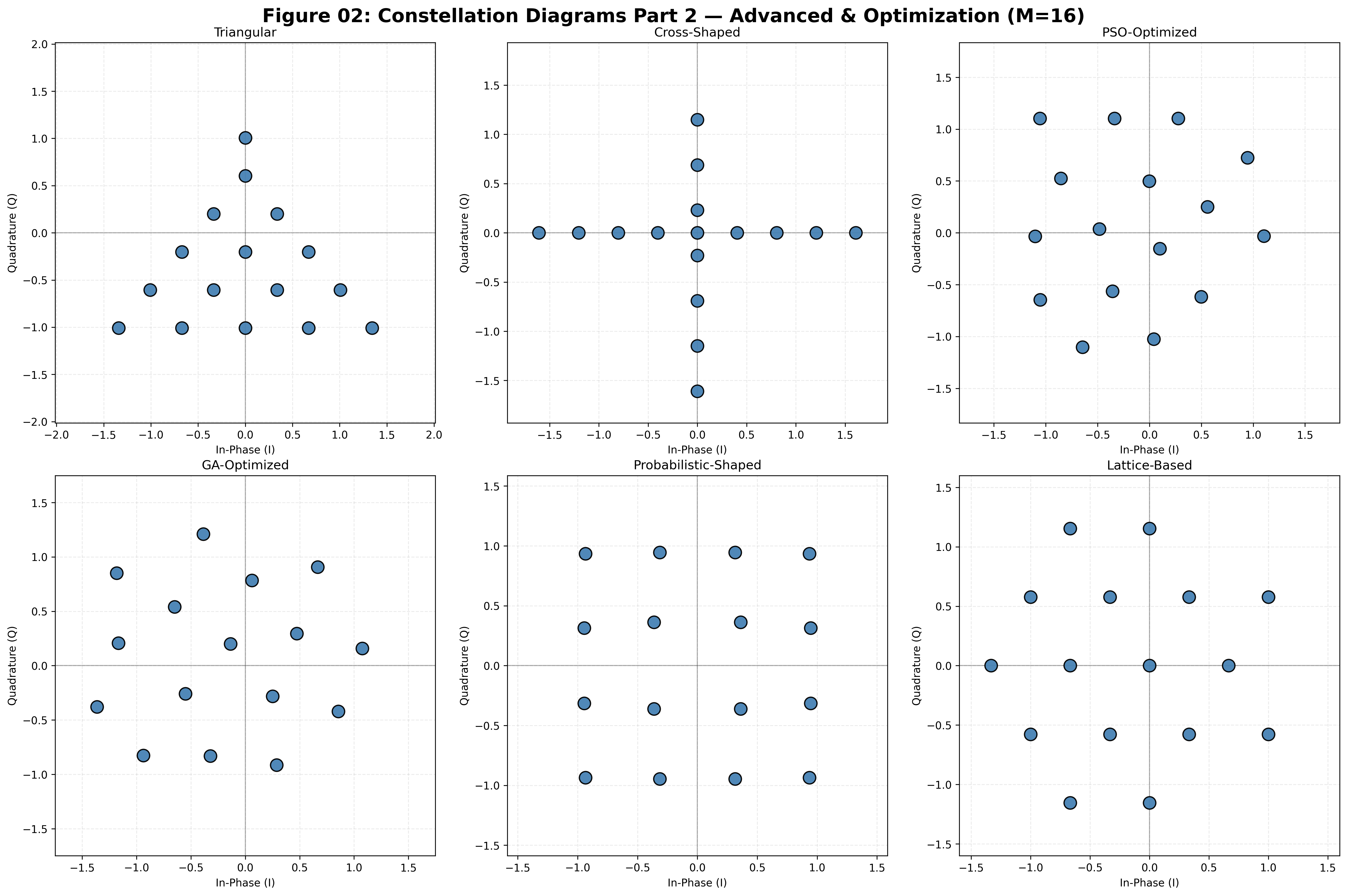
This review details advanced constellation shaping techniques and simulation methodologies, including the application of machine learning to optimize modulation for fading channels and improve energy efficiency.
While conventional modulation schemes prioritize spectral efficiency and error rates, achieving optimal energy efficiency remains a significant challenge in modern digital communications. This is addressed in ‘Alternative Shapes of Modulation Schemes Detailed Exposition and Simulation Methodology’, which presents a comprehensive study of non-traditional constellation designs-including lattice-based, asymmetric, and machine learning-assisted approaches-evaluated under realistic channel conditions and hardware constraints. Our findings demonstrate that prioritizing energy efficiency alongside reliability can yield substantial savings, and that machine learning offers a flexible framework for jointly optimizing these competing objectives. Could intelligently shaped modulation constellations pave the way for truly sustainable and high-performance wireless communication networks?
The Limits of Efficiency: A Fundamental Trade-off
Binary Phase-Shift Keying (BPSK), a cornerstone of digital communication due to its resilience against noise, transmits each data bit using one of two distinct signal phases. However, this simplicity comes at a cost: spectral efficiency. Each symbol in a BPSK system carries only one bit of information, meaning a wider bandwidth is required to transmit a given data rate compared to more complex modulation schemes. This limitation becomes particularly pronounced in modern communication systems demanding ever-increasing data throughput, such as 5G and beyond. While robust, BPSK’s inherent inefficiency necessitates exploration of higher-order modulation techniques that pack more bits per symbol, effectively utilizing the available bandwidth and enabling faster data transmission rates – a crucial factor in meeting the demands of contemporary wireless networks.
To dramatically increase data transmission speeds without expanding the bandwidth allocated for communication, researchers are actively exploring advanced constellation designs and signal shaping techniques. Traditional quadrature amplitude modulation (QAM) constellations, while effective, have inherent limitations in packing data points closely without increasing the likelihood of error. Innovative approaches involve moving beyond rectangular QAM to non-uniform constellations and employing sophisticated signal shaping filters – such as those utilizing sinc functions or Gaussian pulses – to minimize intersymbol interference. These methods strive to maximize the theoretical spectral efficiency – measured in bits per second per Hertz (bps/Hz) – by carefully sculpting the transmitted signal’s power spectral density and optimizing the distance between signal points within the constellation, ultimately pushing the boundaries of how much information can be reliably conveyed within a given frequency range.
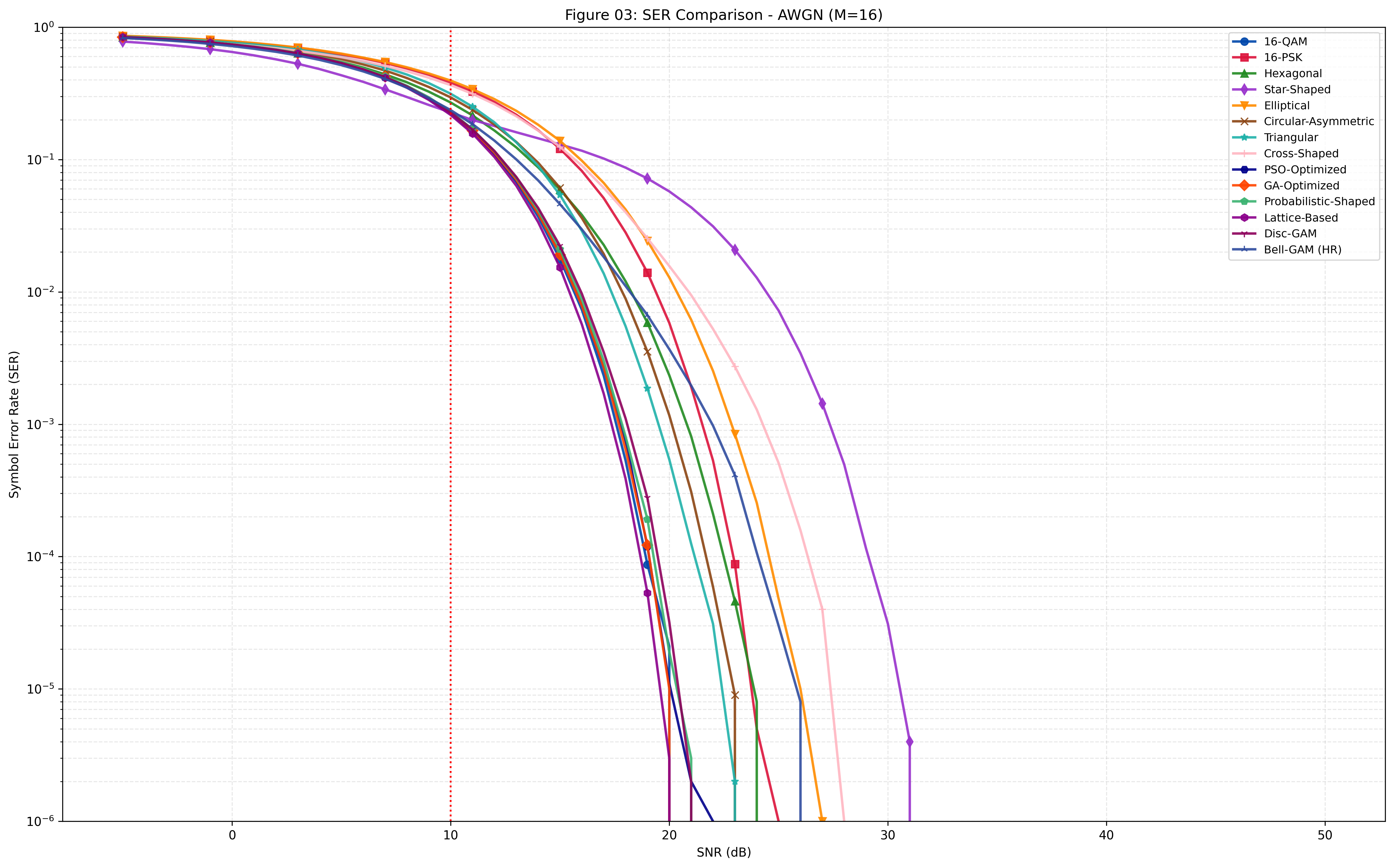
The Additive White Gaussian Noise (AWGN) channel serves as a foundational model in communication systems, revealing the inherent difficulties in reliably transmitting information. This theoretical channel, characterized by noise uniformly distributed across all frequencies, provides a simplified yet powerful benchmark against which new modulation and coding schemes are evaluated. While idealized, the AWGN channel highlights a critical trade-off: increasing data rates invariably reduces the distance between signal points in a constellation, making them more vulnerable to noise. Consequently, maximizing reliable communication within the AWGN environment-and by extension, in many real-world scenarios-demands sophisticated techniques to not only encode information efficiently but also to protect it from the ever-present influence of random noise, pushing the limits of signal detection and error correction.
Constellation Shaping: Sculpting Signals for Efficiency
Constellation shaping is a modulation technique employed to enhance spectral efficiency by optimizing the arrangement of signal symbols within a given signal space. Traditional modulation schemes often utilize uniformly spaced constellations; however, constellation shaping intentionally non-uniformly distributes these symbols to improve the Minimum Euclidean Distance (MED) between them. Increasing the MED directly improves robustness against noise and interference, allowing for higher data rates to be transmitted over a given channel without increasing the Bit Error Rate (BER). This is achieved by strategically mapping bit sequences to signal points, prioritizing the transmission of more probable bit combinations with points further apart in the signal space, and less probable combinations with points closer together. The overall effect is a more efficient utilization of the available bandwidth and improved system performance.
Quadrature Amplitude Modulation (QAM) using square constellations – such as 16-QAM and 64-QAM – provides a straightforward method for increasing data transmission rates due to its ease of implementation and relatively low complexity. However, the performance of square QAM is limited by its fixed symbol spacing within the signal constellation. In the presence of noise and impairments common in real-world channels – including Additive White Gaussian Noise (AWGN), multipath fading, and non-linear distortion – the probability of symbol error increases rapidly. This is because the Minimum Euclidean Distance (MED) between constellation points remains constant, offering limited robustness against channel impairments. Consequently, while effective in ideal conditions, square QAM experiences a performance plateau and requires higher Signal-to-Noise Ratio (SNR) levels to maintain acceptable Bit Error Rates (BER) compared to more advanced modulation schemes when operating in challenging channel environments.
Lattice-based constellations offer improvements in spectral efficiency and robustness by strategically arranging signal points within a multi-dimensional lattice structure. This approach focuses on maximizing the Minimum\, Euclidean\, Distance\, (MED) between constellation points, thereby increasing resistance to noise and interference. Unlike traditional Quadrature Amplitude Modulation (QAM) schemes, lattice-based designs allow for flexible shaping of the constellation to better match channel characteristics. Techniques like Golden Angle Modulation further refine this process by optimizing the angular separation between points, leading to demonstrably higher data rates and reduced bit error rates, particularly in scenarios with high signal-to-noise ratios and challenging channel conditions.
Beyond Static Design: Adaptive and Learned Constellations
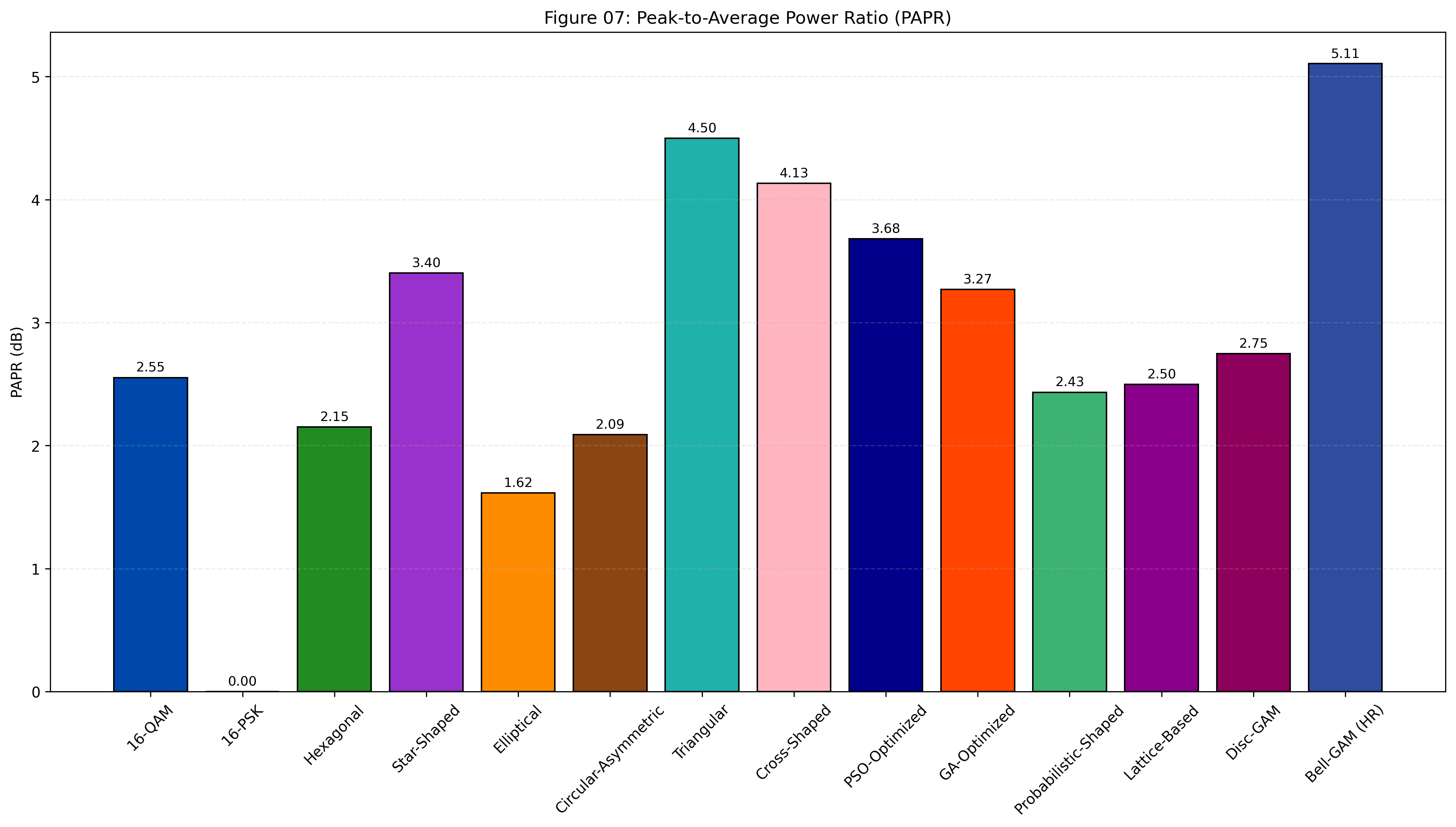
Probabilistic Shaping (PS) is a modulation technique that deviates from the equiprobable symbol transmission of traditional Quadrature Amplitude Modulation (QAM) schemes. By dynamically adjusting the probabilities of each symbol in the constellation, PS aims to approximate Gaussian signaling, which maximizes spectral efficiency. This is achieved by assigning higher probabilities to symbols with lower magnitudes and lower probabilities to those with higher magnitudes, effectively shaping the overall probability density function. The resulting distribution more closely matches a Gaussian distribution, allowing for tighter packing of symbols within the available bandwidth. Furthermore, PS enhances robustness against noise and interference by reducing the probability of transmitting high-power, sensitive symbols, thereby lowering the Peak-to-Average Power Ratio (PAPR) and improving error performance, particularly in non-linear channels.
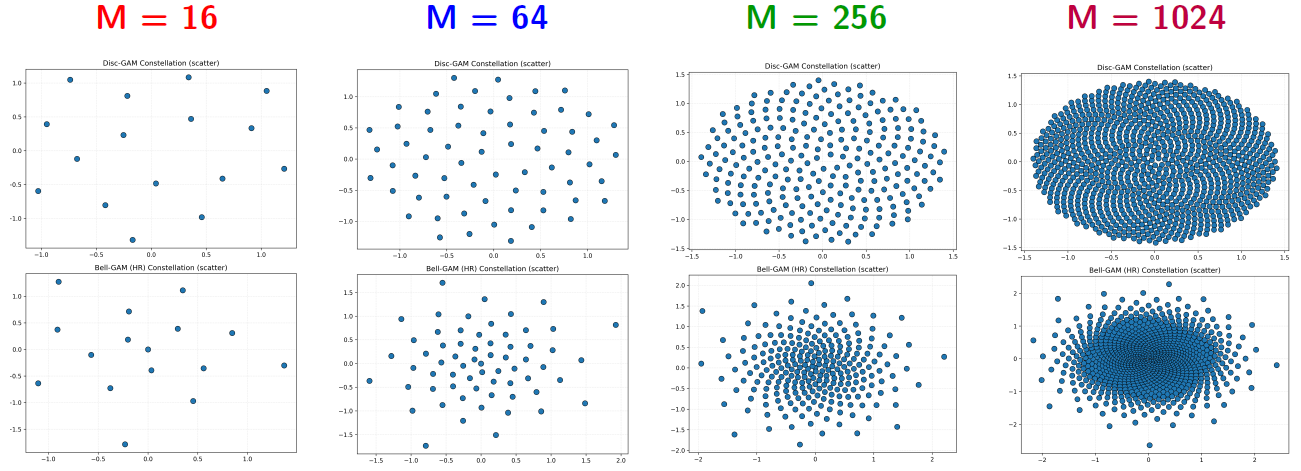
Golden Angle Modulation (GAM) constructs signal constellations based on the golden angle, approximately 137.5 degrees, to achieve a more uniform angular distribution of signal points compared to traditional Quadrature Amplitude Modulation (QAM). This geometric optimization aims to approximate a Gaussian distribution without the computational complexity of explicitly shaping the probability density function. By evenly distributing points across the signal space, GAM reduces the likelihood of closely spaced symbols, mitigating inter-symbol interference and improving error performance. The resulting constellation offers a favorable trade-off between spectral efficiency and robustness, particularly in non-linear channels where peak-to-average power ratio (PAPR) is a critical factor.
Autoencoder-based learning represents a data-driven approach to constellation design, utilizing machine learning algorithms to identify optimal symbol mappings without relying on analytically derived solutions. Recent research indicates that constellations generated through this method can achieve a peak-to-average power ratio (PAPR) reduction of up to 3 dB compared to conventional Quadrature Amplitude Modulation (QAM) schemes. This improvement is realized by training an autoencoder network on representative data, enabling it to learn constellation points that minimize PAPR while maintaining acceptable symbol error rates (SER). The resulting constellations offer potential benefits in power amplifier (PA) efficiency and overall transmission energy, particularly in scenarios where PAPR is a limiting factor.
Learned constellations exhibit improved energy efficiency metrics compared to constellations optimized solely for Symbol Error Rate (SER). Specifically, power amplifier (PA) efficiency is increased, and the energy required per successfully delivered symbol is reduced. Constellations designed with low Peak-to-Average Power Ratio (PAPR), such as Disc-GAM, demonstrate resilience in challenging wireless channels; they incur smaller performance penalties under Rayleigh fading conditions, indicating improved signal reliability in multipath environments. These gains are quantifiable and represent a demonstrable advantage for energy-constrained communication systems.
Intelligent Communication: The Future of Spectral Efficiency
Real-world communication channels are notoriously imperfect, plagued by noise and interference that limit data transmission rates. Adaptive modulation techniques address this challenge by dynamically adjusting the signal properties to match the prevailing channel conditions. Recent advancements leverage machine learning to optimize a crucial aspect of this process: constellation design. Traditional constellation diagrams, which map bits to signal waveforms, often rely on predetermined shapes. However, learned constellation designs, crafted through algorithms that analyze channel characteristics, can significantly enhance spectral efficiency – the amount of data transmitted per unit of bandwidth. By intelligently shaping these constellations, systems can pack more information into the same frequency range, achieving higher data rates and improved reliability even in challenging environments. This approach represents a paradigm shift, moving from static signal designs to dynamic, data-driven optimization for superior communication performance.
The synergistic pairing of machine learning and constellation design represents a significant advancement in the pursuit of enhanced data transmission. Traditionally, constellation diagrams – patterns of signal points used to represent data – were meticulously crafted by engineers. However, machine learning algorithms now offer the capacity to autonomously design and optimize these constellations, adapting to the ever-changing and often unpredictable conditions of wireless channels. This adaptive capability allows for the creation of constellations that maximize spectral efficiency – the amount of data that can be transmitted over a given bandwidth – and minimize error rates. By iteratively learning from channel data and transmission outcomes, these algorithms can discover constellation shapes and mapping strategies previously unattainable through conventional methods, promising substantial gains in both data rates and the overall reliability of communication systems.
The pursuit of ultra-high-speed communication is driving innovation in both learning algorithms and constellation design. Researchers are actively developing algorithms capable of dynamically adapting to complex and ever-changing channel conditions, going beyond simple optimization to truly learn optimal transmission strategies. Simultaneously, exploration extends beyond traditional quadrature amplitude modulation (QAM) constellations, investigating novel geometries – including those leveraging higher-dimensional spaces and irregular shapes – to pack more data into a given bandwidth. This combined approach aims not just to refine existing techniques, but to fundamentally reimagine how information is encoded and transmitted, potentially unlocking \text{Tbps} data rates and significantly improving the resilience of future communication networks. The ultimate goal is a system that intelligently anticipates and mitigates interference, maximizing spectral efficiency and ensuring reliable connectivity in increasingly demanding wireless environments.
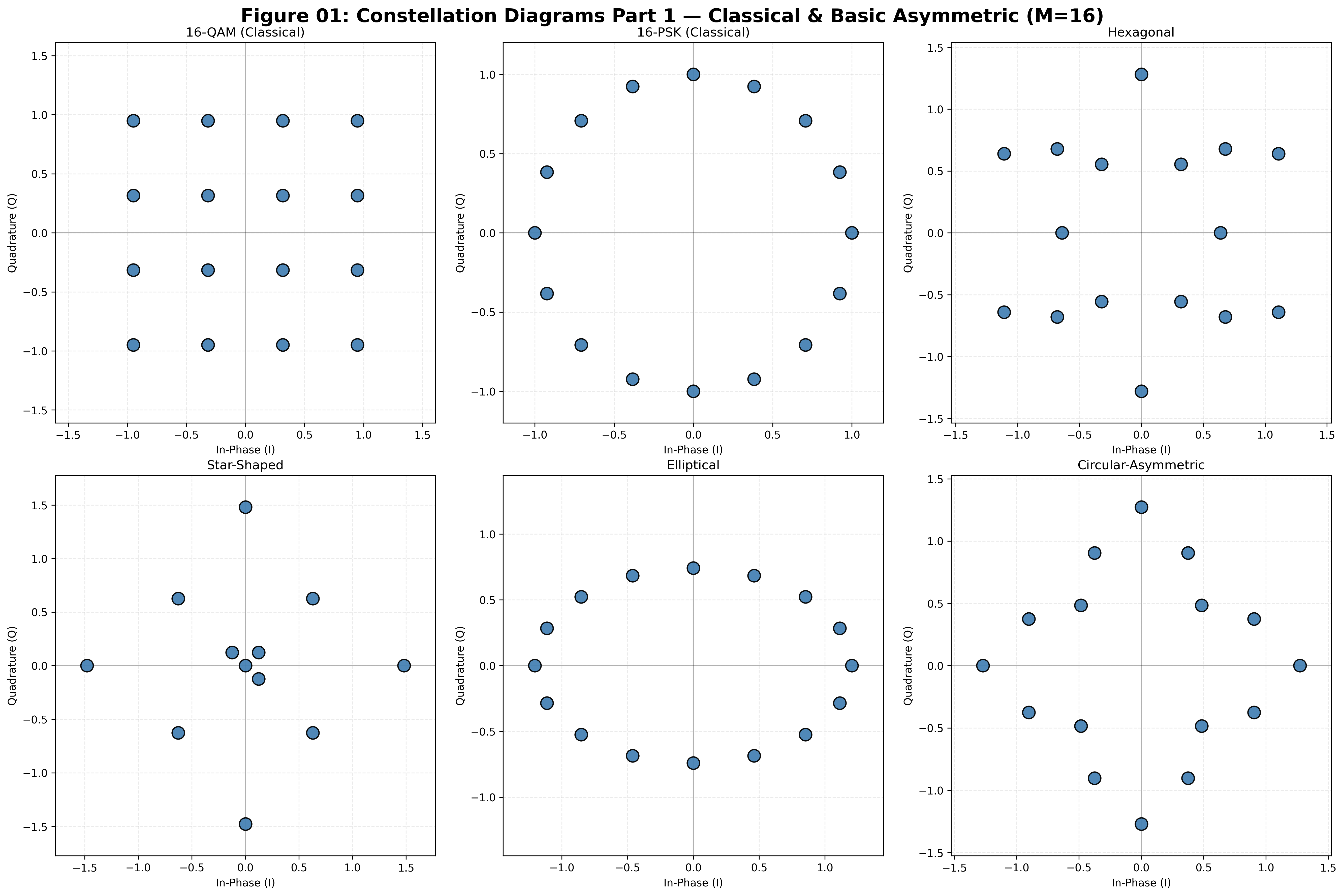
The pursuit of optimized modulation schemes, as detailed in this research, reveals a fundamental truth about decision-making. Even with perfect information regarding channel conditions and energy constraints, the selection of a particular scheme often prioritizes minimizing potential regret – the fear of choosing an inefficient method – over maximizing theoretical gain. This aligns with the observation that humans aren’t rational agents, but rather emotional algorithms. As Henry David Thoreau noted, “It is not enough to be busy; so are the ants. The question is: What are we busy with?” This research isn’t simply about achieving higher spectral efficiency; it’s about directing that effort towards a genuinely meaningful improvement in energy efficiency, a goal often obscured by the habit of optimizing for conventional metrics. The application of machine learning, then, becomes a tool to navigate these ingrained biases and find genuinely optimal solutions.
What Lies Ahead?
The pursuit of modulation schemes optimized for energy efficiency-a metric historically overshadowed by the more easily quantified demands of spectral efficiency-reveals a fundamental truth: the system built prioritizes what the builder values. The presented work offers a useful toolkit, but it skirts the more uncomfortable question of why current systems are so profligate with energy. The market, after all, is merely a barometer of collective mood, and a mood fixated on bandwidth, not battery life. Expecting radical shifts in fundamental design without addressing this underlying bias is… optimistic.
Machine learning, as demonstrated, can certainly refine existing approaches, but its predictive power relies on past data. The next generation of communication will inevitably encounter conditions-channel characteristics, usage patterns-that are genuinely novel. The true test will be not whether these algorithms can optimize for known inefficiencies, but whether they can anticipate and mitigate unforeseen energy drains. Rationality is a rare burst of clarity in an ocean of bias, and these models, for all their sophistication, are still built by-and therefore reflect-the imperfect reasoning of their creators.
Further exploration should focus not just on algorithmic improvements, but on a deeper understanding of the human factors driving communication demand. What unspoken needs are being met by ever-increasing data rates? Until these questions are addressed, optimization will remain a local maximum in a landscape dominated by irrational exuberance-and the persistent squandering of precious energy.
Original article: https://arxiv.org/pdf/2601.15004.pdf
Contact the author: https://www.linkedin.com/in/avetisyan/
See also:
- Forza Horizon 6: Find the Ohtani Treasure Chest Location
- LEGO Batman Legacy of the Dark Knight Batcave Minikits & WayneTech Caches
- NTE Drift Guide (& Best Car Mods for Drifting)
- Diablo 4 Best Loot Filter Codes
- USD RUB PREDICTION
- USD CNY PREDICTION
- Cookie Run Kingdom Timeline of Fate Update Guide
- Top 10 Must-Watch Isekai Anime on Crunchyroll Revealed!
- PS Plus Monthly Games for June 2026 Wish List
- Batman Telltale Episode 5 – All Choices
2026-01-22 13:25