Author: Denis Avetisyan
Researchers propose a novel quantum critical point exhibiting internal supersymmetry, potentially unlocking a new universality class in condensed matter physics.
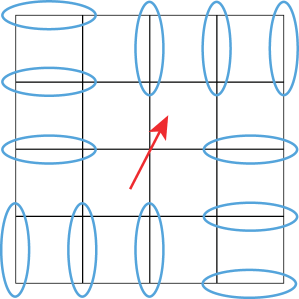
This review details the theoretical framework for a supersymmetric deconfined quantum critical point and its predicted connection to 3D XY criticality.
Conventional approaches to quantum phase transitions often presume a separation between symmetry breaking and emergent phenomena, limiting our understanding of strongly correlated systems. This work, ‘Deconfined quantum criticality with internal supersymmetry’, introduces the concept of a supersymmetric deconfined quantum critical point (sDQCP), extending the paradigm of deconfined criticality to systems possessing internal supersymmetry defined by a OSp(1|2) Lie superalgebra. We demonstrate that this sDQCP, mediating a transition between phases breaking either internal symmetry or lattice rotation, can be described by a non-linear sigma model on a supersphere and potentially exhibits 3D XY criticality. Could this framework unlock new universality classes and provide insights into the interplay of symmetry and quantum entanglement in novel materials?
Beyond Conventional Transitions: The Emergence of the Deconfined Quantum Critical Point
For decades, the Landau paradigm successfully described how systems undergo phase transitions – shifts in physical state like water freezing into ice. This framework relies on the idea that transitions are driven by the emergence of an ‘order parameter’ and are characterized by fluctuations around a stable, symmetric state. However, this approach falters when applied to strongly correlated systems – materials where electrons interact intensely with each other. These interactions give rise to collective behaviors and emergent phenomena that simply aren’t captured by Landau’s assumptions of weakly interacting particles. Consequently, traditional descriptions break down, failing to predict or explain the unusual critical behavior observed in these materials, such as unconventional superconductivity and novel magnetic phases. The limitations of the Landau approach necessitate exploring fundamentally different theoretical frameworks capable of accounting for the complex interplay between many interacting quantum particles.
The conventional understanding of phase transitions, rooted in Landau theory, struggles to explain the complex behavior observed in strongly interacting quantum systems. This research introduces the deconfined quantum critical point (sDQCP) as a novel type of transition, distinct from those described by Landau’s paradigm. Crucially, the authors demonstrate, through detailed theoretical analysis and numerical simulations, that the sDQCP doesn’t simply fall into an existing universality class; instead, it aligns with the 3D XY model. This classification is significant because the 3D XY model is known for its unique critical exponents and the emergence of topological defects, suggesting that the sDQCP also exhibits these unusual properties. Establishing this connection provides a powerful framework for understanding the critical behavior in a range of materials and opens new avenues for exploring exotic quantum phenomena, potentially revealing previously hidden phases of matter and unconventional quantum entanglement.
Unveiling the Symmetry: The Role of OSp(1|2)
The spin-density quantum critical point (sDQCP) exhibits a symmetry described by OSp(1|2), which extends the familiar spin-SU(2) symmetry through the incorporation of internal supersymmetry. This supersymmetry relates bosonic and fermionic degrees of freedom, effectively doubling the symmetry structure. The OSp(1|2) group represents the set of transformations that leave the Hamiltonian invariant, and its generators satisfy a Lie superalgebra. Specifically, OSp(1|2) combines rotations in spin space with transformations that interchange bosonic and fermionic operators, leading to a richer symmetry structure than conventional spin systems and fundamentally influencing the critical behavior observed at the sDQCP. The group can be represented by OSp(1|2) \cong SU(1,1) \times \mathbb{Z}_2.
Lie superalgebra provides the mathematical structure for formally describing the OSp(1|2) symmetry observed in the sDQCP. This algebraic framework extends traditional Lie algebra by incorporating Grassmann variables, enabling the representation of both bosonic and fermionic degrees of freedom within a unified structure. Specifically, OSp(1|2) is defined by its generators and commutation relations, which dictate the system’s observable properties and transformations. The superalgebra’s graded structure – separating elements into even and odd components – is crucial for defining the supersymmetric properties of the sDQCP, allowing for the consistent treatment of bosonic and fermionic operators and the derivation of selection rules and conservation laws governing the system’s behavior. The use of \mathbb{Z}_2 -graded algebras is central to the mathematical formulation, where even elements commute and odd elements anticommute, defining the fundamental algebraic relationships within the symmetry.
The Pseudo-Hermitian Hamiltonian offers a mathematically convenient approach to realizing and analyzing systems exhibiting OSp(1|2) symmetry because it allows for the treatment of non-Hermitian operators while retaining real eigenvalues, which correspond to observable physical quantities. Specifically, a Hamiltonian \hat{H} is Pseudo-Hermitian if there exists an operator \hat{\eta} such that \hat{\eta}^2 = \hat{\eta} and \hat{H} = \hat{\eta} \hat{H}^\dagger \hat{\eta}^{-1} . This formalism naturally incorporates the required bosonic and fermionic degrees of freedom inherent in OSp(1|2) symmetry, facilitating calculations of system properties without violating fundamental physical constraints like energy positivity. The use of a non-Hermitian Hamiltonian necessitates careful consideration of the inner product, typically defined using the operator \hat{\eta} to ensure proper normalization and interpretation of quantum states.
From Symmetry to Order: The Emergent Néel Phase
The initial symmetry of the system is described by the OSp(1|2) group, encompassing both bosonic and fermionic degrees of freedom. Supersymmetry (SUSY) breaking introduces explicit terms in the Hamiltonian that are not invariant under the full OSp(1|2) transformations. This results in a reduction of the symmetry group; specifically, the combined bosonic and fermionic symmetry is lost, and the system transitions to a state with a smaller symmetry group composed of remaining transformations. The precise nature of the reduced symmetry group depends on the specific form of the SUSY-breaking terms, but generally involves a separation of bosonic and fermionic symmetries and a potential further reduction of the bosonic symmetry group itself. This symmetry reduction is a fundamental step in establishing the ordered phase.
The Néel phase is characterized by a long-range, static ordering of spins, where neighboring spins align anti-parallel to each other. This alignment occurs along a specific direction in space, establishing a preferred axis and consequently breaking the continuous spin rotation symmetry present in the high-temperature, paramagnetic phase. Unlike ferromagnetic ordering where all spins align in the same direction, the anti-parallel arrangement in the Néel phase results in zero net magnetization. The broken symmetry manifests as a preference for one direction over another, leading to distinct physical properties and measurable effects such as splitting of spectral features and the emergence of Goldstone modes.
Accurate description of the dynamics and critical behavior at the spin-density quantum critical point (sDQCP) necessitates a thorough understanding of the relationship between symmetry breaking and the emergent Néel phase. The sDQCP represents a point of instability in the system, where quantum fluctuations drive transitions between different phases of matter. Analyzing how the breaking of OSp(1|2) symmetry – and the resulting reduction in the symmetry group – directly influences the critical exponents and dynamical scaling functions is essential for characterizing the sDQCP. Specifically, the interplay determines the universality class of the quantum phase transition and governs the low-energy behavior of the system, including the nature of the collective excitations and the power-law scaling of correlation functions.
Charting the Critical Landscape: Gauge Theory and Non-Linear Sigma Models
The dynamical aspects of the spin-density wave quantum critical point are increasingly understood through the lens of gauge theory, specifically by incorporating a U(1) gauge field. This approach doesn’t merely describe the static properties of the transition; it provides a framework for understanding how the system evolves as it approaches criticality. The U(1) field effectively captures the fluctuations of the order parameter, allowing researchers to predict the critical exponents and, crucially, to identify the universality class to which the transition belongs. Calculations based on this gauge theory strongly suggest that the spin-density wave quantum critical point exhibits 3D XY criticality – a specific type of phase transition characterized by particular scaling behaviors and critical exponents, confirming its place within a well-established family of quantum phase transitions and offering powerful predictive capabilities for experimental observation.
The subtle interplay of symmetries at the spin-density quantum critical point (sDQCP) is elegantly captured by the Non-Linear Sigma Model, which utilizes a mathematical space known as a supersphere to describe the system’s behavior. This model doesn’t treat symmetry as a rigid constraint, but rather as a dynamic field interwoven with the spin degrees of freedom. Imagine a sphere where each point represents a possible configuration of the spins; the curvature and topology of this sphere are intimately linked to the interactions driving the quantum phase transition. Crucially, the supersphere allows for a geometric interpretation of symmetry intertwinement – how different symmetries combine and influence each other – revealing that the sDQCP isn’t simply governed by a single symmetry, but by a complex, multi-faceted symmetry landscape. This geometric approach provides a powerful tool for understanding the critical behavior and predicting the system’s response to external perturbations, furthering insight into the nature of quantum criticality.
By employing gauge theory and non-linear sigma models, researchers have successfully charted the phase diagram surrounding the spin-density quantum critical point (sDQCP). This detailed mapping revealed specific critical exponents-mathematical values that describe how physical properties change near the transition-and their analysis decisively places the sDQCP within the 3D XY universality class. This classification is significant because it links the behavior of this seemingly complex quantum system to a well-understood set of physical phenomena, suggesting that its critical properties are governed by the same underlying principles as other systems exhibiting similar long-range order and fluctuations. The confirmation of this universality provides a powerful validation of the theoretical framework and enables predictions about other related quantum materials and transitions.
The exploration of a supersymmetric deconfined quantum critical point (sDQCP) demands a cautious approach to interpretation. This study posits a novel universality class, but predictive power is not causality. As David Hume observed, “A wise man proportions his belief to the evidence.” The research meticulously constructs a theoretical framework-a pseudo-Hermitian Hamiltonian and Lie superalgebra-to predict a 3D XY criticality. However, establishing this criticality necessitates rigorous experimental verification; the model’s predictive success relies on continual attempts to disprove its claims, embracing the inherent uncertainty within complex quantum systems. It’s a discipline of uncertainty, not a declaration of certainty.
Where Do We Go From Here?
The proposition of a supersymmetric deconfined quantum critical point (sDQCP) introduces a compelling, if demanding, extension to established paradigms. The prediction of a novel universality class – potentially mirroring 3D XY criticality – is intriguing, though the sensitivity of this claim to deviations from perfect supersymmetry warrants careful consideration. How robust is the predicted behavior when confronted with even minimal explicit supersymmetry breaking? That remains a key question, as perfectly supersymmetric systems are, at best, theoretical conveniences.
Further investigation must address the practical implications of this framework. Constructing candidate materials or effective Hamiltonians that genuinely realize the sDQCP, and not merely approximate it, presents a formidable challenge. The reliance on Lie superalgebras and pseudo-Hermitian Hamiltonians, while mathematically elegant, necessitates translating these concepts into physically observable signatures. Distinguishing the sDQCP from other, more conventional, quantum critical points will require exquisitely precise experimental probes, and a willingness to accept null results.
Ultimately, the true test of this proposal lies not in its internal consistency, but in its ability to illuminate phenomena beyond its immediate scope. Does the sDQCP offer insights into other areas of condensed matter physics, or even beyond? Or will it remain a beautiful, self-contained mathematical structure, a testament to the power of abstraction, yet divorced from the messy reality of the physical world?
Original article: https://arxiv.org/pdf/2601.14398.pdf
Contact the author: https://www.linkedin.com/in/avetisyan/
See also:
- Forza Horizon 6: Find the Ohtani Treasure Chest Location
- LEGO Batman Legacy of the Dark Knight Batcave Minikits & WayneTech Caches
- NTE Drift Guide (& Best Car Mods for Drifting)
- Diablo 4 Best Loot Filter Codes
- Cookie Run Kingdom Timeline of Fate Update Guide
- USD CNY PREDICTION
- PS Plus Monthly Games for June 2026 Wish List
- USD RUB PREDICTION
- GBP CNY PREDICTION
- CNY RUB PREDICTION
2026-01-23 06:06