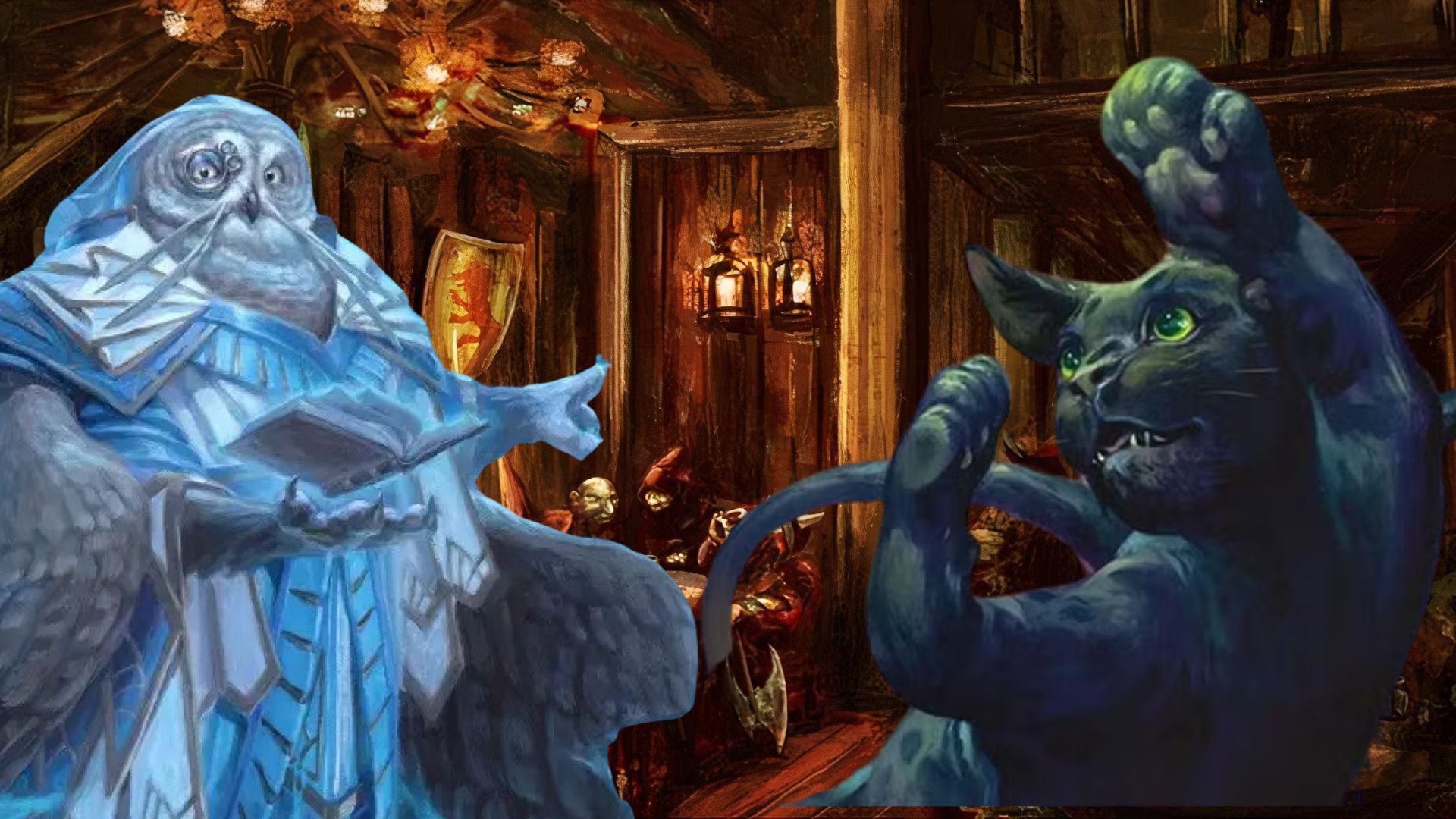
In a Dungeons & Dragons game, non-player characters, or NPCs, are what bring the world to life. They’re important for building a detailed and immersive setting, whether they play a key role in the story or simply add interesting details. Interactions with these characters can be straightforward, but they often become unpredictable – sometimes because of player choices, and other times due to the Dungeon Master intentionally creating unexpected twists.
Dungeon Masters who’ve been running games for a while often use challenging non-player characters (NPCs) to create tricky traps, puzzles, and stories for their players. However, it doesn’t always go as planned! I spoke with a DM named Oskar about some of the Dungeons & Dragons NPCs that he and others enjoy using to surprise and challenge their players.
The Barkeepers and Tavern owners
Always Be Nice To The People Who Make Your Food And Pour Your Ale
Bartenders and tavern owners are generally seen as helpful community members – they can offer gossip, directions, and useful information. But players frequently treat them as targets for petty crimes like stealing or causing trouble, all while trying to avoid getting caught. These impulsive actions often create misunderstandings and can reveal tensions within the group.
Okay, so as a gamer, I’ve learned the hard way that when you roll into a small town, the tavern is the place to be. It’s where everyone hangs out, and usually the first person you meet. Seriously, don’t go around making enemies with the first person you see! They might have info you need, be a skilled craftsman, or even become a valuable ally. Pissing someone off right away can make a campaign way harder than it needs to be, trust me. It’s always better to be friendly first.
The Filler NPC
Meet Bob—Bob is Trying To Mind His Own Business
When a Dungeon Master tries to create a vivid and immersive experience, they often describe scenes and the people within them. Sometimes, they’ll include minor characters simply to add atmosphere. However, players can unexpectedly become fascinated with these unimportant NPCs, determined to find hidden meanings or connections to the main story, even when none exist.
When players become overly focused on a minor character, it can be tough for the Dungeon Master to steer the game back to the main story. However, a skilled DM can use this to their benefit, transforming that seemingly unimportant character – perhaps someone simply enjoying a drink at a tavern – into a crucial figure in a larger plot filled with mystery and secrets.
The Curators
Never Underestimate Librarians
Curators are often seen as quiet experts, like book lovers and historians. However, players sometimes forget these individuals are carefully selected by organizations to protect valuable items. This frequently results in trouble-makers encountering curators in difficult situations and quickly learning that these seemingly gentle figures can be surprisingly formidable, whether through magic or impressive fighting skills.
The Curators of War Domain archives are a great example of this. War Domain clerics and their followers are naturally strong fighters and know a lot about combat. Those chosen as Curators – to protect ancient texts that can be dangerous and promote aggression – are typically the most skilled and disciplined, as they also need a strong and controlled mind.
The Pet
Protect Him With Your Life!
Tabletop role-playing games, like Dungeons & Dragons, are known for having tough monsters, but they’re also full of fun and lighthearted moments. It’s often hilarious how much time players spend protecting or befriending even the most ordinary creatures they encounter in the game world.
Players might craft leather armor for their pet or magically empower a random animal, potentially giving it god-like powers. Surprisingly, the party’s hamster often survives the entire adventure, even going on to live a long, happy life and maybe even earning some kind of honor or title.
The Familiar or Mount
Can We Keep Him?
Players’ familiars and mounts are often treated like pets, but they tend to be more powerful – and riskier. What a player chooses as a familiar or mount often reveals a lot about their character. It’s common for these creatures to be fierce beasts or monsters, with one player confidently claiming they’re under control. That confidence is often misplaced, usually resulting in the creature attacking a key character within a matter of minutes.
Unlike a pet, a familiar is a unique companion bonded to a single player, and it can sometimes be a nuisance to the rest of the group. The player connected to their familiar or mount will likely become very attached to it, even if it’s a large and potentially dangerous creature like a giant Owlbear. Mounts can be unwieldy, get in the way, or simply be left unused.
The Street Rat
Riff Raff… Street Rat…
Growing up in a fantasy city is hard, so most children the adventurers meet will probably be orphans, sneaky thieves, or playful troublemakers. These kids might be escaping danger or trouble with the authorities. The adventurers could choose to take care of the child, or turn them over to the city guard for a reward.
Someone with questionable morals might teach the character how to cheat at games, while a religious figure could try to change their beliefs. Strong fighters often take them under their wing and train them in combat. With the right guidance from their companions, this street urchin could either ruin everything or become a hero.
The Lonely Henchman
He Only Had 3 Days Left Until Retirement
It’s funny how a small detail can unexpectedly expand a game’s story. For example, if players overhear a minor enemy complaining while on patrol – and that enemy is even called out by name – it can suddenly make that character a focus of attention and create a whole new storyline the players might want to explore.
The players can either directly pursue and confront the character, or avenge him by eliminating the group that was tormenting him. Players often enjoy interacting with minor enemies – either by using them as recurring obstacles for the main villain, or by exploring a potential change of heart for the character.
The Recurring Guard
He Used To Be An Adventurer Like You, Then He Took An Arrow To The Knee
Recurring guards represent the established, official side of any opposing force. They’re often presented as neutral characters, and their loyalty can shift depending on how they’re treated. Because they’re authority figures and bureaucrats, it’s satisfying to outsmart or challenge them. They serve as a contrast to the hero characters, and those heroes – or other less conventional groups – frequently enjoy publicly exposing their flaws or weaknesses.
Generally, people who don’t follow the rules often see authority figures as minor opponents. They might deliberately try to bother or upset these figures as a way to relieve stress or blow off steam after a difficult situation. Sometimes, they’ll even go out of their way to specifically target and annoy someone who seems particularly strict or rigid.
Dragon
When There Is A Bard…
While other adventurers might see dragons as dangerous enemies, some bards view them as potential dates. Having a bard in your group who constantly tries to flirt with every monster they meet can create some very unexpected – and potentially disastrous – complications during your journey.
Sometimes, when a bard avoids causing problems with their romantic entanglements, things can actually turn out well. A dragon who’s fallen for the bard might even spare the party, or, even better, decide to keep the bard around – a happy ending for everyone!
A Player-Character’s Family Members
Surprise! It’s Trauma Time!
Family members showing up in a Dungeons & Dragons game rarely goes smoothly. When a Dungeon Master introduces a player character’s relative into the story, things can quickly become chaotic. Players often don’t maintain proper behavior, and the situation could even escalate to a dangerous or deadly conflict, depending on how they’re feeling.
Social awkwardness can be surprisingly painful. Imagine a character cringing when their parents use an embarrassing childhood nickname, or a disruptive player targeting another player’s family member – the potential for upsetting moments in a group is huge.
Read More
- All Shadow Armor Locations in Crimson Desert
- Jujutsu Kaisen Season 3 Episode 12 Release Date
- Dark Marksman Armor Locations in Crimson Desert
- Keeping AI Agents on Track: A New Approach to Reliable Action
- How to Beat Antumbra’s Sword (Sanctum of Absolution) in Crimson Desert
- Top 5 Militaristic Civs in Civilization 7
- Sega Reveals Official Sonic Timeline: From Prehistoric to Modern Era
- How to Get the Sunset Reed Armor Set and Hollow Visage Sword in Crimson Desert
- Sakuga: The Hidden Art Driving Anime’s Stunning Visual Revolution!
- How To Beat Ator Archon of Antumbra In Crimson Desert
2026-01-24 06:06