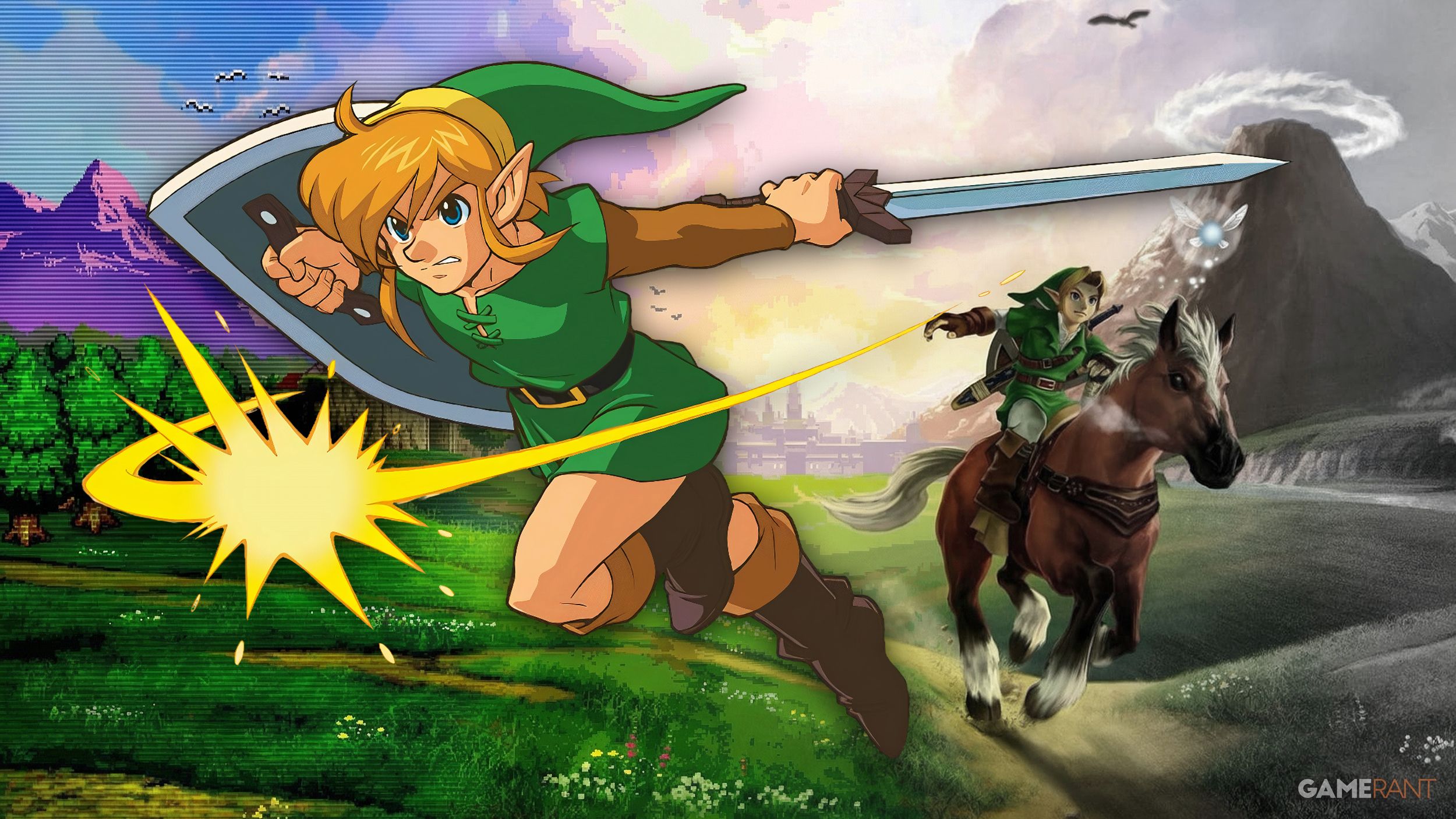
It’s amazing to think that The Legend of Zelda is celebrating its 40th anniversary on February 21, 2026 – exactly four decades after the original game came out on the NES! With each new release continuing to receive positive reviews, Zelda remains one of the very few franchises that have enjoyed such long-lasting success. Nintendo’s commitment to evolving the series, even when it means making changes longtime fans might not expect, is a major reason why. But despite all the changes over the years, The Legend of Zelda still draws its biggest influence not from Ocarina of Time, but from an earlier game.
Whenever people debate the best Zelda game, Ocarina of Time usually comes out on top. It’s famous for shaping the video game world with its story, how you explore the world, and the way it’s played. Plus, it’s officially recognized by Guinness World Records as the greatest game of all time.
While Ocarina of Time is considered a landmark game, its success was built on the strong foundation of The Legend of Zelda: A Link to the Past, a SNES classic released less than ten years earlier. Ocarina of Time essentially used A Link to the Past as a blueprint and wouldn’t have achieved the same level of success without it, and it, in turn, shaped future Zelda games.
Zelda Wouldn’t Be What It Is Without A Link to the Past
While games like Ocarina of Time and Breath of the Wild are known for being innovative and pushing the Zelda series forward, A Link to the Past remains the most influential title. Released for the SNES in 1991, it was Nintendo’s response to the poorly received Zelda 2: The Adventure of Link, which had tried – and failed – to turn the series into a role-playing game. A Link to the Past is so important because it introduced many core elements that are still used in Zelda games today – even groundbreaking titles like Ocarina of Time were built upon its foundation.
Everything Zelda: A Link to the Past Introduced That Went on to Become Series Staples
- THE MASTER SWORD — The first appearance in the series, introduced as a legendary blade tied to destiny and worthiness.
- THE DUAL-WORLD SYSTEM — The first use of a parallel overworld that directly mirrors and alters gameplay and progression.
- THE SACRED REALM — Introduced as a divine plane connected to the Triforce and the corruption of evil.
- TRIFORCE SPLIT INTO POWER, WISDOM, AND COURAGE — A Link to the Past was the first to define the Triforce as three virtues with thematic meaning.
- KAKARIKO VILLAGE — A Link to the Past was the first game in the series to feature the staple village that still appears today.
- SEVERAL ICONIC ITEMS — Hookshot, Pegasus Boots, Fire Rod, Ice Rod, Magic Mirror, and Book of Mudora.
- GANONDORF AS GANON’S ORIGIN — Introduced via backstory as a Gerudo thief who becomes Ganon, establishing the villain’s mythology.
- HEART PIECES COLLECTIBLES — The first appearance of Heart Pieces as optional fragments that permanently increase health.
- DUNGEON-GATED NARRATIVE PROGRESSION — Multi-dungeon story arcs that gate progression through symbolic objectives and rescues.
- VISUALLY DISTINCT THEMED DUNGEONS — A Link to the Past introduced dungeons with visually distinct themes.
- OVERWORLD STATE CHANGE TIED TO NARRATIVE — The Dark World visually and mechanically reflects the result of Ganon’s corruption.
A Link to the Past Was a Much-Needed Course Correction
When A Link to the Past came out in 1991, it wasn’t immediately hailed as the greatest Zelda ever – its impact hadn’t rippled through future games yet. Honestly, at the time, it felt like a huge relief for the series. Zelda 2 had really divided fans, so Nintendo was under a lot of pressure to get things back on track. The early reviews weren’t about a total reinvention, but about how well it fixed things. Everyone loved that it went back to the top-down view of the original Zelda, but improved on it in almost every way – the world was so much bigger, the story flowed better, and the whole design just worked. It really felt like the true sequel to the NES Zelda, and that meant everything back then.
When it was first released for the Super Nintendo, The Legend of Zelda: A Link to the Past sold around 4.61 million copies worldwide. This made it one of the best-selling games on the SNES and a huge hit for the Zelda series.
The game was a huge success, selling millions of copies and becoming a highlight for the SNES. It was often included with the console itself, introducing it to players who might not have actively sought out a Zelda game. Word of mouth spread quickly, as players shared discoveries and realized just how expansive the game was. While it didn’t instantly become legendary, A Link to the Past successfully won back the trust of Zelda fans, allowing the series to continue with Link’s Awakening on the Game Boy and, eventually, Ocarina of Time on the Nintendo 64.
A Link to the Past Is to Zelda What Epona Is to Link
Link is capable on his own, but his horse, Epona, significantly improves his adventures. She allows him to travel quickly, access previously unreachable areas, and provides dependable support when he needs it. Similarly, The Legend of Zelda: A Link to the Past was a pivotal game for the entire Zelda series. While the series might have continued without it, this game propelled it forward in a way that wouldn’t have been possible otherwise.
What truly set A Link to the Past apart was its introduction of many core features that continue to define the Zelda series, even forming the foundation for later, groundbreaking games like Ocarina of Time.
This game established the core formula for all future Zelda titles. It introduced iconic elements like the Master Sword, which became central to the story, and the enduring location of Kakariko Village. A Link to the Past also gave Ganon a backstory, turning him into the character Ganondorf and establishing his role as a force of corruption in Hyrule. Ultimately, this game laid the groundwork and allowed subsequent Zelda games to evolve and expand upon its ideas.
Looking back, I think A Link to the Past really set the stage for how Zelda games are designed. That game was the first to have those really unique, themed dungeons, and honestly, every Zelda since then has tried to recapture that feeling – each dungeon having its own look, story, and puzzles. Ocarina of Time built on that, The Wind Waker took it to a huge open world, and even Tears of the Kingdom brought back the classic dungeons after Breath of the Wild left them out – and fans definitely noticed! It just proves how much of an impact A Link to the Past had, and continues to have, on the whole series. It’s basically the blueprint for what makes a Zelda game feel like a Zelda game.
While Ocarina of Time is rightfully considered a classic, the true foundation of the Zelda series’ enduring success actually lies in A Link to the Past. Released in 1991, that game didn’t just rescue the franchise after a disappointing previous installment; it established a winning formula that Zelda has successfully built upon for the past 30 years. Zelda games continue to evolve and innovate, but they always retain that core feeling established by A Link to the Past.
Read More
- All Shadow Armor Locations in Crimson Desert
- How to Get the Sunset Reed Armor Set and Hollow Visage Sword in Crimson Desert
- Best Bows in Crimson Desert
- All Golden Greed Armor Locations in Crimson Desert
- Wings of Iron Walkthrough in Crimson Desert
- How to Craft the Elegant Carmine Armor in Crimson Desert
- All Helfryn Armor Locations in Crimson Desert
- All Skyblazer Armor Locations in Crimson Desert
- How To Beat Ator Archon of Antumbra In Crimson Desert
- Keeping Large AI Models Connected Through Network Chaos
2026-01-30 15:05