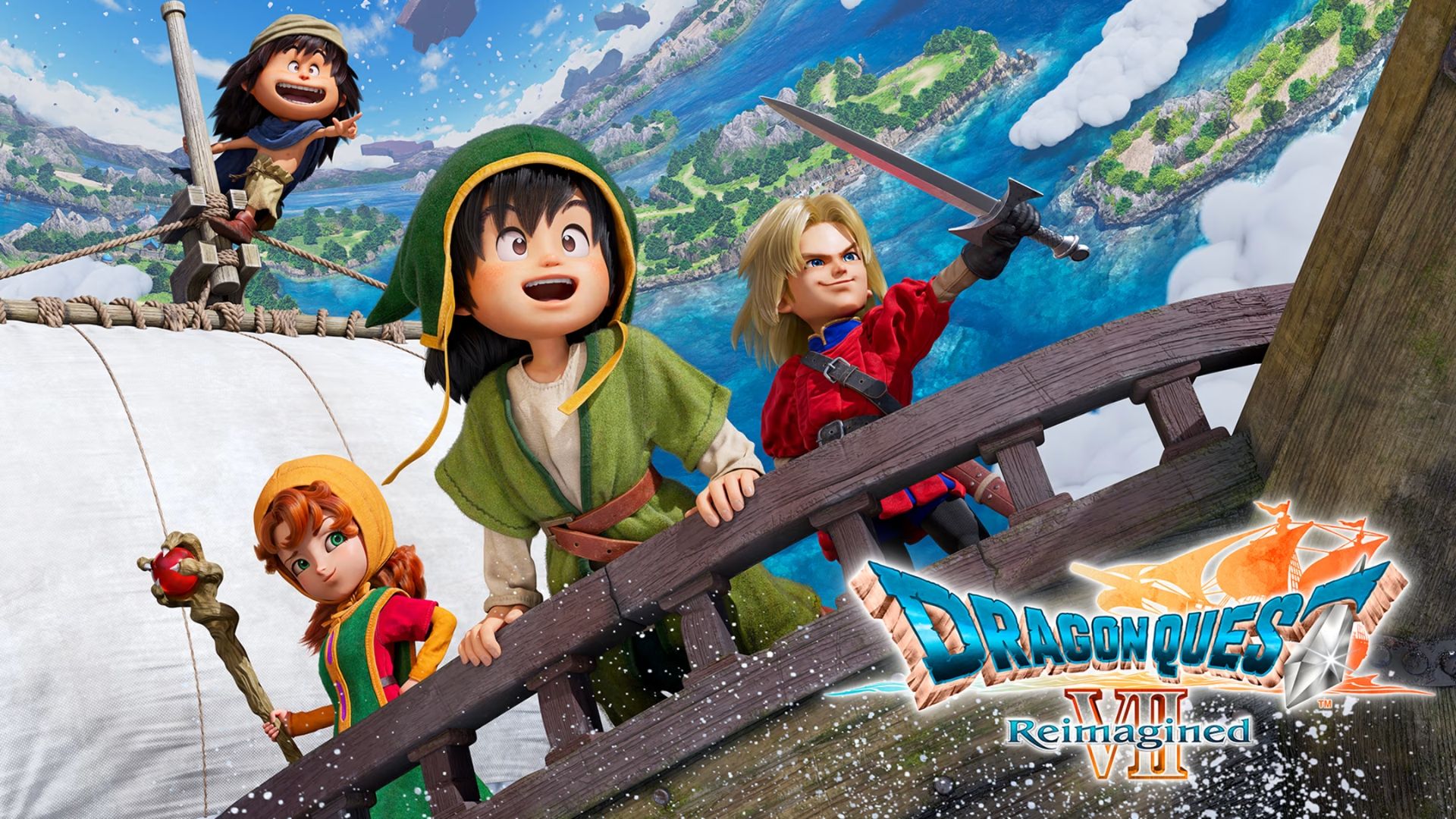
Square Enix has faced criticism recently from some long-time fans who feel the company has changed. Many believe it’s now more focused on appealing to Western audiences and hasn’t created a truly exceptional role-playing game like it did in its earlier, most celebrated years.
I’ve observed that criticisms and praise about this often come from fans of the Final Fantasy series, not necessarily dedicated fans of this specific game. Final Fantasy is known for constantly changing and trying new things, which sometimes upsets long-time players.
The other major series from Enix is Dragon Quest. It’s known for sticking to a consistent style, which keeps its Japanese fanbase loyal and is also attracting more players globally. The huge success of Dragon Quest XI proves this growing international appeal.
Square is also trying to attract new fans to Dragon Quest by remaking older games. The first three games, known as the Erdrick trilogy, have been updated with a beautiful HD-2D style. Plus, Dragon Quest VII, which originally came out on PlayStation and was later remade for the 3DS, has been completely rebuilt again for today’s consoles.
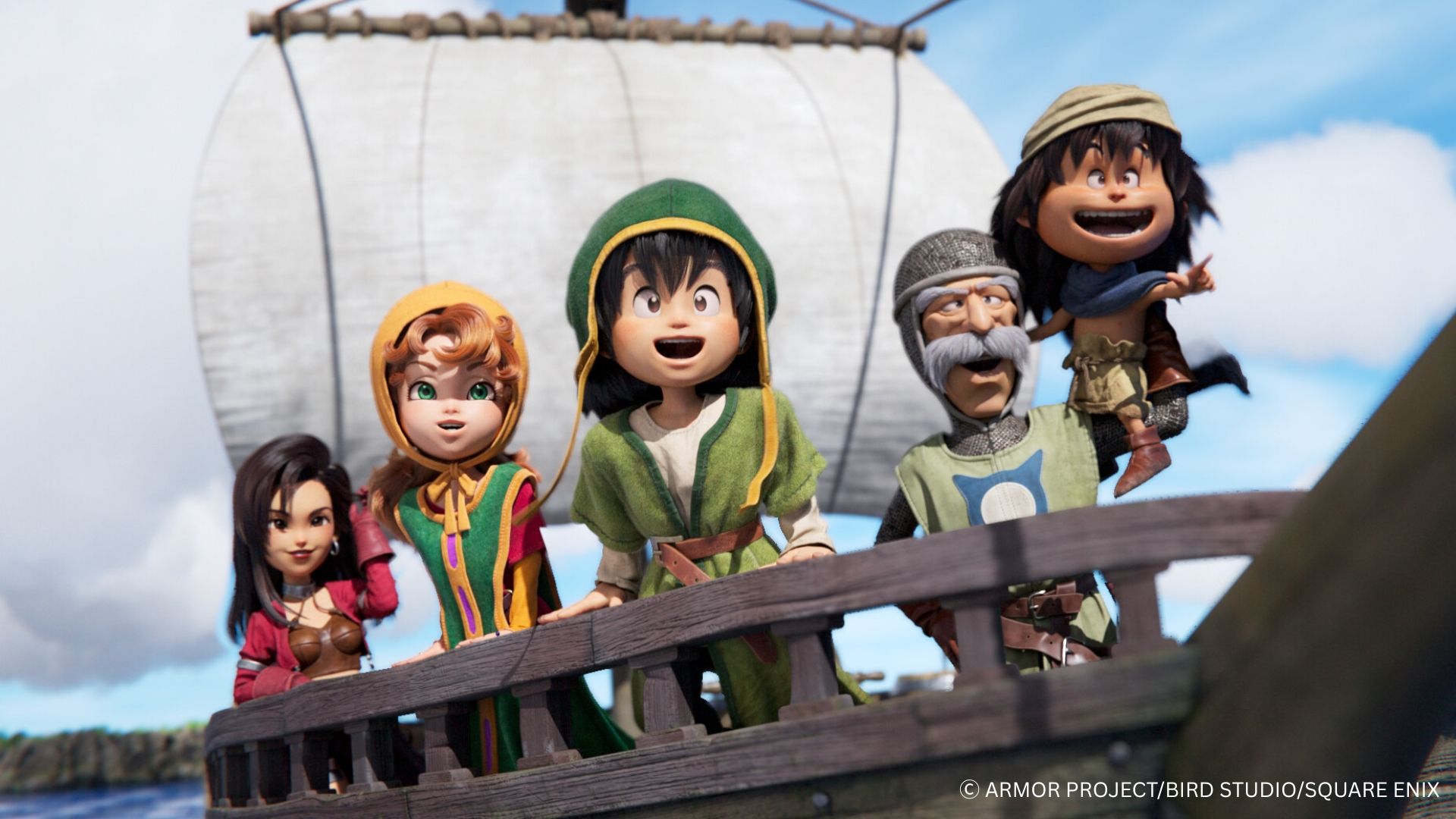
Called Dragon Quest VII Reimagined, this new version is meant to be a great starting point for anyone interested in the Dragon Quest series. It keeps the classic look and feel of the original game – a pioneering JRPG from decades ago – while adding modern features and improvements. The developers aimed to please both longtime fans and newcomers who are just discovering the world of Slimes and monster battles.
I’d tried the original game before, but never completed it. I spent around 25 hours playing, discovered the different character classes, explored for a while, and then lost interest. While this remake definitely improves the pacing compared to the original, it still feels a bit too slow for players who aren’t used to how Japanese role-playing games build up over time.
Having spent nearly ninety hours playing and earned the platinum trophy, I’m now ready to share my review of Dragon Quest VII Reimagined.
The Story of the Past
Imagine living on a tiny island with just one castle, one village, and everyone knowing everyone else. If your options for the future were extremely limited, you’d likely try to leave and find somewhere new. But what if people had already tried, and it turned out your island was the only one in the world?
The world of Dragon Quest VII Reimagined starts with just one island. Luckily, the main character – a young, quiet fisherman’s son – and Kiefer, the prince of Estard, aren’t happy with such limited surroundings. They both want to explore and find new lands, and honestly, it’s easy to see why – I’d feel the same way!
During their adventure, with Maribel reluctantly along for the ride, the group discovers a Shrine. Once they gather pieces and place them on the altar, they’re magically transported to a new island, and their real journey begins. The surprising part is that when they fix the problems on that island and return home, they learn about another island appearing nearby. It quickly becomes clear that by protecting the past, they’re also protecting their present.
Next, we’ll need to gather more pieces and take them to a new altar, sending us to a different time period. The game isn’t one long story, but a series of smaller, self-contained tales. Each time period feels unique, with its own challenges, customs, and way of speaking. When we resolve a problem in the past, a piece of the island reappears in the present, often echoing the events we just experienced.
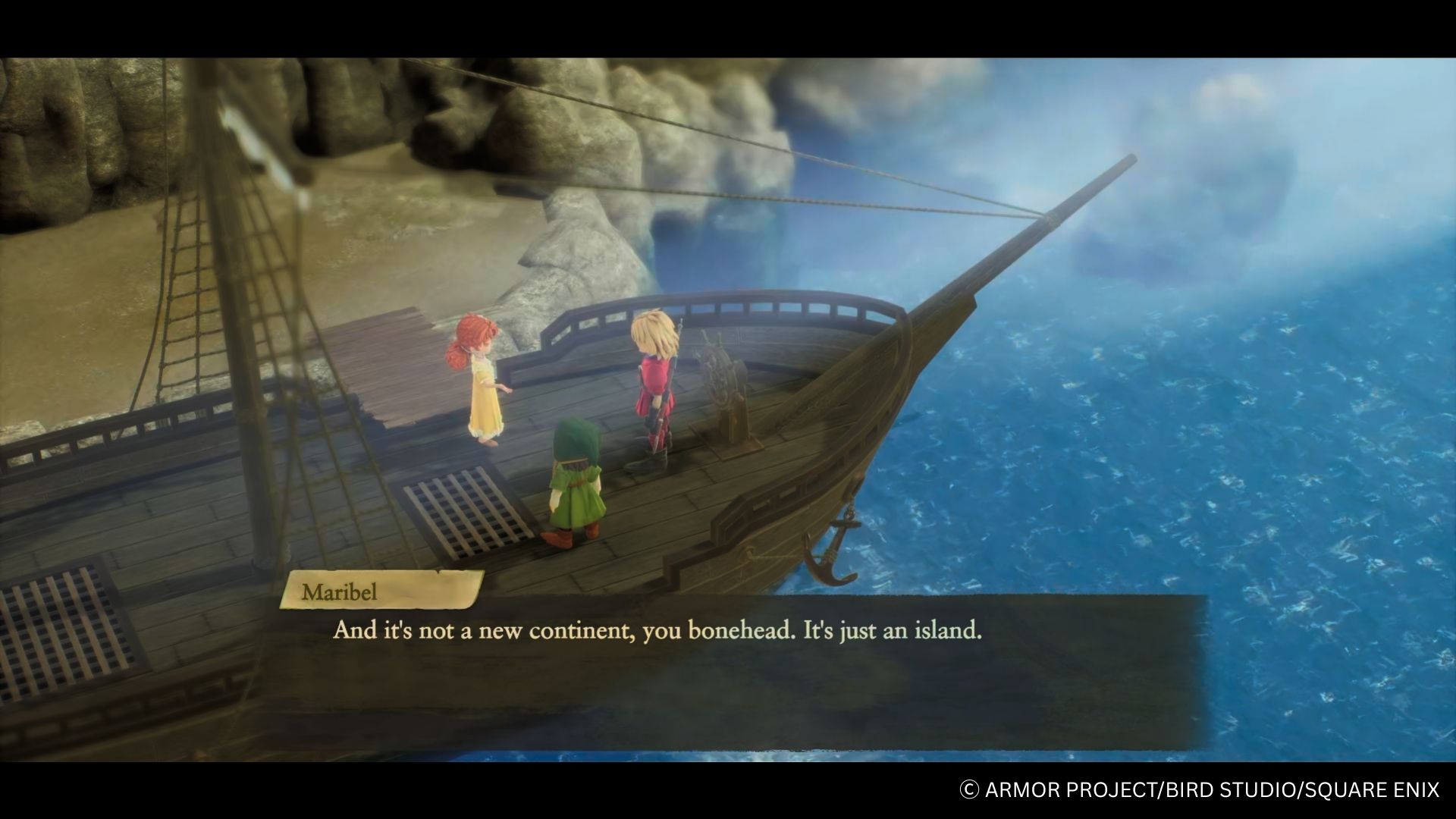
The way Dragon Quest VII Reimagined tells its story, through a series of connected episodes, has both advantages and disadvantages. The format really makes the characters feel alive; as the story progresses, everyone – even the smallest villagers – remembers and reacts to what’s happened. Because the game mostly keeps you within a single town, dungeon, or storyline, these changes feel natural and create a more detailed and immersive world.
It’s hard to understand how these stories fit together or what the overall goal of the main character’s journey is. I won’t spoil anything, but be aware that for around 20 to 30 hours, you’ll be completing tasks for people in different areas without knowing the bigger picture or why you’re doing them, beyond simply playing the game.
To be honest, I didn’t mind the story too much. I’ve always thought the gameplay in Dragon Quest games was better than the narratives, and that’s especially true with Dragon Quest VII Reimagined. While some areas have surprisingly dark moments, most of the plot points are fairly predictable.
Honestly, playing through this, it doesn’t feel like one big story. It’s more like a bunch of smaller, self-contained stories all linked together. It’s cool, but it’s definitely not a traditional, epic narrative.
Despite everything, I found each new island captivating. Gathering pieces, arranging them on the altar, and traveling back in time was consistently enjoyable and fascinating. The unpredictable nature of the story – never knowing what challenges lay ahead or how to overcome them – offered a fresh perspective on the JRPG genre, even after years of playing similar games.
Look, I get it – some of us like a tight, focused story where everything feels connected. If that’s you, Reimagined might test your patience. It spends a lot of time on smaller stories and hints at things to come. Honestly, I can see how someone might get frustrated and quit before all that setup actually pays off. It’s a slow burn, and if you need instant gratification, it might not be your cup of tea.
Party Chat is Back, Somewhat
What ties everything together – all the different islands and time periods – is our group of characters, who experience it all as one. And I have to say, one of my biggest frustrations with modern Japanese role-playing games is the tradition of silent main characters. Even the creator of Dragon Quest, Yuji Horii, thinks it’s a dated idea, and I completely agree.
While a character with a neutral expression might work in simpler, pixelated games, it really hurts the story in a 3D game with detailed faces, great voice acting, and dramatic moments. A main character who mostly just stares and occasionally nods, even during intense scenes, weakens the emotional impact and overall narrative.
The game cleverly addresses the hero’s silence with a feature called Party Chat, which first appeared in Dragon Quest VII. Many believe the character Maribel was specifically created to make the most of this feature. In the original game, Party Chat let you talk to your companions through the menu, and they’d comment on absolutely everything – from simple things like walking into a house or petting a dog, to more significant events like battling enemies with special abilities. They really did have opinions on everything that happened!
Party Chat was designed to give the characters more personality and depth without making the main story too long or slowing it down. The game expected players to use this feature, but when I first played Dragon Quest VIII, I didn’t know it existed and rarely used it. I initially thought my characters felt flat, but I later realized their hidden depth was actually within the Party Chat system.
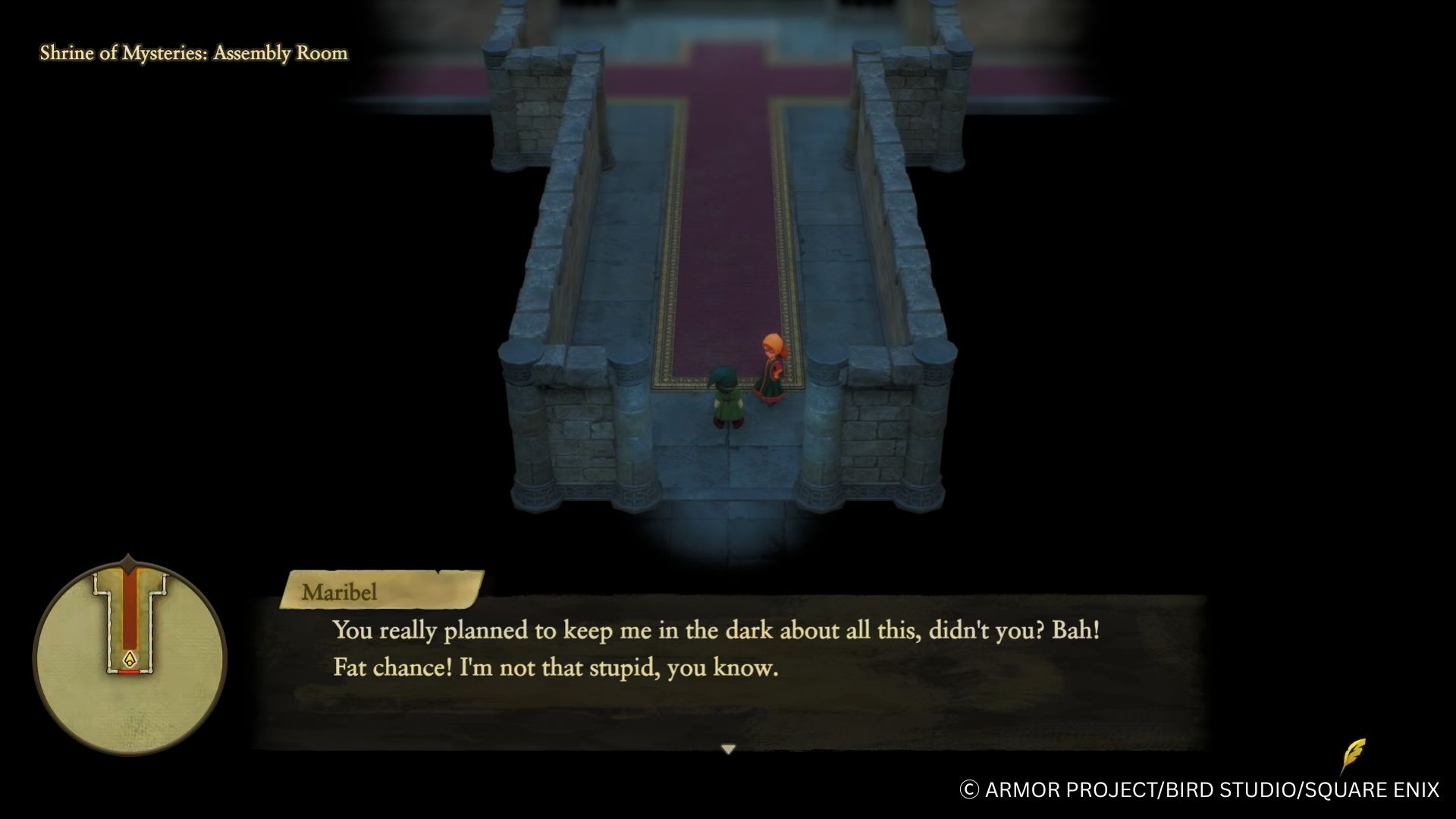
While Dragon Quest VII Reimagined has reduced the amount of Party Chat, it hasn’t removed it entirely. After my first fight, Kiefer offered some unique dialogue. Then, when I found a story fragment, his chat changed again, proving the system still has some depth. However, these conversations only happened because I actively looked for them.
The game sometimes offers hints through character conversations. If you ask for one, a teammate will give you a clue about what to do next, and they’ll repeat it if you keep asking. However, I found the timing of these hints to be inconsistent – sometimes they wouldn’t appear even during interesting moments, but other times they’d pop up for even the most basic actions. This meant I ended up constantly checking for hints, which actually slowed me down instead of helping me move forward.
It would be great if Dragon Quest VII Reimagined had a notification for new conversations, similar to how the Tales of games handle their skits. Right now, finding new dialogue feels awkward. After playing for around forty hours, I gave up checking for it because it was exhausting. I usually love reading every bit of in-game text to learn more about the world, but constantly getting the same repeated messages just isn’t enjoyable.
The remake thankfully includes more conversations within the main game, giving the characters more depth without relying as much on the separate Party Chat system. However, Party Chat still offers a lot more content overall. A lot of Maribel’s witty and occasionally grumpy comments are exclusive to Party Chat, so if you skip it or don’t actively use it, you’ll miss out on seeing her full, quirky personality.
The other characters are all really interesting and well-developed, and they make the story of saving the world much more engaging. I’m worried some players won’t fully appreciate them if they skip the Party Chat feature. It’s a bit unusual, but it really helped me connect with the characters. Because I took the time to chat with them, I enjoyed the game much more. My advice? Don’t skip the Party Chat – even if it slows things down a little – because it adds a lot to the story and makes the characters feel more real.
The Most Classic of Turn-Based
Dragon Quest VII Reimagined still uses the classic turn-based battle system, but with a new twist. Instead of characters taking turns in rounds, each character acts immediately after you give them a command.
Battles feel quick and responsive, which is great. I had trouble playing the updated versions of the game at their regular pace, but even the default speed here feels smooth. Beyond the ability to speed things up, this version includes helpful features like visible enemies on the map, instant fast travel, and a shared inventory – a first for the series.
I’m really loving the recent updates! Now there are little markers on the minimap that show where all the chests are, and it even points you towards your next main objective, which is super helpful. And honestly, it’s a relief that I don’t see my party members being carried around in coffins anymore! A cool change is that if you win a fight even with someone knocked out, they come back with just 1 HP – that saved me a few times! But the best part? You can customize the difficulty now! You can tweak how much experience and gold you earn, and even adjust how strong your team and the enemies are. I was seriously using those modifiers when I was trying to grind my way up to beat the game’s superboss, they were a lifesaver!
In Dragon Quest VII Reimagined, characters don’t have traditional classes, but a system called Vocations. These Vocations now have ranks, and as you advance, you learn new skills. The remake also introduces Vocational Perks – special abilities that trigger when a character gets excited. For example, if the hero is fishing, the entire party can become temporarily immune to a single attack. Each Vocation has a unique perk like this that can dramatically change the course of battle.
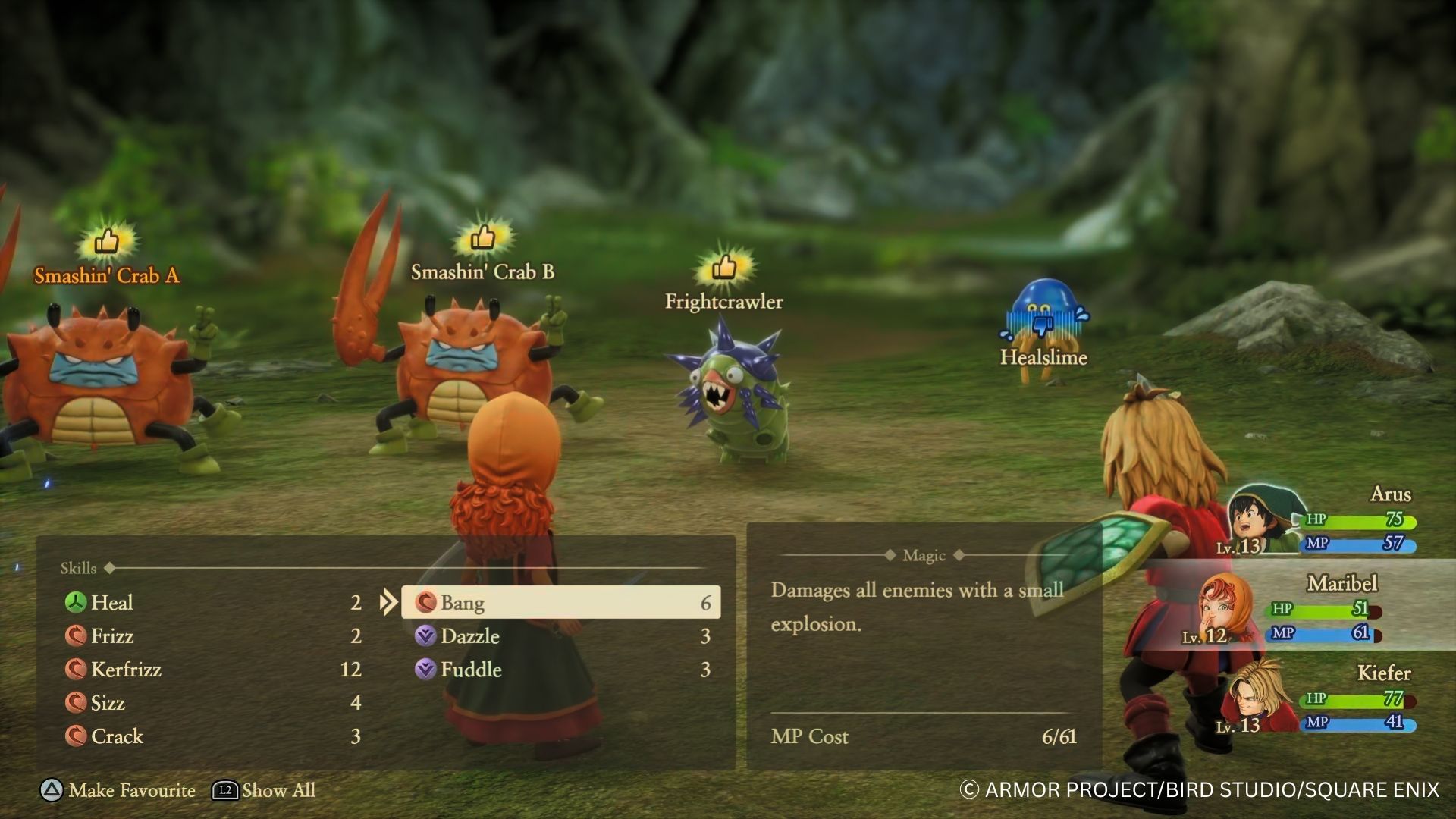
The game’s story and how you play it are pretty simple, but that’s part of its charm for fans of the Dragon Quest series. Instead of randomly bumping into enemies, you see them on the map and can even get a head start by attacking them first. If you’re much stronger than an enemy, you’ll defeat them instantly without a battle, which keeps the game moving at a good pace.
I really enjoyed all the new features. Playing through the game on normal difficulty, I found this version, Reimagined, to be the most forgiving of all the Dragon Quest games I’ve tried. I only lost when fighting the optional super boss. I mostly used auto-battle and won most regular fights, and I think I could have even beaten some of the main bosses that way. I get why the developers made the game so easy to pick up and play, though.
Even though the developers tried to make Dragon Quest VII Reimagined easier to get into, it can still feel slow-paced. It took me a full hour before I even got into my first battle, and a whopping 15 hours to unlock new character classes. I had already become proficient with the starting classes in just six hours, so I spent almost ten hours repeating the same skills before anything new became available.
The game really opened up once I started unlocking different character classes. I loved switching between them and combining two at a time with the Moonlight system to create powerful combinations. Earning new classes also encouraged me to keep fighting and gaining experience, although it did take a significant amount of time to unlock everything.
This new version of the game doesn’t include Monster Vocations. Instead, you collect Monster Hearts – special accessories you get by defeating tougher versions of regular monsters called Vicious Monsters.
Exploring Every New Island
I might have spent extra time simply exploring every nook and cranny of each new location. Dragon Quest VII Reimagined really encourages players to venture off the main path. If you only focus on battling monsters, earning money, and buying new gear, you’ll quickly run out of funds or get stuck repeating the same grinding tasks.
Honestly, I’ve found that if I really take the time to check everything – every dungeon, every barrel, every pot – and hunt down all those Mini Medals, I’m way better equipped. I don’t have to spend nearly as much time just repeating battles to level up. Exploring actually leads to more fights, which means more experience and gold anyway, so it’s a win-win!
Once I unlocked more Vocations, the gameplay improved exponentially.
One of my favorite additions to the remake is a helpful interface that tells you if an area still has collectibles left to find. It works for both Mini Medals and fragments. By checking the game’s database for these items, you can easily see if you’ve uncovered all the secrets in each region you’ve explored.
To make the game smoother, developers made some areas optional. You can explore these past regions if you find hidden fragments, but they aren’t required to finish the story. These optional areas reward you with extra gear and items that help you become stronger for future challenges. However, it’s important to remember they’re optional – the connection to the main story is already a bit unclear in the required areas, and you won’t find any such connection in these side areas.
Subscribe for deeper Dragon Quest VII insights and wider JRPG coverage
I especially loved discovering how my actions in previous versions of the game affected the islands in the current one. There’s a specific area where I repeatedly traveled back in time, and each change I made noticeably altered the islands in the present. It was also fun to see how the characters reacted – some held onto old customs, while others had their histories completely changed by the passage of time.
New Graphics, Same Soundtrack
A key difference between the original Dragon Quest VII and its updated version is the way it looks. The remake uses a special art style that tries to capture the classic designs of Akira Toriyama, but in a smaller, 3D format.
I really enjoyed it! The characters look appropriately young and energetic, which suits the adventurous story perfectly. My only slight issue was with how Kiefer looked – his face seemed a bit overly smoothed out, almost like it had a strong filter applied.
What impresses me most about remakes is the way they transform the environments. It’s amazing to see those old, pixelated worlds become expansive and detailed in 3D, really showing off how big they always were. The overworld still feels familiar and nostalgic, but everything – the villages, dungeons, and castles – looks fantastic and refined.
One of the biggest issues I’ve noticed is that the game reuses character models way too often. It’s not so bad with background characters, but seeing the same face on important, named characters like mayors or elders feels repetitive. Most characters lack unique designs, and those are typically saved for the most important figures.
The updated version visually aims to capture the classic art style of Akira Toriyama, but in a smaller, three-dimensional format. I thought it was fantastic.
The game looks fantastic in combat, with particularly impressive animations. I’ve never seen Kaffrizzle and Gigalash look so good! This art style also helps the game run very smoothly. The lack of graphics settings suggests it consistently maintains a high frame rate and resolution. It’s a truly beautiful remake overall.
I might get some pushback for this, but after spending the last year and a half playing four Dragon Quest games, I’ve started to feel a little weary of the music. I really appreciate how famous and well-loved most of the tracks are – I even think the main theme deserves to be Japan’s national song! – but after hearing Koichi Sugiyama’s work repeatedly, the recurring musical themes started to become predictable.
The music starts out enjoyable, but after playing for a while, you’ll realize the same tracks are used for everything – caves, forests, happy moments, sad moments, and battles. After about 50 to 60 hours, it gets repetitive, particularly the battle music which never changes. This might just be my opinion – I could be getting tired of the game – so if you’re a fan of the series’ soundtrack, you might not notice it as much.
Streamlined, But Still Dragged On
I really had a great time playing Dragon Quest VII Reimagined. Being a longtime JRPG fan, and already familiar with Dragon Quest games, it hit all the right notes for me. But honestly, I don’t think it’s the best game to recommend to someone new to the series, even though Square Enix seems to be aiming for that. Dragon Quest XI is another long RPG, but it immediately pulls you in – you understand why you’re on this adventure right from the start, and the story grabs you quickly. Dragon Quest VII doesn’t quite do that.
Even though Dragon Quest VII Reimagined is more focused than previous versions, it takes a while for the story and gameplay to really get going. The core of the battle system, called Vocations, don’t become available until about fifteen hours into the game. Because of this, the early dungeons felt more like repetitive tasks where I mostly just selected attacks and let the game play itself.
It took a little while to get going, but once the game opened up, it really grabbed me. I had more ways to customize things, my characters became unique, and the story felt deeply personal. After that, I breezed through the rest of the game, enjoying every victory and restoration. While JRPGs generally ask players to be patient, Dragon Quest VII Reimagined requires a bit more dedication. Luckily, the effort is well worth it – the ending is fantastic.
Closing Comments
Dragon Quest VII Reimagined updates the classic game with new features and improvements, making it easier to enjoy for today’s players. However, it still unfolds at a leisurely pace, which is typical for Japanese role-playing games. This version asks for even more patience, but if you appreciate a story told in chapters and utilize the new Party Chat and character class systems, you’ll find the long adventure rewarding.
Read More
- All Skyblazer Armor Locations in Crimson Desert
- All Shadow Armor Locations in Crimson Desert
- How to Get the Sunset Reed Armor Set and Hollow Visage Sword in Crimson Desert
- Marni Laser Helm Location & Upgrade in Crimson Desert
- Best Bows in Crimson Desert
- All Helfryn Armor Locations in Crimson Desert
- All Golden Greed Armor Locations in Crimson Desert
- How to Craft the Elegant Carmine Armor in Crimson Desert
- Keeping Large AI Models Connected Through Network Chaos
- One Piece Chapter 1179 Preview: The Real Imu Arrives in Elbaf
2026-02-02 18:14