
I’ve followed the development of Task Force Admiral more closely than anyone, starting with initial news reports and including an extensive three-part interview with the project lead, Amiral. I’ve also covered its playable teaser and provided an exclusive demo preview. Just recently, I tested the latest demo. Now, I’m ready to experience the full game and take to the skies over the Pacific.
What Is Task Force Admiral?
- Genre: Wargame | Historical | Naval Strategy
- Developer: Drydock Dreams Games
- Publisher: MicroProse Software
- Price: $35.99 | 30,59€ | £27.89
- Release Date: 27 January, 2026
- Reviewer: Nuno Marques (PC)
- Target Audience: Wargamers; Naval Wargamers; WW2 History Buffs, History buffs in general
- Final Score: 9/10
Okay, so I’ve been playing this game, Task Force Admiral, and it’s seriously immersive. You’re put in command of a US Navy Task Force in the Pacific during 1942, basically stepping into the shoes of a Rear or full Admiral during WWII. The coolest part? It tries to recreate those legendary naval battles as accurately as possible. Everything – ships, planes, even the weapons – are modeled in 3D. Battles happen live, which is intense, though you can fast forward. A lot of the gameplay is about planning – charting courses, setting up defenses, sending out scouts, and then launching your attacks. It’s a lot to manage, but it feels really authentic.

Task Force Admiral sounds complex – you’re in charge of large forces, managing equipment and preparing for battle. However, the game smartly reduces unnecessary tasks, letting you focus on strategy for a smooth and clear experience. I was able to successfully replay the Battles of the Coral Sea and Midway using only basic commands like planning routes, scouting, and organizing strike forces. While the game does offer detailed control over every aspect – even checking individual plane stats – what I appreciated, as someone not deeply familiar with naval history, is how easy it is to learn and play, even without a tutorial.
So, the question is, does my most anticipated wargame for 2026 deliver?
Great Fundamentals, But Thin In Content
Task Force Admiral is easily the most realistic recreation of World War II carrier combat available. It’s clear the developers poured their passion and expertise into meticulously recreating ships, planes, equipment, formations, and tactics. I was curious about how realistic the flight felt, so I contacted the developers, and they confirmed the game features a full flight engine. Planes behave dynamically – they gain speed when diving and lose it when climbing – making the combat feel much more natural than if it were just pre-programmed animations. During a demo last year, I even saw a plane recover from a near collision with another, which was incredibly impressive. This level of realism and unpredictability in the air combat truly sets Task Force Admiral apart from other games.

Despite all its strengths, Task Force Admiral is a promising game that has the potential to become the best World War 2 naval combat simulator available. However, potential buyers should be aware of a couple of significant issues before purchasing. Firstly, the game lacks tutorials. While it’s relatively easy to learn if you’re already familiar with carrier combat, newcomers might find it challenging. This isn’t due to a complicated interface, but rather the game’s assumption that players already understand the intricacies of naval operations and how to participate effectively.
One of the biggest drawbacks right now is the limited number of missions. There are only four to choose from – Coral Sea and Midway are based on real history, and the other two are what-if scenarios. Normally, that would seriously hurt a game’s replayability, but I don’t think it’s a huge deal here. The game’s mechanics are so dynamic that even replaying the same battles feels fresh. I’ve already played the Coral Sea battle several times, trying different strategies each time, and it’s amazing how much things can change! Honestly, I’d say you can easily sink 5 to 10 hours into each of those four battles before you even start to feel like you’ve seen everything.

The game does have a battle generator, but it’s pretty basic right now. You can only change a few things, like how many ships you have, where the battle starts, and how skilled your pilots are. If you want to try a naval battle without any aircraft, you can’t – at least not yet. Hopefully, the developers will expand the battle generator in the future to offer more options, similar to the highly detailed and customizable generator in the game Sea Power: Naval Combat In The Missile Age.
Okay, so the way you give orders in this game is really straightforward. You pull up the 2D map, and everything is just a few clicks away. If I want to scout for the enemy, I select a search, tweak the direction and how wide an area I want to cover, decide how many planes to send, set a departure time, and even tell them to shadow any potential targets. Then I just send them off! Attacking is just as easy. I pick a target, choose which planes and how many of each type to use, set a time, and boom, they’re off to the Pacific. What’s a little strange, though, is I haven’t been able to find a way to just scramble fighters to intercept a suspected enemy force that’s already moving. I might be overlooking something, and I’m no naval history expert, so maybe that’s how it was tactically in reality, and the game is being realistic. But it feels odd that you always need to include a bomber with your fighters when sending out a strike group. So, I end up picking a target, assigning 20 fighters and one bomber, and sending them all together. I’m still hoping I’m just missing a setting somewhere!

Don’t worry, you have ways to protect yourself from attack. First, set up a defensive zone around your fleet. If an enemy attacks, your fighters will automatically launch to intercept them. You can even customize which targets they prioritize and adjust the positioning of your ships to match your strategy. There’s a lot of control if you want it, but Task Force Admiral also lets you jump straight into battle with a focus on automation, similar to games like Distant Worlds 2 and Europa Universalis 5, which avoid tedious micromanagement.
Tally Ho! The Air Combat In Task Force Admiral
Now that we’ve covered the basics, let’s talk about how it actually plays. Once your planes launch, they automatically organize and head towards the target you’ve chosen. It feels remarkably realistic – you’ll see dozens of planes circling as they prepare for takeoff, with your ships waiting alongside. Fighters will proactively defend the dive-bombers, either by engaging enemy fighters or, if none are present, by targeting enemy bombers. Importantly, all of this happens automatically, without any player input. You can take manual control of a plane, but it’s a little awkward right now and isn’t needed to enjoy the experience.
Dogfights can last a long time, with pilots constantly trying to gain an edge over their opponents. Sometimes, a single accurate shot is all it takes to bring a plane down. The combat feels well-designed overall, and while I can’t say how realistic the flying is, it looks convincing. I didn’t see any of the random mid-air collisions that were present in the demo version of the game.

Dive-bombers and torpedo planes attack in groups, attempting to break through enemy defenses. Watching a torpedo plane fly just above the water as it prepares to strike is thrilling and visually impressive. The battles are always action-packed and a fantastic spectacle.
I’ve noticed the AI doesn’t just automatically target and bomb locations. For example, during a recent attempt at the Battle of Midway, heavy cloud cover completely obscured the enemy ships from my planes’ perspective. They couldn’t see the carriers directly below them until gaps in the clouds appeared, at which point my strike force was able to dive and successfully attack. I’m not sure if this was a fluke, but it suggests that clouds and cloud cover have a significant impact beyond just visibility. If anyone else has had similar experiences, I’d love to hear about them.

Awesome Looking Naval Wargame
I often see people online arguing that graphics aren’t important in strategy and wargames, and while I understand that point of view – and sometimes even agree – Task Force Admiral really demonstrates that good graphics do make a difference. They make a game easier to understand by reducing confusing abstractions, and they simply make everything more engaging than just moving pieces around on a board.
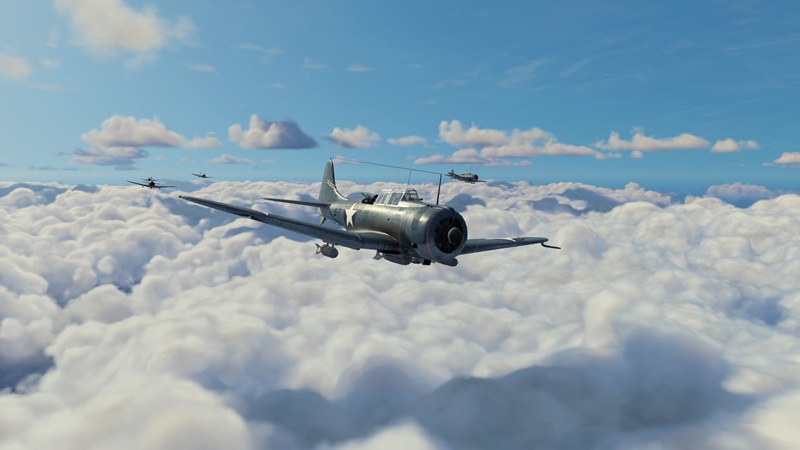
Task Force Admiral is a visually stunning wargame, ranking among the best-looking in the genre, alongside titles like Sea Power and Graviteam Tactics. The unit models are incredibly detailed with realistic colors, and effects like explosions and water splashes look fantastic. The ocean and skies are particularly impressive. While the ground terrain, especially on the Midway map, could use more detail, the game is still in Early Access, so improvements are likely. Currently, there are no crew members visible on the ships, but this feature was a stretch goal in the game’s Kickstarter campaign and will be added later.
The game features voice acting for mission briefings, which is a welcome touch. The voice actor does a good job capturing a 1940s style – enthusiastic but serious. Beyond that, the sound design is what you’d expect from a game like this: crashing waves, engine noise, and explosions – and it all sounds quite good.

How a game looks is especially crucial when it aims for realism, showing everything clearly and giving players immediate visual feedback instead of just relying on text messages. Task Force Admiral is a complicated game with many elements, and while the interface helps make sense of it all, the 3D graphics do the real work. For example, simply receiving a message that scouts have been sent isn’t as impactful as seeing the aircraft deck come alive as planes are moved around to prepare for takeoff. This difference is even more noticeable in air combat – knowing the results of a battle through a message is one thing, but watching the fight unfold in real-time, seeing each plane maneuver and attack, is a much more immersive experience.

The game looks fantastic, but you’ll need a fairly powerful computer to really enjoy it and get a smooth experience. While I was able to play it on my older machine with a few minor hiccups, it’s truly stunning on a more powerful PC. Be sure to check the minimum system requirements before you purchase.
Final Score 9/10
As long-time readers know, I prefer to review games I genuinely enjoy – life’s too short to waste time on things I don’t! I’m rating Task Force Admiral based on its current quality, specifically how detailed and realistic the carrier combat is, and how much care went into its development. Considering those aspects alone, it’s a 9 out of 10. However, given the limited amount of content and the lack of helpful tutorials, I’d say it’s more of a 7 or 8 overall. Still, no other naval strategy game has ever grabbed my attention quite like Task Force Admiral did – it made me want to drop everything and play!
Aside from the content itself, my biggest issue with Task Force Admiral is that the gameplay can get repetitive. The core loop of managing your fleet – setting up patrols, defenses, and attacks – doesn’t change much, and that can become tiresome. However, it’s worth noting that this repetition actually reflects the reality of World War II naval operations. If you’re a dedicated history enthusiast, you probably won’t mind it at all.
Task Force Admiral is clearly a passion project, built on the creator’s incredible commitment to historical accuracy and the skill of a very talented development team. It’s currently the most realistic and promising foundation for World War II carrier combat games we’ve seen, and I’m really looking forward to what the developers do with it next.
Read More
- All Skyblazer Armor Locations in Crimson Desert
- How to Get the Sunset Reed Armor Set and Hollow Visage Sword in Crimson Desert
- All Shadow Armor Locations in Crimson Desert
- Marni Laser Helm Location & Upgrade in Crimson Desert
- All Golden Greed Armor Locations in Crimson Desert
- All Helfryn Armor Locations in Crimson Desert
- Best Bows in Crimson Desert
- Keeping Large AI Models Connected Through Network Chaos
- All Icewing Armor Locations in Crimson Desert
- How to Craft the Elegant Carmine Armor in Crimson Desert
2026-02-03 17:45