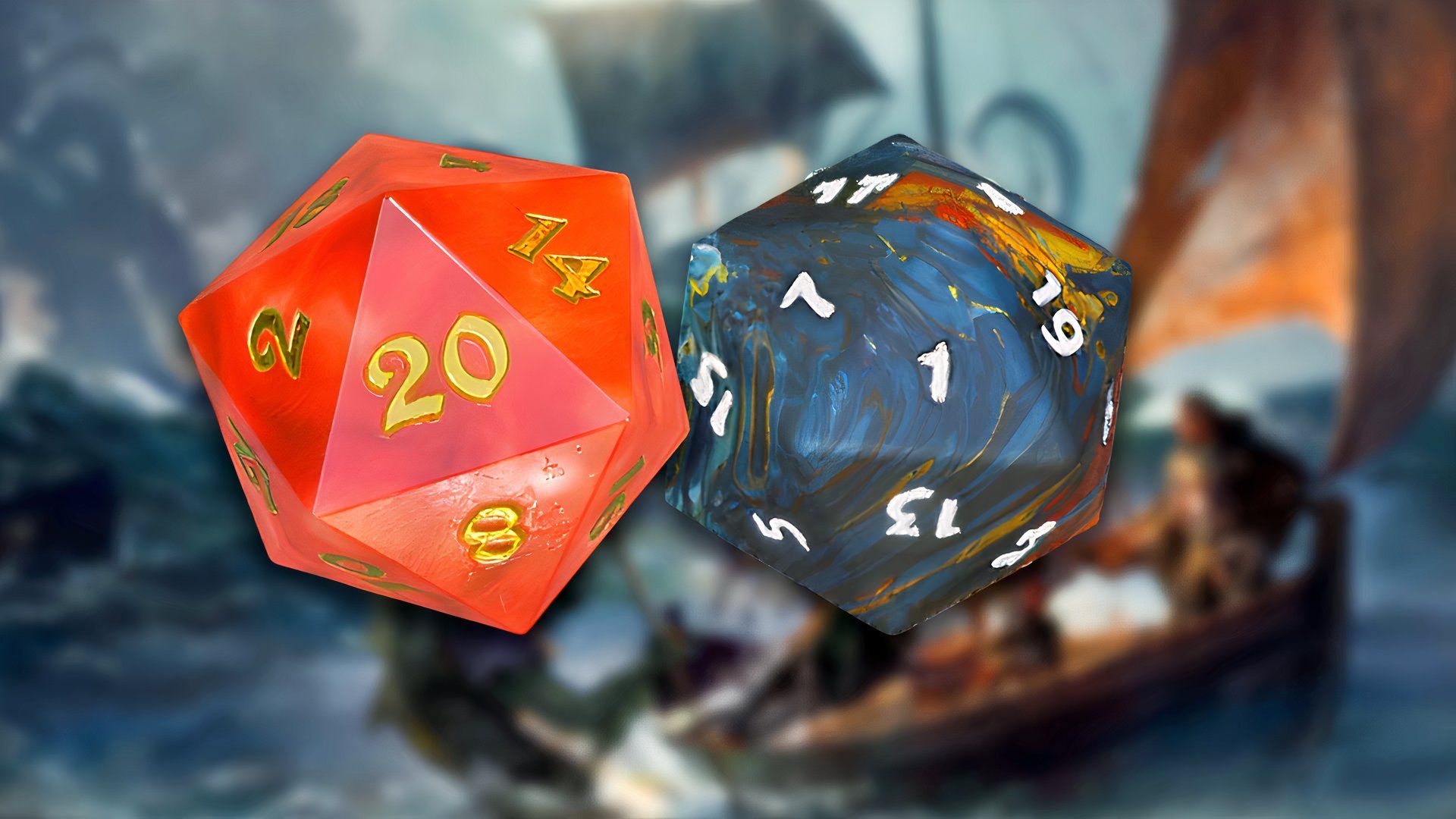
One of the key principles of Dungeons & Dragons is the “Rule of Cool,” which encourages Dungeon Masters to focus on players enjoying themselves rather than getting bogged down in strict rules. Because of this, it’s common for D&D groups to create homebrew rules – custom rules that better suit their specific game, story, and play style.
Sometimes, adding custom rules to the game can create a significant imbalance, giving players or enemies an unfair edge. If not carefully considered, these changes can lead to easily exploited situations, undermining the fun and fairness of the game and potentially disrupting the story’s intended experience.
Critical Success And Natural Failures
A 20 Or 1 On A Non-Attack Roll Must Go Either Way
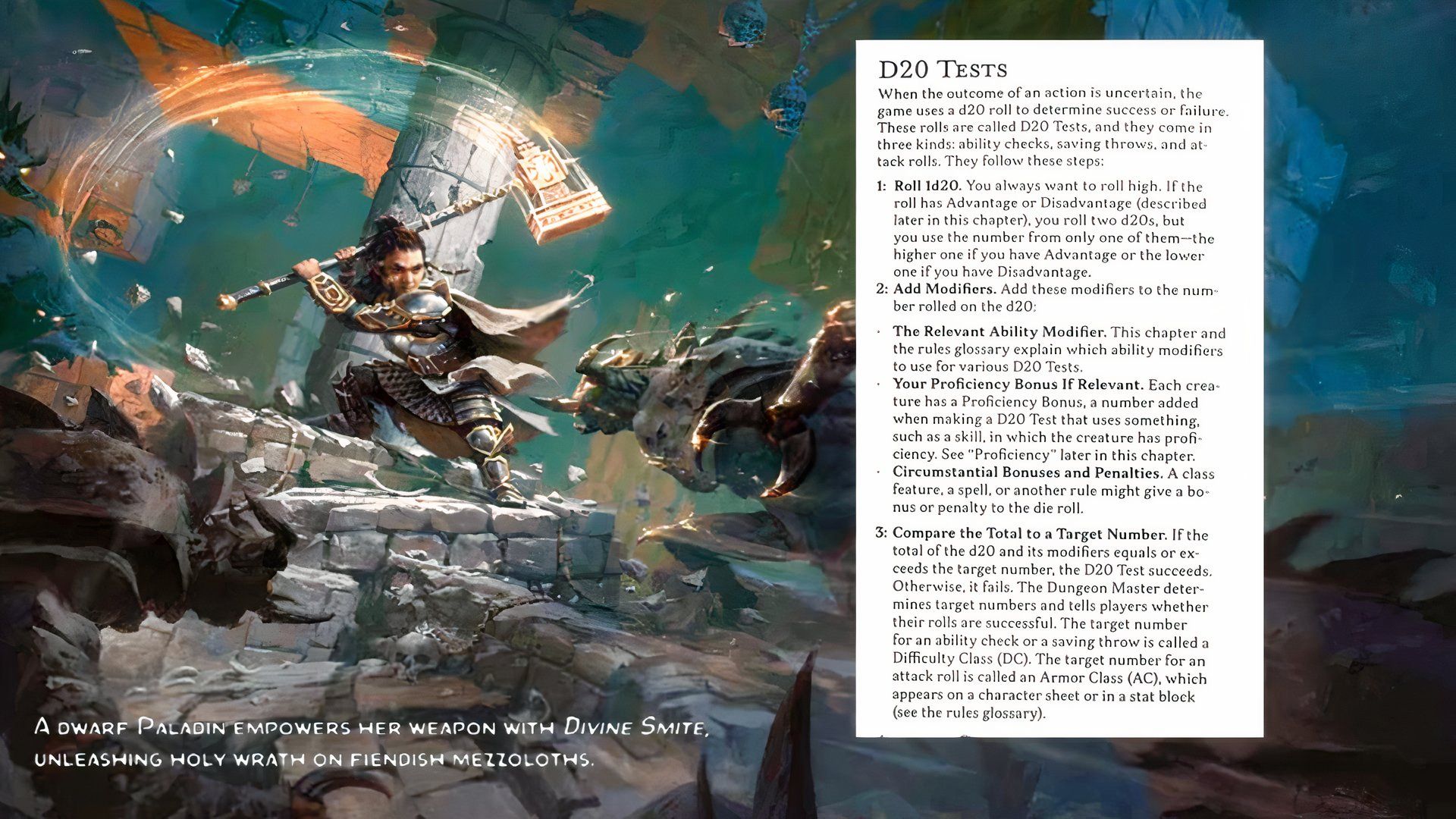 Image from the 2024 Revised Player’s Handbook
| THE HOMEBREW RULE | WHAT MAKES IT GAME-BREAKING |
| A Natural 1 or a Critical (Natural 20) on a dice equates to tremendous failure or a remarkable success | “Guaranteeing” a failure or a success based on Natural 1 or a Critical might not fit all situations — especially a Critical on a near-impossible situation. |
Players of Dungeons & Dragons know the excitement of rolling a 20 on a skill check – successfully jumping to safety, sealing a monster portal, or defeating the villain are all possible! Conversely, a roll of 1 can lead to disaster, even character death. While this dramatic range – from complete failure to incredible success – adds a lot of thrill to the game, it’s not part of the standard rules.
The updated rules for Dungeons & Dragons 5th Edition (2024) now categorize checks as “D20 Tests.” These tests include Attack Rolls (for hitting things), Saving Throws (for avoiding damage), and Ability Checks (for general skill attempts). All tests use a 20-sided die (d20) plus modifiers. However, only Attack Rolls can result in a natural 1 or a critical hit. The outcome of Ability Checks depends on how well you do compared to the Difficulty Class.
Ignoring Spell Components
A Spell Focus Doesn’t Exempt From Other Components
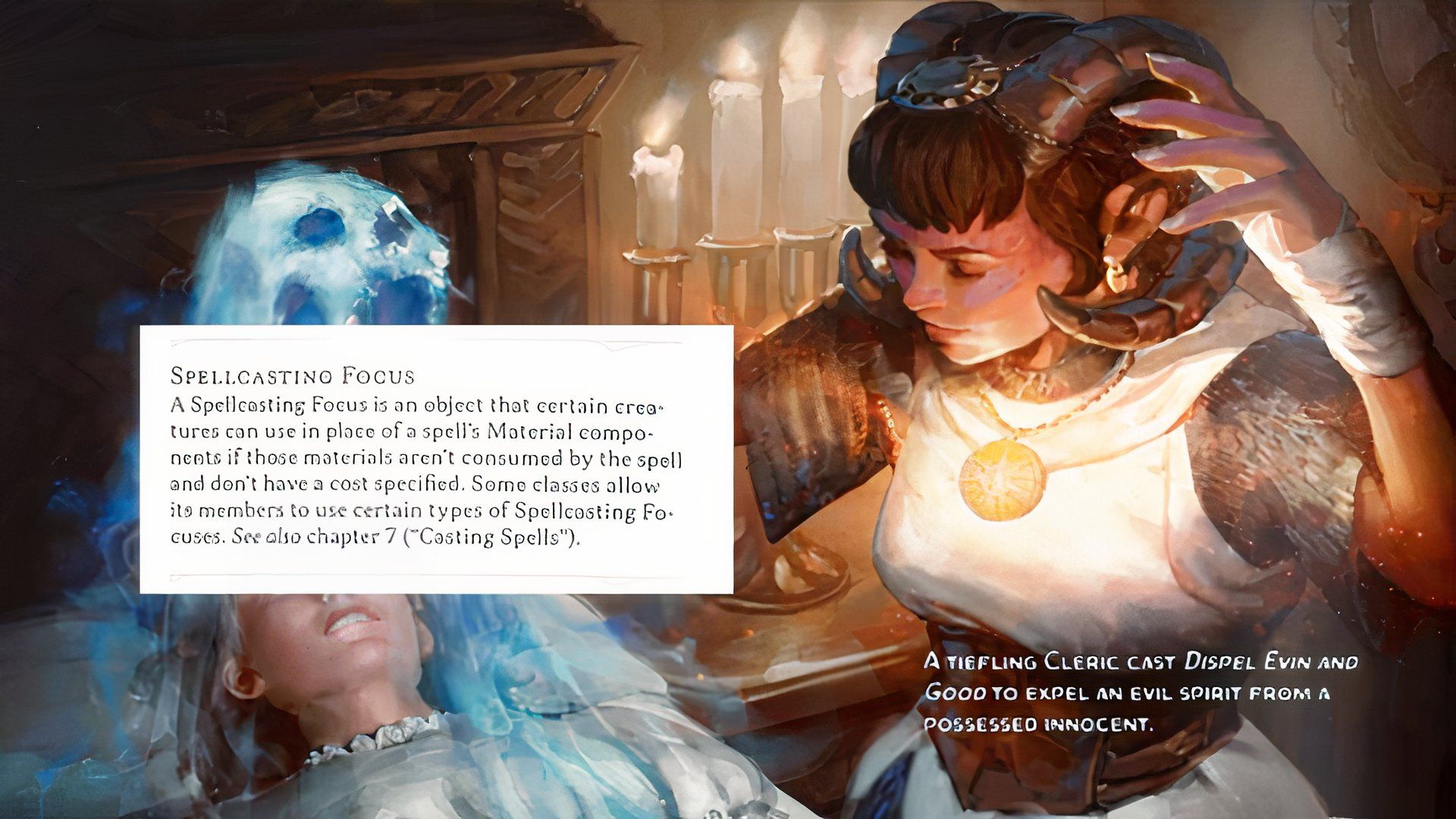 Rules in the 2024 Revised Edition Rules
 | THE HOMEBREW RULE | WHAT MAKES IT GAME-BREAKING |
| As long as a spellcaster has a Spellcasting Focus, they don’t need other Components to cast Spells. | The War Caster Feat exists because a spellcaster cannot ordinarily cast Somatic Spells while holding other objects. Likewise, a Spellcasting Foci does not exempt a user from needing consumable Components. |
In many fantasy stories, magic users cast spells through items like orbs, staffs, or books, so it’s natural that Dungeons & Dragons includes a similar idea. A Spellcasting Focus allows spellcasters to avoid needing specific materials for their spells – the Focus acts as a replacement. Instead of spending 10 gold pieces on incense to cast a spell like Find Familiar, a Focus can do the job. However, Spellcasting Foci are actually more nuanced than that simple trade-off.
In Dungeons & Dragons, a Spellcasting Focus can replace Material Components in a spell only if those components aren’t used up during the spell or don’t have a listed cost. A Component Pouch, on the other hand, can hold all Material Components without any cost. Importantly, a Spellcasting Focus doesn’t get rid of the need for Somatic (gestures) or Verbal (words) Components – you still need to perform those actions to cast spells that require them.
Rolling A Critical On Initiative Gets An Extra Turn
It Should Be 20 Plus The DEX Mod
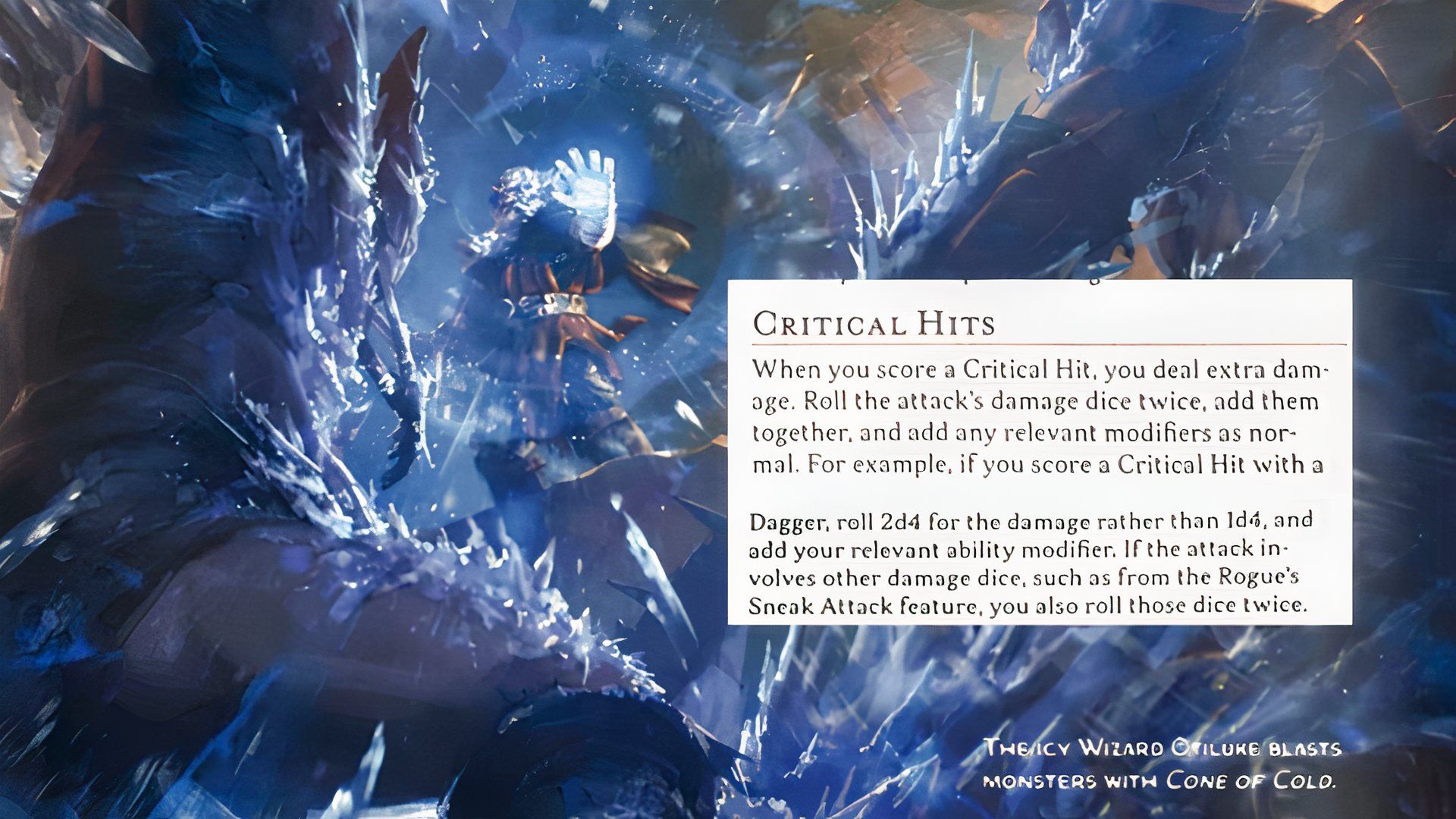 Rules in the 2024 Revised Edition Rules
 | THE HOMEBREW RULE | WHAT MAKES IT GAME-BREAKING |
| Rolling a Critical on Initiative gives said player an extra turn before the Initiative Order starts. | An extra turn on a Critical can be a tremendous Advantage for the recipient, as they can prepare setups even before the battle occurs. |
In Dungeons & Dragons, the order players act in during combat—called Initiative—is crucial. Going first gives a big advantage, so a popular homebrew rule lets players earn an extra turn if they roll a critical success on their Initiative roll. This can dramatically change the game, no matter who gets it. For example, characters built around quickly dealing lots of damage (often called “Nova” builds) can essentially double their output, and close-combat fighters can take out key enemies in a single round. Consider an 11th-level Fighter who can attack twice per turn normally: with an extra turn and their Action Surge ability, they could potentially make six attacks in one round!
The original Dungeons & Dragons rules meant being surprised completely shut down a character’s first turn, leading players to create their own ‘surprise round’ rules to balance things out. This often gave players an edge, or created difficult encounters with monsters who took advantage of the situation. Now, in the revised rules, being surprised simply makes your initiative roll harder – you roll with disadvantage – rather than completely preventing you from acting.
Long Rest Anytime, Anywhere
Resource Management Becomes Meaningless
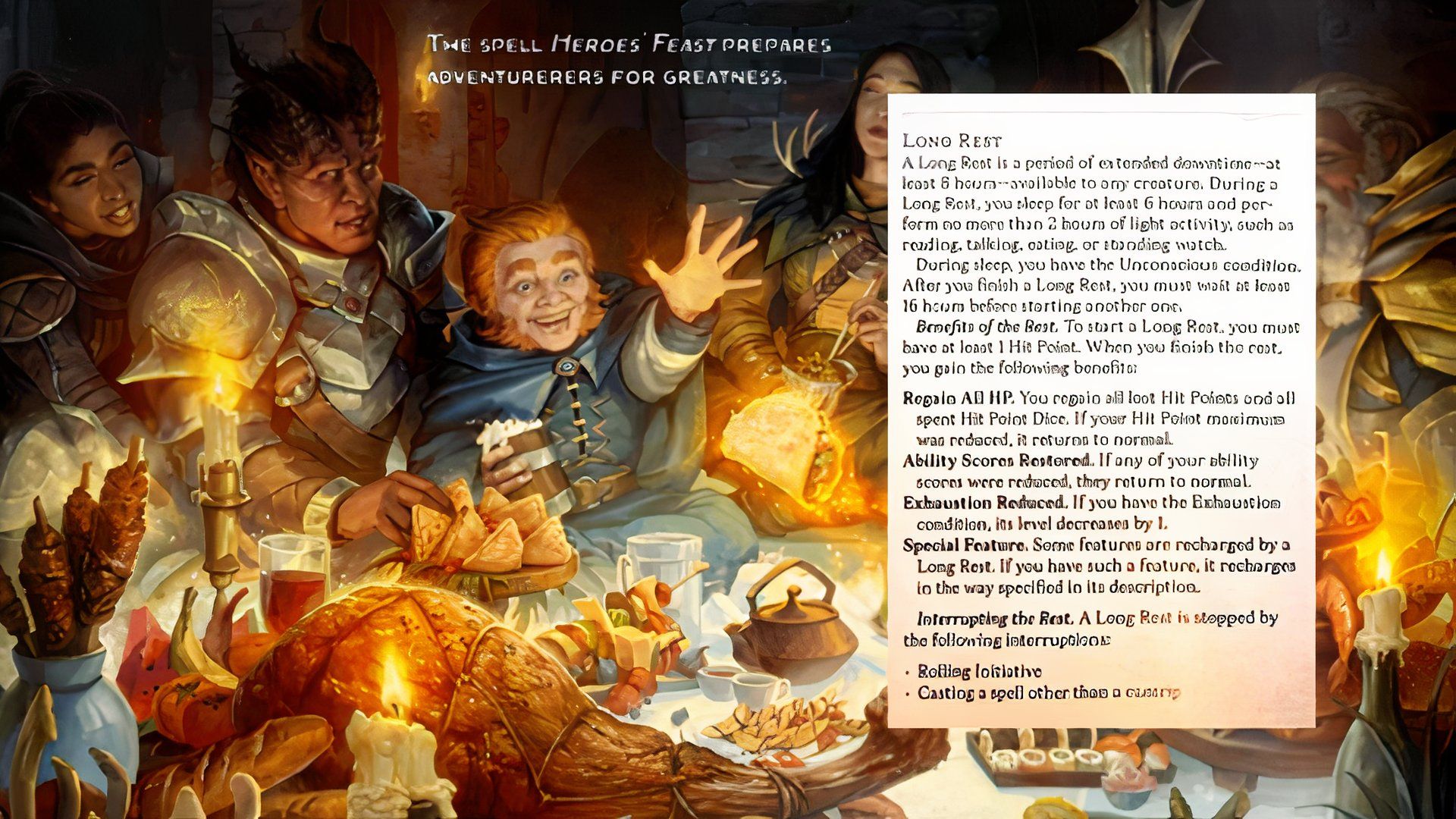 Image from the 2024 Revised Edition Player’s Handbook
 | THE HOMEBREW RULE | WHAT MAKES IT GAME-BREAKING |
| Players are allowed to take Long Rests anywhere, even in dangerous locations. | This eliminates the need for resource management, especially when given a chance to rest in a difficult dungeon. |
In Dungeons & Dragons, how players use their spells is a key part of the game. Players often quickly dismiss spells that seem very specific or limited, but this can encourage experimentation, especially if they know they can easily recover with a long rest. Recently, some Dungeon Masters have been allowing players to set up spells at any time and in any location, a trend likely influenced by the popularity of Baldur’s Gate 3, which often features limited opportunities for long rests.
Letting players recover their spell slots with a Long Rest anytime, anywhere, can make the game less challenging. In Dungeons & Dragons, spells need to use up valuable spell slots to ensure players carefully consider when and how to use them. This forces strategic thinking: is now the right moment to cast a spell, or should that slot be saved for later? This is particularly important for players who like to use all their powerful spells at once, even if it means limiting their options for the rest of the encounter.
 Find all 10 pairs Results
Critical Hits Mean Max Damage Plus A Damage Dice
Crit Creep Builds Become Encouraged
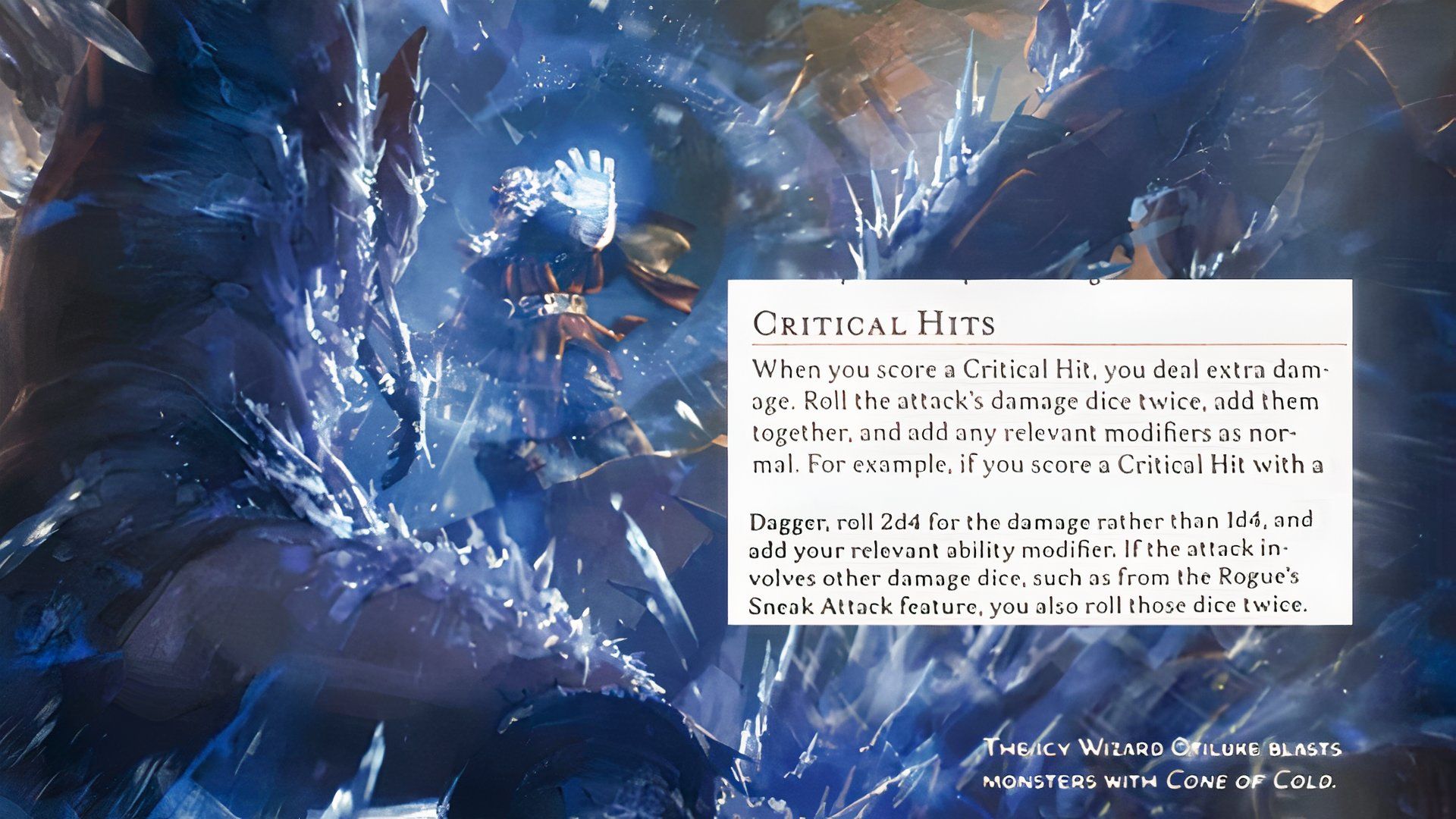 Image from the 2024 Revised Edition Player’s Handbook
 | THE HOMEBREW RULE | WHAT MAKES IT GAME-BREAKING |
| When rolling a Critical Hit, the Maximum Damage available for that attack is taken on top of a regular Damage Roll. | This can encourage the creation of Critical-creeping builds instead of more diverse characters. |
In Dungeons & Dragons, a Critical Hit is a big success, letting players double the damage they roll with an attack. With certain abilities, a Critical Hit can even happen on a roll of 19 instead of 20, or deal even more damage. Because of this, a custom rule that automatically gives the highest possible damage on a Critical Hit and adds extra damage dice might be too strong for players.
This rule set unintentionally pushes players towards focusing on maximizing critical hits – either by building their characters to roll dice more often, or by making it easier to achieve a critical hit. Unfortunately, this can discourage players from experimenting with diverse and imaginative character builds, as they prioritize simply dealing more damage. This problem is even worse when enemies also benefit from frequent critical hits, as many monsters already have powerful abilities that can deal significant damage.
Free-Hand Casting
Holding A Shield Does Not Count As A Free Hand
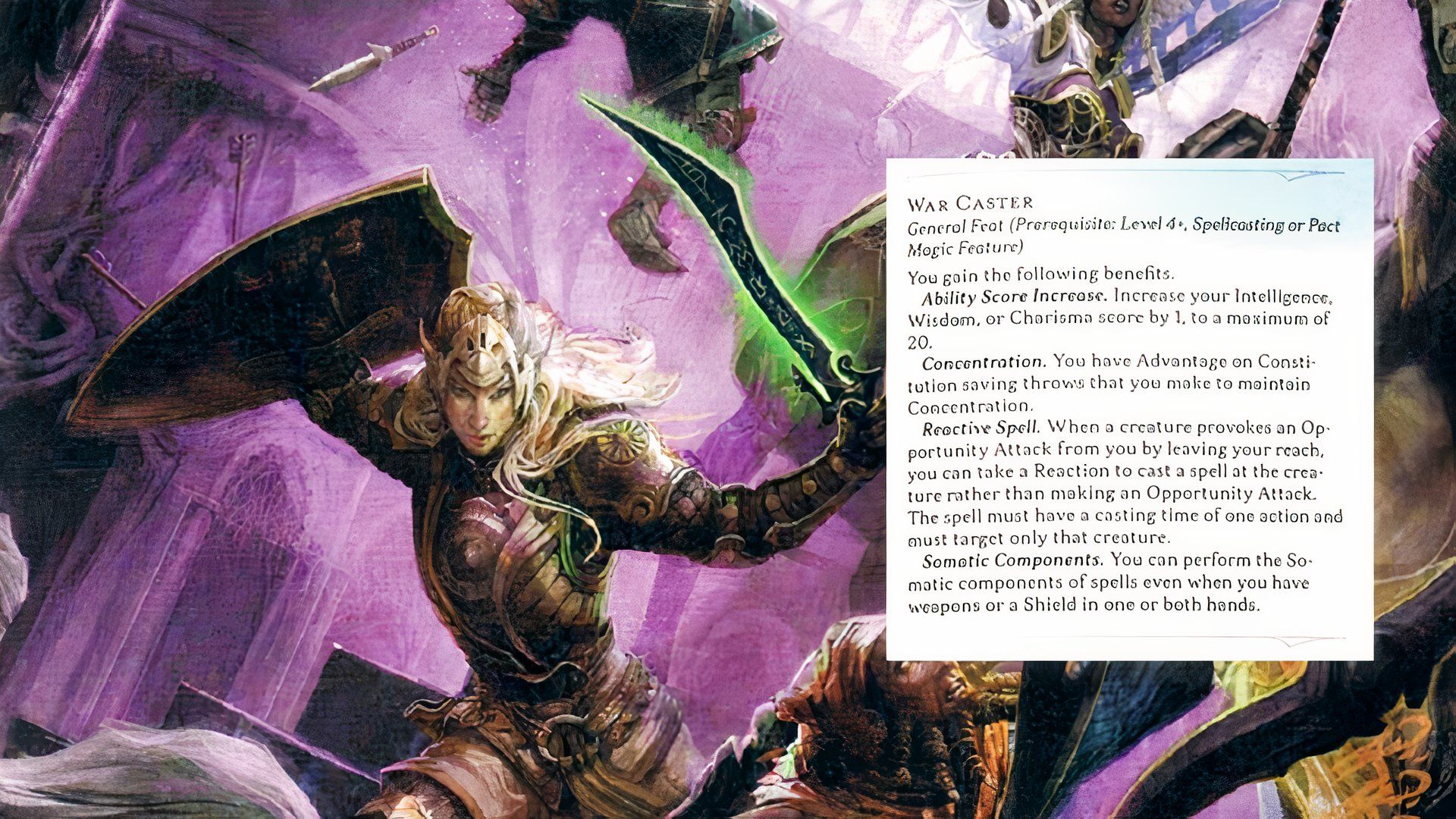 Image from the 2024 Revised Edition Player’s Handbook
 | THE HOMEBREW RULE | WHAT MAKES IT GAME-BREAKING |
| Spellcasters are allowed to cast most Spells, even when holding a staff with two hands or having a staff and a shield. | Somatic Components denote gestures, often with a full hand. This means a hand grasping a shield doesn’t count as a free hand that can make gestures, ergo stopping the Somatic Component. It’s for this reason that a Feat like the War Caster exists. |
Spell components are a key part of Dungeons & Dragons spells, particularly for players aiming to optimize their characters for challenging campaigns. Each spell requires a specific gesture (somatic), spoken words (verbal), or even materials to work correctly. Somatic components—the gestures required for casting—are often underestimated, as the game rarely prevents characters from moving their hands and arms.
Many homebrew adjustments to the game allow spellcasters with the “Free-Hand Casting” ability to cast spells requiring hand gestures even while holding a two-handed staff or using a shield. This changes a core rule – normally, spellcasters need free hands to perform these gestures. The War Caster feat exists specifically to address this limitation, letting casters cast spells even without a free hand.
Flanking Gives Advantage
Exploit Free Advantage When Conga-Lining The Enemy
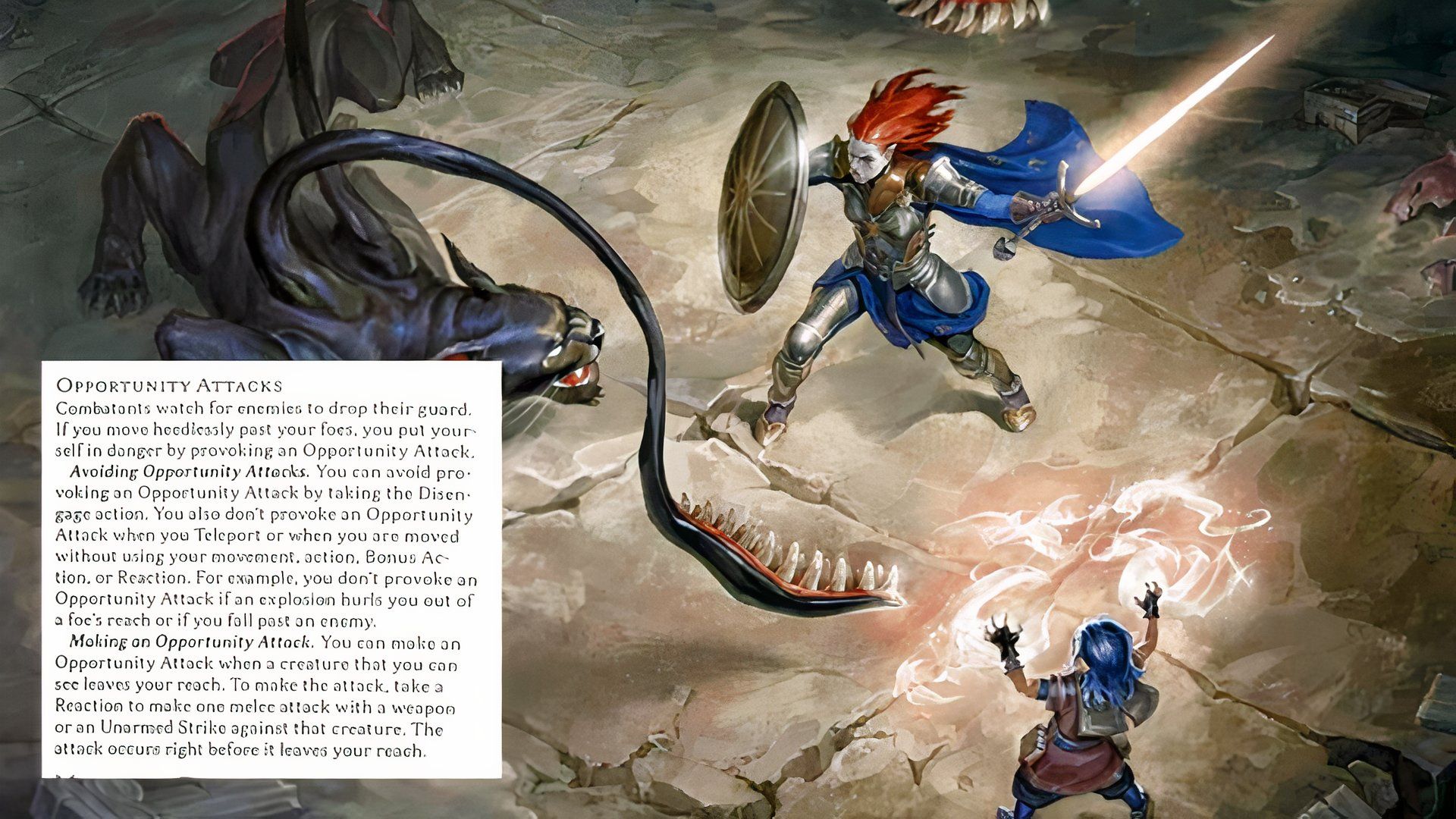 Image from the 2024 Revised Edition Player’s Handbook
 | THE HOMEBREW RULE | WHAT MAKES IT GAME-BREAKING |
| An enemy flanked on any side by an ally will be attacked with Advantage. | Provides easy access to Advantage just by standing in the right spot, and enemies can be taken across a conga line for continuous Advantage-based attacks. |
Many Dungeons & Dragons groups—whether they play the current Fifth Edition or older versions with more character classes—have a rule about flanking. In Fifth Edition, flanking is optional and gives an attacker an advantage if an ally is positioned on either side of the target. The idea is that this represents teamwork and someone watching for trouble. However, the rule was removed in the 2024 revised edition because it was often misused and caused problems.
The “free Advantage” mechanic is easily abused. If enemies are flanked or positioned so players can cut off their retreat, they become vulnerable to guaranteed hits and even give attackers an advantage on opportunity attacks. A party can essentially create a line and move past an enemy, with each member attacking with Advantage. Players often complain when enemies use flanking tactics, even though enemies usually outnumber the party in battles, making this inconsistency frustrating.
Read More
- All Skyblazer Armor Locations in Crimson Desert
- How to Get the Sunset Reed Armor Set and Hollow Visage Sword in Crimson Desert
- All Shadow Armor Locations in Crimson Desert
- Marni Laser Helm Location & Upgrade in Crimson Desert
- One Piece Chapter 1180 Release Date And Where To Read
- All Helfryn Armor Locations in Crimson Desert
- All Golden Greed Armor Locations in Crimson Desert
- All Icewing Armor Locations in Crimson Desert
- How to Beat Stonewalker Antiquum at the Gate of Truth in Crimson Desert
- Legendary White Lion Necklace Location in Crimson Desert
2026-02-06 14:39