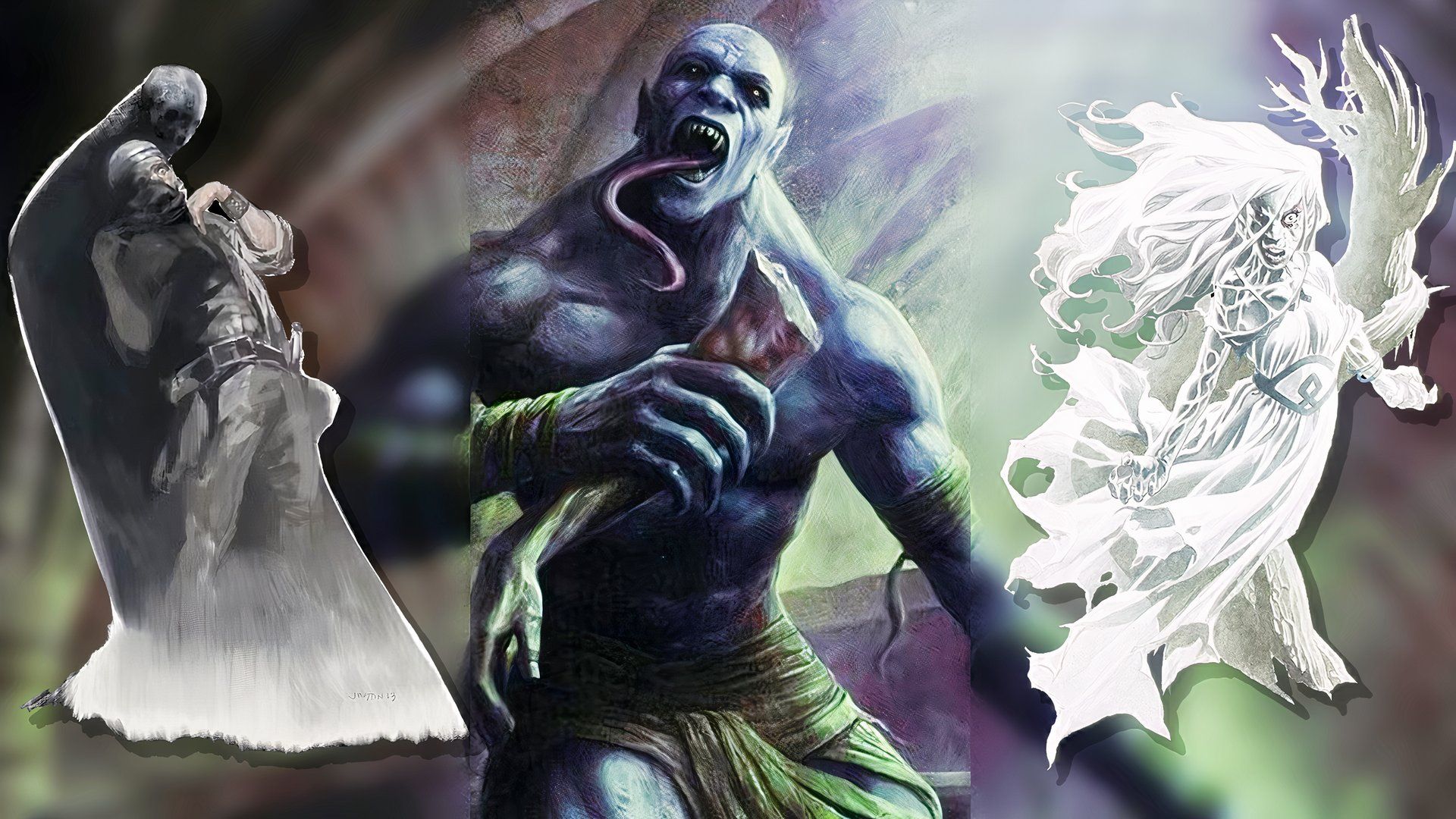
The Monster Manual is full of creatures that can make Dungeons & Dragons more challenging, but some are often overlooked for stronger, higher-level monsters. While those powerful foes are certainly tougher on their own, the Monster Manual offers plenty of creatures that use tactics like swarming, trickery, and evasion to create surprisingly difficult encounters.
I’ve been brainstorming for our next D&D session, and I’ve found 10 monsters that I think could really throw the players for a loop! They might not lead to epic, dragon-slaying moments, but I have a feeling these encounters will force everyone to think outside the box and really work together – which is always a good thing, right?
Who’s That Character?  Identify the silhouettes before time runs out.
Results
High Score: 0 —
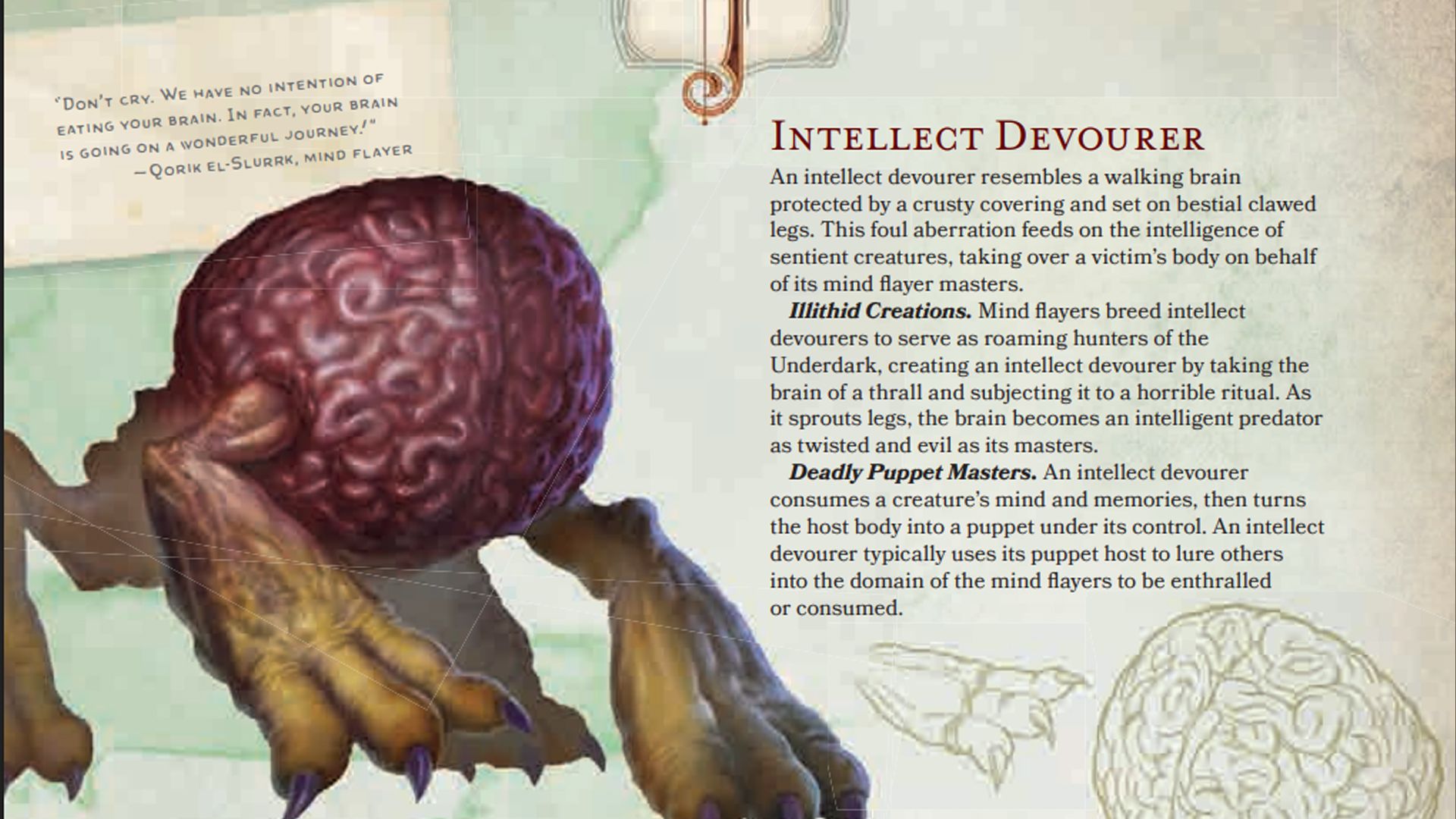
Intellect DevourersIntellect Devourers
These creatures can melt their target’s mind, crippling them in combat
 Credit: Wizards of the Coast
 - AC: 12
- HP: 21
- CR: 2
Intellect Devourers are a memorable enemy in Baldur’s Gate 3, and rightfully so! They present a significant challenge early in the game with the potential for real consequences. They’re tough to fight with resistance to most physical attacks from normal weapons, and their special ‘Devour Intellect’ ability forces a target to make a difficult Intelligence saving throw. If the target fails, their intelligence can be reduced to zero, immediately stunning them.
These creatures can also target a helpless humanoid and initiate a mental battle (Intelligence check). If the player fails, the Intellect Devourer takes control of their character’s body, potentially leading to death even if the creature is later defeated. This is especially dangerous for characters who rely on Intelligence, such as Wizards and Artificers, and can quickly sideline a player. They’re great for tricking players into a false sense of security – after easily defeating a few, players might not anticipate such a sudden and devastating attack on a character’s mind.
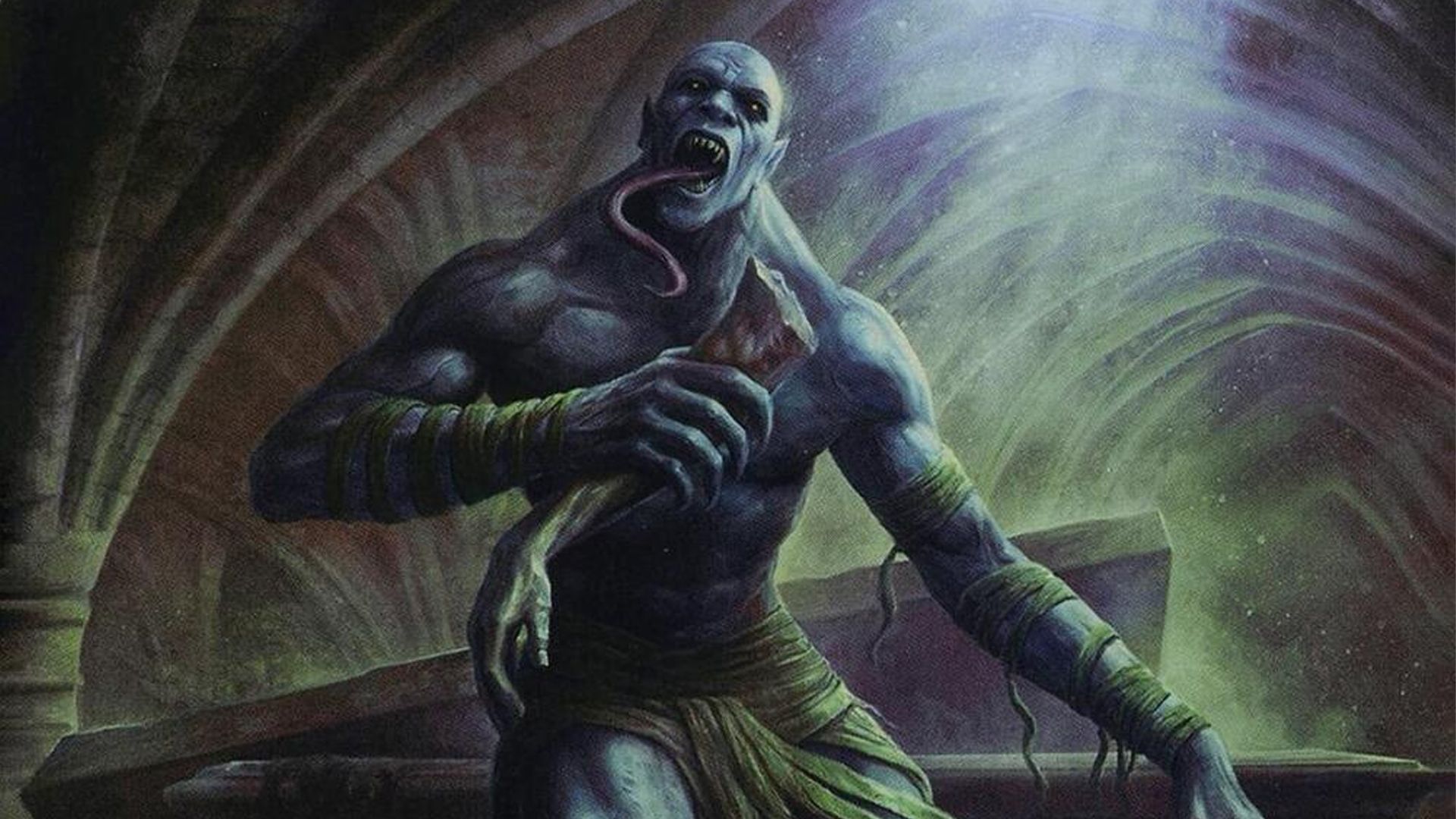
Ghouls
Elves or Undead are the only creatures escaping the Ghoul’s paralyzing claws
 Credit: Art Series: Adventures in the Forgotten Realms
 - AC: 12
- HP: 22
- CR: 1
Ghouls are dangerous opponents, comparable in strength to Intellect Devourers, despite only being a challenge rating 1. Their Bite and Claw attacks aren’t particularly strong, dealing 2d6+2 and 2d4+2 damage respectively. However, the claws have a unique and powerful effect: they can instantly paralyze a target, effectively removing them from combat.
The creature’s claw attack forces most targets – excluding the undead and elves – to succeed on a saving throw (difficulty class 10) or suffer a debilitating effect. While tougher characters might resist, this attack can be very dangerous at lower levels, especially if the players haven’t faced it before. This presents a good chance for them to learn how to deal with conditions like paralysis during a fight.
While a couple of Ghouls aren’t much trouble, encounters can quickly become difficult if players are stuck constantly trying to avoid paralysis instead of attacking.
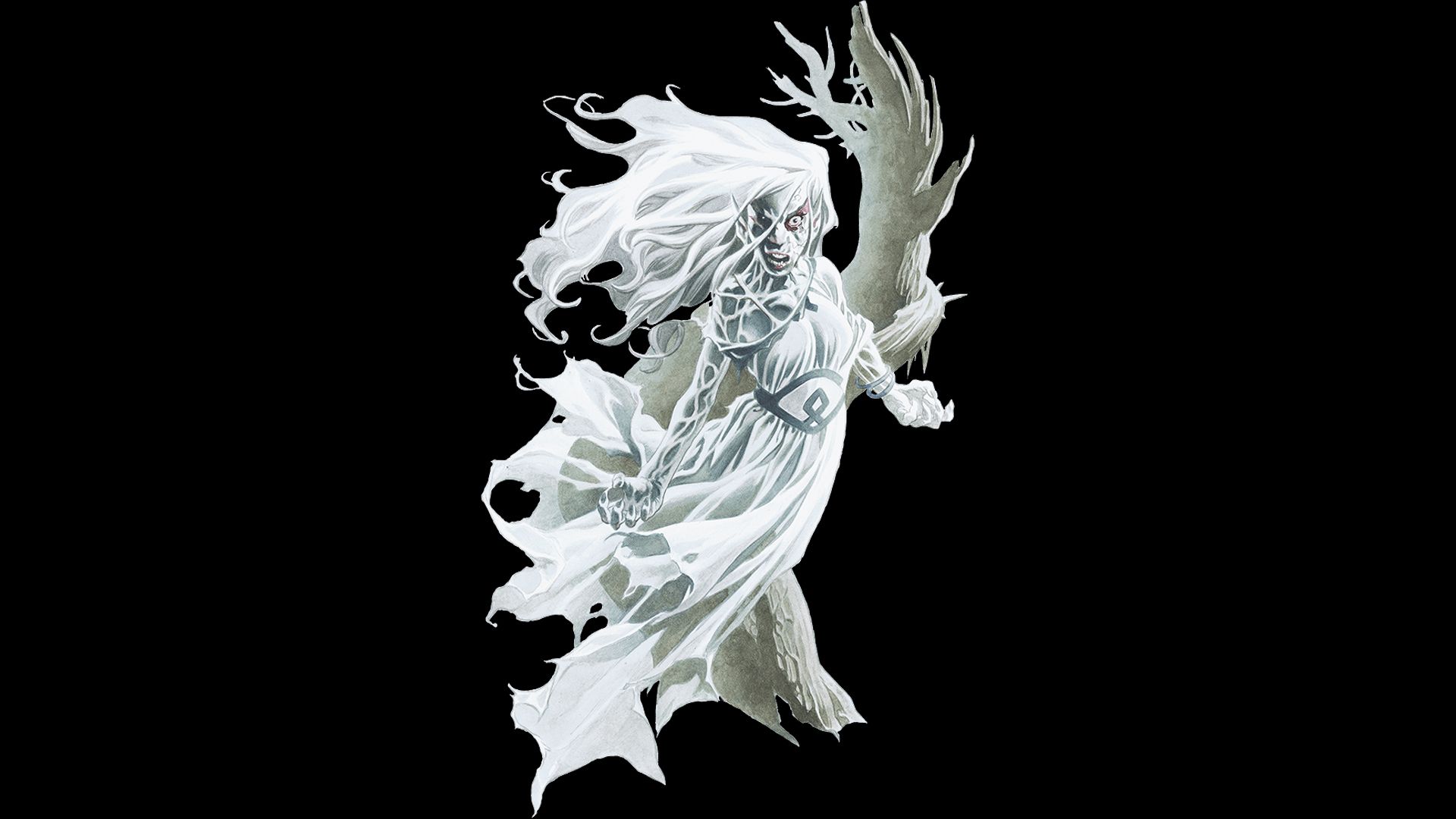
Banshees
There’s no avoiding Banshees, nor their debilitating Wail
 Credit: Wizards of the Coast, D&D 5e Monster Manual
 - AC:12
- HP: 58
- CR: 4
Banshees are dangerous creatures, even for experienced adventurers. A group of just three can challenge a party of four seventh-level characters. Their 58 hit points mean they’re not easily defeated, making for a difficult fight.
Banshees have a special ability called Detect Life, letting them sense almost any living creature within 5 miles. While it doesn’t pinpoint exact locations, it makes hiding or running away very difficult. They’re also quite fast, moving at 40 feet per turn, which is quicker than most players, so escaping a confrontation is unlikely.
These creatures are truly dangerous because of their Wail ability, which they can use only once each day. If a character fails a Constitution saving throw (difficulty class 13), they are instantly defeated. Even if a character succeeds on the save, they still suffer 3d6 psychic damage, potentially up to 18 points!
A Banshee’s scream is incredibly dangerous, and a party will likely struggle without someone who can counter its effects. While officially rated as a challenge rating 4 creature, its potential to instantly defeat an entire party makes some wonder if it should be even more challenging.
Mimic
From chests to wardrobes, even entire rooms, Mimics can perfectly replicate any object and trap their enemies
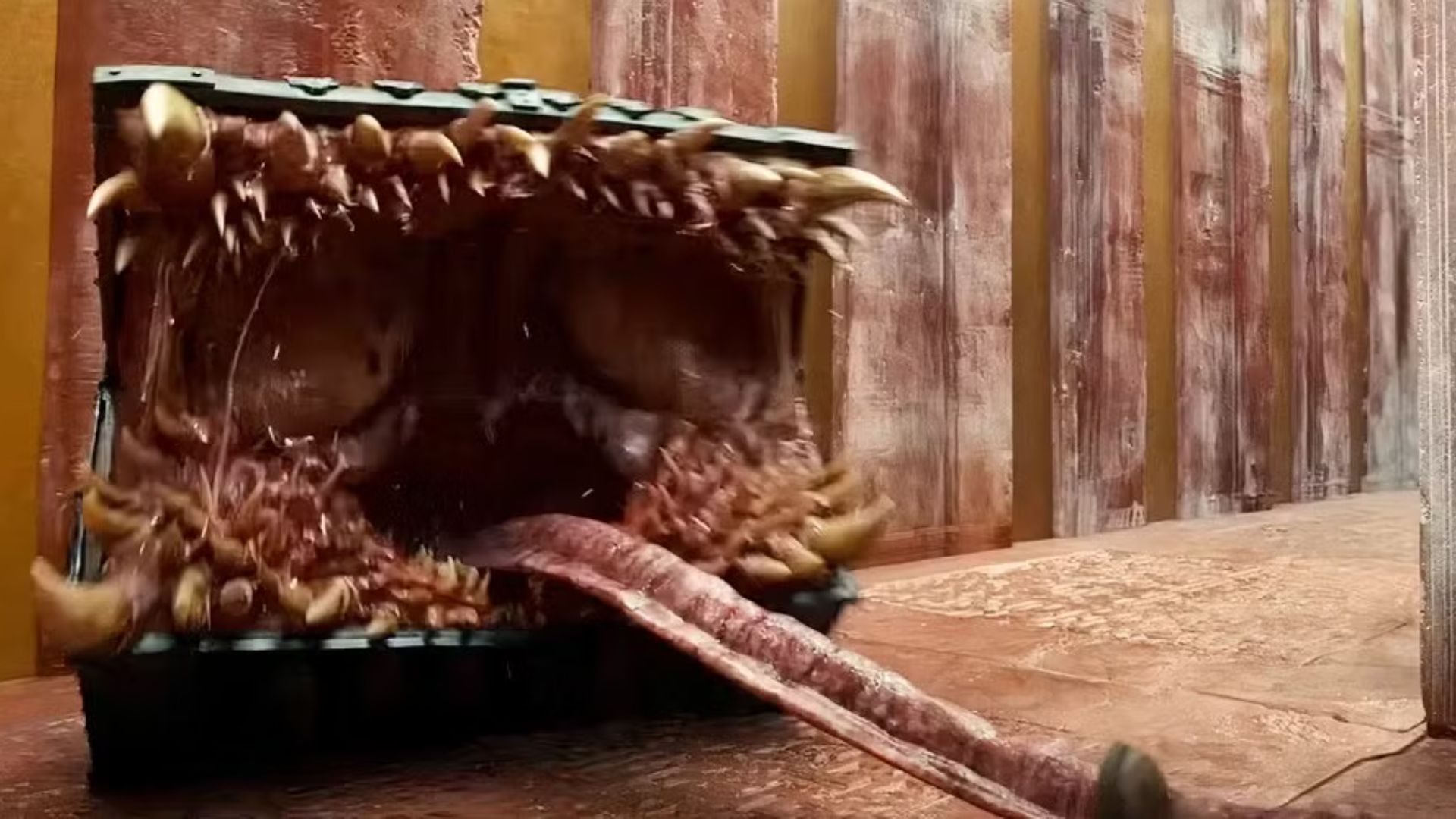 Credit: Wizards of the Coast
 - AC:12
- HP: 58
- CR: 2
Mimics are among the most famous monsters from the world of Dungeons & Dragons, and they often appear in other games and stories. They’re notorious for ambushing adventurers at the worst possible moments, often disguised as treasure chests or piles of gold. While they might seem like just a fun surprise, Mimics can be genuinely dangerous. When disguised as an object, they can stick to anything that touches them, effectively trapping their victims.
To avoid being stuck or to break free from a Mimic’s grasp, a player needs to succeed on a Strength (Athletics) or Dexterity (Acrobatics) check, competing against the Mimic. Escaping its hold is also harder than usual, as these checks are made with disadvantage, making the Mimic a particularly challenging enemy to fight.
Creatures grappled by a Mimic are also at a disadvantage in close combat, as the Mimic gains an advantage on its attack rolls against them. Despite being a relatively low-level threat (CR 2) with a modest armor class of 12, a Mimic can quickly overwhelm and break through even strong parties’ defenses.
Gas Spore
Armed with fatal Death Bursts, Gas Spores can end enemies, with only a slim window to recover
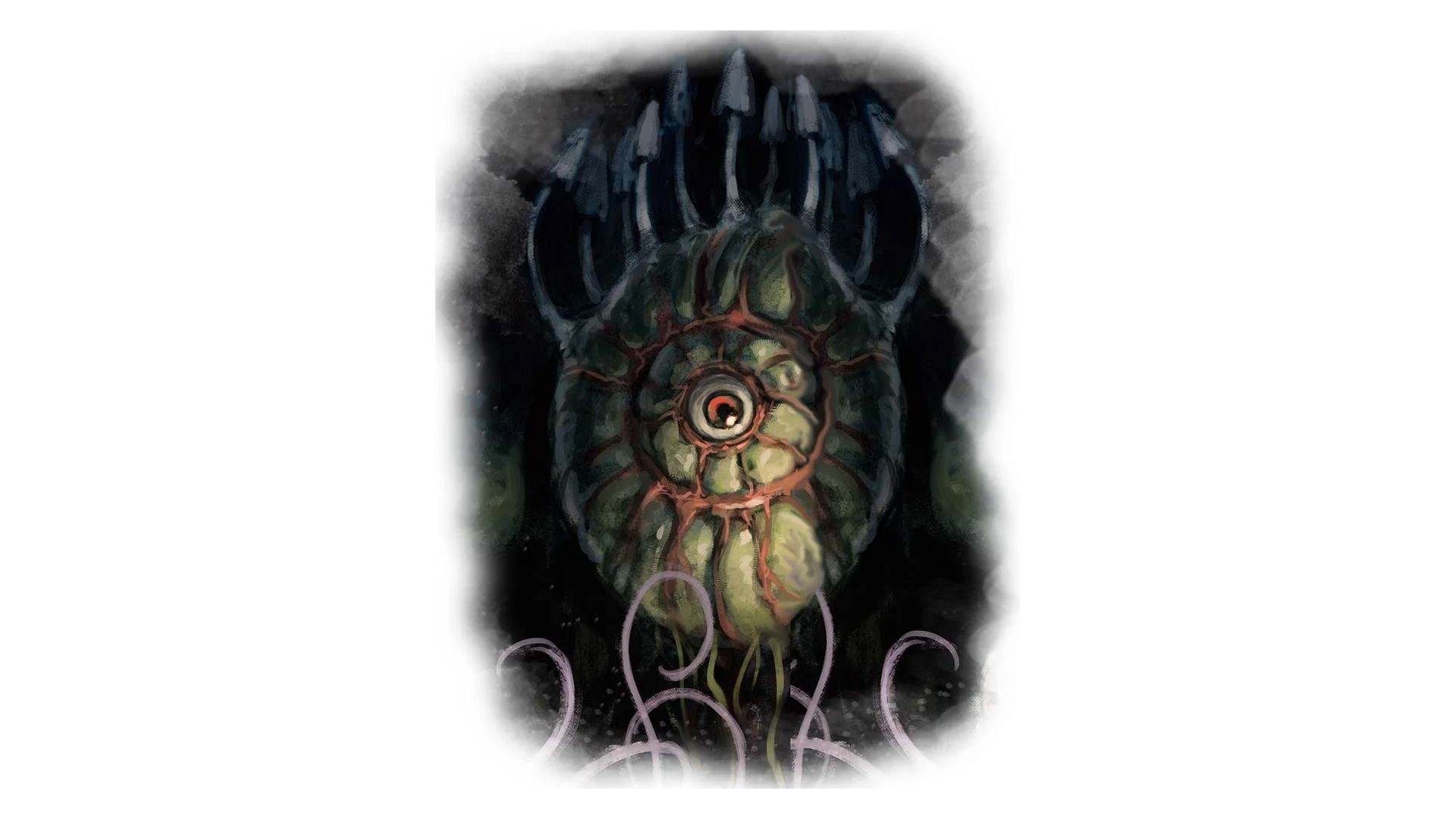 Credit: Monster Manual (5th Edition), Wizards of the Coast
 - AC: 5
- HP: 1
- CR: 1/2
The Gas Spore is a surprisingly dangerous monster from Dungeons & Dragons, even though it’s officially considered very weak. While its attack—a simple touch—only does 1 point of damage and it has just 1 hit point itself, it can still be a deadly encounter for players.
Despite generally weak stats, this creature’s Death Burst is a powerful ability. When it’s defeated, it explodes in a burst of spores. Every creature within 20 feet must make a Constitution saving throw (DC 15). Those who fail take 3d6 damage and become infected.
If a creature is infected, it will die after a period of time determined by rolling 1d12 and adding the creature’s Constitution score. As the disease takes hold, the creature’s condition will worsen. When the infected creature dies, it releases spores from its corpse, which mature and spread the disease further. While players can try to find a cure, it’s not always possible, particularly if they encounter these creatures in their native environment, the Underdark.
Animated Armor
These suits can knock players out cold for a whole fight, with one spell save
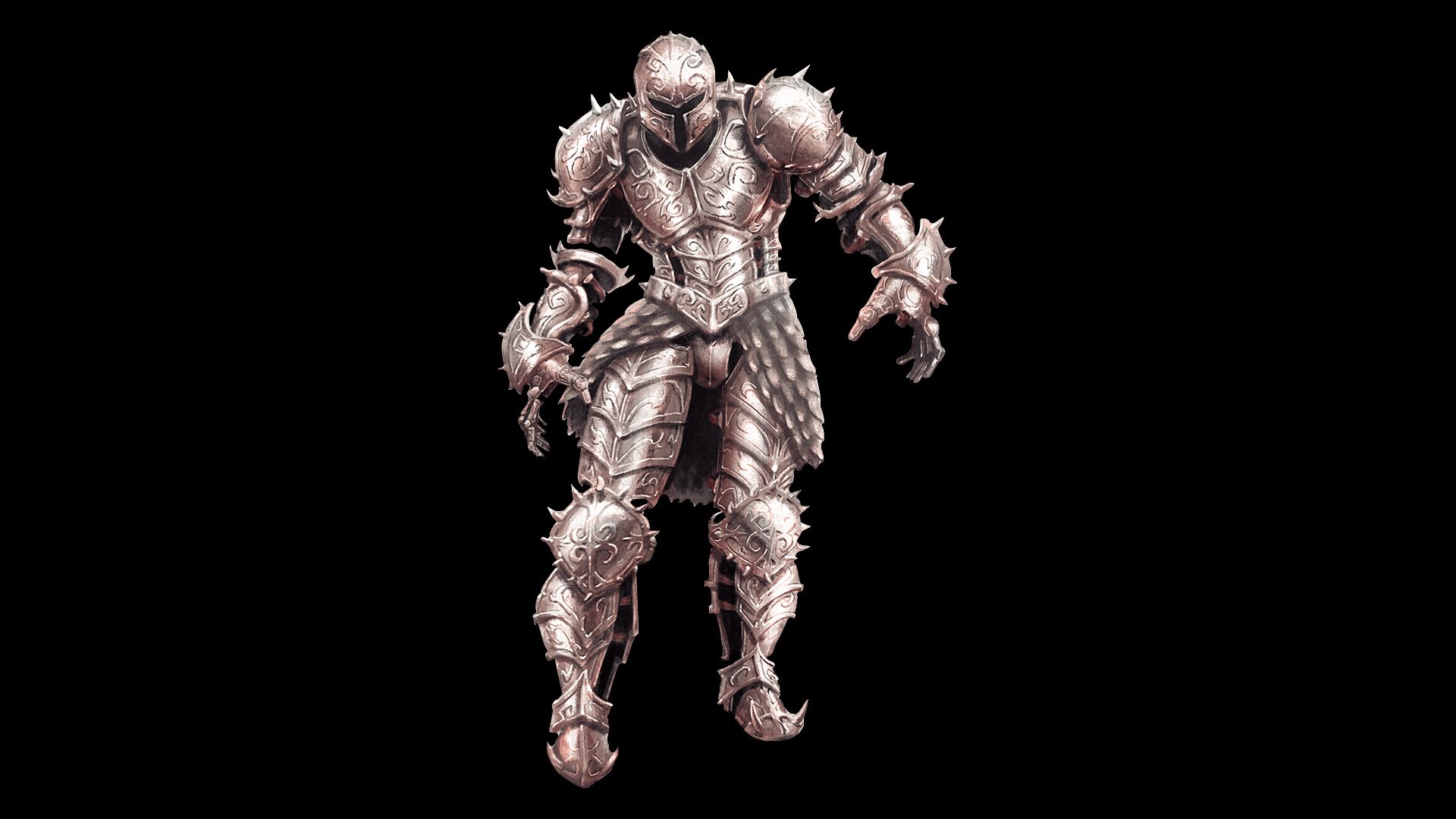 Credit: Wizards of the Coast
 - AC: 18
- HP: 33
- CR: 1
As a longtime D&D fan, I’ve always loved Animated Armor – it’s just such a classic monster! But honestly, because it’s only a Challenge Rating 1, I think a lot of DMs underestimate it. It’s surprisingly durable! Being a construct, it’s immune to a ton of conditions – things like being blinded, charmed, or even poisoned just don’t affect it. Plus, its Armor Class is really high, so even experienced players can have a hard time consistently hitting and damaging it. It’s tougher than it looks, that’s for sure!
These creatures can attack multiple times in a single turn, but thankfully, that’s their only offensive ability. Unlike some other monsters, they have specific weaknesses players can use to their advantage – antimagic fields and dispel magic completely shut them down. Also, their ability to perceive things without relying on sight only extends 60 feet, effectively limiting their awareness beyond that range.
This creature is best suited for the beginning of the game, but placing a few Animated Armor suits in a noble’s manor can definitely give players pause – if they live through the first encounter, that is.
Nilbog
Magical creatures that avoid damage and even heal themselves with a reaction
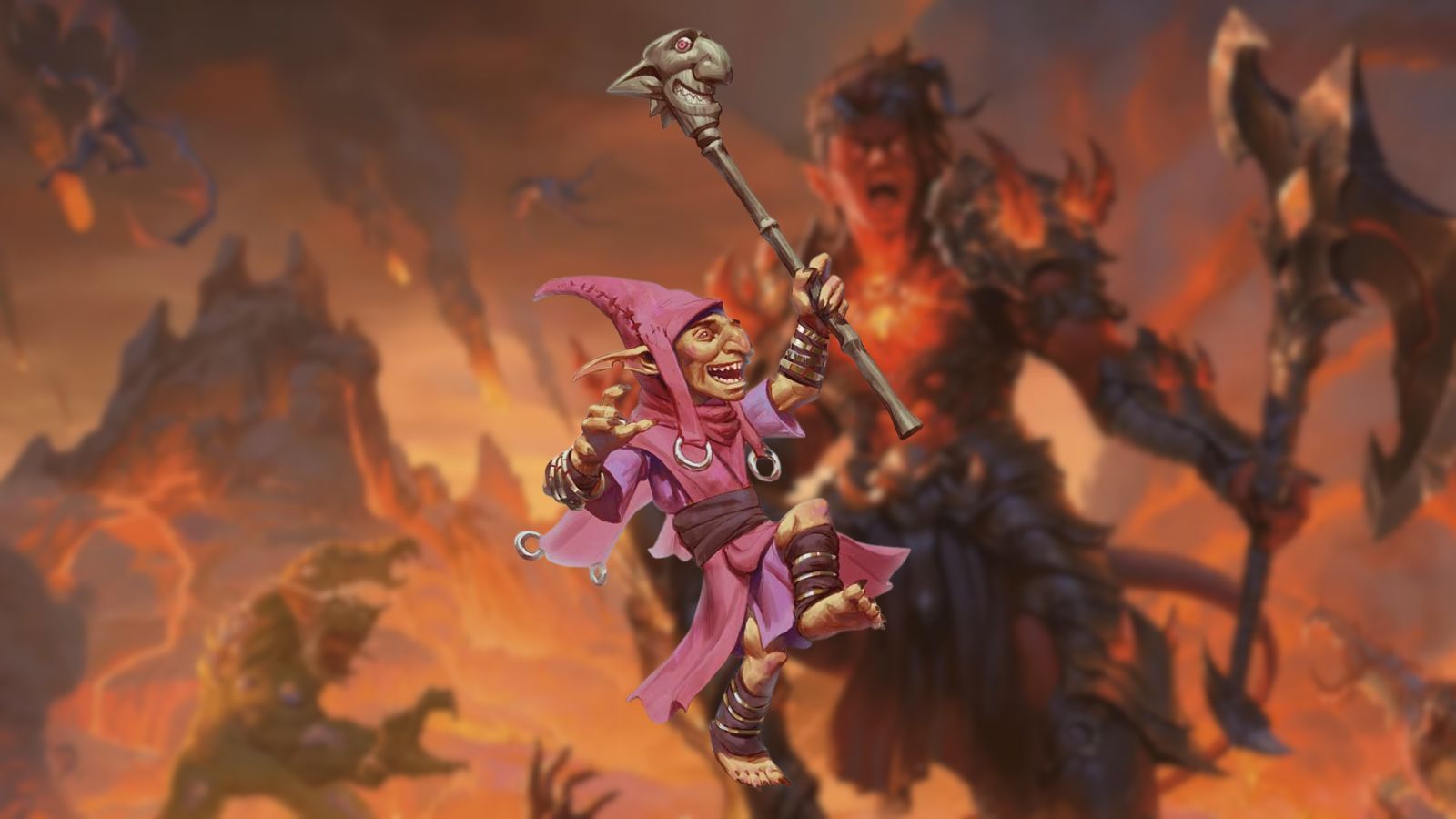 Credit: Wizards of the Coast
 - AC: 13
- HP: 7
- CR: 1
Nilbogs are fragments of a mischievous god who now inhabits Goblins, creating conflict within their communities. Though incredibly fragile, they are immune to harm. Their special ability, Nilbogism, forces anyone attempting to attack them to make a Charisma save (difficulty 12). If they fail, they become charmed by the Nilbog until their next turn and will spend that turn praising it instead of fighting.
If a character somehow bypasses the initial defense and harms the Nilbog, they can use a special reaction called Reversal of Fortune to completely negate the damage and heal themselves for 1d6 hit points instead. This makes the Nilbog a surprisingly tough opponent, and it’s generally best to defeat it quickly with a single, powerful attack. While it only has 7 hit points, making it easier to defeat at higher levels, a party encountering it for the first time might be surprised by this unusual ability.
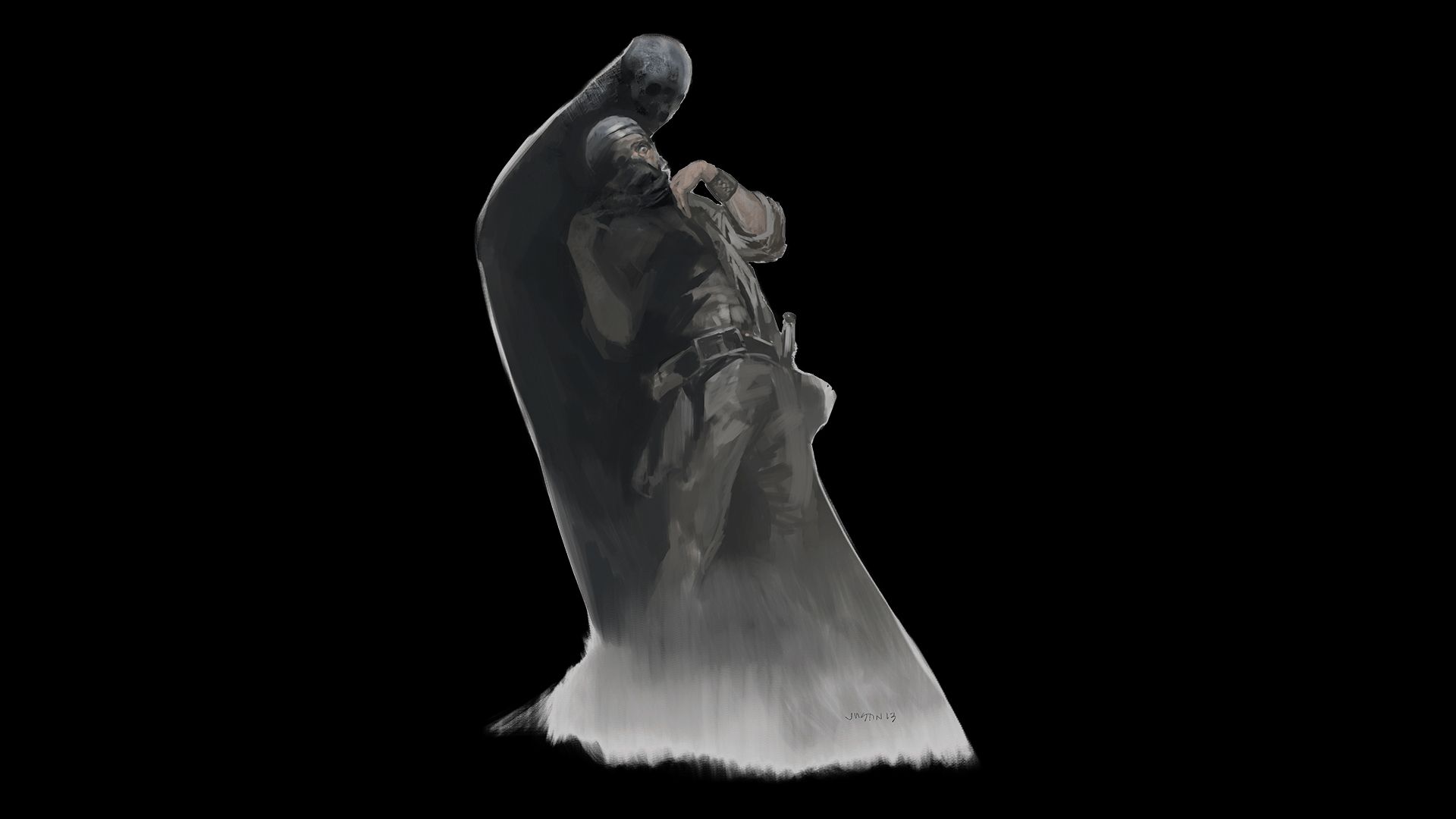
Shadow
Excels in darkness, resistant to a smorgasbord of damage types, and able to eliminate melee characters with ease
 Credit: Wizards of the Coast
 - AC: 12
- HP: 16
- CR: ½
Shadows appear weak on paper, but they’re surprisingly tough to defeat. They have resistance to almost all types of physical and elemental damage – acid, cold, fire, lightning, and bludgeoning, piercing, and slashing attacks barely affect them. Even more impressively, they can’t be harmed by necrotic or poison damage, and they are immune to conditions like exhaustion, fear, being grappled, paralyzed, turned to stone, poisoned, knocked prone, or restrained.
These creatures thrive in the dark, but they don’t rely on just being able to see in it. They can also use a special ability called Shadow Stealth, letting them hide quickly even in slightly dim conditions.
Shadows have an attack that saps strength, dealing necrotic damage (2d6+2) and reducing a target’s Strength by 1d4. This can quickly disable powerful attackers. If a Shadow reduces a creature’s Strength to zero, that creature dies, and a new Shadow is created from their remains.
Wizards and other magic-focused characters, particularly those who didn’t prioritize physical strength, may find battles against creatures like Shadows very challenging, even though their overall stats might not fully reflect how dangerous those enemies are.
Read More
- All Skyblazer Armor Locations in Crimson Desert
- One Piece Chapter 1180 Release Date And Where To Read
- How to Get the Sunset Reed Armor Set and Hollow Visage Sword in Crimson Desert
- All Shadow Armor Locations in Crimson Desert
- All Golden Greed Armor Locations in Crimson Desert
- How to Beat Stonewalker Antiquum at the Gate of Truth in Crimson Desert
- All Helfryn Armor Locations in Crimson Desert
- Marni Laser Helm Location & Upgrade in Crimson Desert
- Black Sun Shield Location In Crimson Desert (Buried Treasure Quest)
- Re:Zero Season 4 Episode 1 Release Date, Where to Watch
2026-02-07 17:40