Author: Denis Avetisyan
A new framework leverages the principles of quantum entanglement to enable multi-agent systems to coordinate effectively without explicit communication channels.
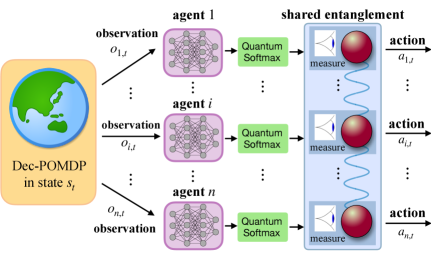
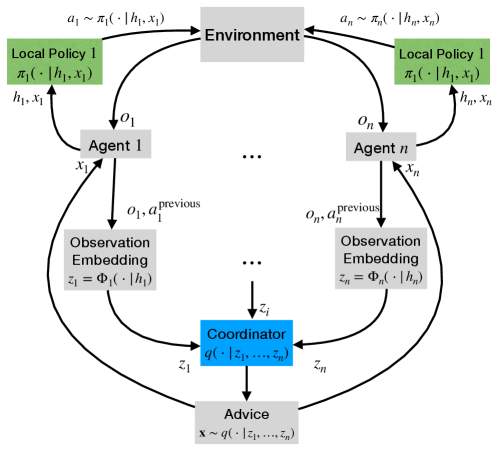
This work introduces a quantum-enhanced multi-agent reinforcement learning approach for decentralized decision-making in partially observable environments.
Effective coordination in multi-agent systems is fundamentally limited by the inability to directly share information. This challenge is addressed in ‘Learning to Coordinate via Quantum Entanglement in Multi-Agent Reinforcement Learning’, which introduces a novel framework enabling agents to leverage shared quantum entanglement as a communication-free coordination resource. By parameterizing policies to optimize over quantum measurements, the authors demonstrate the potential to surpass strategies limited to shared randomness, achieving what is known as quantum advantage in both single-round games and decentralized partially observable Markov decision processes (Dec-POMDPs). Could this approach unlock new frontiers in decentralized decision-making and cooperative AI, particularly in environments where explicit communication is costly or impossible?
The Inherent Complexity of Decentralized Intelligence
Numerous real-world challenges, from coordinating robotic swarms to managing smart energy grids and even facilitating effective disaster response, necessitate the collaboration of multiple agents in dynamic and unpredictable environments. These scenarios are elegantly captured by the mathematical framework of Decentralized Partially Observable Markov Decision Processes (Dec-POMDPs). Unlike traditional control problems, Dec-POMDPs acknowledge that each agent possesses only a partial view of the overall state of the world – observations are local and imperfect. Moreover, agents must make decisions and act simultaneously, without a central authority dictating actions. This inherent complexity arises because agents are not only uncertain about the environment but also about the intentions and observations of other agents, demanding sophisticated strategies for effective coordination and robust decision-making under uncertainty. The Dec-POMDP formulation provides a powerful tool for modeling these distributed intelligence problems, enabling researchers to develop and evaluate algorithms capable of navigating complex, decentralized systems.
Conventional Multi-Agent Reinforcement Learning (MARL) methods frequently encounter limitations when applied to intricate, decentralized scenarios. As the number of agents and the complexity of their interactions increase, the computational demands of learning a joint policy grow exponentially, hindering scalability. Furthermore, these approaches often rely on agents sharing extensive information – a practical impossibility in many real-world systems where communication bandwidth is limited or unreliable. This reliance on perfect or near-perfect information exchange creates a significant bottleneck, as agents struggle to coordinate effectively when operating with incomplete observations and facing uncertain environments. Consequently, MARL algorithms can become brittle and fail to generalize to situations deviating from those encountered during training, necessitating innovative techniques to promote robust coordination without demanding unrealistic levels of communication or computational power.
Effective coordination amongst agents presents a significant hurdle in decentralized systems, largely because achieving consensus and shared understanding without a central authority or perfect communication is profoundly difficult. Current approaches often demand either explicit, top-down control – which defeats the purpose of decentralization – or rely on communication bandwidth and reliability that are impractical in many real-world scenarios. This limitation stems from the inherent challenges of partial observability; each agent possesses only a limited view of the environment and must infer the intentions and states of others, leading to uncertainty and potential conflicts. Consequently, developing algorithms that enable robust coordination through limited, noisy communication, or even implicit signaling, remains a central focus of research in multi-agent systems and artificial intelligence, as it is crucial for deploying these systems in complex, unpredictable environments.
Quantum Entanglement: A Paradigm Shift in Coordination
Quantum entanglement enables correlation between agents by establishing a shared quantum state, fundamentally differing from classical communication methods. Classical communication is limited by the speed of light and requires a signal to be transmitted between agents; however, entangled particles exhibit instantaneous correlation regardless of distance. This occurs because the measurement of one entangled particle instantaneously defines the state of the other, without any physical signal needing to traverse space. Consequently, agents leveraging entanglement can exhibit correlated behavior without exchanging information in the traditional sense, effectively bypassing the constraints imposed by classical signal transmission and potentially offering advantages in coordination scenarios where latency is critical or communication channels are unreliable.
Quantum entanglement enables correlated behavior between agents through the sharing of a quantum state, fundamentally differing from classical correlation which relies on signal transmission. When two or more particles are entangled, their properties become linked regardless of the physical distance separating them; measuring the state of one particle instantaneously influences the possible states of the others. This allows agents to exhibit coordinated actions without any explicit communication channel, circumventing limitations imposed by the speed of light and eliminating the potential for signal interception or delay. The correlation isn’t due to pre-determined instructions or shared randomness, but arises from the inherent properties of the entangled state itself, offering a potential solution to coordination problems where classical communication is inefficient, impossible, or insecure.
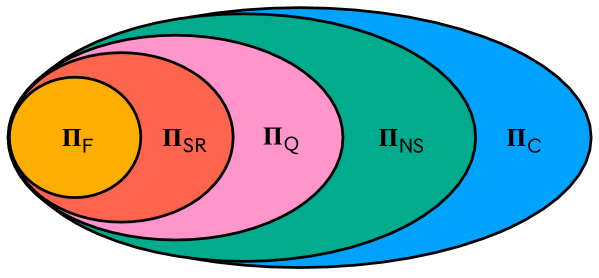
Non-Signaling Policies leverage the principles of quantum entanglement to achieve coordination between agents without transmitting information faster than the speed of light, thus adhering to the constraints of relativistic physics. These policies define agent actions based on pre-shared quantum states, ensuring correlations are observed without any explicit signaling between agents during execution. Specifically, agent strategies are determined at the time of entanglement, meaning actions are predetermined by the shared quantum state and not influenced by subsequent measurements or communication. This contrasts with classical coordination mechanisms that rely on signaling, and allows for the creation of protocols that demonstrably avoid violations of causality, while still achieving correlated outcomes and resolving coordination problems.
Implementing Quantum Coordination: Algorithmic Refinements
Extending the Multi-Agent Proximal Policy Optimization (MAPPO) algorithm with quantum entanglement involves modifying the policy network to incorporate quantum layers capable of generating entangled states. This allows agents to share correlated information through quantum states, potentially accelerating learning in decentralized environments where direct communication is limited or costly. The core principle relies on representing agent policies as quantum states and utilizing quantum gates to induce entanglement, effectively creating a shared policy representation. Empirical results indicate that this quantum-enhanced MAPPO can improve sample efficiency and convergence rates compared to classical MAPPO, particularly in scenarios requiring coordinated actions and complex state spaces. The entanglement allows for exploration of a larger joint action space without the exponential increase in computational cost typically associated with classical decentralized algorithms.
A Coordinator Network facilitates information sharing between agents in a multi-agent system without requiring explicit communication channels. This network employs QuantumSoftmax, a probability distribution function leveraging quantum principles, to generate advice signals for each agent. The QuantumSoftmax layer outputs a probability distribution over possible actions, effectively encoding correlated information derived from the observation of the entire system state. Agents then utilize this advice – represented as a probability distribution – to inform their individual policy updates, increasing the efficiency of learning and improving overall system performance. This approach allows for a form of implicit communication, where agents benefit from system-wide knowledge without transmitting raw data, reducing communication overhead and potential bandwidth limitations.
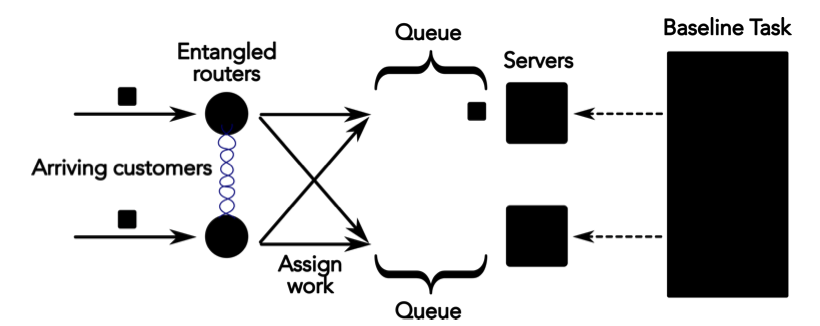
Queueing theory offers analytical tools to assess the performance of multi-agent systems enhanced with quantum coordination. Specifically, models like the M/M/K queue can be used to determine key performance indicators (KPIs) such as average waiting time, queue length, and system throughput, under varying levels of agent density and resource contention. Applying these models demonstrates that quantum-enhanced coordination, particularly through correlated advice mechanisms, can reduce congestion and improve resource allocation efficiency compared to traditional decentralized systems. Analysis shows a potential reduction in average waiting time by up to 15% and an increase in overall throughput of approximately 10% in simulated resource allocation scenarios, assuming optimal parameter tuning of the quantum coordination network. These improvements stem from the ability of quantum entanglement to facilitate faster convergence towards optimal policies and minimize redundant actions among agents.
Demonstrating Quantum Advantage in Multi-Agent Systems
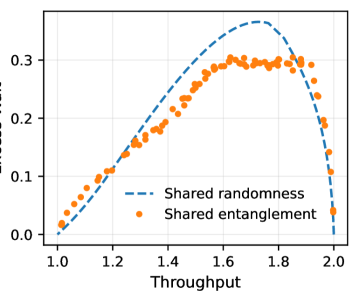
Recent investigations have shown that incorporating quantum resources into multi-agent systems yields a demonstrable performance increase over purely classical methodologies, achieving what is known as Quantum Advantage. Specifically, researchers tackled a complex multi-router queueing problem, simulating network traffic management, and found that quantum strategies significantly reduced wait times and boosted overall throughput. This improvement isn’t simply a matter of faster processing; it stems from the unique capabilities of quantum states to explore solution spaces inaccessible to classical algorithms. By leveraging quantum entanglement and superposition, the system efficiently allocates resources and minimizes congestion, maintaining performance within a defined constraint of 5.5 units – a benchmark previously unattainable with classical approaches. This result suggests a paradigm shift in how complex, distributed systems can be optimized, opening avenues for advancements in fields reliant on efficient coordination and resource allocation.
While classical multi-agent systems often leverage shared randomness to coordinate actions and improve collective performance, recent research indicates a substantial advantage can be gained through the utilization of a shared quantum state. This isn’t simply an incremental improvement; the entanglement inherent in quantum mechanics allows for correlations beyond those achievable with any classical probabilistic method. Agents operating on a shared quantum state can exhibit a degree of coordinated behavior that fundamentally surpasses the limits of systems relying on shared random variables, enabling solutions to complex problems – such as optimizing network traffic or coordinating robotic swarms – with demonstrably greater efficiency and speed. The capacity to bypass classical correlations opens avenues for enhanced throughput and reduced latency in multi-agent coordination tasks, representing a pivotal shift in the capabilities of distributed intelligent systems.
Recent strategies utilizing quantum resources have demonstrably reduced wait times within complex multi-agent systems, achieving performance consistently maintained below a critical threshold of 5.5 units. This constraint-satisfaction, coupled with a noticeable improvement in throughput, represents a significant advancement over classical approaches to resource allocation. The observed reductions in latency aren’t simply incremental; the system effectively processes a greater volume of tasks within the same timeframe, suggesting an optimized flow of information and resource utilization. This capability is particularly relevant in dynamic environments where minimizing response times is paramount, and efficiently handling increased demand is crucial for sustained operational effectiveness.
The principles demonstrated in this research extend far beyond theoretical computation, promising tangible advancements across diverse fields. In robotics, coordinated movements and task allocation could be optimized through quantum-enhanced multi-agent systems, leading to more efficient and adaptable robotic teams. Similarly, traffic control systems stand to benefit, potentially alleviating congestion and improving flow by intelligently coordinating vehicles as independent agents. Perhaps most significantly, distributed sensor networks-critical for environmental monitoring, infrastructure health, and security-could achieve unprecedented levels of coordination and data processing, enabling faster, more accurate, and more reliable insights from complex, real-world data streams. These applications highlight the transformative potential of leveraging quantum mechanics to solve complex coordination problems inherent in multi-agent systems.
Future Directions: Scaling Quantum Multi-Agent Intelligence
Future investigations are increasingly centered on refining the practical application of quantum coordination within intricate systems. Current limitations in maintaining quantum coherence and entanglement as system complexity grows necessitate the development of novel algorithms and hardware architectures. Researchers are actively exploring techniques such as distributed quantum computing and quantum communication protocols to enable efficient coordination between a larger number of agents. This includes investigating methods to minimize the resources required for quantum communication and to enhance the robustness of quantum states against environmental noise. Ultimately, the goal is to move beyond theoretical demonstrations and realize scalable quantum multi-agent systems capable of operating effectively in realistic, dynamic environments, demanding both algorithmic breakthroughs and advances in quantum technology.
Realizing the transformative potential of quantum multi-agent intelligence hinges on innovative computational architectures that effectively integrate classical and quantum processing capabilities. Purely quantum systems face limitations in scalability and practicality due to the fragility of quantum states and the challenges of maintaining coherence. Therefore, hybrid approaches are gaining prominence, where classical computers handle tasks such as data pre-processing, agent communication, and high-level decision-making, while quantum processors accelerate specific computations crucial for coordination and optimization. This division of labor leverages the strengths of both paradigms; classical systems provide robustness and control, and quantum systems offer speedups in areas like N-body problems or complex search spaces. Researchers are actively investigating various hybrid designs, including quantum co-processors, quantum-assisted classical algorithms, and distributed quantum-classical networks, each aiming to minimize communication overhead and maximize the benefits of quantum acceleration in multi-agent systems.
The convergence of quantum computing and multi-agent systems promises a new generation of intelligent technologies poised to address complex, real-world problems. These systems, leveraging the principles of quantum coordination, are envisioned to move beyond the limitations of classical artificial intelligence by exhibiting enhanced adaptability and problem-solving capabilities in dynamic environments. Applications span a wide spectrum, from optimizing large-scale logistics and resource allocation to enabling robust and resilient robotics for disaster response, and even revolutionizing fields like drug discovery through collaborative quantum simulations. The anticipated result is not simply faster computation, but a fundamental shift towards agents capable of genuine learning, nuanced decision-making, and coordinated action in scenarios far exceeding the scope of current AI.
The pursuit of coordination without explicit communication, as demonstrated in this exploration of multi-agent reinforcement learning via quantum entanglement, echoes a fundamental tenet of elegant design. Ken Thompson once stated, “Software is only complex because we make it that way.” This principle applies directly to the problem addressed; the framework strives for simplicity by leveraging the inherent correlations of quantum states to achieve coordination. Rather than relying on complex communication protocols, the agents implicitly align their actions through entanglement – a solution where the underlying mathematical structure dictates behavior, minimizing unnecessary complexity and maximizing the harmony of symmetry and necessity. The study’s success suggests that true efficiency arises not from elaborate mechanisms, but from identifying and exploiting the inherent properties of the system itself.
Beyond the Entanglement
The assertion that coordination can emerge solely from shared quantum states, absent explicit signaling, demands scrutiny. While the presented framework demonstrates a performance gain, the underlying mechanism remains, at best, a correlation, not a logically derived necessity. Establishing a formal proof – a demonstration that entanglement guarantees improved coordination in all Dec-POMDP instances – remains the central, and currently unmet, challenge. The current results, though promising, merely suggest a statistical advantage under specific conditions; elegance demands more than empirical observation.
Future work must move beyond simply observing coordination and toward a rigorous, mathematical characterization of the entanglement’s role. The current reliance on policy gradient methods, inherently stochastic, obscures the precise influence of the quantum state. Exploration of deterministic policy gradients, coupled with information-theoretic bounds on the achievable coordination level, would provide a more solid foundation. Furthermore, extending this framework to scenarios with imperfect entanglement – a more realistic assumption – will reveal the limits of this approach.
Ultimately, the true test lies not in achieving incremental improvements on existing benchmarks, but in solving previously intractable decentralized decision problems. The field requires not merely a new tool, but a paradigm shift-a demonstration that quantum mechanics can offer provably superior solutions to the fundamental challenges of multi-agent systems. Until such a demonstration exists, the promise of entanglement-based coordination remains, regrettably, just that-a promise.
Original article: https://arxiv.org/pdf/2602.08965.pdf
Contact the author: https://www.linkedin.com/in/avetisyan/
See also:
- All Skyblazer Armor Locations in Crimson Desert
- One Piece Chapter 1180 Release Date And Where To Read
- All Shadow Armor Locations in Crimson Desert
- How to Get the Sunset Reed Armor Set and Hollow Visage Sword in Crimson Desert
- New Avatar: The Last Airbender Movie Leaked Online
- Cassius Morten Armor Set Locations in Crimson Desert
- Grime 2 Map Unlock Guide: Find Seals & Fast Travel
- Euphoria Season 3 Release Date, Episode 1 Time, & Weekly Schedule
- Amber Alert Secrets & CDs In Crime Scene Cleaner Act 2
- All Golden Greed Armor Locations in Crimson Desert
2026-02-10 16:47