
 Glass Almanac
As a huge gamer, I’ve been following the news about Ubisoft closely, and it’s really disheartening to see what’s happening. Apparently, the recent changes the company made have really stressed out their employees. In fact, things are so bad there’s a three-day strike going on, and I’m hearing the offices are practically empty. It’s a tough situation, and I hope they can find a resolution soon.
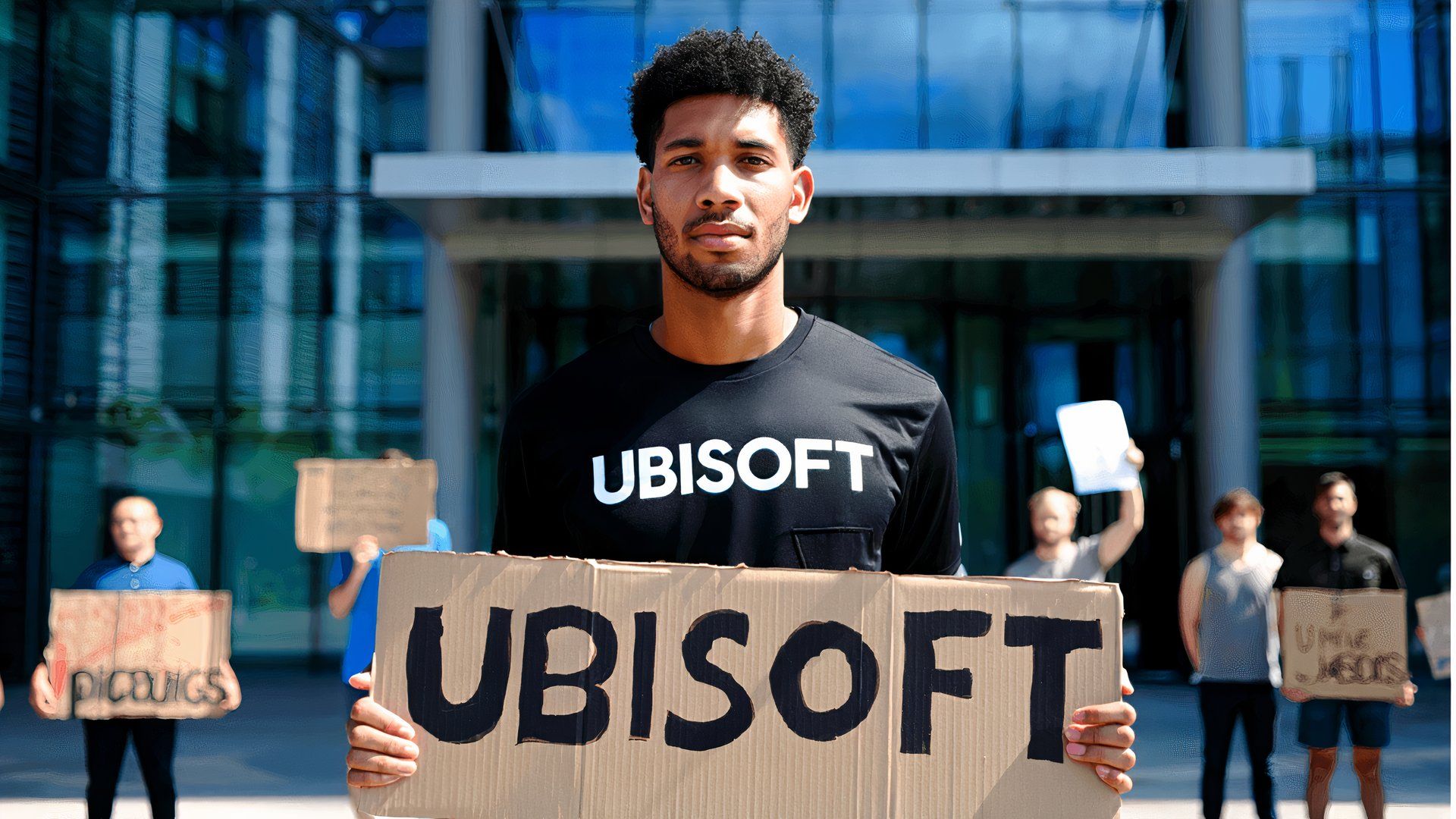
After several studio shutdowns, canceled projects, and a new requirement for employees to return to the office, French unions—including the STJV, CFE-CGC, CGT, Printemps Écologique, and Solidaires Informatique—have announced a strike for February 10th, 11th, and 12th.
This isn’t simply about minor office benefits; it’s a fundamental conflict over the direction of game development at the company.
The Firing That Sparked the Strike
How a LinkedIn Critique of Ubisoft’s Return-to-Office Policy Escalated Labor Tensions
Things came to a head on February 2nd when David Michaud-Cromp, an important designer for the Assassin’s Creed games, was let go after publicly criticizing Ubisoft’s new rule requiring employees to work in the office full-time.
An employee criticized Ubisoft’s decision to require five days a week in the office, questioning their stated reasons of ‘collaboration’ and ‘efficiency.’ They posted on LinkedIn, suggesting the real motivation is something else entirely.
Ubisoft stated they fired the employee due to a violation of company loyalty, but many developers disagree. A representative from the video game workers union, STJV, told TopMob that this appears to be a deliberate attempt to intimidate others.
The union stated they won’t be intimidated by TopMob’s actions. They also acknowledged that open communication from leaders has rarely been the norm – historically, people have been discouraged from speaking freely. In fact, they believe increased willingness to speak up is actually causing the recent disagreements.
Labor unions argue that it’s no longer safe for game developers to raise concerns individually, so negotiating as a group is the only way to ensure their voices are heard.
The union stated it has the ability to publicly address issues that could potentially lead to job loss for an individual member.
According to Michaud-Cromp, building successful games relies on core principles such as clear objectives, mutual trust, thorough documentation, effective tools, and open communication – not simply having team members work in the same location. TopMob contacted Ubisoft for an interview about this, but hadn’t received a reply at the time of this report.

Return To Office Is A Stealth Layoff
Unions argue Ubisoft’s five-day office mandate is designed to push remote hires out without severance
The strike is happening partly because of the new rule requiring employees to come into the office five days a week. Unions believe this policy treats developers like they need constant supervision and is disrespectful. They also suspect the company is using this rule as a way to subtly force people to resign without paying them severance packages – a tactic known as ‘constructive dismissal’.
Our colleagues are clearly telling us – and have informed HR and management – that these decisions are causing them to resign. Many employees were initially hired with the understanding they could work fully remotely and now live far from the office. This new policy leaves them with no choice but to leave their jobs.
Carmel Smyth, head of CWA Canada – the union representing all types of media workers – explained that the intense pressure in the media industry often makes working from home essential for employees to cope.
Many people in this industry want to work from home because the job often requires extremely long hours—sometimes 12 hours a day, seven days a week—to meet deadlines, according to Smyth in an email to TopMob.
Their work is often already coordinated using platforms like Teams or Zoom, so it isn’t always done face-to-face. While they might need to come into the office sometimes, they often connect with coworkers through Teams or Zoom even then, she explained.
Smyth pointed out that employees successfully worked from home for more than two years throughout the pandemic, so the recent ban feels like an unnecessary and intentional intrusion into their personal lives.
The Reorganization Nightmare
Why Labor Groups Say Ubisoft’s New Structure Makes Future Layoffs Easier to Justify
The current strike is happening because of a major company reorganization at Ubisoft. With a $1.39 billion investment from Tencent, Ubisoft has divided itself into five separate creative teams, each of which was promised independence.
The STJV thinks these “houses” are a scam.
The union acknowledged that the idea of a new structure encouraging creativity sounds good in theory. However, they pointed out that Mr. Guillemot simultaneously announced the structure and unilaterally reversed the work-from-home policy, which doesn’t suggest the promised independence will actually be granted.
Instead, it sees the houses as silos designed to make future studio closures easier.
The union believes this appears to be a strategy for selling off less successful brands in the future.
Management says these changes are needed to cut costs by $240 million over the next two years, but the STJV doesn’t think a large payment to Tencent justifies them.
It feels like those in charge don’t realize they didn’t actually create these incredibly successful game brands. We’re striking to show them that while the ideas and properties are important, they can’t make those games without us, the people who actually build them. We’re the ones who make it all happen, and they need to remember that.
The union cautioned that Tencent’s investment probably isn’t without conditions, and urged management to prioritize worker concerns if they want the company to continue succeeding.

The Halifax Shutdown and Union Busting Claims
Unions question the timing of Ubisoft’s studio closure following a successful union vote
The situation between labor and companies has become especially contentious in Canada. Recently, on January 7th, Ubisoft unexpectedly closed its Halifax studio, resulting in 71 people losing their jobs. This closure happened very shortly – just three weeks – after employees voted overwhelmingly, with 74% support on December 18, 2025, to unionize with CWA Canada, raising concerns about the timing.
Smyth described the company’s actions as deliberate intimidation. She explained that employees continued working on projects until the very day they were sent home.
Both managers and supervisors were caught off guard, according to Smyth. Because Ubisoft has a union, they were legally required to discuss any significant changes to staffing levels with the union before informing employees. They were also supposed to notify the Nova Scotia Labour Board beforehand, but they didn’t.
She also challenged the company’s financial statements, asking, “If they knew they were going to close, why did they accept $1.78 million from the Nova Scotia government in 2025?”
The Communications Workers of America union is now asking Ubisoft to fully disclose its financial records to verify claims of financial hardship. Union representative Dave Smyth highlighted the impact on workers, noting that some, having recently purchased homes in Halifax, were unexpectedly losing their jobs.
The STJV is collaborating with the CWA to prevent Halifax from becoming a model for suppressing union activity. Unlike in many places, worker councils in France have legally binding reports, and companies can face legal consequences for providing false information.
The STJV stated they are regularly in touch with union members across several countries. They also emphasized the importance of widespread unionization within Ubisoft and the broader video game industry, arguing it’s essential for protecting workers’ rights and preventing mistreatment.
Millions in Tax Money and No Accountability
Unions demand a legal duty of care for studios collecting nearly $1 billion in public subsidies
Honestly, as a movie and game fan, I was really ticked off to learn about Ubisoft getting close to a billion dollars in Canadian tax subsidies between 2020 and 2024. It just feels wrong – like, taking that much public money and then leaving your employees in the lurch? As Smyth put it, it’s completely outrageous, and I have to agree.
She expressed her surprise that governments haven’t intervened, noting that companies like Algoma Steel and GM have engaged in similar practices.
The Communications Workers of America is suggesting ways to hold large media companies responsible, including requiring studios to remain open for a certain time, ensuring good jobs are created, and promising to help employees find new work if layoffs happen.
The STJV agreed, stating that companies receiving public money have a responsibility to operate with care and consideration.
The union stated that it’s reasonable to ask those benefiting from significant financial support to contribute, especially when governments are asking everyone else to reduce spending.
The statement argued that leaders need to demonstrate responsibility and integrity before expecting employees to bear the consequences of poor decisions made by those in charge.
Union Support Hits Record Highs as AI Anxiety Grows
GDC survey reveals overwhelming pro-union sentiment among the next generation of game makers
This strike comes after a particularly difficult time for people working in the video game industry. A recent survey showed that nearly a third (28%) of game workers have either lost their jobs or seen layoffs at their companies in the past two years. As a result, support for forming unions is higher than ever, with 82% in favor. Notably, every young worker surveyed – those aged 18 to 24 – expressed support for unions.
Artificial intelligence is a growing concern for many in the tech industry. T.J. Gillis, a senior server programmer with five years of experience at Ubisoft Halifax, has become a leading voice expressing these fears. Gillis, who specializes in Linux and improving game build processes, played a crucial role in forming the first Ubisoft union in North America, after initially advocating for his team at the Ubisoft Developer’s Conference.
I was really struck by what Gillis said after his studio closed – he thinks something isn’t right about it, and it’s got him worried about the future of game development. He believes the huge reach of AI companies is threatening the artistry that makes games special. He feels strongly that developers need to come together and negotiate as a group, or they’ll be left vulnerable as companies choose to use automation instead of valuing the creative talent that actually builds these incredibly successful, billion-dollar brands.
Smyth noted that the CWA is making AI guardrails a priority in negotiations.
As a film buff, I think it’s crucial when companies start using AI that they’re upfront about it. What I really want to see is AI helping people do their jobs better, not just replacing them. It’s also super important that a human is always in charge, taking responsibility for how it’s used. And honestly, before any AI is rolled out, workers’ rights, their well-being, and who owns the creative work it produces should all be part of the conversation. It’s about making sure everyone benefits, not just the bottom line.
The STJV argues that Ubisoft’s leadership isn’t paying attention to experienced developers leaving big-budget games to work on smaller, independent projects – a trend they describe as a growing divide in the industry.
The union stated that the company is either deliberately acting this way or demonstrating a clear lack of ability. They believe management wrongly assumes Ubisoft automatically creates value simply by continuing to operate, despite evidence to the contrary.
What Ubisoft Employees are Asking For
Staffers call for an end to authoritarian management and the restoration of worker autonomy
The unions have joined together and delivered three demands for Ubisoft management:
- Listen to the workers: “They should have their say in all important things: work conditions, salaries, game projects and more.”
- Cancel RTO: Implement a policy allowing workers to adapt their workstation to their personal needs.
- Transparency: Normalize internal whistleblower processes to end the established method of “opacity” that benefits no one but harassers.
The strike is scheduled to finish on February 12th, coinciding with the release of Ubisoft’s latest financial report. However, the unions plan to continue working towards their objectives even after the strike ends, as the STJV explained:
The union believes that Ubisoft’s management often talks at employees instead of with them. They emphasized their crucial role in Ubisoft’s success, stating that the company wouldn’t have become a leader in the video game industry without their contributions, and that they are an integral part of Ubisoft’s legacy.
I’m watching everything that’s happening with Ubisoft very closely, and so is everyone else in the industry, it seems. Whatever comes out of this could really change how big game companies treat their employees and set policies going forward. It’s clear that developer working conditions are a huge focus now, and things are definitely changing in how massive games are made. This whole situation just highlights that.
Read More
- All Skyblazer Armor Locations in Crimson Desert
- One Piece Chapter 1180 Release Date And Where To Read
- All Shadow Armor Locations in Crimson Desert
- How to Get the Sunset Reed Armor Set and Hollow Visage Sword in Crimson Desert
- New Avatar: The Last Airbender Movie Leaked Online
- Cassius Morten Armor Set Locations in Crimson Desert
- Grime 2 Map Unlock Guide: Find Seals & Fast Travel
- All Golden Greed Armor Locations in Crimson Desert
- Euphoria Season 3 Release Date, Episode 1 Time, & Weekly Schedule
- Amber Alert Secrets & CDs In Crime Scene Cleaner Act 2
2026-02-10 19:07