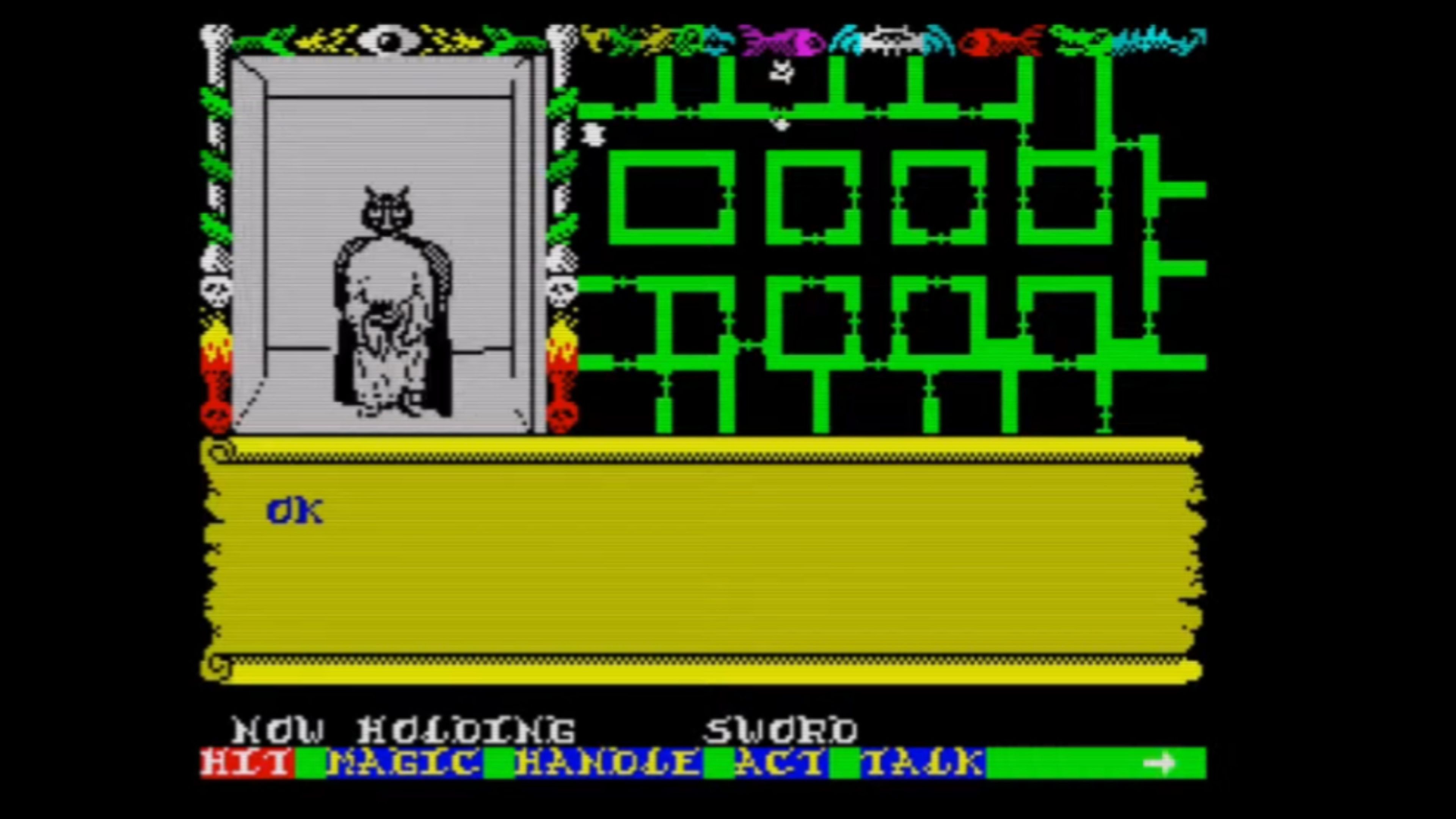
Even before the popular style of story-focused RPGs with teams of adventurers trying to save the world became common, the roots of JRPGs were forming in the 1980s. Japanese developers were creating games on early home computers, working with limited technology and without many established RPG conventions. These early games were often small and a bit rough around the edges, but they were incredibly influential in shaping the genre as a whole.
Early Japanese role-playing games, or JRPGs, weren’t very polished. They often used mostly text, simple symbols, or basic graphics. Stories were usually straightforward, and sometimes lacked detail, while the gameplay wasn’t always refined. Despite their simplicity, these games pioneered many of the core concepts that would come to define the JRPG genre, and their impact is still noticeable in modern games.
Underground Exploration (Chitei Tanken)
Release Date: 1982
- Text-based dungeon exploration with party-focused combat.
- Players build a party, fight monsters, collect gold, and manage supplies.
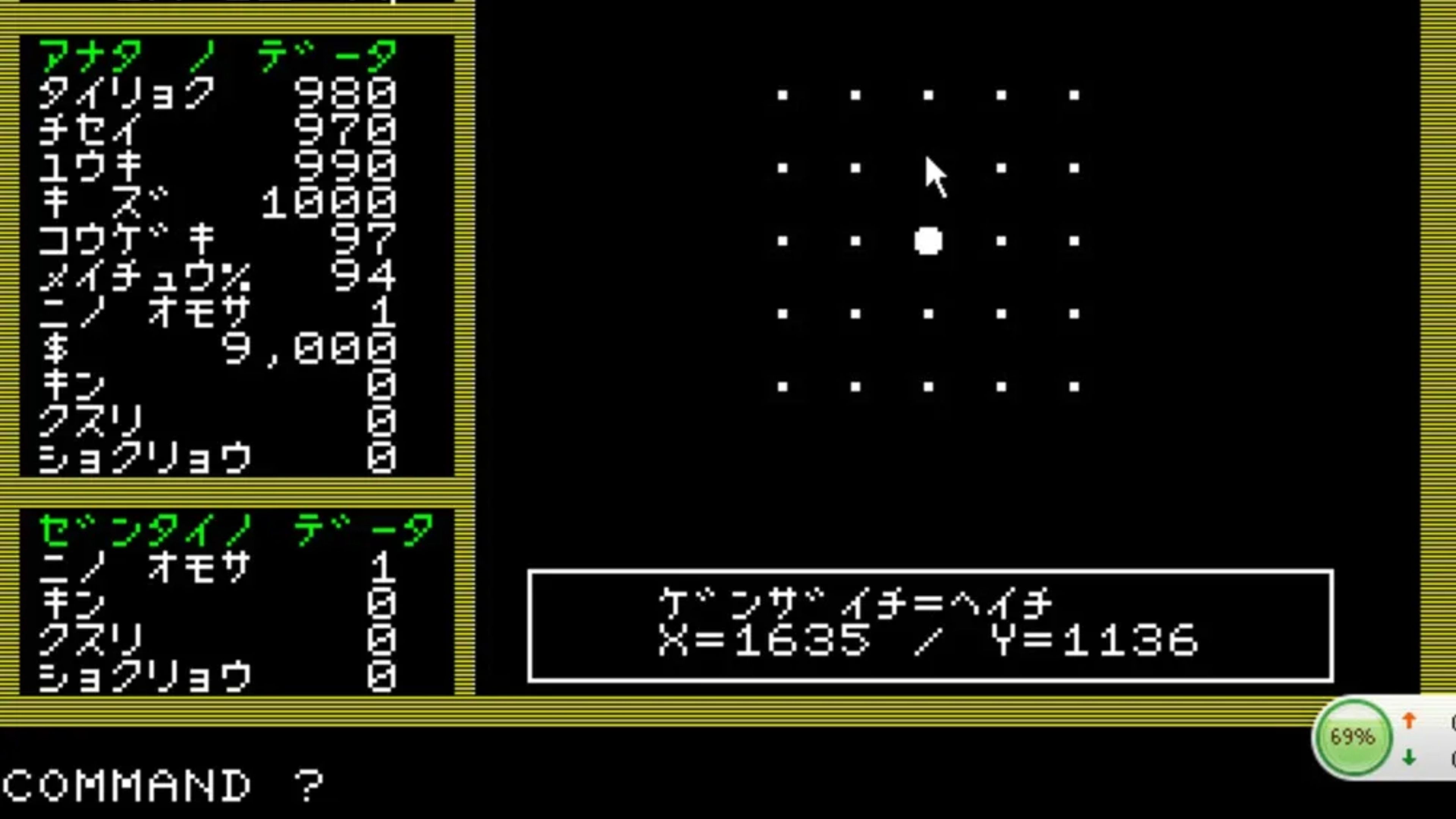
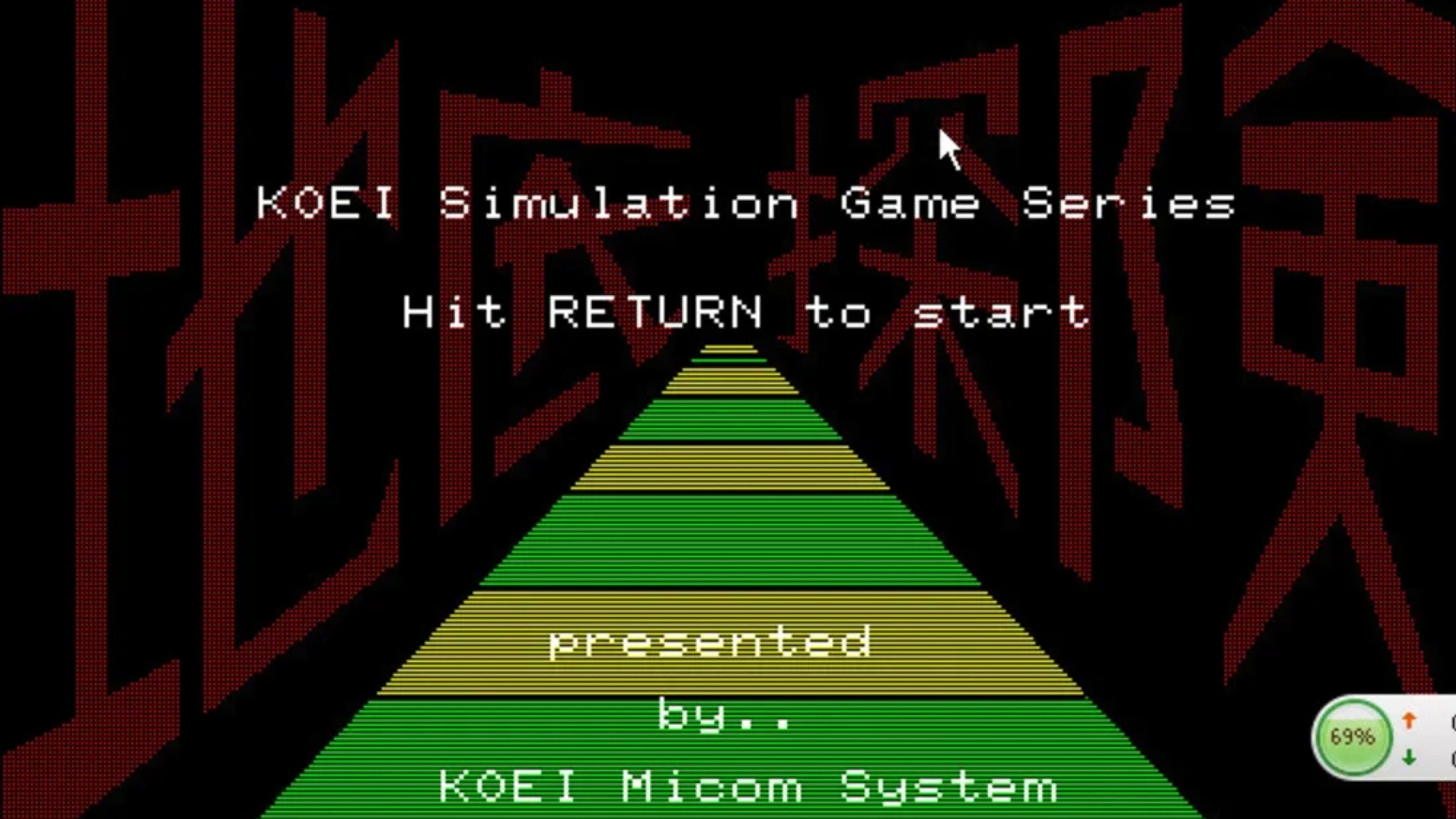
First released in Japan in 1982, Underground Exploration was one of the very first role-playing games developed in the country. Instead of relying on pictures and icons, the game is primarily text-based – players read descriptions and type commands to navigate and interact. You control a small team of adventurers, typically four or five, and guide them through a deep, multi-level underground maze.
The biggest hurdles are staying alive in a dangerous place, keeping the team healthy with enough food and medicine, and discovering hidden treasure. Players will battle monsters and use gold to buy essential supplies. The game progresses slowly, floor by floor, using a turn-based system that moves time forward as the group explores and fights. It’s a simple concept, but it probably sounds quite familiar.
Spy Daisakusen
Release Date: 1982
- Spy‑themed adventure with RPG‑like mechanics
- Modern setting with text-heavy gameplay.
Released in 1982, Spy Daisakusen was a unique RPG for its time. Instead of the typical fantasy setting of knights and wizards, it let players become international secret agents, drawing inspiration from the popular Western series Mission: Impossible and translating that feel into an early Japanese role-playing game.
In Spy Daisakusen, you play as a secret agent tasked with sneaking into secure areas, grabbing confidential information, and evading capture. It offered a welcome break from the typical fantasy games of the time, which often involved battling monsters. However, the game is very text-based and tries out some unusual ideas, so be prepared for that.
The Dragon And Princess
Release Date: 1982
- Popular for being the first Japanese game to use a separate tactical screen for battles.
- It combines traditional text-based storytelling with a grid-based combat system.
The Dragon and Princess is a game by Koei that tried something new with the way battles happen in Japanese role-playing games (JRPGs). It mostly uses text to tell the story, but it also features a turn-based battle screen where characters move and attack on a grid. This system went on to influence the battle mechanics in many later JRPGs.
With its mix of text-based adventure, early combat strategy, and managing a group of characters, The Dragon and Princess is a strong contender for being one of the first Japanese games to feature what we’d now recognize as RPG systems – even before those systems were common. The game tells a classic tale: a party of heroes sets out on a journey to save a princess from a dragon.
Danchizuma No Yuwaku (Seduction Of The Condominium Wife)
Release Date: 1982
- An early adult-themed RPG where the player controls a traveling salesman in an apartment complex.
- An unusual blend of adventure, choice, and adult‑themed interactions.
It may be unexpected to see a game with mature content on this list, but Danchizuma no Yuwaku by Koei is actually the fourth JRPG ever created, making its inclusion historically important. Though it never came to other countries, this game was Japan’s first erotic RPG, and surprisingly, it had good gameplay. Players take on the role of a condom salesman navigating a large apartment complex. They go door-to-door, meeting residents and using their charisma to both sell products and seduce them.
Despite not being a traditional fantasy RPG, Danchizuma no Yuwaku includes RPG-style features like managing stats – such as health, intelligence, and stamina – and balancing resources. The game features encounters with both ghosts and gangsters, creating a combat-focused experience where staying alive and conserving stamina are key to success.
Sword & Sorcery
Release Date: 1983
- A medieval fantasy adventure with character classes.
- Features turn‑based combat and open exploration.
In 1983, Koei continued exploring RPGs with Sword & Sorcery. Originally released for Japanese home computers such as the FM‑7, PC‑8001, and PC‑8801, this turn-based game shares a similar story with The Dragon and Princess: a kingdom is threatened, a villainous wizard is causing trouble, and a princess needs to be rescued.
In Sword & Sorcery, towns and castles serve as safe havens where you can rest, trade items, and investigate your surroundings. Combat happens in turns, and you win battles by choosing simple attack and magic options. With its defined character roles, combat based on stats, and interconnected world to explore, Sword & Sorcery stands out as a well-developed JRPG from the early 1980s, representing a key step in the evolution of the genre from its earliest beginnings to the more complex games that came later.
Secrets Of Khufu (Khufu‑Ō No Himitsu)
Release Date: 1983

- A solo dungeon adventure in the Great Pyramid of Egypt.
- Maze‑like corridors, survival choices, and a simple RPG feel.
In 1983, Koei, a Japanese game publisher, took a different approach to game themes, moving away from typical medieval settings and exploring Ancient Egypt. Their game, Secrets of Khufu, is a classic example of a ‘dungeon crawler’ – a game focused on exploring labyrinthine environments. Players navigate the pyramids of Giza with the straightforward goal of discovering the lost treasure of Pharaoh Khufu.
The game focuses on challenging gameplay rather than impressive visuals. Players navigate tricky, maze-like hallways filled with dangers like traps and monsters. Success depends on carefully managing your character’s stamina, avoiding unnecessary fights, and collecting food to prevent starvation.
Arfgaldt
Release Date: 1983

- A text-based fantasy adventure with early RPG systems.
- Explore a hex map, fight monsters, and gather food and treasure.
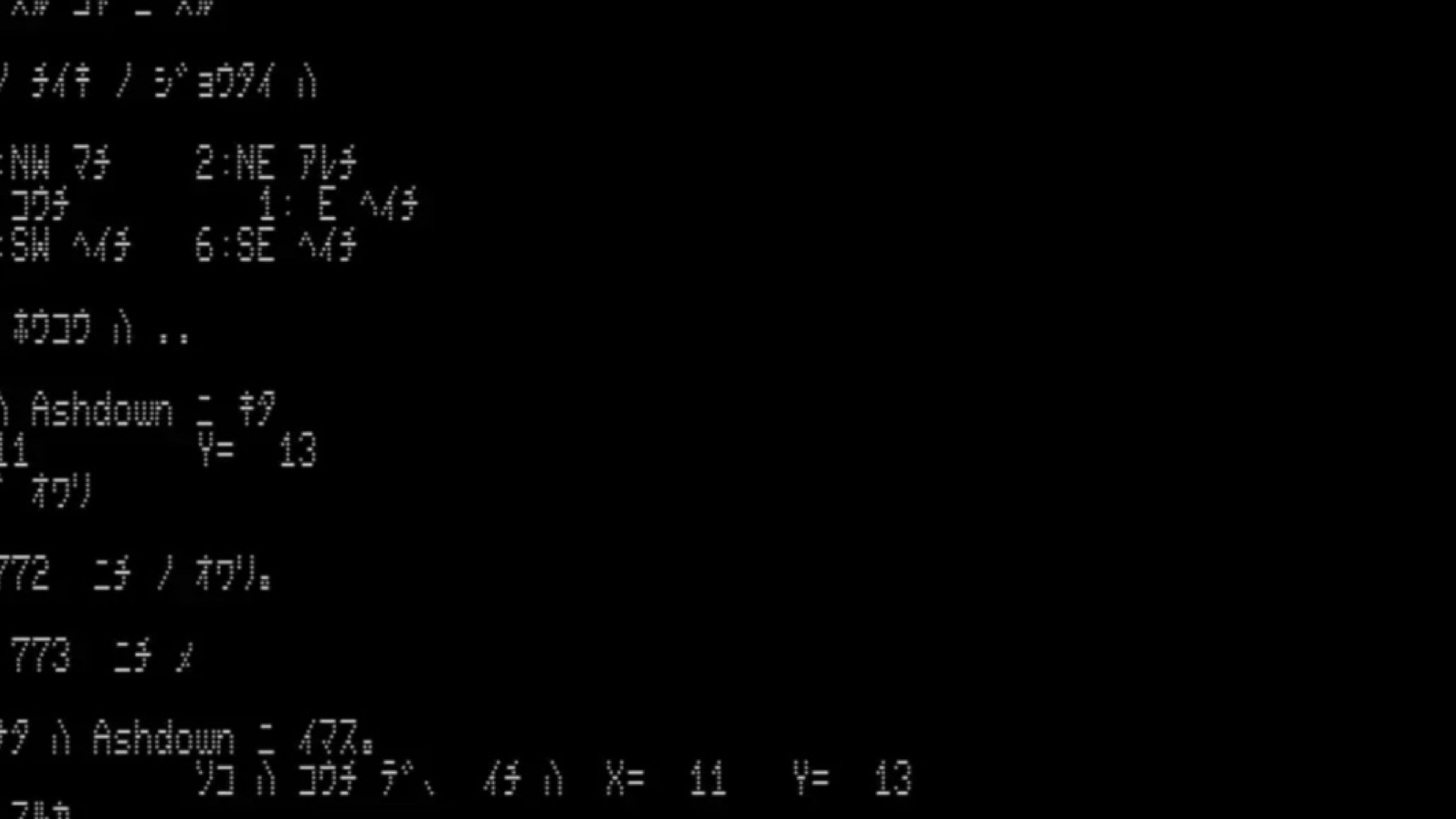
Arfgaldt was an early Japanese game that combined the storytelling of text adventures with the character development of role-playing games. It originally appeared in 1983 as a BASIC program listing in ASCII magazine for the FM-7 computer. Instead of using graphics, Arfgaldt presented its world and gameplay entirely through text, requiring players to type commands to move around, explore, and interact with everything.
In Arfgaldt, you begin by playing as a set character in a fantasy world. The world is displayed as a hexagonal map, but the game only shows your character’s location and surrounding descriptions on the screen. Players need to use a printed map (originally included with the magazine) to fill in the rest of the world themselves. While exploring, you’ll need to find food to stay alive and treasure to collect.
Panorama Toh (Panorama Island)
Release Date: 1983
- A very early hybrid action‑RPG with real‑time combat.
- An open world with survival needs, NPCs, and a day–night cycle.
Nihon Falcom is a well-known and respected developer of Japanese role-playing games (JRPGs), and their game Panorama Toh was a key starting point for many of their creative ideas. Released in 1983, Panorama Toh felt different from other games of the time. Created for the NEC PC-8801, it placed players on a mysterious island with a free-roaming, overhead perspective – an early example of an open world. Unlike most RPGs of that era, combat happened in real-time, and players also had to manage basic survival needs like finding food to regain health.
Instead of the turn-based combat and character leveling common in later Japanese role-playing games, Panorama Toh emphasized moving freely, making quick decisions, and simply trying to survive. Though it didn’t have traditional levels, the game still felt full of meaningful choices, which was innovative for its time. The island wasn’t just a pretty background; it featured a day-night cycle that altered the challenges, and players could interact with characters by either talking to them or battling them – a unique feature for that era.
Dragon Slayer
Release Date: 1984
- The first true action JRPG.
- Real‑time combat, dungeon crawling, and item puzzles.
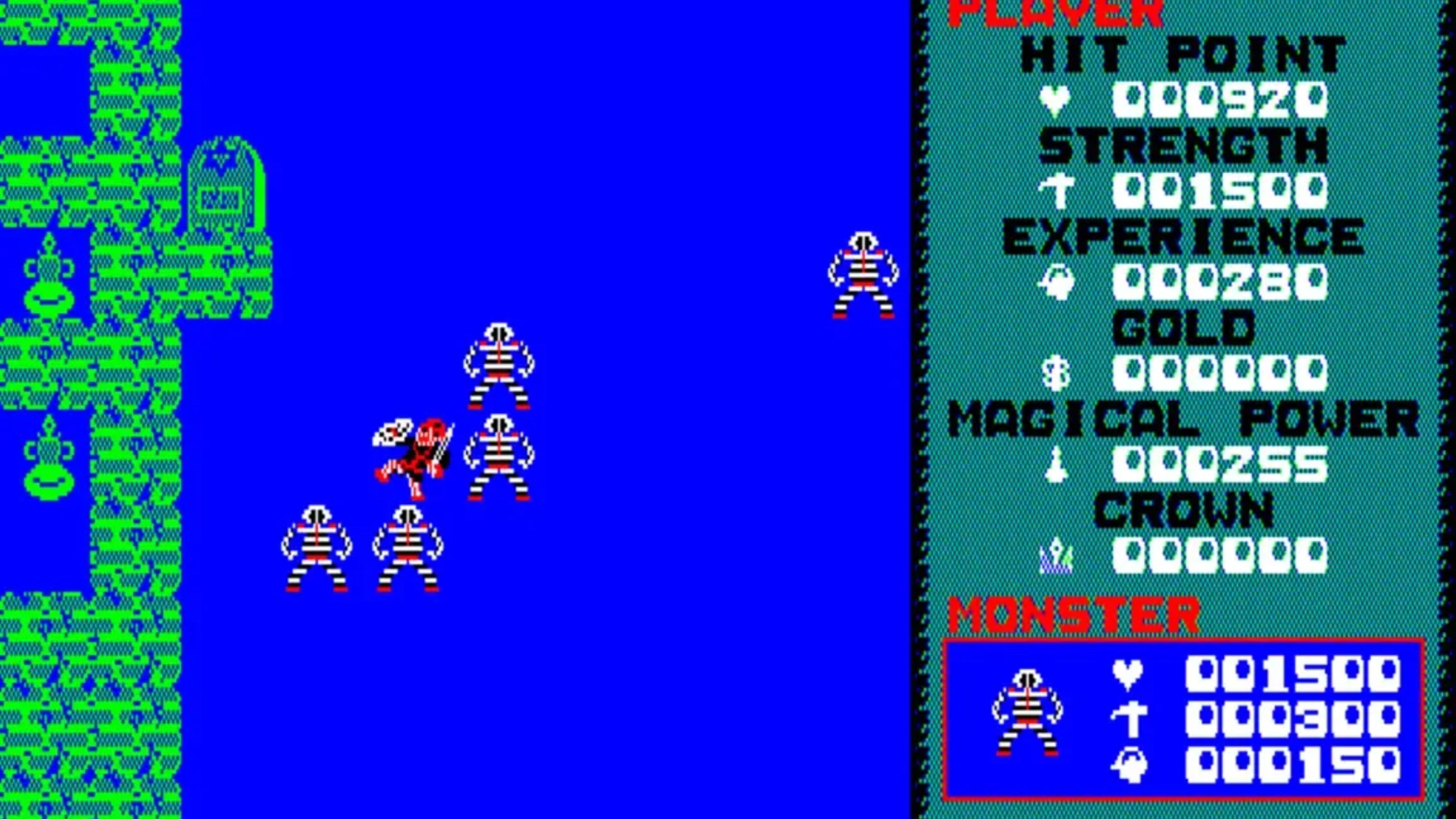
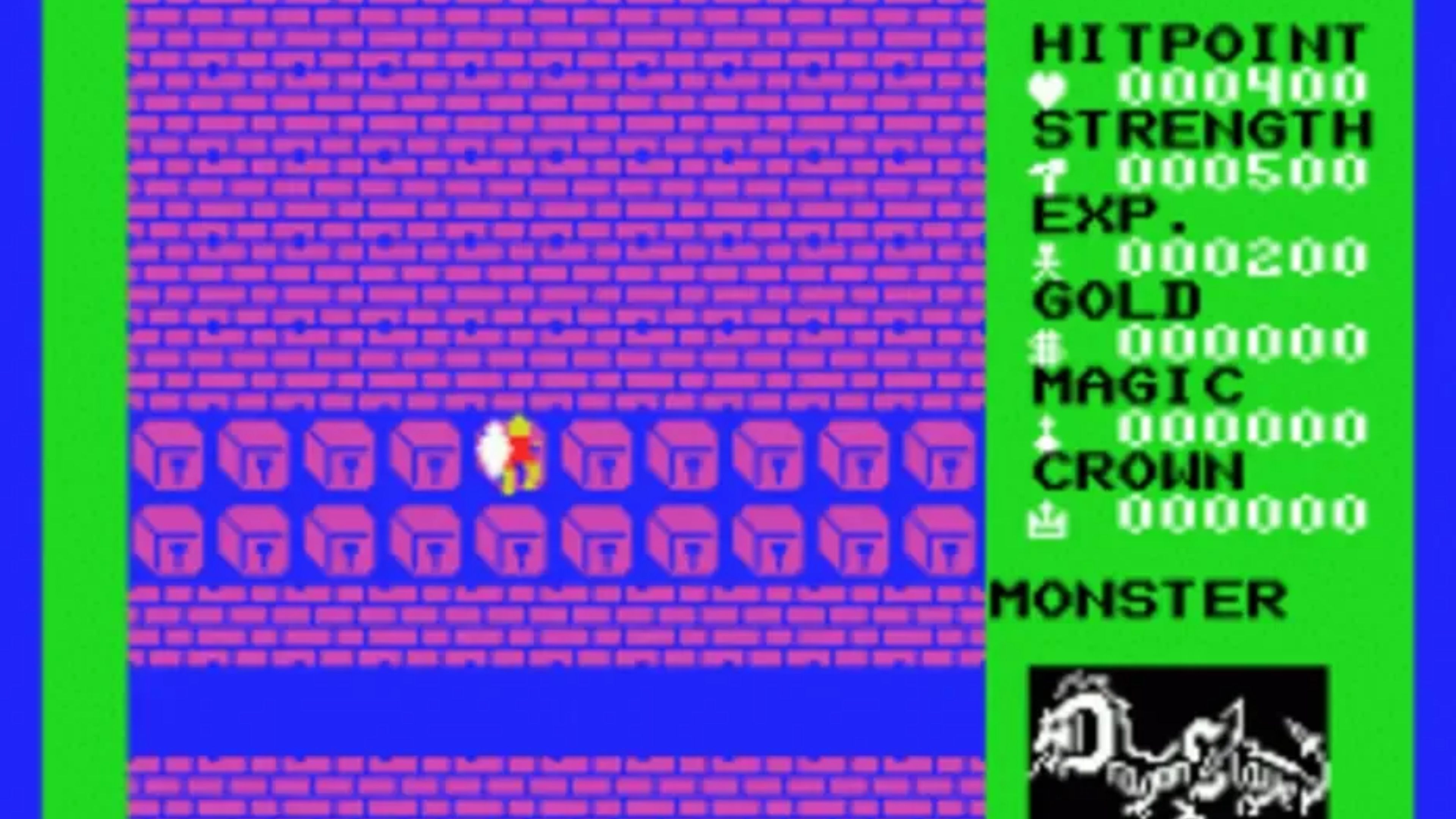
Released early in the history of Nihon Falcom, Dragon Slayer significantly influenced the development of Japanese role-playing games. Unlike previous RPGs that relied heavily on menus and slow pacing, Dragon Slayer emphasized fast-paced, real-time action. Players directly control their character, battling monsters and navigating dungeons while solving basic puzzles on their journey.
The core concept of Dragon Slayer was simple: players began as a weak character and had to venture out, collect items and treasure, and become stronger to survive the dangers within the dungeon. Unlike many games of the time, combat wasn’t turn-based, and simply walking into an enemy caused damage, making every move feel tense and immediate. Although Dragon Slayer came before popular JRPGs like Final Fantasy, its impact on the genre is huge. It essentially created the action RPG style in Japan, blending fast-paced arcade movement with role-playing elements, and paved the way for many games that followed.
Hydlide
Release Date: 1984
- One of the earliest Japanese action role-playing games.
- Real-time combat and open exploration in a fantasy kingdom.
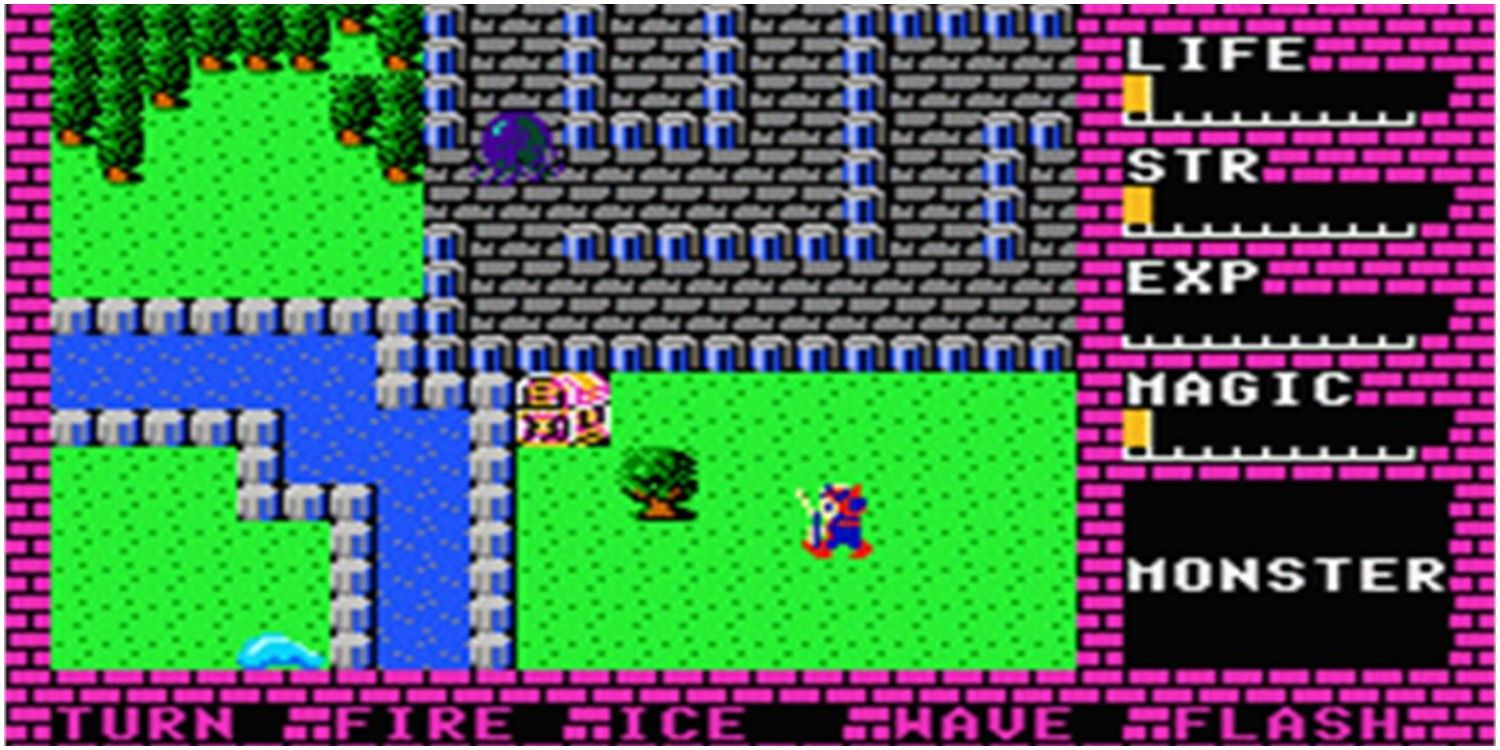
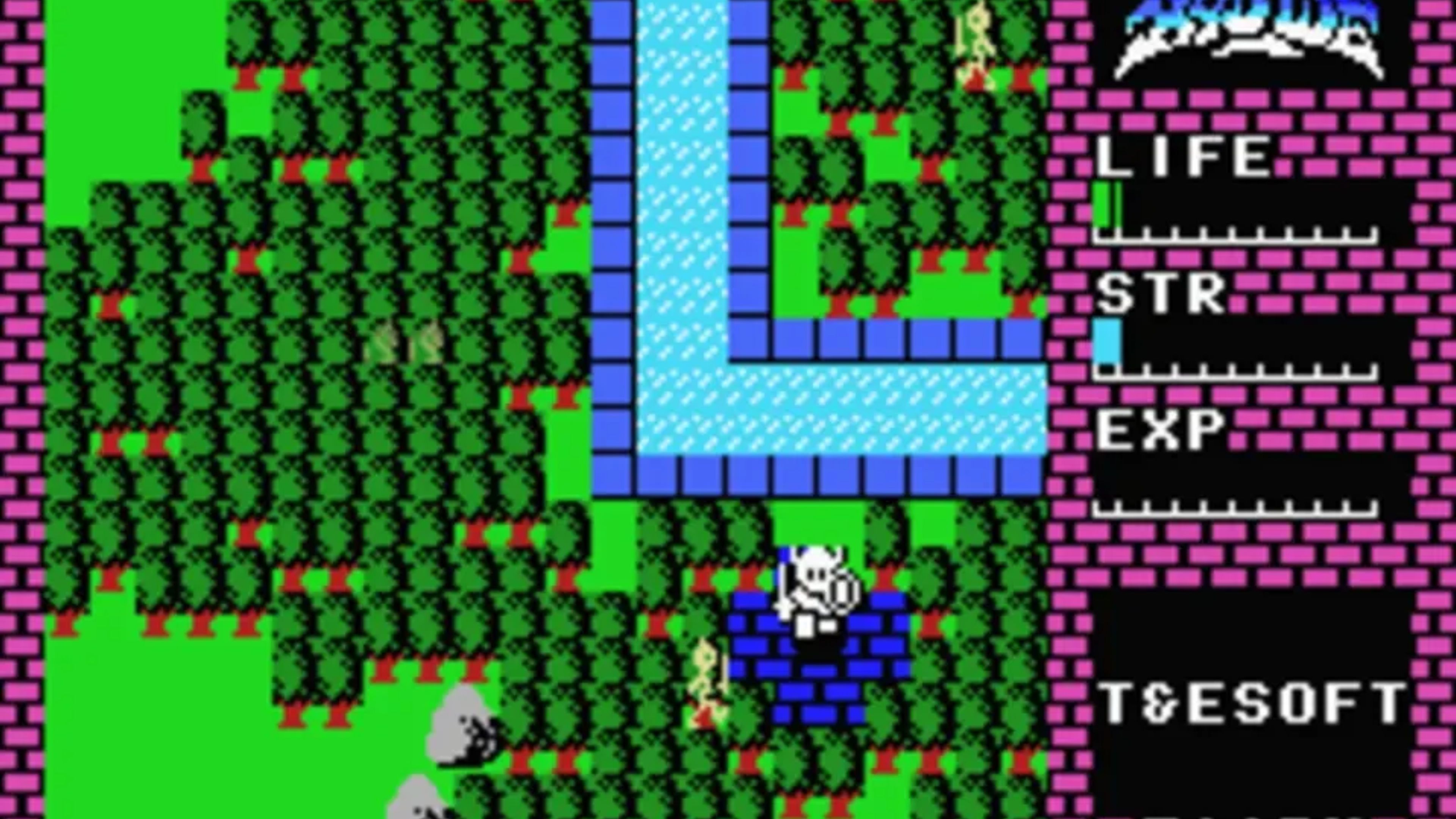
As a long-time gaming fan, I always think about how groundbreaking Hydlide was! It’s one of the earliest open-world RPGs and was a huge hit when it came out. The creator, Tokihiro Naito from T&E Soft, really wanted to make a game where you were constantly moving and exploring, while still leveling up your character – which wasn’t common back then. Interestingly, he hadn’t really played many of the big Western RPGs like Ultima or Wizardry while he was making it! Instead, he drew inspiration from Japanese arcade games, especially The Tower of Druaga, and early dungeon crawlers like The Black Onyx. It’s cool to see how those influences shaped this classic!
Unlike many games of its time, players didn’t choose actions from menus. Instead, they directly moved their character, Jim, through a seamless world of fields, woods, and caves. Battles happened instantly as players ran into enemies – a simple, direct combat style. Players could switch between offense and defense, use discovered spells, and explore the game world without interruptions. There were no pauses for combat or complicated menus; everything felt fluid and connected as the character moved around.
Read More
- All Skyblazer Armor Locations in Crimson Desert
- One Piece Chapter 1180 Release Date And Where To Read
- New Avatar: The Last Airbender Movie Leaked Online
- All Shadow Armor Locations in Crimson Desert
- How to Get the Sunset Reed Armor Set and Hollow Visage Sword in Crimson Desert
- Cassius Morten Armor Set Locations in Crimson Desert
- Red Dead Redemption 3 Lead Protagonists Who Would Fulfill Every Gamer’s Wish List
- Grime 2 Map Unlock Guide: Find Seals & Fast Travel
- Euphoria Season 3 Release Date, Episode 1 Time, & Weekly Schedule
- USD RUB PREDICTION
2026-02-12 16:41