Author: Denis Avetisyan
New research explores how loop quantum gravity can offer a viable mechanism to replace the crushing singularity at the heart of collapsing stars with a ‘bounce’ into a new phase of spacetime.
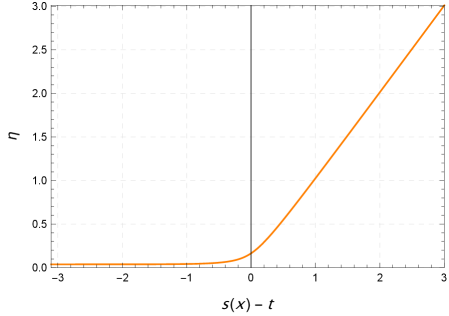
This study investigates the phenomenological properties of an asymmetric bounce in an effective loop quantum gravity framework applied to gravitational dust collapse within a LTB spacetime.
The persistence of singularities in classical general relativity motivates explorations beyond its established framework, and this is addressed in ‘Investigation of the gravitational dust collapse of the LQG-inspired effective asymmetric bounce model’. This work examines gravitational dust collapse within an effective loop quantum gravity (LQG) model featuring an asymmetric bounce, revealing singularity resolution at the central curvature singularity, albeit with the emergence of a shell-crossing singularity in the polymerised vacuum during the bounce phase. Notably, a critical mass threshold governs horizon formation prior to the bounce, a restriction absent in the post-bounce phase, highlighting key dynamical differences. Do these distinctions offer a pathway towards a more complete understanding of the universe’s earliest moments and the nature of quantum gravity?
The Inevitable Breakdown: Confronting Singularities
General relativity, while remarkably successful, predicts its own limitations through the formation of spacetime singularities during gravitational collapse. These aren’t simply regions of extreme density, but points where the very fabric of spacetime becomes ill-defined, and the equations of the theory break down, losing their predictive power. As matter compresses under gravity, the curvature of spacetime increases until it reaches infinity at the singularity, a condition where concepts like time and space cease to have their usual meaning. This isn’t a flaw in observation, but rather a signal that our current understanding of gravity is incomplete; the singularity indicates the need for a more comprehensive theory, potentially involving quantum gravity, to accurately describe what happens under such extreme conditions. The prediction of these singularities therefore serves as a crucial challenge and guide for theoretical physicists seeking to reconcile gravity with the rest of physics.
The formation of singularities within gravitational collapse isn’t merely a prediction of general relativity, but a stark indication of the theory’s limitations. Singularities, such as the shell-crossing singularity that arises when collapsing dust clouds become infinitely dense, signify a point where the known laws of physics break down, yielding unphysical predictions. At these singularities, quantities like density and curvature diverge to infinity, rendering calculations meaningless and demanding a more complete theoretical framework. Physicists posit that a successful theory of quantum gravity is required to resolve these singularities, potentially replacing the singularity with a region of extremely high, but finite, density and curvature. Investigating these points of failure is, therefore, not just about understanding the fate of collapsing matter, but about pushing the boundaries of physics and uncovering the fundamental nature of spacetime itself.
The study of collapsing dust clouds extends far beyond simply charting the life cycle of stars; it represents a unique testing ground for the very foundations of gravitational theory. These clouds, undergoing relentless gravitational compression, push the boundaries of known physics, potentially revealing where general relativity breaks down and a quantum theory of gravity becomes essential. By meticulously modeling the behavior of matter under extreme densities, researchers hope to observe the formation of singularities – points where spacetime curvature becomes infinite – and thus pinpoint the limits of predictability within our universe. This isn’t merely an astrophysical pursuit, but a fundamental investigation into whether gravity, as currently understood, is a complete description of reality, or if new physics is required to explain the ultimate fate of matter and spacetime itself.

A Quantum Foundation: Discreteness as Salvation
Loop Quantum Gravity (LQG) is a theoretical framework that applies quantum mechanics to the gravitational field, differing from perturbative quantum gravity approaches. It achieves this by quantizing the geometry of spacetime itself, representing space as a network of finite-sized loops and spin networks. This discretization of spacetime leads to a minimum possible volume and area, effectively introducing a fundamental length scale – the Planck length \approx 1.6 \times 10^{-{35}} \text{ meters} . Consequently, LQG predicts that the singularities predicted by classical general relativity, such as those at the center of black holes or at the Big Bang, are resolved due to quantum effects becoming dominant at extremely high densities and curvatures, preventing infinite values and offering a finite, albeit quantum, description of these extreme conditions.
Loop Quantum Cosmology (LQC) adapts the quantization procedures of Loop Quantum Gravity (LQG) to the study of the universe’s origins and large-scale evolution. Specifically, LQC calculations indicate that the classical Big Bang singularity – a point of infinite density and curvature – is resolved due to quantum gravitational effects. Instead of an initial singularity, LQC predicts a ‘bounce’, where the universe contracted to a minimum volume before expanding into the current epoch. This bounce occurs at a Planckian density, approximately 10^{94} g/cm^3, and implies the existence of a pre-bounce phase, potentially extending infinitely into the past. The resolution of the singularity is attributed to quantum geometry effects that become dominant at extremely high densities, preventing the gravitational collapse to a point.
Effective models in Loop Quantum Cosmology (LQC) simplify the full quantum equations to allow analytical investigation of collapsing matter. These models typically employ symmetry reductions, such as considering homogeneous and isotropic universes, and utilize a semi-classical approximation where quantum effects are treated as perturbations to a classical background. A key result is the replacement of the classical singularity with a quantum bounce, governed by a modification of the Friedmann equation. This modified equation incorporates a density term, ρ, and a critical density, \rho_c, related to the fundamental scale of quantum geometry. Solutions to these effective equations demonstrate that as matter collapses, it reaches a maximum density related to \rho_c, then expands, avoiding the singularity predicted by classical general relativity. These models allow the calculation of observables like the time to bounce and the evolution of perturbations through the bounce, providing testable predictions for future cosmological observations.
Implementing Quantum Corrections: A Patchwork of Reality
Polymerization functions, utilized within effective models of quantum gravity, introduce modifications to classical dynamics by altering the functional form of differential operators. Specifically, these functions, often involving \frac{1}{\sqrt{N}} where N represents a dimensionless parameter related to the fundamental scale of quantum gravity, effectively “smear” out spacetime geometry at the Planck scale. This smearing is implemented by replacing derivatives with finite difference approximations, resulting in momentum-dependent modifications to the Hamiltonian and equations of motion. The application of polymerization functions leads to a discrete-like structure in spacetime, effectively resolving the ultraviolet divergences encountered in standard perturbative quantum gravity calculations and potentially yielding a finite theory.
Mimetic Gravity provides a self-consistent mathematical structure for embedding quantum gravity corrections into effective dynamics by postulating that the metric tensor g_{\mu\nu} is not a fundamental variable but is instead determined by the trace of the momentum tensor. This approach avoids the need for introducing higher-order curvature terms, which can lead to instabilities and ghost-like modes. By constructing actions based on the non-metricity tensor, Mimetic Gravity offers a framework where quantum corrections, arising from, for example, loop quantum gravity or string theory, can be systematically incorporated without violating the underlying mathematical consistency of the theory. This allows for the exploration of modified gravitational dynamics that maintain a well-defined variational principle and avoid the pitfalls of non-renormalizable gravity.
The effective dynamics resulting from the implementation of quantum gravity corrections are parameterized by constants that relate to the underlying quantum theory; a prominent example is the Barbero-Immirzi parameter, denoted as γ. This dimensionless parameter arises naturally in loop quantum gravity and dictates the quantum geometry of spacetime. Variations in γ affect the quantum corrections to the classical dynamics, influencing observables like the energy spectrum of black holes and cosmological parameters. Its specific value is not determined by the theory itself, but is constrained by observational data, effectively serving as a free parameter that connects the quantum gravity framework to experimental results and potentially resolves ambiguities in the quantum dynamics.
Quantum Collapse and the Asymmetric Bounce: Beyond Symmetry
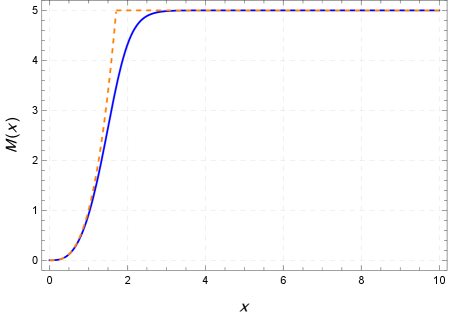
Investigations employing effective models on spherically symmetric collapse, as described by the Lemaître-Tolman-Bondi (LTB) model, demonstrate notable departures from classical collapse predictions. These models, which incorporate quantum effects, suggest that the standard picture of a singularity forming at the center of a collapsing dust cloud is not inevitable. Instead, the application of these models reveals a modification of the collapse dynamics, introducing quantum pressure that opposes gravitational attraction as density increases. This leads to a potential halting of the collapse before a singularity can form, and ultimately, a transition to expansion – a scenario drastically different from the predictions of general relativity in such extreme conditions. The LTB model serves as a crucial framework for understanding how these quantum effects influence the evolution of collapsing matter, offering a pathway towards resolving the singularity problem in cosmology.
The quantum behavior of collapsing dust clouds, as modeled within the Loop Quantum Cosmology framework, is demonstrably affected by the initial spatial distribution of the dust itself – a parameter known as the Dust Profile. This profile dictates how mass density varies across the collapsing cloud, and subtle variations within it significantly alter the quantum gravitational effects. Specifically, the Dust Profile influences the effective potential experienced by the cloud during collapse, impacting the probability of quantum tunneling and the subsequent bounce. A non-uniform distribution, rather than a perfectly homogeneous one, introduces asymmetries in this potential, leading to deviations from the standard symmetric bounce scenarios. Consequently, the Dust Profile isn’t merely a descriptive element of the initial conditions; it actively shapes the quantum evolution and the ultimate fate of the collapsing matter, potentially influencing the characteristics of the emerging expanding universe and even the avoidance of a singularity – a point where R = 0.
Current models of quantum gravity suggest a departure from classical predictions during extreme gravitational collapse, specifically proposing an ‘asymmetric bounce’ rather than a singularity. This bounce represents a transition from contraction to expansion, but crucially, it isn’t a mirror image around the point of maximum density; the expansion phase differs significantly from the preceding collapse. This asymmetry is linked to the preservation of the curvature scalar – a measure of spacetime distortion – which remains finite even as matter reaches extreme densities. Consequently, the central singularity predicted by classical general relativity is resolved, provided there are non-zero gradients in the mass density of the collapsing object. This means the universe, or any collapsing region within it, might not reach an infinitely dense point, instead undergoing a phase of quantum-driven expansion, and offering a potential pathway beyond the limitations of classical physics.
Analysis of the collapsing dust reveals the formation of shell-crossing singularities within the polymerised vacuum region, a consequence of the specific mass profile employed in the model. These singularities don’t represent a breakdown of the theory, but rather a point where different shells of dust cross paths, creating a region of extremely high, but finite, density. This phenomenon emerges due to the inherent properties of the polymerised vacuum, which modifies the usual rules of gravitational collapse and introduces a minimum length scale. Consequently, while classical general relativity predicts a singularity at the center of collapse, this model demonstrates that shell-crossing singularities can arise before reaching the central point, offering a potential pathway to resolve the singularity problem by altering the dynamics of gravitational collapse and suggesting a more complex, yet finite, endpoint.
Current models of quantum cosmology suggest a universe that doesn’t simply halt its contraction and re-expand symmetrically, but rather ‘bounces’ – transitioning from collapse to expansion. However, this bounce isn’t universally achievable in traditional symmetric models, often requiring a specific, and sometimes unattainable, minimum mass to avoid re-collapse. Recent investigations demonstrate a fundamentally different behavior; the region where expansion becomes possible – the ‘anti-trapped’ region – is present throughout the contracting universe, regardless of mass density. This ubiquity represents a significant departure from earlier models, implying that even low-density regions can successfully transition to expansion, potentially circumventing the need for a critical mass threshold and offering a more robust mechanism for cosmological rebound. This pervasive anti-trapped region dramatically alters predictions about the universe’s ultimate fate, suggesting a more resilient and universally expansive future.

The investigation into asymmetric bounce models reveals a deep truth about how humans attempt to grapple with the unknown. Every hypothesis, in this case the specific parameters defining the bounce, is an attempt to make uncertainty feel safe. This research, exploring singularity resolution within Loop Quantum Gravity, isn’t merely a calculation of spacetime; it’s a formalized expression of hope that the universe doesn’t simply end. As Kierkegaard observed, “Life can only be understood backwards; but it must be lived forwards.” The study of these models, and the attempt to predict the universe’s evolution beyond a singularity, embodies this forward momentum, even if the underlying physics remains shrouded in complexity. The marginally bound nature of the dust collapse, a key focus of the investigation, only underscores the delicate balance between order and chaos that defines existence itself.
Where Do We Go From Here?
The persistent appeal of singularity resolution lies not in a yearning for physical realism, but in a deep-seated discomfort with finality. This work, meticulously charting the consequences of an asymmetric bounce within the LQG-inspired framework, reveals the model’s predictive power – and, crucially, its dependence on initial conditions so finely tuned they border on the improbable. The dust collapse, though mathematically elegant, remains a constructed scenario, a thought experiment designed to avoid an unpleasant outcome rather than reflect a fundamental property of the universe. It exposes how much of theoretical physics is, at its core, a sophisticated exercise in narrative control.
Future iterations will undoubtedly refine the effective models, seeking greater consistency with observational cosmology. However, the true challenge isn’t technical; it’s psychological. The insistence on a ‘bounce’ – a continuation beyond the point of infinite density – betrays a human need for narratives of renewal, a rejection of true endings. The models will become more complex, more internally consistent, yet will remain tethered to the initial, unacknowledged desire to escape the inevitable.
One anticipates a proliferation of parameter adjustments, each designed to nudge the predicted universe closer to the observed one. But these adjustments are merely stories told to justify the equations. The next step isn’t to improve the model, but to honestly assess the degree to which it is a reflection of the universe, or simply a reflection of the model-builder’s anxieties.
Original article: https://arxiv.org/pdf/2602.15227.pdf
Contact the author: https://www.linkedin.com/in/avetisyan/
See also:
- Quantum Agents: Scaling Reinforcement Learning with Distributed Quantum Computing
- Boruto: Two Blue Vortex Chapter 33 Preview — The Final Battle Vs Mamushi Begins
- All Skyblazer Armor Locations in Crimson Desert
- Every Melee and Ranged Weapon in Windrose
- How to Get the Sunset Reed Armor Set and Hollow Visage Sword in Crimson Desert
- Zhuang Fangyi Build In Arknights Endfield
- One Piece Chapter 1180 Release Date And Where To Read
- All Shadow Armor Locations in Crimson Desert
- Windrose Glorious Hunters Quest Guide (Broken Musket)
- Jojo’s Bizarre Adventure Ties Frieren As MyAnimeList’s New #1 Anime
2026-02-18 21:42