Video games often draw inspiration from history. Some, like the Assassin’s Creed series, recreate historical settings very accurately, letting players explore and interact with the past. Others use historical events as a starting point for telling fictional stories, whether intimate or epic in scope.
As a huge fan of historical games, what really draws me in isn’t just how things look, but how people actually lived back then. It’s about understanding their daily lives, what they thought was important, and the challenges they faced. And honestly, the myths and legends of the time are a big part of that too! The further you go back in history, the more people relied on stories to explain the world. When a game nails all of this – the culture, the everyday life, and the mythology – it’s just incredible. It creates a really special experience, a perfect mix of learning and fantasy that you won’t soon forget. That’s what I look for, and that’s what these games deliver!
Kingdom Come: Deliverance 2
Hey Kid, Want To Explore Bohemia?
As a history buff and gamer, I’m blown away by how realistic Kingdom Come: Deliverance 2 is. Seriously, it’s got incredible detail – even better than the Assassin’s Creed games, in my opinion! You can really feel like you’re in medieval Bohemia. Everything, from the little farms out in the countryside to the buildings in places like Kutna Hora, feels totally authentic.
The game feels incredibly realistic, and that extends to its detailed role-playing elements. Combat isn’t just about pressing a button – you need to use specific directions to block and attack. Everything about the main character, Henry – from his clothes to his hygiene – affects how people respond to him, and those reactions vary depending on where he is. The game’s portrayal of mythology is also deeply connected to its culture. Religious symbols are everywhere, from the crosses on shields to the churches you’ll find throughout the world, making the citizens’ beliefs in Kingdom Come: Deliverance 2 very clear. They even explain unexplained events by blaming ghosts and demons.
Assassin’s Creed Origins
The Only Way To Make Egypt Look Better Is To Go There Yourself
The Assassin’s Creed series always strives for historical accuracy, but Assassin’s Creed Origins truly stands out. Perhaps it’s the remarkably detailed recreation of Ancient Egypt, the rich cultural depictions in cities like Thebes and Krokodilopolis, the realistic combat, or the fantastic music – but Origins feels more genuine and immersive than other games in the series.
 —
—
Results
Notice
Mythology is a huge part of the game. You’ll encounter actual gods like Anubis and Sobek during your travels, even in the middle of the desert, and they’ll fight you! Even regular enemies aren’t just typical guards or bandits – they have a mythological connection. While all these elements don’t always fit together perfectly, they significantly contribute to the unique world of Origins, even if the world feels a bit inconsistent at times.
Pentiment
Hey, Mr. Painter, Solve This Murder
Let’s move from 14th-century Bohemia (as seen in Kingdom Come) forward about 100 years and a bit west to Bavaria. In Pentiment, you play as Andreas, a traveling painter who gets caught up in a series of murders when he arrives in the town of Tassing. He’s unexpectedly tasked with investigating these crimes and identifying a suspect, and his choice will have lasting consequences for the entire community.
Understanding the story’s secrets depends a lot on knowing the history and customs of the time and place. A great way to learn is by talking to the people who live there – they’re usually happy to explain how the town works and who’s connected to whom, especially if you offer them a meal. Visiting the local abbey with Andreas shows just how deeply Tassing is rooted in Catholicism, particularly the traditions of Saint Benedict, and how that faith shapes both their beliefs and their local stories – though some might not call those stories ‘mythology’.
Ghost Of Tsushima
Who Needs The Samurai Code When You’ve Got Stealth Kills?
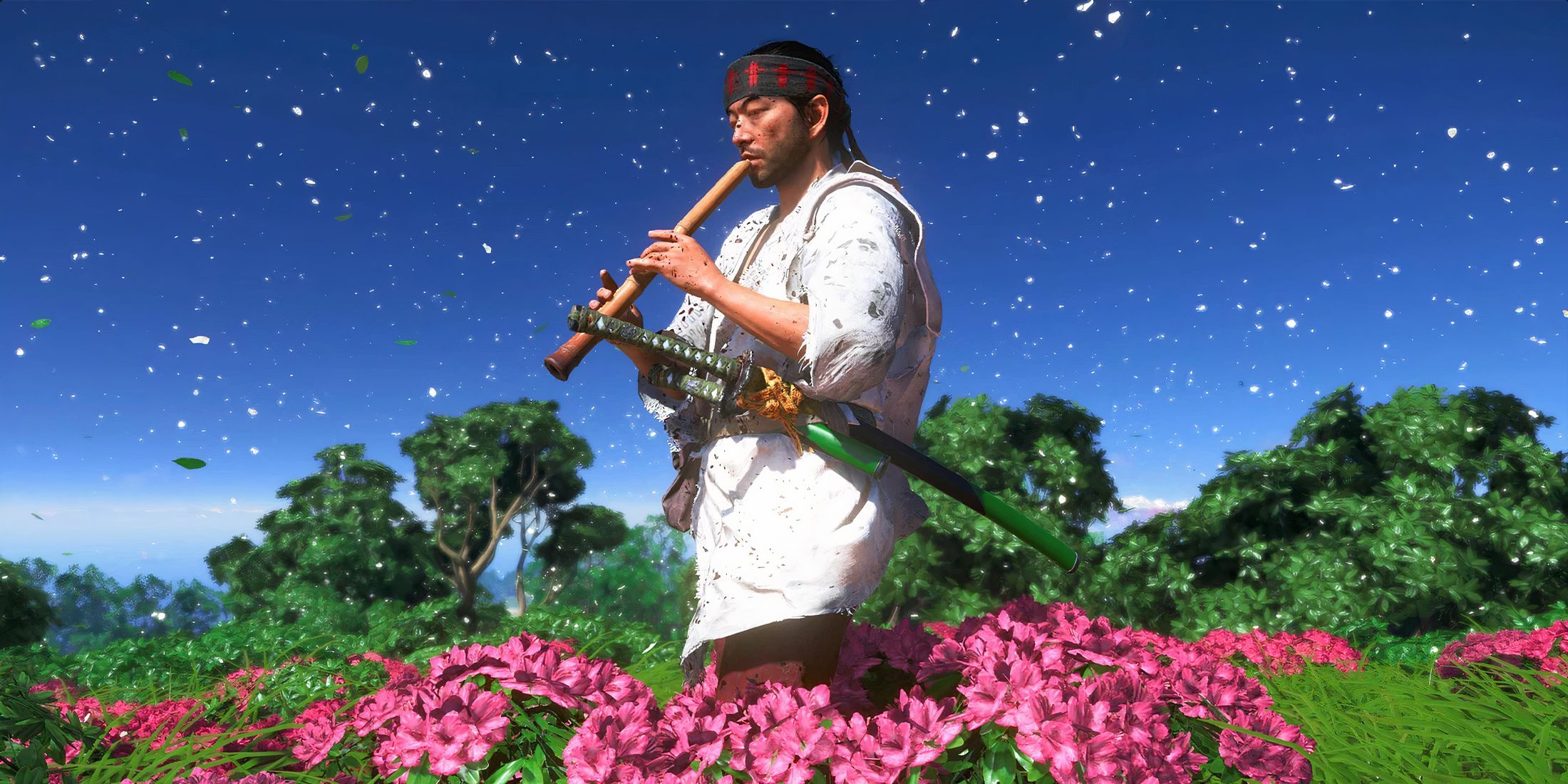
In 1274, the Mongol army really did invade the Japanese islands of Tsushima and Iki – it was the first of two attempts to conquer Japan. Despite the legend of a lone samurai stopping them with a grappling hook, the game Ghost of Tsushima is generally accurate in its depiction of Japanese history and culture.
As Jin gains a reputation as a vengeful spirit fighting against the invaders, the story takes on a mythical quality. Jin becomes more than just a man; he embodies the spirit of resistance. Though driven primarily by personal revenge, he still inspires fear in his enemies. Along his journey, Jin also encounters various mythical figures – immortal warriors and dangerous spirits – and must face them as a living legend himself.
Red Dead Redemption 2
Don’t Let Tuberculosis Spoil The Gorgeous View
As a huge fan, I truly believe Red Dead Redemption 2 is Rockstar’s masterpiece. It’s not just one of the best historical games ever made, but honestly, one of the greatest open-world games, full stop. What’s amazing is that even after almost eight years, it still feels incredible and sets the standard for the genre. A big reason why is how real the world feels – from the vast, untamed wilderness to the lively towns and cities of the Old West, it’s all so authentic.
The game heavily explores the idea of outlaws and challenges players to consider whether a truly ‘honorable’ outlaw can exist – or if it’s just a romanticized idea. This question is central to the main character, Arthur, who struggles with a life-threatening illness and wonders if he can find redemption before he dies. The game doesn’t offer a simple answer, leaving it up to players to form their own opinion about Arthur, his choices, and his legacy. Ultimately, how you play determines whether the world of Red Dead Redemption 2 feels like a myth or a realistic portrayal of the Wild West.
Indiana Jones And The Great Circle
History, Culture, And Mythology Are Basically The Indy Elevator Pitch
Archaeologists are fascinated by history, culture, and mythology, and Indiana Jones, as an archaeologist, should embody those areas alongside his adventurous spirit and fighting skills. Thankfully, the new film, Indiana Jones and the Great Circle, successfully balances these core elements – everything that made the character so popular – something the previous two movies didn’t quite achieve.
Indiana Jones journeys across the globe, from the Vatican and Egypt to Iraq, exploring everything from ancient ruins to former Nazi sites. He consistently demonstrates a deep understanding of history and culture, offering insightful commentary on famous artworks and lost artifacts. His quests ultimately lead him to the hidden tombs of the “Warrior Giants,” mysterious figures from the past whose skeletal remains are remarkably large.
A Plague Tale: Innocence
Enough Plague Rats For A Lifetime
The game A Plague Tale: Innocence is deeply rooted in its historical setting of medieval France during the Black Plague. Although some events are fictionalized, the game – and its sequel, A Plague Tale: Requiem – consistently emphasizes its French origins and atmosphere.
What really struck me about A Plague Tale is the story of Amicia and Hugo de Rune. They’re from a noble family, and seeing them forced to become fugitives really shows just how devastating the plague is – it affects everyone. And then there’s Hugo… he has this crazy ability to control the rats carrying the disease. It made me wonder if it was based on some old French legend, but it actually feels more inspired by the Pied Piper story. Either way, there’s definitely a supernatural vibe to the game that goes beyond just typical scary folklore.
Nioh
History And Fiction So Intertwined You’ll Think Demons Really Took Over Japan
As a huge fan, I’d definitely call the Nioh games – all three of them – epic historical adventures, and it’s totally accurate! The first Nioh feels the most connected to real history, especially since the third one throws in time travel. It’s set in Japan’s Sengoku period, and you play as William, a British samurai who’s tracking down a powerful sorcerer. What’s really cool is that he ends up quietly influencing big events, like the Battle of Sekigahara. And get this – you fight so many yokai! Seriously, yokai are everywhere.
Okay, so the story in Nioh isn’t a history lesson, and that’s totally fine with me! Let’s be real, the yokai and spirits make it pretty clear it’s not aiming for 100% accuracy. But honestly, that’s what I like about it. It’s steeped in Japanese history and culture, which gives the whole game a really cool feel and keeps it from going totally over the top. It’s not about fighting some cosmic being from another dimension, you know? It stays focused on Japan, and even with all the giant snakes and spirits running around, it still feels grounded and believable. It’s a fantastic blend of fantasy and history!
Read More
- All Skyblazer Armor Locations in Crimson Desert
- Robinhood’s $75M OpenAI Bet: Retail Access or Legal Minefield?
- How to Get the Sunset Reed Armor Set and Hollow Visage Sword in Crimson Desert
- How to Catch All Itzaland Bugs in Infinity Nikki
- Speedsters Sandbox Roblox Codes
- Re:Zero Season 4 Episode 3 Release Date & Where to Watch
- Who Can You Romance In GreedFall 2: The Dying World?
- Top 10 Must-Watch Isekai Anime on Crunchyroll Revealed!
- All Upcoming Banners in Umamusume Global
- Black Sun Shield Location In Crimson Desert (Buried Treasure Quest)
2026-02-22 15:38