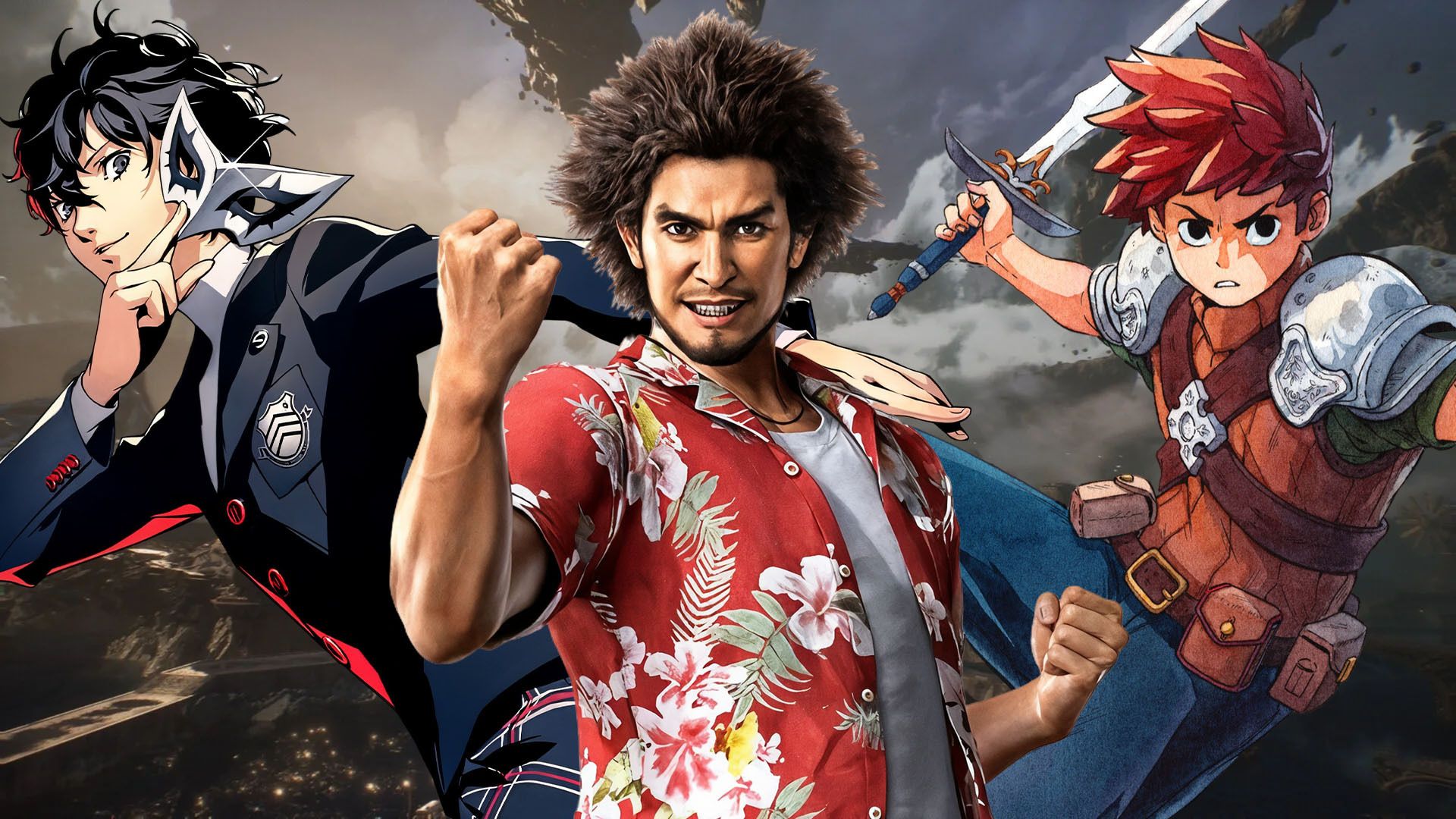
For a while, it was unclear if traditional turn-based role-playing games would regain their former popularity. Major franchises like Final Fantasy and Tales of had switched to faster, real-time combat systems. While many independent game developers were successfully using turn-based mechanics, big-budget, mainstream games were moving away from them.
Turn-based games are making a big comeback! A few recent titles have really boosted their popularity, and it doesn’t look like that will change anytime soon. The past ten years have given us some of the best turn-based RPGs ever created, and we’re excited to highlight them. These games are nearly perfect and are accessible enough for anyone new to the genre.
Throughout this article, we’re defining “the last 10 years” as anything published in 2016 or more recently, even if it’s just over ten years old.
Persona 5 Royal
The Pinnacle Of A Legendary JRPG Franchise
Even from the very first trailer, Persona 5 stood out. It had a unique style and confidence that few games attempted, and it quickly attracted both longtime fans of the Persona series and people new to Japanese role-playing games. Its vibrant menus, cool jazz music, and everyday life simulation aspects were all incredibly appealing.
Currently, the definitive edition of the game is Persona 5 Royal. It includes everything from the original, plus a new character, a new area to explore, and a richer story. But even the original Persona 5 is a great game, filled with characters you won’t forget, exciting battles, and a story that will stay with you long after you finish playing.
Clair Obscur: Expedition 33
The Underdog That Shocked The Gaming World
Nobody anticipated the massive success of Clair Obscur: Expedition 33. While previews were overwhelmingly positive, few predicted its industry-wide impact. The game, which went on to win numerous Game of the Year awards, truly surprised everyone. What’s even more impressive is that despite incredibly high expectations, Clair Obscur continues to deliver an exceptional experience for players.
This game’s battle system is a clever twist on traditional turn-based RPGs. Each character fights in a unique way, with things like elemental powers and different fighting styles that combine surprisingly well. You can also use Pictos to boost your abilities or change how battles play out, adding even more depth. But the real standout feature is the parry system – it feels more like the fast-paced action in Sekiro than a typical Final Fantasy game. This keeps combat exciting and makes you actively participate on every turn, so you’re never just waiting for your chance to attack.
Baldur’s Gate 3
A Modern Classic, And One Of The Greatest RPGs Ever Made
After being developed over a long period with player feedback, Baldur’s Gate 3 officially launched and immediately became known as one of the best role-playing games in recent years. When it was released on consoles, its popularity soared, and it’s now considered one of the greatest RPGs ever made – and that’s no exaggeration. Larian Studios has crafted an incredible sequel to a classic series, creating a game that responds to player choices in remarkably dynamic ways.
Who’s That Character?  Identify the silhouettes before time runs out.
Results
High Score: 0 —
The game’s responsiveness extends beyond the story. Battles aren’t simply about picking an attack; where you stand, how far you move, and even the surrounding environment all matter. With different classes, companions, and magical effects, each fight can unfold in many unique ways, making Baldur’s Gate 3 a consistently engaging RPG that stays fresh and exciting.
Like A Dragon: Infinite Wealth
An Absurdist Adventure In Hawaii
When the Yakuza/Like a Dragon series switched from action-packed brawling to turn-based combat – officially called the “Live Command RPG” Battle System – many fans were skeptical. Yakuza 7: Like a Dragon eased those concerns, but Like a Dragon: Infinite Wealth completely won players over. It’s now considered one of the best games in the series and one of the top JRPGs released in the last ten years.
Battles happen in turns, but characters have a clearly marked movement range, letting you freely move and adjust your position each turn. This impacts your attacks – you can strike enemies from the rear or team up with allies for special Tag Team attacks. The game keeps the series’ signature over-the-top style, with wild moves like attacking with a champagne bottle spray. Ultimately, it builds on everything fans love about the Yakuza/Like a Dragon games, and that’s a good thing!
Octopath Traveler 2
Eight Interconnected Stories Culminating In A Spectacular Finale
Octopath Traveler 2 sets itself apart from the original by trading a medieval fantasy world for one inspired by 19th-century England. Like the first game, you experience the journeys of eight unique characters, whose stories intertwine and ultimately lead to a very rewarding ending. The game is designed for a lengthy playthrough, and it generally respects your time and doesn’t require unnecessary grinding unless you’re aiming for the ultimate challenge.
Battles in the game are tough at first, but become very rewarding as you learn the ropes. You’ll use typical attacks, spells, and items, along with a ‘Boost’ system that strengthens your actions when you have enough energy. However, the real key to success lies in each character’s unique ‘Latent Power’ abilities. By building a team that combines these powers effectively, you can overcome almost any challenge. There’s a lot to learn and manage, but Octopath Traveler 2 truly shines when you master its complex systems.
Metaphor: ReFantazio
Reinvigorating Turn-Based Combat By Introducing Real-Time Combat
Rather than immediately making Persona 6, Atlus surprised everyone with a brand new game called Metaphor: ReFantazio. It shares similarities with the Persona series, blending social simulation with traditional JRPG elements for a compelling gameplay experience. However, instead of attending high school, you’re navigating a medieval fantasy kingdom and competing to become the next ruler. The king has been murdered, and the prince is unconscious, leading to a tournament to determine the heir. The story is exceptional, and the characters are among the most memorable in the genre.
Battles in Metaphor are mostly turn-based, and they’re really well done. Similar to games like Persona and SMT, each character has a class, called an Archetype, which determines their skills. But Metaphor differs from Persona because characters aren’t limited to just one Archetype – you can combine them to create even more powerful abilities. The game also features an optional real-time combat system that’s a standout. If you weaken enemies before a turn-based fight, you gain an advantage, and it lets you quickly finish easy battles when you’re leveling up and want to conserve magic points. This system significantly speeds up gameplay, especially in long dungeons, and makes grinding for experience much easier.
Darkest Dungeon
A Devastatingly Difficult Lovecraftian Horror RPG
Sometimes you want a really challenging game – one that relentlessly pushes your limits. Forget slowly getting better; how about a game that feels almost impossible, yet remains strangely enjoyable? That’s Darkest Dungeon. You control a band of four mercenaries who are based in a rundown town. They explore dangerous dungeons searching for resources, gold, and even cursed items. Your goal is to rebuild the town and fight back against the terrifying creatures emerging from the nearby mountains. These monsters are incredibly tough and will repeatedly defeat you, but the game is so compelling you’ll keep coming back for more.
The game unfolds in a 2D world, and battles, though turn-based, take place with your characters and enemies lined up in a single column – where they stand impacts what skills they can use. A key mechanic is the Stress meter: characters become stressed by negative events, like a teammate’s death. When the meter fills once, they suffer a mental breakdown, gaining debilitating negative effects and potentially becoming uncontrollable. Fill it a second time, and they’ll have a heart attack and die. Characters also have health, and losing all of it results in death. These deaths are permanent, and losing too many characters can make it impossible to win the game. Despite all this, Darkest Dungeon is designed to be just manageable enough to offer a sliver of hope, and that’s enough to keep you playing through the tough times.
Fire Emblem: Three Houses
Classic Fire Emblem Gameplay With A More Personal Story At Its Heart
Fire Emblem: Three Houses brilliantly combines the strategic battles of the Fire Emblem series with the social simulation elements found in games like Persona. This makes it a standout title in the Fire Emblem franchise and one of the greatest tactical role-playing games ever made. The game begins with character creation and choosing a ‘House’ – essentially the class you’ll be teaching at the Garreg Mach Monastery. You’ll progress through the story by winning tactical battles, and when you’re not fighting, you’ll spend your time teaching, gardening, and building relationships with your students.
The calm story moments provide a welcome break from the challenging battles. Combat happens on a grid-based map where you control units from above, then switch to a third-person view for turn-based fighting. Each character starts with a specific class and skills, which you can improve and customize over time. Unlike previous Fire Emblem games, Three Houses stops letting you recruit new characters midway through, meaning your success depends on developing the team you already have. This might feel different for longtime fans, but it’s rewarding to see your carefully built characters thrive when the battles get harder.
Chained Echoes
A Homage To Classic Turn-Based RPGs That Supersedes Many Of Them
Created by a single developer over seven years, Chained Echoes is a heartfelt tribute to classic Japanese role-playing games (JRPGs). With its top-down view and 16-bit graphics, it strongly resembles beloved titles like Chrono Trigger and Final Fantasy 6, which heavily influenced its design. The combat system feels familiar yet innovative, building on traditional designs with the addition of an Overdrive meter. This meter changes with every attack, rewarding players for keeping it at optimal levels while also presenting a challenge – overheating requires skillful use of other abilities to bring it back under control.
Chained Echoes is exceptional in every way, boasting top-tier storytelling and music. The story is captivating and concludes beautifully, with each character experiencing a well-developed and fulfilling journey. Combat is dynamic and consistently evolves as you gain new skills, and you’ll immediately feel yourself getting stronger. The final section of the game is particularly memorable, featuring enemies that cleverly challenge your established strategies. Plus, around the midpoint, every character gains access to their own powerful mech. Chained Echoes not only delivers on everything a fan of the genre would expect, but also goes above and beyond. It’s a loving tribute to classic games, and it stands proudly among them.
Warhammer 40K: Rogue Trader
One Of the Finest Video Game Representations Of The 40k Universe
Interest in Warhammer 40k games has grown a lot recently, which is fantastic. Stories that used to be limited to the tabletop game are now available to players everywhere. Leading the way is Warhammer 40k: Rogue Trader, an RPG played from an overhead perspective. You take on the role of a Rogue Trader, an heir with the freedom to explore the galaxy, trade, establish colonies, and conquer worlds. Your main objective is to build an empire, and you have complete control over how you achieve that, including who you choose to eliminate along the way. These choices significantly impact the game’s story and even the equipment you unlock.
The combat in this game is remarkably intricate. It’s similar to XCOM and Fire Emblem, but with a much higher level of complexity. Each character has a wide range of abilities that may seem daunting at first, but mastering them is key to unlocking their potential and finding their perfect role in battle. It’s incredibly satisfying to get to know your companions – or your own character – and see them become powerful forces. This isn’t an easy game – expect to spend over 120 hours with it – but the combat stays fresh and interesting thanks to clever encounter design that constantly challenges you, and the story is among the best in the genre.
Read More
- All Skyblazer Armor Locations in Crimson Desert
- How to Get the Sunset Reed Armor Set and Hollow Visage Sword in Crimson Desert
- Robinhood’s $75M OpenAI Bet: Retail Access or Legal Minefield?
- How to Catch All Itzaland Bugs in Infinity Nikki
- Speedsters Sandbox Roblox Codes
- Invincible: 10 Strongest Viltrumites in Season 4, Ranked
- Jojo’s Bizarre Adventure Ties Frieren As MyAnimeList’s New #1 Anime
- Who Can You Romance In GreedFall 2: The Dying World?
- Top 10 Must-Watch Isekai Anime on Crunchyroll Revealed!
- Re:Zero Season 4 Episode 3 Release Date & Where to Watch
2026-02-23 01:07