Steam reviews aren’t always reliable. While they provide an overall score – a common way to judge quality these days for things like movies, music, and games – these scores aren’t perfect. However, they usually offer a good sense of what most players think of a game, which is more representative than just a few critics’ opinions.
Often, games receive unfair criticism. There are many reasons why this happens, but when overall user scores, like those on Steam, show that negativity, it can damage a game’s reputation unnecessarily. The following first-person shooter (FPS) games fall into this category. They represent different periods in gaming history, and while they currently have a “Mostly Positive” rating on Steam, they’re actually much better games than that score suggests.

Critical Mass
Pick games to balance the averages.
Scales
Results
F.E.A.R. 2: Project Origin
A Sequel That Stands On Its Own Terms
The original F.E.A.R. remains a fantastic game, skillfully combining horror elements with realistic physics and intelligent enemy behavior. It was incredibly popular, so when F.E.A.R. 2: Project Origin was announced, fans were eager to play. Unfortunately, it proved difficult to live up to the high standard set by the first game, and the sequel doesn’t quite reach the same level.
The second game ramps up the action compared to the first, though the scary parts take a backseat for much of the gameplay, really shining in a few slower sections. It doesn’t quite have the same overall polish as the original, but the action is still excellent, and it looks significantly better than the first F.E.A.R. game. The weapons are more inventive, and the ending is truly spectacular. While F.E.A.R. 2 might not live up to expectations if you directly compare it to F.E.A.R., if you approach it as its own experience, you’re in for a lot of fun.
Avatar: Frontiers Of Pandora
A Gorgeous Adventure Game Set On An Alien World
Let’s be upfront: Avatar: Frontiers of Pandora is a stunningly beautiful game – one of the best-looking ever created. While its association with Ubisoft and the Avatar movies might lead to some skepticism, players who give it a chance generally love it.
Playing in the world of Pandora is a truly special gaming experience. It’s enjoyable just to move around, thanks to the clean interface, fluid controls, and easy-to-learn exploration. The game offers a unique perspective – you play as a tall Na’vi character, and the camera reflects that height. Whether you’re soaring through the air on an Ikran or taking down enemy bases, the action is just as impressive. Frontiers of Pandora sometimes gets overlooked because of its title, but it’s a really great first-person shooter, especially if you prefer playing solo.
Void Bastards
A Sci-Fi Roguelike Inspired By System Shock 2
Most roguelike games have a straightforward goal: explore an area, defeat enemies, collect items, and then move on. Void Bastards takes that formula and adds a unique spin. It’s a sci-fi roguelike where you play as a prisoner thawed from cryosleep aboard the Void Ark, tasked with finding the officials who can authorize the ship’s next jump.
As you explore, you’ll board different ships filled with mutants. But unlike typical games, you’re not focused on killing everything. You’re pulling off a heist – finding specific items on each ship and then making a quick escape. This changes the usual gameplay loop in a really good way. While the creative and satisfying weapons mean you’ll still be doing plenty of shooting and having fun, you don’t need to shoot every enemy if you have a better plan. The sequel, Wild Bastards, improves on this even further.
Atomic Heart
The Dystopic Soviet Take On BioShock
Atomic Heart was a project many years in the making, and as more trailers were released, it seemed almost too good to be true. The game looked stunning, the combat felt incredibly responsive, and the weapons and abilities were remarkably imaginative. While clearly taking inspiration from BioShock, Atomic Heart offers a unique and captivating Soviet-era setting that’s both interesting and visually striking. There’s a lot to enjoy in this game.
Overall, Atomic Heart mostly lives up to its promises. While it has some performance hiccups, the game looks exactly as you’d expect. The action is fast-paced and features a great variety of weapons and abilities, offering a surprisingly tough challenge. The main drawback is the story and the protagonist, who can be quite annoying. However, if you can look past that and are searching for a shooter with a unique world and excellent combat, Atomic Heart is definitely worth playing.
Atomfall
Your British Grandma’s Fallout
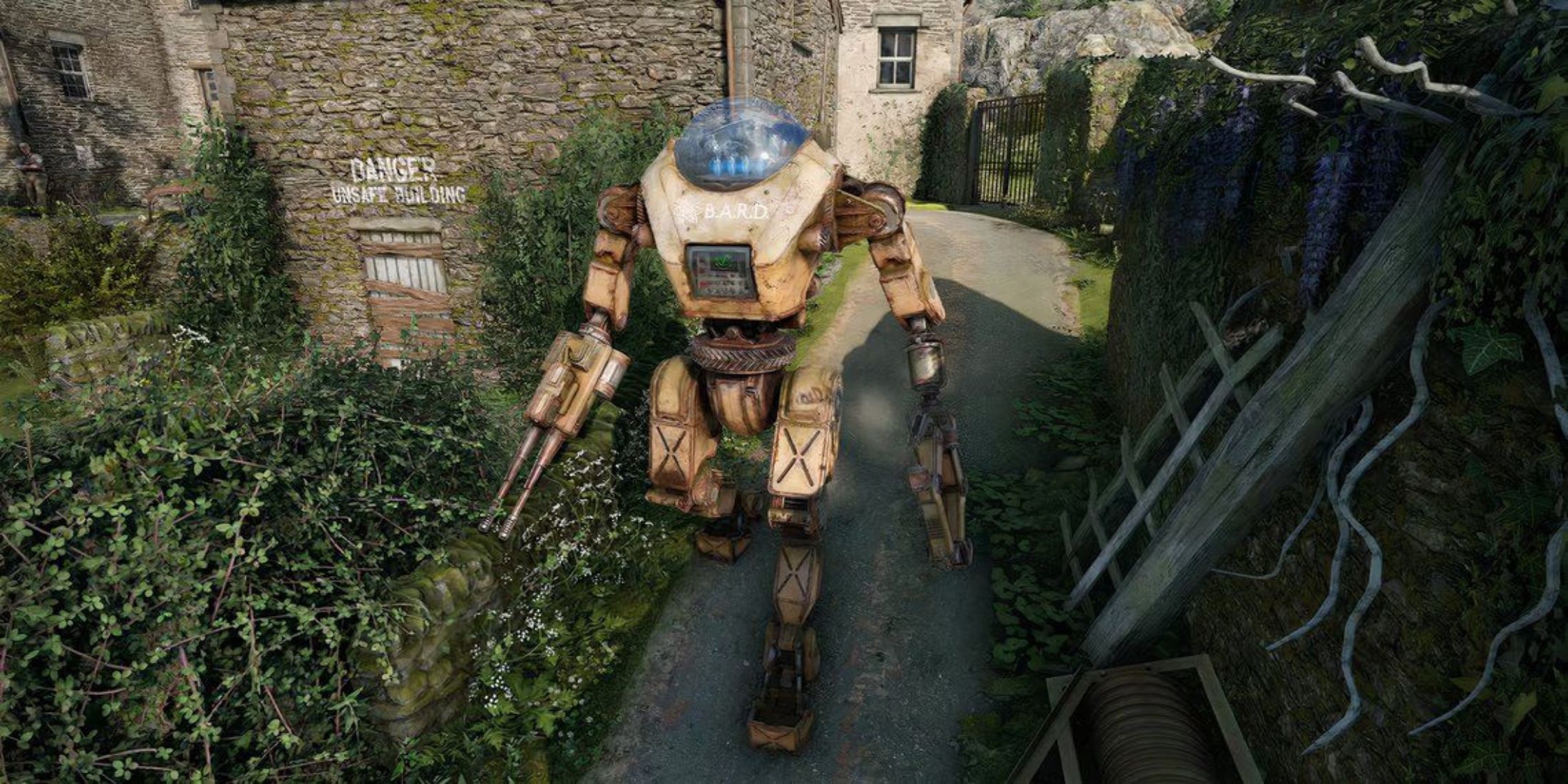
Similar to how Atomic Heart clearly takes inspiration from BioShock, Atomfall does the same with Fallout, especially the more recent games made by Bethesda. It’s a post-apocalyptic action game where you survive in Northern England by crafting items, exploring the world, and finding loot. The game also includes RPG features, like talking to characters and making choices that affect the story.
Atomfall lets you tackle challenges in a variety of ways, similar to immersive sims. Though it doesn’t offer quite the same level of freedom as games like Dishonored, you can choose to be stealthy, fight, use the environment to your advantage, or talk your way out of trouble. Ultimately, it’s a survival game where resources are limited, which makes every encounter feel more intense. This mix of genres is one of the many reasons why Atomfall is a game worth checking out.
The Finals
The Most Destructive Free-To-Play FPS On The Market
Despite some debate about its use of AI voices, The Finals is generally receiving positive feedback from players. However, its Steam reviews reflect a concern some have with the length of time it takes to eliminate opponents, which is slower than in popular competitive shooters like Call of Duty or Rainbow Six Siege. Even so, The Finals offers a fresh and unique experience in the competitive FPS genre and is definitely worth checking out – and perhaps even more praise.
The main draw here is environmental destruction. Each map in The Finals can be destroyed from top to bottom, meaning each match will vary based on both intentional and incidental demolition. Then there’s the primary game mode, Cashout. Instead of trying to rack up kills or capture objectives, Cashout involves tracking down currency on the map and depositing it in a Vault. Depositing takes time, leaving you vulnerable to attack, and anyone who kills you can steal your cash for themselves. Destruction complements this, allowing you to blast through walls to reach the cash quicker, or blow the floor out from under the Vault to move it into a location that’s easier to defend. There are many layers to The Finals’ gameplay, and it’s one of the newer free-to-play shooters that’s genuinely worth your time.
E.Y.E.: Divine Cybermancy
A Shockingly Overlooked Sci-Fi RPG With Unreal Character Build Depth
Let’s talk about E.Y.E.: Divine Cybermancy – it’s a surprisingly good sci-fi RPG that doesn’t get enough attention. It’s a bit obscure, partly because of its complicated name and story. The game is incredibly detailed, maybe even overwhelming for some players, but the unique gameplay systems are well worth the effort to learn. Honestly, for a game that’s 15 years old, it’s remarkably complex and responsive – truly one of the best sci-fi RPGs out there.
This game really shines with its creative building and hacking. You can do typical things like disable security and use cameras, but also take direct control of enemies from a distance. And that’s just the beginning! It also features powerful psychic abilities – some are so strong they can drastically change the game. You can turn enemies against each other, or even banish them to a dimension that drives them mad. With tons of weapons and powers to combine, you can create incredibly effective strategies. What’s really cool is that many of these abilities change how you fight, making each playthrough feel fresh and unique.
Homefront: The Revolution
Essentially, A Near-Future Version Of Far Cry
The original Homefront didn’t offer much new, feeling like a copy of Call of Duty built on the foundations of a cancelled Medal of Honor game. Its sequel, Homefront: The Revolution, faced a difficult development process, raising concerns about its quality. However, it ultimately succeeded, doing something most military shooters avoid: embracing an open-world design.
In Homefront: The Revolution, you’ll find yourself in a Philadelphia occupied by the Korean army. You play as a member of the resistance, working to liberate the city by building a network of allies while evading enemy patrols and drones. The game offers a mix of intense combat and stealth, but its standout feature is the incredible weapon customization. You have almost limitless freedom to modify your weapons – turn a crossbow into a flamethrower, or give a revolver sniper-level range, for example. It’s a lot like a futuristic Far Cry game, but with weapons that are truly over-the-top and imaginative. That should tell you everything you need to know!
Read More
- All Skyblazer Armor Locations in Crimson Desert
- Robinhood’s $75M OpenAI Bet: Retail Access or Legal Minefield?
- How to Get the Sunset Reed Armor Set and Hollow Visage Sword in Crimson Desert
- How to Catch All Itzaland Bugs in Infinity Nikki
- Speedsters Sandbox Roblox Codes
- Re:Zero Season 4 Episode 3 Release Date & Where to Watch
- Who Can You Romance In GreedFall 2: The Dying World?
- Top 10 Must-Watch Isekai Anime on Crunchyroll Revealed!
- Black Sun Shield Location In Crimson Desert (Buried Treasure Quest)
- Top 8 UFC 5 Perks Every Fighter Should Use
2026-02-25 02:41