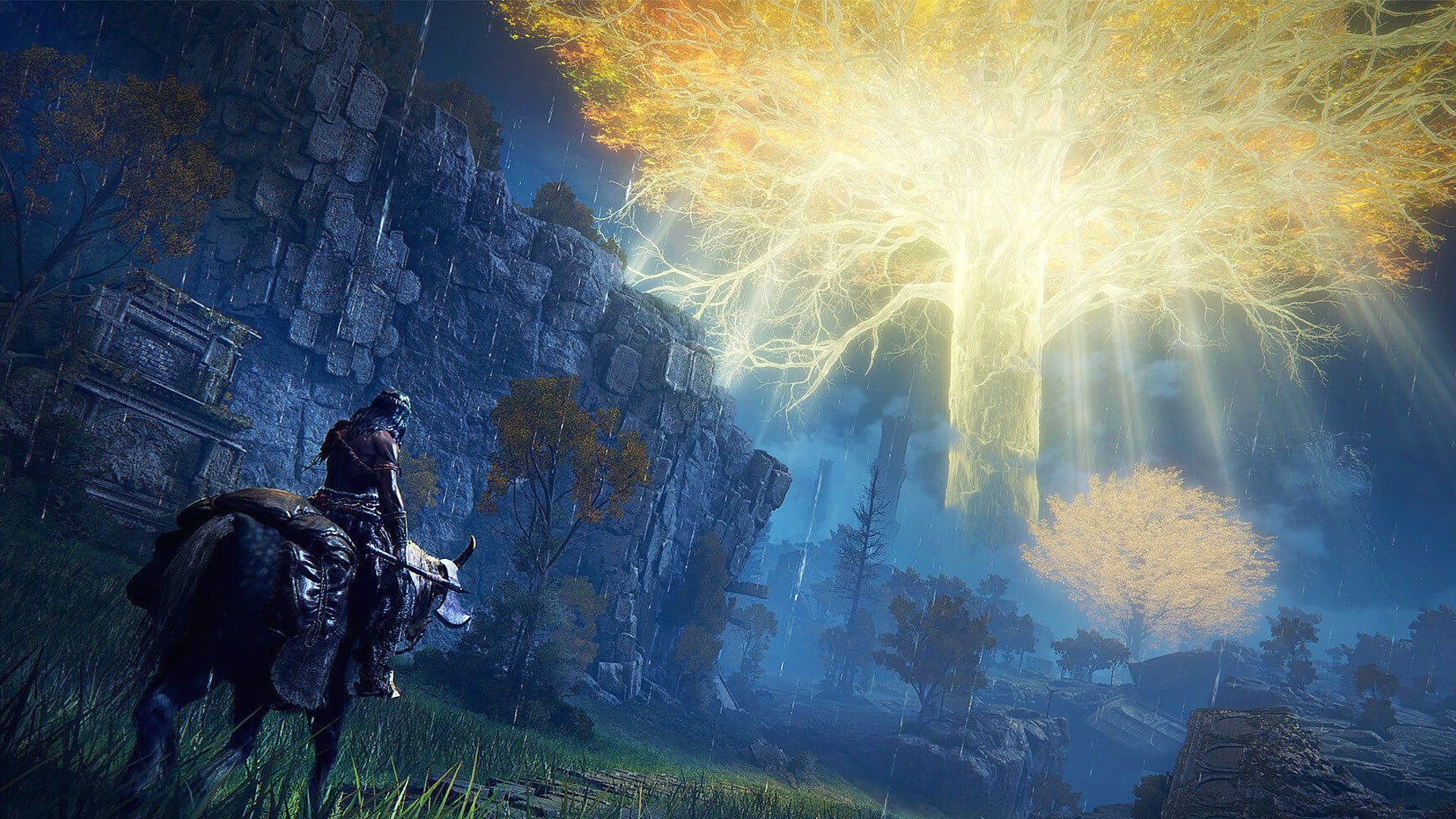
To create truly captivating fantasy RPGs that players can enjoy for hundreds of hours, developers need to build incredible worlds first. These worlds should feel so real that players truly lose themselves in them. For years, creators have focused on crafting believable fantasy settings with rich histories, detailed stories, unique inhabitants and creatures, and distinctive cultures and religions. In the best RPGs, all these elements come together to create a deeply immersive experience in a world that feels truly unique and alive.
The most compelling game worlds grow and deepen with each new game, offering intricate details, vast new areas to explore, and unforgettable stories that resonate with players. We’re taking a look at the best fantasy worlds in role-playing games – both brand new creations and those built upon established franchises – that stand out for being truly immersive and visually unique.
Sanctuary
The Diablo Series
The Diablo series takes place in the dark fantasy world of Sanctuary, and each game has brought its own changes. With Diablo 4, the series has returned to the dark, gothic style that many fans love. Sanctuary is a world caught between Heaven and Hell, constantly threatened by undead creatures and demons. After the more colorful look of Diablo 3, which some players didn’t enjoy, Diablo 4 features a darker color scheme and shadowy dungeons and caves.
As a longtime ARPG fan, I’d say Diablo 4 delivers a solid fantasy experience. The world feels really well-built – believable environments and regions, but the story unfolds through what you do in the game, not through endless cutscenes. It’s more about experiencing the lore as it happens. What I’ve really appreciated in both Diablo 3 and 4 is how the developers have created these unique regions within Sanctuary, like Kehjistan and Nahantu, each with its own culture and vibe. It adds a lot of depth and makes the world feel truly diverse.
Eora
Avowed, Pillars of Eternity
Obsidian’s world of Eora is their most detailed creation yet. It first appeared in Pillars of Eternity as a traditional fantasy land with a complex history of souls and deities. The sequel, Deadfire, moved towards a pirate-themed setting with realistic colonial themes, while also expanding on the world’s religions. Now, with Avowed, players can experience Eora in first-person, enjoying its unique mix of influences and diverse races like the Aumaua and Orlan, which offer a fresh take on fantasy archetypes.
Beyond the introduction of new races, what truly sets the world of Eora apart is its detailed and fascinating pantheon of gods. These gods are complex characters with interwoven relationships, and players are constantly prompted to question their beliefs. This often leads to lengthy, lore-rich discussions and even direct trials from the gods themselves. While Eora may not yet be on the same level as established RPG settings like The Elder Scrolls or Dragon Age, it has significant potential to become a compelling universe for many future role-playing games.
Faerûn
Baldur’s Gate 3
Even though Baldur’s Gate 3 is considered one of the best modern computer role-playing games, its world-building isn’t entirely original. The game takes place in Faerûn, a well-established setting from the Dungeons & Dragons universe, but doesn’t significantly expand upon or change the decades of existing lore. While the Forgotten Realms is a classic and expansive setting, Baldur’s Gate 3 doesn’t add much that’s new.
Many players will be perfectly happy just enjoying the colorful and exciting fantasy world of Baldur’s Gate 3, with all its strange creatures and limitless possibilities. However, the game’s vastness can be a drawback. While it attempts to incorporate every fantasy idea imaginable, it sometimes struggles to establish a truly unique identity of its own.
Thedas
The Dragon Age Series
Both Mass Effect and Dragon Age are central to BioWare’s legacy of role-playing games, and they’ve created some of the most detailed and immersive worlds in video game history. For many players, the world of Thedas in Dragon Age: Origins feels like a second home. It was one of the first fantasy worlds aimed at mature audiences, tackling complicated issues like prejudice and featuring characters with complex motivations and questionable morals. Though it shares some similarities with other fantasy settings, Dragon Age is unique thanks to elements like the conflict between Mages and Templars, distinct races like the Qunari, and world-altering events like the Darkspawn Blights, allowing it to stand apart from series like The Elder Scrolls or Forgotten Realms.
The Dragon Age games are famous for presenting the world of Thedas in a constantly evolving way. While core stories and conflicts remain consistent, the creators frequently update and even change aspects of the world’s history and appearance. This means each game—Origins, DA2, Inquisition, and The Veilguard—feels distinct, and fans often have a particular favorite based on their preferred version of Thedas.
 Rearrange the covers into the correct US release order.
Your Order
Results
— —
Tamriel
The Elder Scrolls Series
Compared to the world of Faerûn, Tamriel from The Elder Scrolls feels more realistic, serious, and grand. It focuses on making the world feel connected and believable, rather than simply being huge (though Morrowind is an exception). Each game, such as Skyrim, takes place primarily within one of Tamriel’s nine distinct provinces, each dominated by a different race. This creates a unique atmosphere and the feeling that you’re experiencing only a piece of a much larger, interconnected world.
The world of Elder Scrolls has grown incredibly detailed over the past three decades, featuring rich history, unique cultures for each race – including the original Argonians and Khajiit – and complex political conflicts. Players can uncover centuries of backstory through in-game books and conversations. What’s particularly impressive is how the developers at Bethesda continue to add new layers to the lore without rigidly defining it, leaving plenty of room for players to interpret the history and world themselves.
Yharnam
Bloodborne
Among FromSoftware’s incredible games, Bloodborne truly stands out – even for Dark Souls fans! The gothic city of Yharnam, filled with powerful cosmic forces, strange influences, and unsettling diseases, is just as captivating today as it was over ten years ago. Players rarely forget their experience exploring Yharnam and the areas around it, and even fewer are ready for what happens next in the story.
Bloodborne excels at combining unusual elements into a captivating experience, leaving players with more questions than answers and fueling their imagination through its subtle but consistent world-building. While years of studying the game’s story have revealed much, Yharnam still retains enough secrets to make revisiting this unique universe incredibly appealing to fans.
The Continent
The Witcher Series
I’m a huge fan of The Witcher games, but it’s important to remember they’re built on the incredible foundation of Andrzej Sapkowski’s books. CD Projekt Red absolutely deserves praise for how they’ve brought that world to life, especially with the massive open world of The Witcher 3: Wild Hunt. What really sets it apart for me is the world itself – the Continent. Okay, the name isn’t the most creative, but it’s a sprawling, Slavic-inspired fantasy world with a really unique feel that you don’t often see in this genre. And the backstory, with the Conjunction of the Spheres, is just brilliant – it basically opens the door to a multiverse of possibilities, which is exciting considering all the new Witcher projects coming out!
The world of The Witcher is incredibly detailed, filled with unique creatures, political conflicts, and complex issues like racial inequality. It features compelling relationships between powerful figures and heartfelt stories about everyday people. This makes it an ideal setting for an open-world RPG, and fans are fortunate that CD Projekt Red developed the game.
The Lands Between
Elden Ring
Elden Ring, widely considered FromSoftware’s masterpiece, sets a new standard for fantasy role-playing games. Its breathtaking world, the Lands Between, is incredibly vast and detailed, offering the deep storytelling fans have come to expect. Unlike previous games like Bloodborne or Dark Souls, which featured distinct areas, Elden Ring allows players to freely explore a massive, interconnected world and forge their own unique journey.
The Lands Between and the Realm of Shadows are filled with incredible creatures, locations, and environments, each with a rich history and hidden depths. Beneath the surface lies centuries of lore and backstory, rewarding dedicated players who delve deeper. The connections between demigods, the subtle influence of cosmic forces, and the overall world-building are so extensive that the story of Elden Ring could easily fill entire books.
Read More
- All Shadow Armor Locations in Crimson Desert
- All Skyblazer Armor Locations in Crimson Desert
- How to Get the Sunset Reed Armor Set and Hollow Visage Sword in Crimson Desert
- Marni Laser Helm Location & Upgrade in Crimson Desert
- Best Bows in Crimson Desert
- All Golden Greed Armor Locations in Crimson Desert
- All Helfryn Armor Locations in Crimson Desert
- How to Craft the Elegant Carmine Armor in Crimson Desert
- Wings of Iron Walkthrough in Crimson Desert
- Keeping Large AI Models Connected Through Network Chaos
2026-02-22 17:39