Summary
- “The Best of Both Worlds” almost became a four-part saga, enhancing character development and emotional depth.
- Rick Berman’s preference for episodic, self-contained stories led to the rejection of the extended arc idea.
- The proposed longer story would’ve reshaped Picard and Riker’s arcs, setting the stage for more serialized storytelling in TNG.
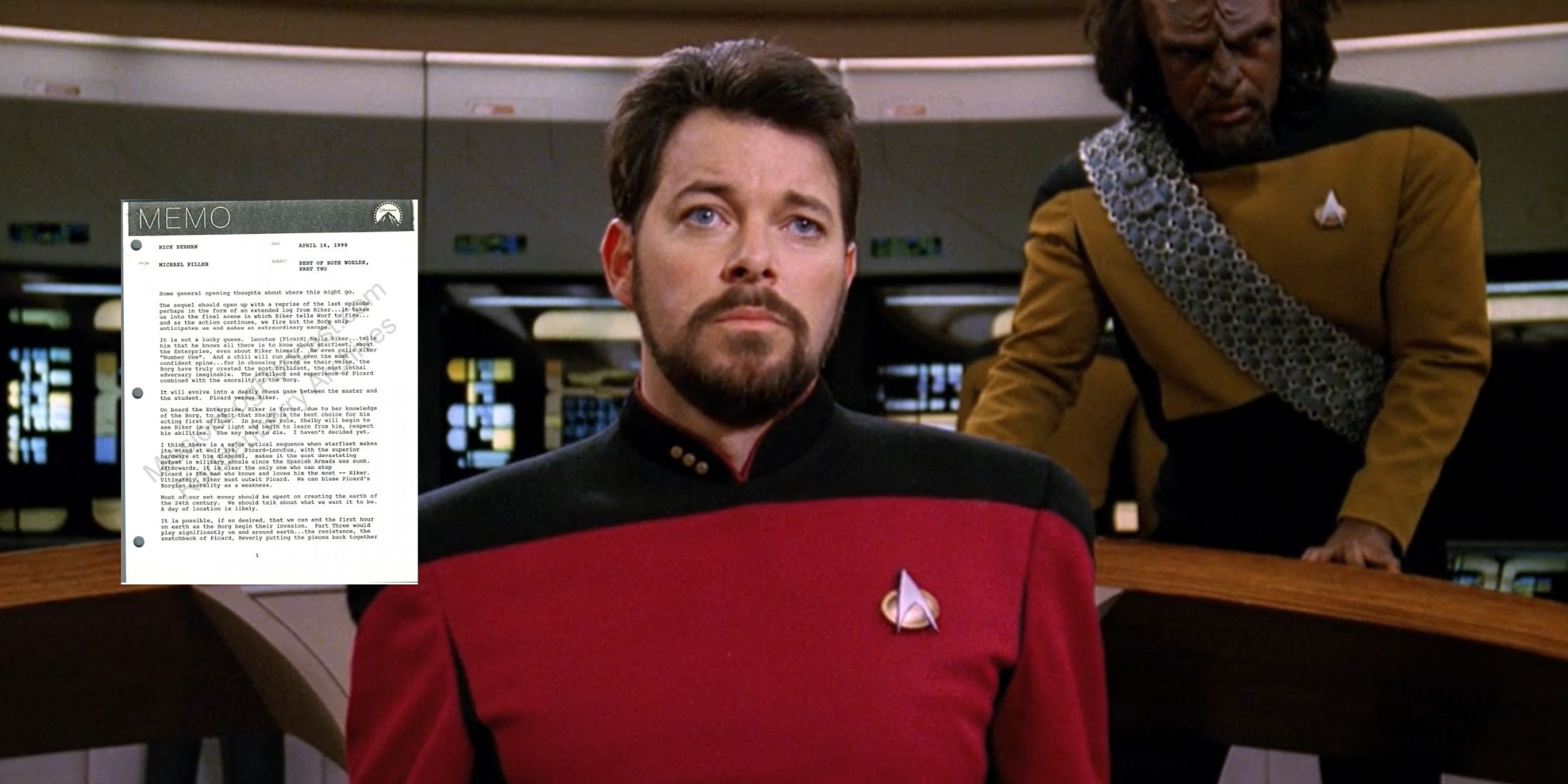
Originally, the epic two-part Star Trek: The Next Generation episode “The Best of Both Worlds” was planned to be a much larger storyline. A 1990 production memo revealed that the intense clash between the Borg and the Enterprise-D’s crew was initially conceived as a four-episode series.
The story ‘The Best of Both Worlds’, which is one of the most famous episodes in TNG, was broadcast as a two-part finale and premiere between Seasons 3 and 4. This episode not only strengthened the legacy of TNG, but it also played a significant role in shaping the modern cliffhanger. Interestingly, thanks to some intriguing behind-the-scenes revelations by The Trek Collective, we now know that the creative team initially considered an even more expansive storyline for this episode; had they gone through with it, this change might have significantly altered the course of Star Trek storytelling.
Imagining The Next Generation’s Four-Part Saga
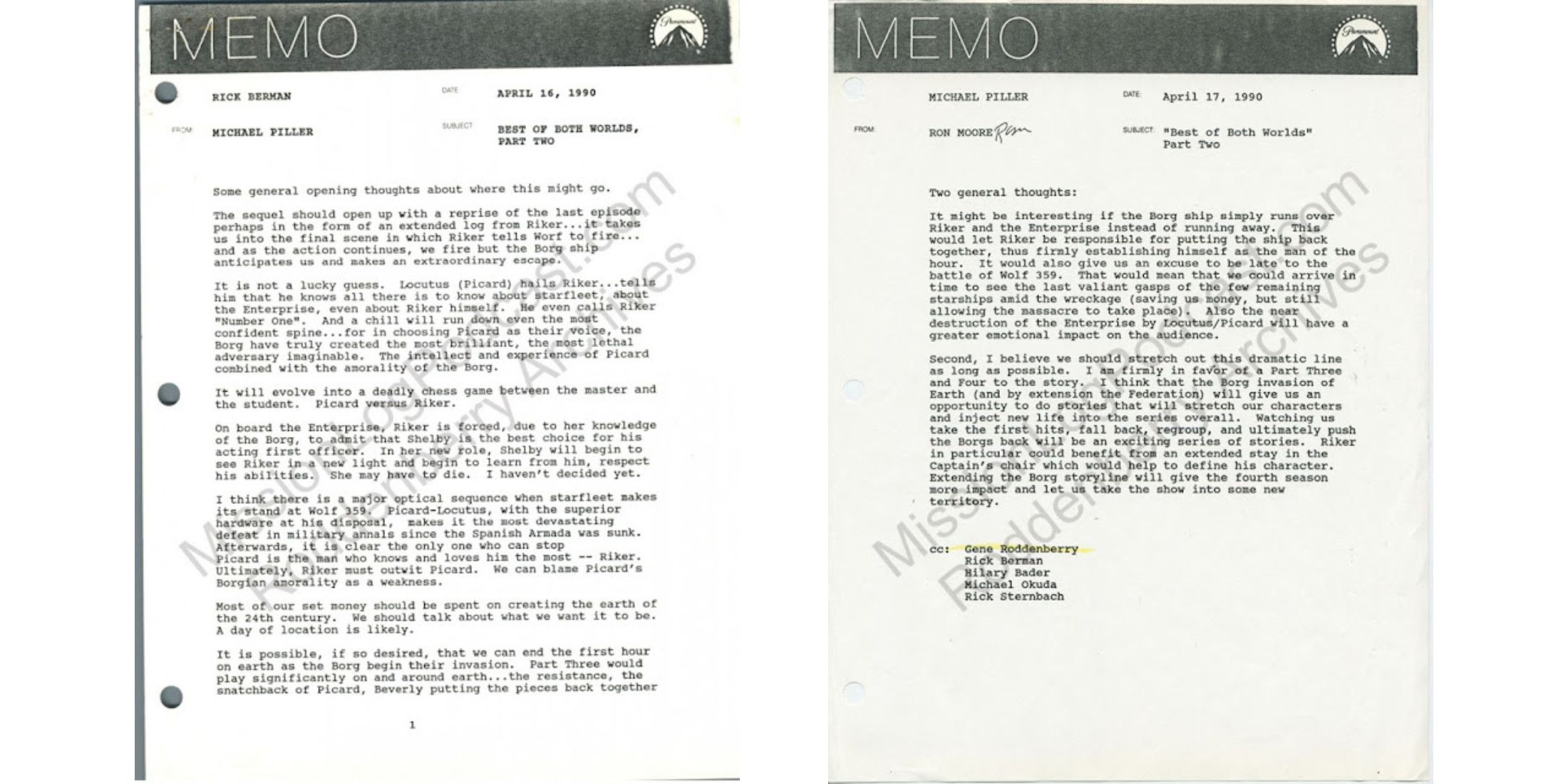
In 1990, two notes were passed around among the Star Trek: The Next Generation team, one from the showrunner Michael Piller and another from writer Ronald D. Moore. Piller presented an ambitious plan for a significant storyline, which Moore immediately endorsed. Piller’s concept was for a four-episode sequence that delved into the consequences of a Borg attack. Moore backed this idea, even proposing that the Enterprise should suffer heavy damage at the hands of the Borg, leaving Riker (Jonathan Frakes) to step up and restore the ship, delaying their arrival at the Battle of Wolf 359, as stated in his memo.
“I am firmly in favor of a part three and four to the story.”
The story they imagined might have looked something like this:
- Part I: The Threat Emerges: This episode would have followed the same events leading up to the cliffhanger from the existing Part I, including Riker’s growing tension, and the crew’s attempt to intercept the Borg cube. The Borg reveal Picard (Patrick Stewart) as Locutus, and Riker gives the fateful order to fire.
- Part II: Picard Becomes Locutus: Worf (Michael Dorn) fires on the Borg — but the cube anticipates the move and escapes. Locutus (Picard) hails the Enterprise, revealing his knowledge of Starfleet and Riker himself, even mockingly calling him “Number One.” A cerebral battle unfolds between Riker and Locutus: mentor vs. student.
- Part III: The Counterattack: The crew launches a series of unsuccessful attempts to disable the Borg cube, with multiple away missions led by Riker, Data (Brent Spiner), and Worf. Tensions among the crew escalate. Riker is pushed to rely on Shelby, who earns his respect as acting first officer, while Starfleet suffers a devastating defeat at Wolf 359, arriving too late to prevent the carnage. Federation outposts fall. Starfleet is on the brink of collapse.
- Part IV: Redemption and Aftermath: The Enterprise, severely damaged, recovers with Riker in charge. The crew battles in an all-out Borg war, with the Enterprise narrowly escaping destruction by outsmarting the Borg and exploiting their regeneration sequence. Similar to the actual “Best of Both Worlds” Part 2 ending, the Enterprise escapes as the cube explodes over Earth, and Picard starts to recover as his Borg implants deactivate.
Instead of the original, we received a compacted, yet equally thrilling version. This abridged edition covers the crucial points: Riker’s leadership quandary, the emergence of Locutus, the suspenseful cliffhanger, and ultimately, the destruction of the Borg cube. However, some expansive storylines such as the Federation’s comprehensive response, character growth for the crew, and Picard’s gradual recuperation were either omitted or saved for subsequent episodes like “Family.
Why The Star Trek: TNG Mega Episode Didn’t Happen
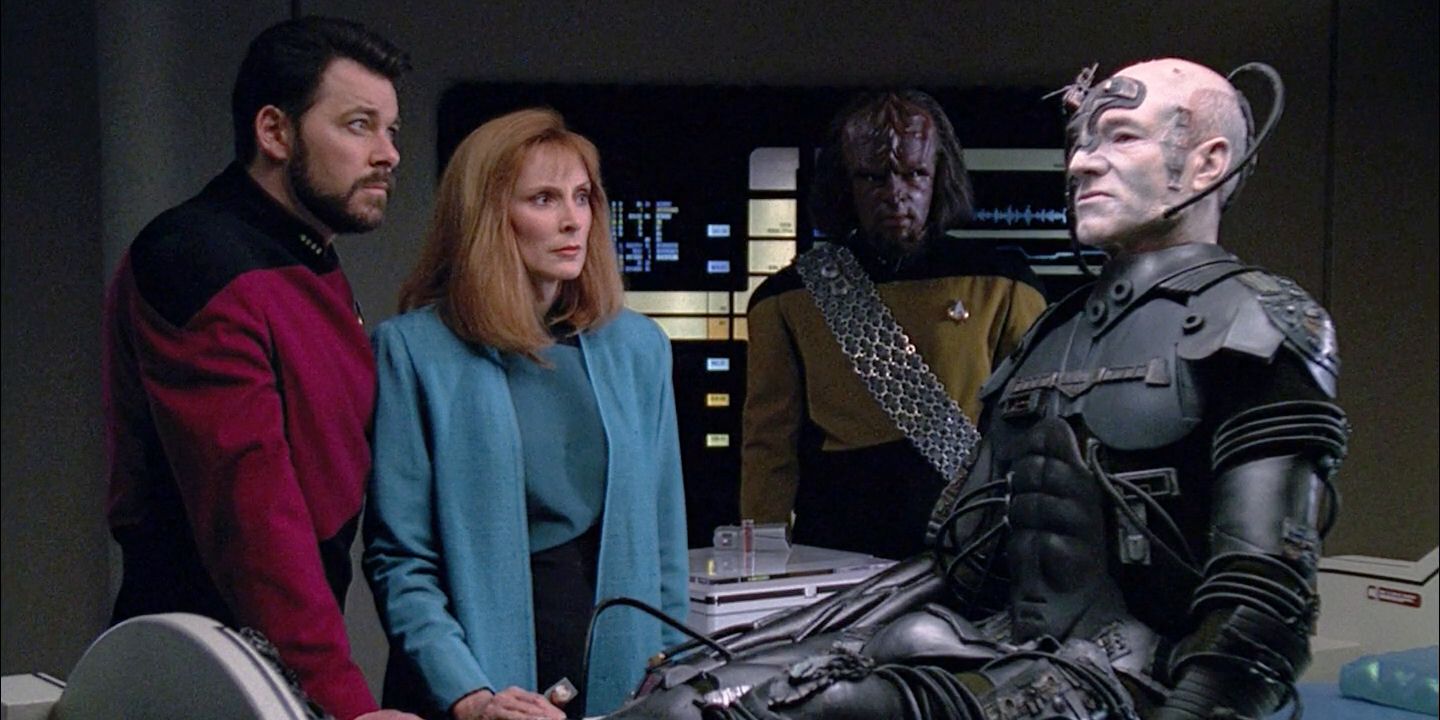
In essence, the four-part series never materialized mainly because of Rick Berman, the executive producer. Berman favored standalone episodes, especially those that could work as single-episode stories (or “bottle shows”), which usually restored the original state of affairs by the end. This was part of a broader approach to production that aimed to make TNG episodes more suitable for syndication, where serialized storytelling was seen as a risky venture at the time.
Michael Piller initially proposed a trilogy concept, but Berman, together with series creator Gene Roddenberry, favored a science-focused narrative that would primarily take place on the ship and follow an episodic structure. They were cautious about delving too deeply into serialized storytelling, particularly when dealing with a formidable adversary like the Borg, given its heavy reliance on special effects.
Additionally, it’s quite probable that there were other contributing factors. The tight budget was a major challenge due to the need for intricate sets, prosthetics, and special effects to convincingly portray a Borg War, which would have stretched the financial capabilities of TNG. Another concern was the time crunch. With numerous episodes already in production for Season 3, it’s possible that the team found themselves short on resources to dedicate to a three or four-hour epic episode.
In spite of the hurdles, the ideas put forth by Piller and Moore were evidently impactful on the end result. While their original ideas may have been scaled back, the intensity and emotional depth they intended for the story still shone through in “The Best of Both Worlds”, making it a production that is hard to forget.
What Could Have Been: Expanded Arcs For Riker and Picard
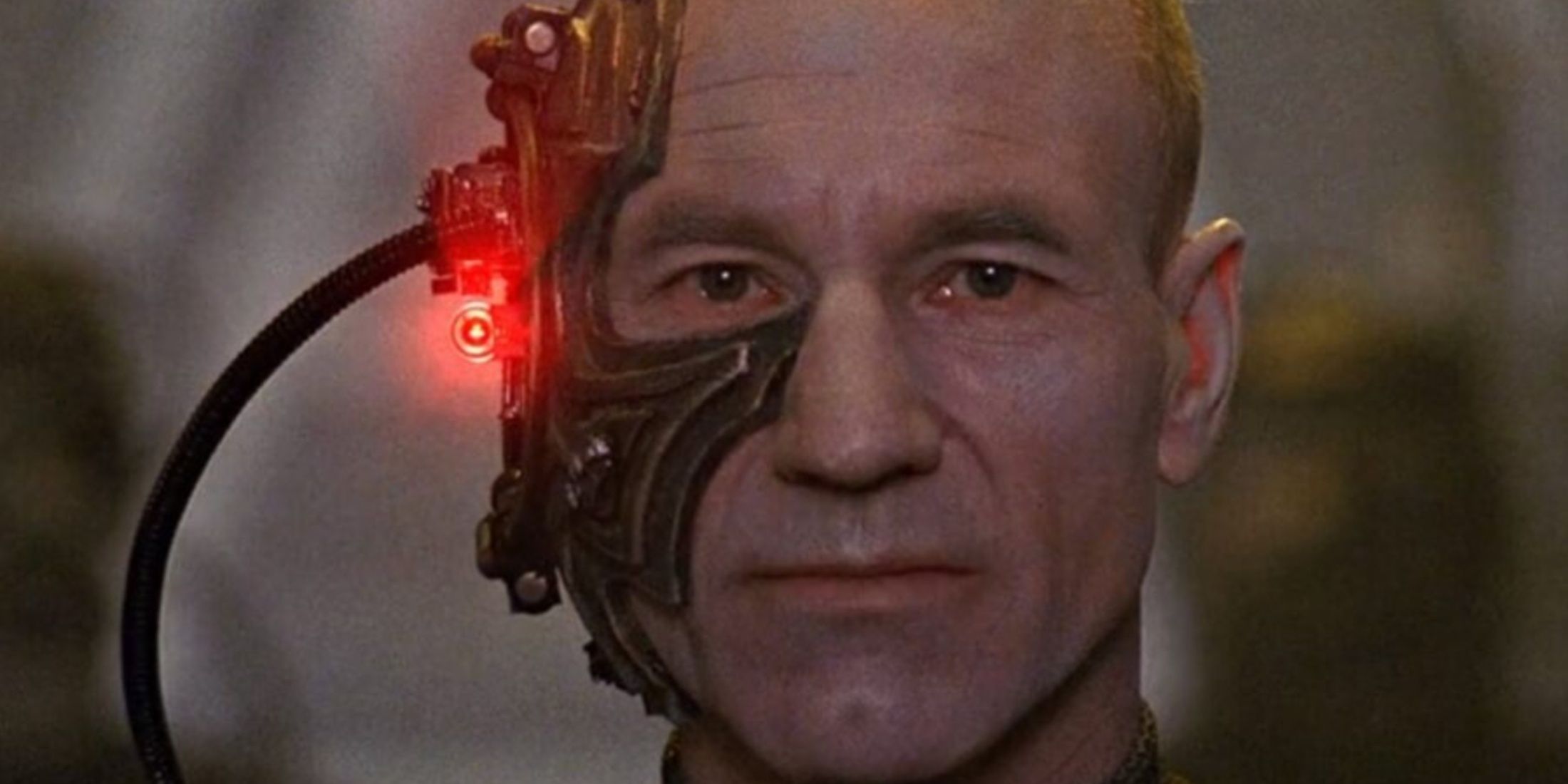
The planned four-episode sequence wouldn’t merely increase the magnitude; it would significantly impact the emotional journeys and character development of the TNG crew. Prolonging the Borg storyline over four episodes would have allowed the characters room to grow and respond to the Federation’s most serious threat to date. Ronald D. Moore viewed this arc as an opportunity to deepen the characters and rejuvenate the show.
Witnessing our initial struggles against the Borg, followed by strategic retreats, reorganization, and ultimately forcing the Borg back will make for a thrilling collection of tales.
Instead of quickly transitioning and recovering like Locutus, Captain Picard’s psychological journey could have been drawn out and more intense. Viewers might have witnessed Picard struggling with identity loss in real-time, making his trauma a central theme rather than just a side note.
In another scenario, Commander Riker could have developed significantly more if given a longer period of command. This extended role would have allowed him to confidently assume the captain’s position during wartime, not just as a temporary replacement, but as a strong, decisive leader. Moore suggested this expanded storyline would provide a clearer definition of Riker’s character, demonstrating his leadership skills in challenging times, rebuilding the ship, and making critical decisions that would impact future seasons. Piller and Moore saw this prolonged arc as a chance to explore new directions for the series. A four-episode saga could have made Season 4 feel like a fresh, daring beginning, and potentially pave the way for more interconnected storytelling within the Star Trek franchise.
“The Best of Both Worlds” Is Still Star Trek Gold
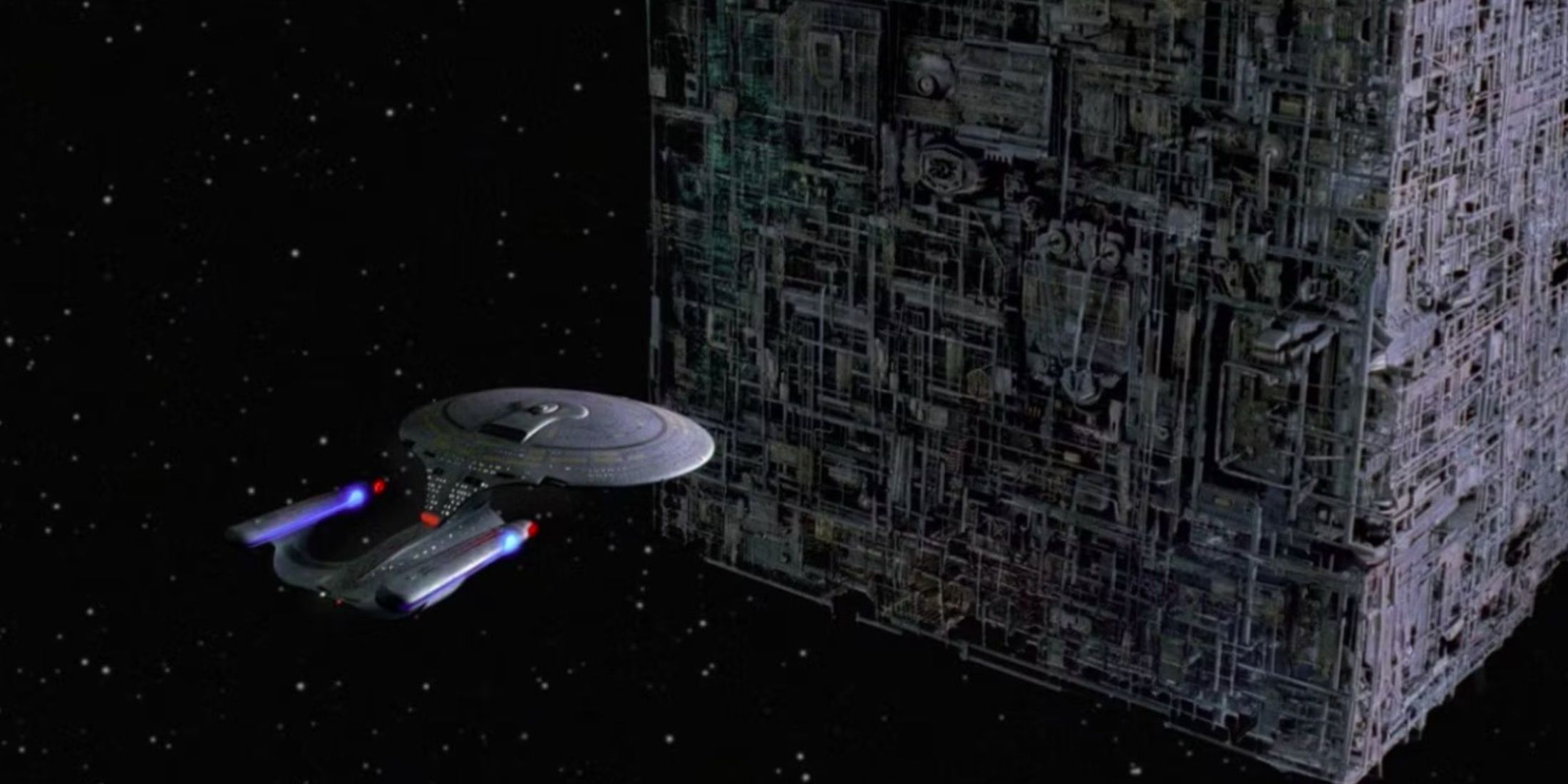
Despite being split into two parts, ‘The Best of Both Worlds’ brought some of the most thrilling moments in science fiction TV history. The tension leading up to Riker’s “Mr. Worf, fire” moment remains iconic. The ominous quietness of Locutus was chilling. And the special effects were groundbreaking, even by today’s standards. In essence, its influence was so powerful that it continues to shape future ‘Star Trek’ series, as well as numerous other TV shows. If not for ‘The Best of Both Worlds’, we might never have seen the Dominion War arc in ‘Deep Space Nine’ or the Year of Hell in ‘Voyager’.
Nearly four decades on, the episode remains an influential milestone in television. Shows such as Star Trek: Picard have picked up on the themes of self-discovery, pain, and fortitude initially explored here. Many viewers believe that this TNG plotline was when we truly witnessed the emotional side of Captain Jean-Luc Picard. The old documents suggesting “The Best of Both Worlds” as a four-part series offer a tantalizing peek into what Star Trek: TNG could have evolved into if it had adopted longer narratives earlier. It’s a thought-provoking reflection that even the paths not taken can continue to inspire fans and creators for decades to come.
Read More
- All Skyblazer Armor Locations in Crimson Desert
- All Shadow Armor Locations in Crimson Desert
- How to Get the Sunset Reed Armor Set and Hollow Visage Sword in Crimson Desert
- Marni Laser Helm Location & Upgrade in Crimson Desert
- Best Bows in Crimson Desert
- All Helfryn Armor Locations in Crimson Desert
- All Golden Greed Armor Locations in Crimson Desert
- How to Craft the Elegant Carmine Armor in Crimson Desert
- Keeping Large AI Models Connected Through Network Chaos
- One Piece Chapter 1179 Preview: The Real Imu Arrives in Elbaf
2025-04-27 17:07