Author: Denis Avetisyan
New research highlights the crucial role of correlated hopping interactions in understanding the properties of both superconductors and nanoscale quantum dot devices.
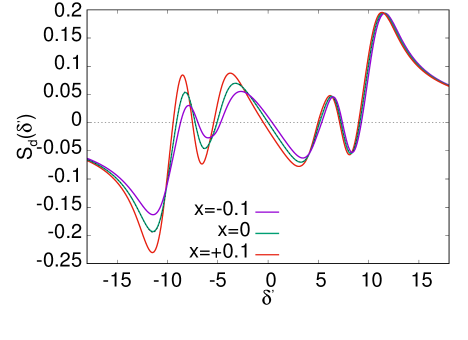
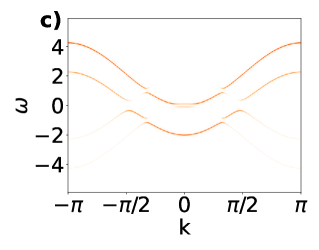
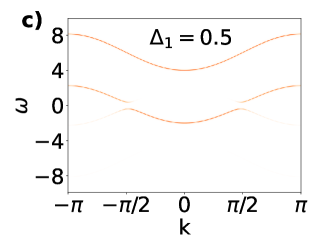
This review details how correlated hopping breaks particle-hole symmetry and impacts spectral functions in systems approaching the Mott transition.
While the Hubbard model provides a foundational description of strongly correlated systems, it often overlooks crucial interactions that govern emergent phenomena. This is addressed in ‘Beyond Hubbard: the role of correlated hopping interaction in superconductors and quantum dot devices’, which investigates the impact of correlated hopping-an interaction beyond standard Hubbard descriptions-on both superconducting materials near the Mott transition and nanoscale quantum dot structures. Our findings reveal that correlated hopping fundamentally alters spectral properties and tunneling amplitudes, acting as a key driver of phase transitions and providing a measurable signature in conductance. How might a more complete understanding of these correlated interactions unlock novel functionalities in advanced materials and devices?
The Emergence of Complexity: Unveiling High-Temperature Superconductivity
High-temperature superconductors, discovered in the 1980s, dramatically challenged established principles of condensed matter physics by exhibiting zero electrical resistance at temperatures significantly warmer than traditional, low-temperature superconductors. Conventional metallic behavior, governed by the Bardeen-Cooper-Schrieffer (BCS) theory, predicts a rapid decline in superconductivity with increasing temperature; however, certain ceramic materials, like cuprates and iron pnictides, maintain this remarkable property at temperatures attainable with liquid nitrogen – a far cry from the liquid helium required for conventional superconductors. This deviation necessitates a re-evaluation of fundamental concepts, as the mechanisms driving superconductivity in these materials are demonstrably beyond the scope of established theories. The persistent enigma surrounding high-temperature superconductivity continues to fuel intensive research, driving the development of novel theoretical models and experimental techniques in the pursuit of materials exhibiting superconductivity at, or approaching, room temperature.
The peculiar behavior of high-temperature superconductors hinges on the intricate dance of strong interactions and electron correlations-forces beyond the simple attraction between electrons and atomic nuclei. In conventional materials, electrons largely act independently, but within these superconductors, electrons strongly influence each other’s behavior due to their mutual repulsion and the complex structure of the material. This correlation means an electron’s movement isn’t just determined by external fields, but also by the positions of all other electrons. Consequently, these interactions lead to the formation of exotic quantum states and collective phenomena-like Cooper pairs-responsible for the lossless flow of electricity. Precisely characterizing these correlated electron systems is therefore paramount; it’s not enough to treat electrons as individual particles, but rather as a collective, interacting entity where their quantum properties are deeply intertwined and dictate the material’s superconducting capabilities.
Conventional theoretical frameworks, built upon the understanding of simple metals, consistently fall short when applied to high-temperature superconductors. These materials exhibit a level of electron correlation – the way electrons influence each other’s behavior – that dramatically alters their properties, rendering standard models inadequate. Attempts to describe superconductivity solely through phonon-mediated attraction, the traditional mechanism, fail to account for the observed transition temperatures or the materials’ unusual electronic characteristics. The intricate interplay between these strong electron correlations, magnetic interactions, and the layered crystal structures creates a complex quantum mechanical landscape that resists straightforward analysis, effectively stalling the development of materials exhibiting superconductivity at or near room temperature and necessitating the exploration of entirely new theoretical paradigms.
Conventional metallic models, built upon the premise of weakly interacting electrons moving within a static lattice, demonstrably fail to explain the behavior observed in high-temperature superconductors. These materials exhibit properties – such as zero electrical resistance and the Meissner effect – that arise from profoundly correlated electron behavior, where interactions between electrons dominate. Consequently, physicists are compelled to develop entirely new theoretical frameworks that move beyond perturbation theory and embrace more holistic approaches. These include techniques like dynamical mean-field theory and quantum Monte Carlo simulations, aiming to capture the intricate many-body effects and emergent phenomena crucial to understanding these complex materials. The pursuit of such frameworks isn’t merely an academic exercise; it represents a fundamental shift in how scientists conceptualize the nature of electron interactions and holds the key to potentially realizing superconductivity at practical temperatures.
Modeling the Dance: Beyond the Simple Hubbard Model
The Hubbard model is a simplified representation of interacting electrons within a periodic lattice, focusing on two primary energy terms: kinetic energy allowing electrons to move between lattice sites, and a local, on-site Coulomb repulsion U that penalizes multiple electrons occupying the same site. This model neglects long-range interactions and assumes a single band, making it analytically tractable while still capturing the essential physics of strong electron correlations. The Hamiltonian is typically expressed as H = -t \sum_{\langle i,j \rangle} (c^{\dagger}_i c_j + c^{\dagger}_j c_i) + U \sum_i n_i (n_i - 1), where t represents the hopping parameter, and n_i is the number operator for site i. Despite its simplicity, the Hubbard model exhibits a rich phase diagram, including Mott insulating behavior, and serves as a foundational starting point for understanding strongly correlated electron systems.
While the Hubbard model successfully introduces electron-electron interactions into a lattice framework, accurately describing the behavior of high-temperature superconductors necessitates moving beyond its basic formulation. These materials exhibit phenomena, such as unconventional pairing symmetries and pseudogap behavior, not fully captured by the standard Hubbard Hamiltonian. Consequently, researchers have developed extensions to address these limitations, often involving additional parameters to account for longer-range interactions, variations in hopping integrals, or the inclusion of next-nearest neighbor hopping. These modifications aim to better represent the complex interplay of electronic correlations and lattice structure crucial to understanding the superconducting mechanism in these materials, ultimately requiring computational methods beyond those typically employed for the simpler Hubbard model.
The Hatsugai-Kohmoto model builds upon the Hubbard model by introducing a modified hopping term that depends on the site occupancy. This modification, represented mathematically as an alteration to the t parameter in the Hubbard Hamiltonian, accounts for the effects of local charge fluctuations on electron mobility. Specifically, the hopping integral becomes density-dependent, influencing the kinetic energy of electrons and impacting the single-particle excitation spectrum. This approach allows for a more accurate description of the normal state properties of strongly correlated electron systems, particularly in materials where electron-electron interactions significantly alter the band structure and quasiparticle behavior. The model’s refinements address limitations in the standard Hubbard model’s treatment of charge transfer and provide a pathway to understanding the emergence of insulating or metallic behavior in these complex materials.
The Spałek-Hatsugai-Kohmoto model represents an advancement beyond the Hatsugai-Kohmoto extension of the Hubbard model by introducing additional parameters designed to account for specific magnetic and electronic correlations present in high-temperature superconductors. Specifically, it incorporates anisotropic exchange interactions and considers the effects of diagonal and off-diagonal pairing symmetries, allowing for a more detailed description of the spin and charge order observed in these materials. This refinement allows researchers to investigate the interplay between these competing orders and their influence on the superconducting properties, moving beyond the limitations of simpler, isotropic models. The model’s parameters are often determined through comparison with experimental data obtained from techniques like neutron scattering and angle-resolved photoemission spectroscopy (ARPES).
Probing the Invisible: Nanoscale Investigations of Correlation
The N-QD-N (Nanolead-Quantum Dot-Nanolead) structure functions as a controllable nanoscale system for studying correlated electron behavior. This architecture consists of a quantum dot connected to two nanoleads, allowing for the precise manipulation of electron transport. By varying the size and spacing of the nanoleads and the properties of the quantum dot, researchers can engineer the electronic environment and observe how electron interactions influence the system’s conductivity. The structure facilitates the investigation of phenomena like the Kondo effect and Coulomb blockade, where electron-electron interactions significantly alter the expected transport characteristics, providing a platform to probe fundamental aspects of correlated electron physics at the nanoscale.
Correlated hopping describes a mechanism where the probability of an electron moving between sites in a material is not independent, but is instead influenced by the occupancy of neighboring sites. This contrasts with band theory, which typically assumes independent electron hopping. In systems exhibiting strong electron-electron interactions, an electron’s ability to hop to a neighboring site is hindered if that site is already occupied, due to Coulomb repulsion. This leads to a reduction in the overall conductivity and introduces features in the current-voltage characteristics that are not predicted by single-particle models. The strength of this correlation is often quantified by the Hubbard interaction U, and its effects are particularly pronounced at low temperatures where thermal fluctuations are minimized.
The Keldysh Non-Equilibrium Green Function (NEGF) formalism is a technique used to calculate the electronic transport properties of systems driven out of equilibrium. Unlike standard Green’s function approaches which assume equilibrium conditions, NEGF accounts for the time-dependent nature of non-equilibrium systems by utilizing a doubled contour in time, allowing for the treatment of both lesser G^< and greater G^> Green’s functions. This is crucial for accurately modeling nanostructures like the N-QD-N system where applied biases and interactions create a non-equilibrium state. The formalism provides a framework to calculate quantities such as the current and conductance, and can incorporate many-body effects, including electron-electron interactions, by self-consistently solving the Dyson equation with the appropriate self-energy terms. The resulting equations are computationally intensive, but enable a detailed understanding of electron transport in these complex nanoscale devices.
Differential conductance and the differential Seebeck coefficient serve as key experimental probes for identifying correlated electron behavior in nanoscale systems. Specifically, simulations of the N-QD-N structure, utilizing a Hubbard interaction strength of U = 16 and a temperature of T = 0.3, demonstrate how these measurements can reveal signatures of correlated hopping – a phenomenon where electron transport is influenced by the occupancy of neighboring sites. Variations in differential conductance, \frac{dI}{dV} , and the differential Seebeck coefficient, S = - \frac{1}{e} \frac{dV}{dT} , provide direct insight into the many-body interactions governing electron transport at the nanoscale, and can be used to characterize the strength and nature of these correlated effects.
Symmetry’s Subtle Shifts: Unveiling Spectroscopic Signatures
Conventional superconductivity relies on a fundamental symmetry known as particle-hole symmetry, where an electron and its corresponding ‘hole’ (absence of an electron) behave as mirrored partners in the material’s electronic structure. However, in strongly correlated materials, the act of electrons ‘hopping’ between atoms isn’t independent; it’s influenced by the presence of other electrons. This correlated hopping can subtly, yet powerfully, disrupt particle-hole symmetry. When electrons move in concert, influenced by their neighbors, the simple mirror image relationship breaks down, altering the allowed energy levels and leading to novel electronic states. This symmetry breaking isn’t merely a theoretical curiosity; it profoundly impacts observable properties, influencing everything from the material’s conductivity to its superconducting transition temperature, and opening possibilities for engineering materials with enhanced or entirely new functionalities.
The disruption of particle-hole symmetry, stemming from correlated hopping, doesn’t merely represent a theoretical curiosity; it fundamentally reshapes a material’s electronic landscape. This symmetry breaking alters the allowed energy levels for electrons, leading to a redistribution of spectral weight and the emergence of novel quasiparticles with altered characteristics. Consequently, properties like the density of states, optical conductivity, and even the superconducting transition temperature become highly sensitive to the degree of symmetry breaking. The resulting electronic structure exhibits deviations from the predictions of traditional band theory, manifesting as distinct features in spectroscopic measurements. Understanding this interplay is crucial, as it offers a powerful means to engineer materials with customized electronic and superconducting behaviors, potentially unlocking pathways to higher-temperature superconductors and other advanced quantum materials.
The spectral function serves as a crucial diagnostic tool for understanding the complex behavior arising from strong electron correlations within a material. This function essentially maps the allowed energies and momenta of electrons, revealing how their energy distribution is altered by interactions. When correlations are weak, the spectral function typically exhibits sharp features corresponding to well-defined electron states; however, as correlations strengthen, these features broaden, split, or even disappear entirely, signaling a fundamental reshaping of the electronic structure. By meticulously analyzing the shape, position, and intensity of these spectral features – often obtained through techniques like Angle-Resolved Photoemission Spectroscopy (ARPES) – researchers can directly observe the impact of correlated effects and gain insights into the emergence of novel phenomena, including unconventional superconductivity. The ability to probe the E(k) relationship, where E represents energy and k represents momentum, provides an unparalleled window into the many-body physics governing the material’s behavior.
The deliberate manipulation of electron correlation-the way electrons interact with each other-in conjunction with breaking particle-hole symmetry presents a powerful strategy for engineering novel superconducting materials. By carefully controlling these intertwined phenomena, researchers can sculpt the electronic landscape of a material, influencing critical parameters like the strength of electron pairing and the energy gap that defines superconductivity. This approach moves beyond simply discovering materials with inherent superconducting properties and instead allows for the design of materials with specifically tailored transition temperatures, critical currents, and overall performance characteristics. The potential extends to creating superconductors optimized for diverse applications, from lossless energy transmission to ultra-sensitive detectors and advanced quantum technologies, promising a future where superconductivity is no longer limited by the constraints of naturally occurring materials.
Looking Ahead: The Promise of Quantum Dots and Correlated Systems
Quantum dots, nanoscale semiconductors exhibiting unique quantum mechanical properties, demonstrate altered electrical transport due to Kondo correlations. These correlations emerge from the interaction between freely moving conduction electrons and localized magnetic moments within the quantum dot. This interaction doesn’t simply impede electron flow; it creates a many-body effect where electrons ‘screen’ the localized magnetic moment, forming a resonance at the Fermi level. Consequently, electrical resistance at low temperatures doesn’t decrease as expected with diminishing scattering – instead, it exhibits a logarithmic divergence, a hallmark of the Kondo effect. This phenomenon fundamentally changes how electrons behave within the quantum dot, impacting its conductivity and potentially enabling the creation of highly sensitive sensors and novel electronic components.
The design of future quantum devices hinges on a comprehensive understanding of how Kondo correlations and correlated hopping interact within nanoscale systems. Kondo correlations, arising from the coupling of conduction electrons with localized magnetic moments, can dramatically alter a material’s electrical behavior, while correlated hopping describes the influence of electron-electron interactions on electron movement. When these two phenomena occur simultaneously, as is often the case in quantum dots and other nanoscale structures, the resulting interplay governs charge transport in complex ways. Precisely controlling this interplay allows for the tuning of electronic properties, potentially enabling the creation of devices with unprecedented functionality – from highly sensitive sensors to novel transistor designs. Manipulating these quantum mechanical effects represents a significant step toward realizing advanced electronic technologies and exploring entirely new paradigms in quantum computation.
Investigations into nanoscale quantum dot systems reveal a pathway to understanding Mott transitions – the shift from metallic to insulating behavior driven by strong electron-electron interactions. Recent simulations, performed on a structure consisting of ‘N’ quantum dots (‘N-QD-N’) with a symmetrical bias voltage of V = 4 applied, demonstrate how these strong correlations can dramatically alter the flow of electrons. This transition isn’t simply a matter of electrons encountering resistance; rather, it’s a fundamental change in the system’s electronic state, where electrons effectively ‘freeze’ due to their mutual repulsion, preventing conduction. By meticulously modeling these interactions at the nanoscale, researchers gain crucial insights into the emergence of insulating behavior – knowledge which extends beyond quantum dots and provides a valuable tool for exploring correlated electron systems and potentially designing materials with tailored electronic properties.
The study illuminates how emergent order arises not from imposed control, but from the interplay of local interactions-specifically, correlated hopping. This mirrors a principle articulated by Isaac Newton: “I have not been able to discover the composition of any mixed body, though with the greatest diligence.” Just as Newton observed that complex compositions emerge from fundamental interactions, this research demonstrates that the behavior of electrons near the Mott transition and within quantum dots is dictated by these correlated hopping processes. Breaking particle-hole symmetry, a key finding, isn’t a directive, but a consequence of these interactions, affirming that order manifests through interaction, not control.
Beyond Simple Pictures
The investigation of correlated hopping, while extending beyond the limitations of the Hubbard model, does not offer a path toward control of emergent phenomena, but rather a refined understanding of their origins. The subtle breaking of particle-hole symmetry revealed in both superconducting systems and quantum dot structures suggests that global properties aren’t dictated by imposed order, but arise from local interactions and the resultant self-organization. The focus now shifts toward identifying the minimal set of local rules that reliably produce observed macroscopic behavior – a move away from engineered solutions and toward anticipating naturally occurring outcomes.
Limitations remain, naturally. The continued reliance on Green’s function formalisms, while powerful, inherently assumes a degree of quasi-particle coherence that may not hold universally, particularly deep within the Mott insulating phase. Future work should explore more holistic, potentially non-perturbative approaches that embrace the inherent many-body entanglement. Spectral functions, useful as they are, only offer a partial glimpse; a complete picture necessitates understanding the dynamics of correlations themselves.
The real challenge lies not in finding superconductivity or optimizing quantum dot transport, but in recognizing that these are simply manifestations of a deeper, underlying principle: global regularities emerge from simple rules. Any attempt at directive management will likely disrupt this process, highlighting the futility of seeking absolute control and the wisdom of embracing the inherent unpredictability of complex systems.
Original article: https://arxiv.org/pdf/2601.10619.pdf
Contact the author: https://www.linkedin.com/in/avetisyan/
See also:
- All Skyblazer Armor Locations in Crimson Desert
- One Piece Chapter 1180 Release Date And Where To Read
- How to Get the Sunset Reed Armor Set and Hollow Visage Sword in Crimson Desert
- All Shadow Armor Locations in Crimson Desert
- All Golden Greed Armor Locations in Crimson Desert
- How to Beat Stonewalker Antiquum at the Gate of Truth in Crimson Desert
- All Helfryn Armor Locations in Crimson Desert
- Marni Laser Helm Location & Upgrade in Crimson Desert
- Black Sun Shield Location In Crimson Desert (Buried Treasure Quest)
- Re:Zero Season 4 Episode 1 Release Date, Where to Watch
2026-01-18 01:34