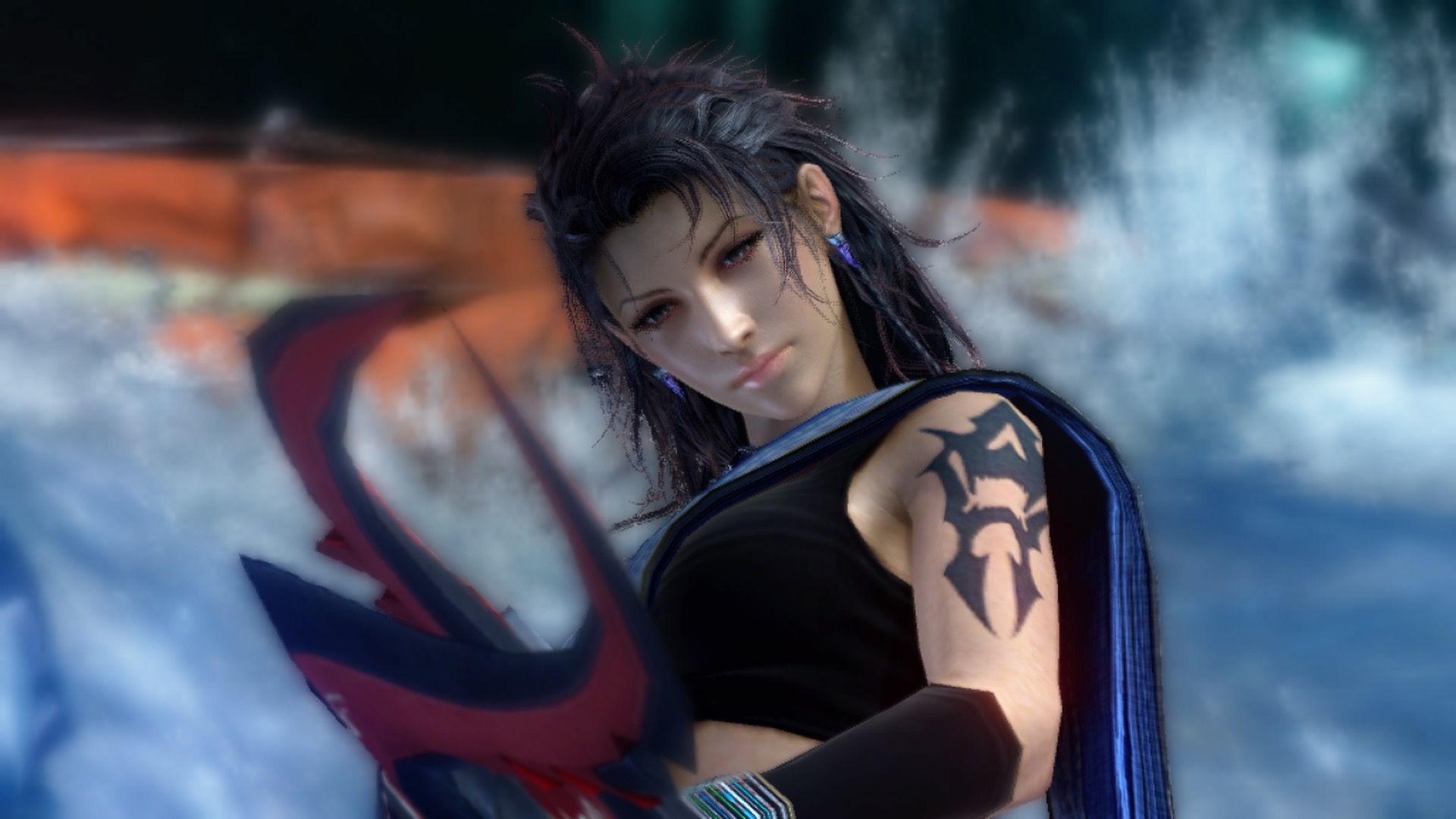
Originally released in Japan as Final Fantasy for the Famicom, the game came to North America on the NES in 1990. It was initially intended to be a single game, but it quickly became Square’s most important series. Today, there are sixteen main Final Fantasy titles, with many more spin-offs and sequels across various platforms, and new games are still being developed.
Final Fantasy is likely the most popular Japanese RPG series globally, or certainly one of the biggest. As the series approaches its 40th anniversary, let’s explore the gameplay features that made it so influential and consider what the future holds.
 Rearrange the covers into the correct US release order.
Your Order
Results
— —
Mini-Games (In A Broad Capacity)
From Sliders To Blitzball
You won’t believe this, but the very first Final Fantasy actually had a little mini-game hidden inside! If you were on the ship, you could enter a code and play a simple sliding puzzle. It wasn’t quite the kind of elaborate mini-games we’d come to expect from the series later on, but it’s amazing to think the idea was there right from the beginning. It’s cool to see the roots of those fun side activities in the original game!
Many Final Fantasy fans cherish the series’ mini-games, like Blitzball from Final Fantasy X and Chocobo Racing from Final Fantasy VII, and would love to see them expanded into their own games. These mini-games offer a fun break from the core combat and showcase the developers’ imagination.
Chocobo Riding
Kweh!
Chocobos first appeared in Final Fantasy 2, a game that didn’t quite fit with the rest of the series but actually helped launch a new one called SaGa. In Final Fantasy 2, players could ride Chocobos to travel safely across the game world, and this feature has become a beloved tradition in most of the main Final Fantasy games.
Chocobos, the iconic birds from the Final Fantasy series, have been implemented differently across various games. For example, in Final Fantasy 9, you get just one Chocobo that improves through a simple mini-game. However, Final Fantasy 7 allowed players to catch and breed Chocobos, creating special ones that could unlock hidden areas. These birds have become a beloved mascot for the series, even starring in their own spin-off games like Chocobo Racing and Chocobo’s Mystery Dungeon on the PlayStation 1.
The Job System
A Switchable Class System
The original Final Fantasy had a basic character class system called Jobs, but once you chose a class for each of your four party members, they were stuck with it – they could only level up within that single class. The Job system that Final Fantasy fans are familiar with – where you can change classes and learn new abilities – didn’t appear until Final Fantasy 3. This later version let players freely switch between different Jobs as they unlocked them.
As a big Final Fantasy fan, I’ve always been a little surprised by how often Jobs – those class-based character roles – pop up outside the main numbered games. They’re a huge deal in spinoffs like Final Fantasy Tactics and Strangers of Paradise: Final Fantasy Origin, which is awesome! But it’s really cool to see Square Enix embrace the Job system in other games too, like Octopath Traveler and Bravely Default. It feels less like something just for Final Fantasy and more like a signature thing Square Enix loves to do, and I’m totally here for it!
Summons
Relying On The Gods
The different classes available to players in Final Fantasy 3 vary depending on the game version. In the original version for the NES, players could choose Evoker, Summoner, or Sage, which allowed them to call upon powerful creatures known as Summons. These Summons, and the Summoner class itself, became a significant part of the Final Fantasy series, influencing both how the games were played and their stories. For example, in Final Fantasy 10, Summons were known as Aeons, and when Yuna used one in battle, it temporarily joined the party as a playable character until defeated or dismissed.
In the newest Final Fantasy 16, powerful beings called Eikons exist, and special people known as Dominants can transform into and wield their power. While classic summons like Ramuh, Shiva, and Ifrit return, some games feature more unique and rarely seen creatures, such as Doomtrain and the Brothers from Final Fantasy 8.
Limit Breaks
One Last Shot
The concept of powerful, special attacks that players could unleash during battle first appeared in Final Fantasy 6, originally called Desperation Attacks. These attacks were difficult to trigger, based on a character’s remaining health, and many players never even experienced them. This idea was refined and became known as “Limit Breaks” in Final Fantasy 7, and has been a recurring feature in the series ever since.
In battle, players could fill up a meter by taking damage. Once full, this allowed them to perform powerful, character-specific attacks that grew stronger as the character progressed. This system, known as Limit Breaks, appears in many Final Fantasy games, such as the Trances in Final Fantasy IX or the Overdrives in Final Fantasy X. The Final Fantasy VII remakes reimagined many original Limit Breaks as weapon skills, like Cloud’s Braver and Blade Burst.
Weapon Upgrading/Tinkering
Making More Out Of Your Gear
In the first six Final Fantasy games, equipment was simple. But Final Fantasy 7 changed things by adding slots to armor and weapons where players could insert Materia – the game’s version of magic. This Materia could boost stats and change how spells worked. The Final Fantasy 7 remakes kept the Materia slots, and added the ability to level up weapons, increasing stats and even unlocking new abilities, like some of Cloud’s old Limit Break moves.
In Final Fantasy 9, equipment wasn’t just about defense and attack power – it also taught characters new skills and magic, both in battle and passively. This idea of gear doing more than simply boosting stats is something many RPGs now do, and it’s largely thanks to Final Fantasy‘s consistent efforts to innovate in that area.
Card Games
A Very Specific Mini-Game Type
I’ve always loved how the Final Fantasy games keep bringing back their card games! It started with Triple Triad in Final Fantasy 8, and I remember spending hours collecting cards and battling NPCs. Then Final Fantasy 9 gave us Tetra Master, which was fun in a different way. What’s really cool is that both of those games are still around in the MMOs – you can play Triple Triad in Final Fantasy 14 and Tetra Master in Final Fantasy 11! It’s awesome to see these little games continue to evolve and stay a part of the Final Fantasy experience.
Players won’t encounter the card game Queen’s Blood until Final Fantasy 7 Rebirth. While the game features three different card mini-games, each with unique gameplay, they’ve all become fan favorites. Some fans love them so much they’ve even created their own independent versions, like Triple Triad: Tournament of the Elements.
Non-Turn-Based Systems (For The Mainline Games)
Easing Into Action
Throughout the main Final Fantasy series, all games traditionally featured turn-based combat until Final Fantasy 11. This game broke from tradition by introducing an auto-battle system similar to other massively multiplayer online games (MMOs). Players selected targets and used abilities and spells governed by cooldown timers—a system also incorporated, with some differences, into Final Fantasy 12 and Final Fantasy 14.
This shift in gameplay speed was a key development that heavily influenced the combat systems in Final Fantasy 15, Final Fantasy 16, and the Final Fantasy 7 remakes. While earlier Final Fantasy games like Final Fantasy Adventure had real-time battles, that title was later considered part of the Mana series. It seems unlikely that a main Final Fantasy game will return to turn-based combat, as real-time action has become more popular in RPGs overall.
Read More
- All Shadow Armor Locations in Crimson Desert
- Jujutsu Kaisen Season 3 Episode 12 Release Date
- Dark Marksman Armor Locations in Crimson Desert
- How to Get the Sunset Reed Armor Set and Hollow Visage Sword in Crimson Desert
- Top 5 Militaristic Civs in Civilization 7
- Keeping AI Agents on Track: A New Approach to Reliable Action
- How to Beat Antumbra’s Sword (Sanctum of Absolution) in Crimson Desert
- Sega Reveals Official Sonic Timeline: From Prehistoric to Modern Era
- Sakuga: The Hidden Art Driving Anime’s Stunning Visual Revolution!
- How To Beat Ator Archon of Antumbra In Crimson Desert
2026-02-15 02:37