The video game industry is full of both huge successes and difficult challenges. Many games never actually get released, and even well-established companies with a history of hits sometimes have to cancel projects. It’s not uncommon for major developers to announce a game, only to later drop it without much fanfare.
Open-world games often struggle with completion, likely because their vast size and need for lots of content can be challenging for developers, even those familiar with the genre. We’ve seen many promising open-world projects get canceled – from games based on well-known franchises to sequels that surprisingly fell through – proving that a good concept doesn’t always guarantee a successful finished product.
Scalebound
Taking To The Skies Together
Details:
- Co-op flight and complex AI systems
- Struggles with the engine and hardware limitations
Scalebound was planned as a large-scale, open-world role-playing game centered around battling creatures. Players would have teamed up with a personalized dragon in a brand-new world. The game, set in a place called Draconis, would have featured huge boss battles, exciting close-quarters combat with magic, and a special gameplay style allowing players to fight directly and simultaneously control their dragon to attack from the air.
From the start, the project ran into difficulties. PlatinumGames, while experienced, hadn’t created a vast open-world game before, and getting the AI for the dragon companion to work reliably proved very challenging. When they tried to add online cooperative play, it became clear the team had taken on too much, even though the initial concept was strong.
Agent
Even Rockstar Can Sometimes Fail The Landing
Details:
- Espionage thriller in the Cold War era
- Struggled to make the mechanics fit the larger world
Rockstar’s Agent was intended to be a huge, globe-spanning spy game set during the Cold War. It aimed to deliver everything players expect from an espionage title – stealth, assassinations, cool gadgets, and disguises – and its darker, grittier style offered a different feel compared to the typical James Bond adventures.
Ultimately, the game’s downfall came from trying to achieve too much. As the company focused its efforts on Grand Theft Auto 5 and Red Dead Redemption, the project lost its dedicated development team. Technical problems and frequent changes to the game’s design also contributed to its cancellation. Later efforts to revive the project didn’t succeed.
Pirates of the Caribbean: Armada of the Damned
A Promising Trailer That Really Led Nowhere
Details:
- Fully open-world pirate RPG
- Studio layoffs and restructuring within
Armada of the Damned was an ambitious role-playing game planned for the popular Pirates franchise, which had already been very successful as a movie. The game aimed to let players freely explore a vast ocean world and participate in large naval battles, shaping their own stories instead of following a set path.
Initial reactions to the game were very good, with some comparing it to a blend of ‘Fable’ and ‘Pirates’. However, the development studio was facing serious financial trouble. The team experienced significant layoffs, and as a result, many projects were suddenly canceled, including ‘Armada of the Damned’, which was scrapped just months before it was scheduled to release.
Prey 2
Hunting Bounties In A Futuristic City
Details:
- An alien city where players could hunt targets freely
- Shifting studio priorities left the project unfinished
Following the success of the first game, Prey 2 was announced with a stunning cinematic trailer. The sequel promised a unique experience: players would take on the role of a U.S. Marshal kidnapped by aliens and stranded in a vibrant, neon-lit cyberpunk city. Gameplay would center around choosing which leads to follow within the game’s expansive and visually striking world.
The initial trailer for the game was incredibly impressive, but development soon ran into serious problems. Repeated delays brought progress to a standstill, and ultimately, the project was canceled. If everything had gone smoothly, gamers might have been playing what would become Cyberpunk 2077 more than ten years ago. It seems the game’s vision was simply a bit too ambitious for the technology available at the time.
Star Wars: Project Ragtag/Orca
From Space Uncharted To Open-World Scoundrels
Details:
- Began as a linear, cinematic adventure game
- Canceled due to EA priority shifts
The world of Star Wars has seen many ideas explored, but one of the most fascinating was Project Orca. Originally planned as a straightforward, *Unchartedlike adventure, it evolved into an open-world game where players could complete missions, and even steal from competing groups, all across large, explorable planets connected by criminal networks.
It’s a real shame, but as EA moved forward, they started prioritizing games they could finish quicker. That meant even after they tried to revamp it, this project never really got off the ground. I think some of the cool ideas ended up inspiring games like Outlaws down the line, but the original game itself? It looks like we’ll never get to play it, sadly.
The Getaway 3
A True Driver’s Sandbox
Details:
- Emphasis on realism in cities like London
- Abandoned in place of newer projects
The Getaway 3 was Sony’s third try at creating a game like Grand Theft Auto. They aimed to improve the graphics, make the game more realistic, and add a lot of detail to the open-world cities. Initial demos showed incredibly accurate city blocks on the PlayStation 3, and the game was designed to smoothly blend action sequences with cutscenes to fully immerse players.
Despite a promising start, Sony shifted its focus to bigger, more established games for the PlayStation 3, leading to the cancellation of any further installments in The Getaway series. While fans still hope for a new game, the possibility of a revival seems increasingly unlikely with each passing year.
Wild
Surviving A Gigantic Wilderness
Details:
- Prehistoric survival with unique animal control
- Prolonged development stagnation resulted in cancellation
Wild was a fascinating and unusual open-world game idea from Ubisoft. It took place in a magical prehistoric setting where players could take control of various animals – like bears and birds – to solve challenges and stay alive in a huge, ever-changing environment.
The game faced major development problems, and as the scope of the project increased, it lost steam. When the original lead developer, Michel Ancel, left, progress stalled completely. Ironically, fans of Ubisoft didn’t have to wait long for a comparable prehistoric adventure, as they soon got it with Far Cry Primal.
Project Apollo
Bringing The Nolanverse To Consoles
Details:
- Larger scope, true open-world Batman game
- Warner Bros didn’t want to compete with the Arkham series, so they shifted attention to other titles
Project Apollo was an ambitious project aiming to create an open-world video game based on Christopher Nolan’s Dark Knight films. Limited information and available footage suggested a diverse gameplay experience, incorporating stealth, intense hand-to-hand combat, and surprisingly, what would become the well-known Nemesis system.
Warner Bros. ultimately decided launching a big new Batman game at the same time as their other projects wasn’t a good business move. Instead of abandoning everything, they repurposed a lot of the game’s systems and technology for Shadow of Mordor, so all the effort wasn’t wasted even though the Batman game was canceled.
Tomb Raider Ascension
More Horror And Less Raiding
Details:
- Early concept for the 2013 game
- Scrapped for a more familiar, grounded product
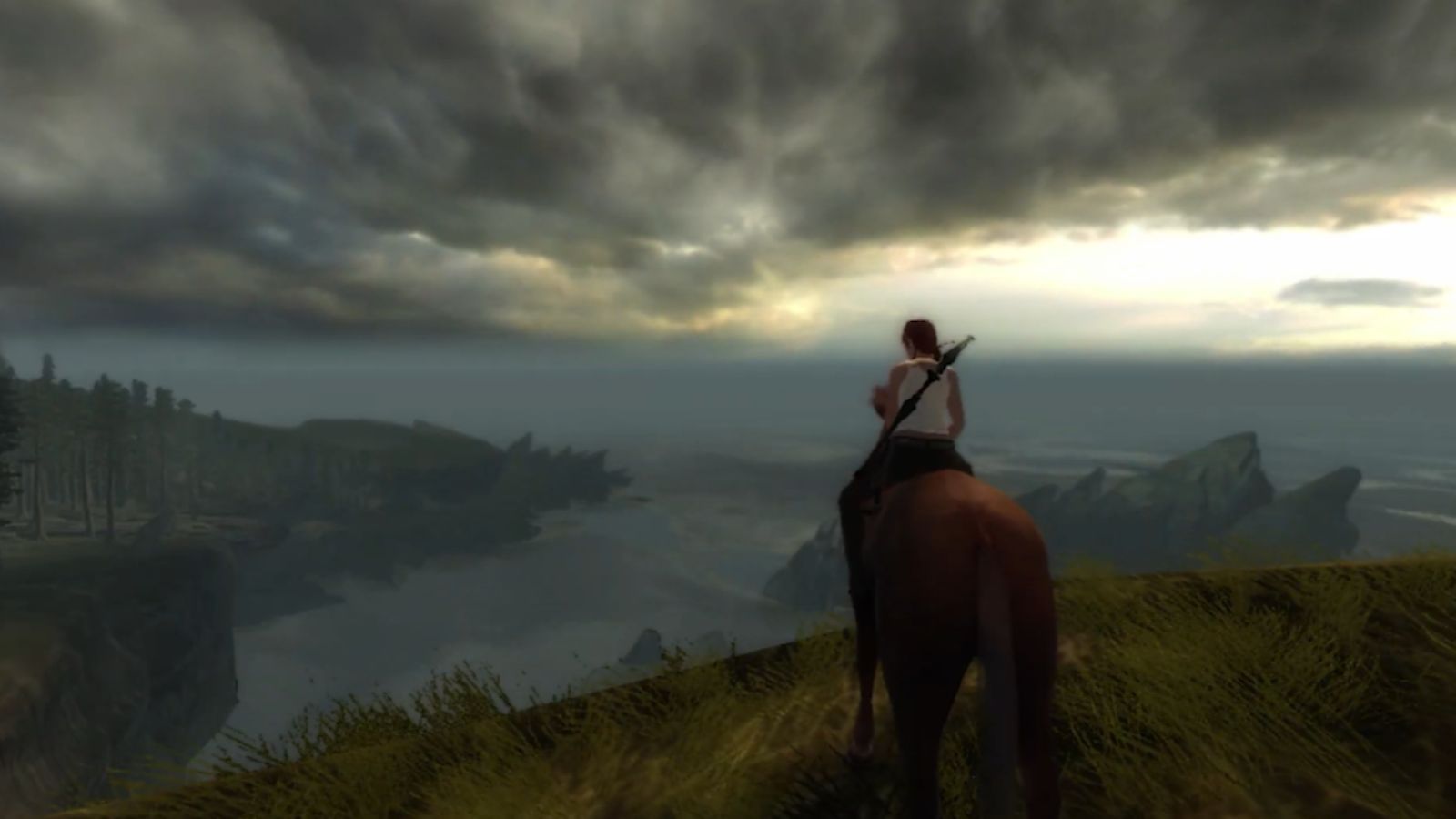
Before the 2013 Tomb Raider game was made, developers considered a very different approach. Originally, the plan was for a game called Ascension to be a large, open-world horror experience. Lara Croft would have faced terrifying creatures in vast environments, creating a much darker and more intense game focused on fear and feeling helpless.
As development continued, the team shifted direction and ultimately created the realistic survival experience the series became famous for. However, the initial concept—a very different type of game—was intriguing, and early artwork and test footage suggest it could have been a unique twist on the usual adventure game format.
Raw
Not All MMOs See The Light Of Day
Details:
- Hardcore co-op sandbox
- Studio issues within and a collapse of funding
Raw started as a project funded through Kickstarter, aiming to be a unique open-world crime role-playing game. The idea was to let players rise through the criminal ranks, build a reputation, and create their own criminal empire, all while also taking care of basic needs like eating and sleeping.
Man, this game had so much promise! It started with a really cool idea and even got more funding than they asked for. But things fell apart because the developers and the publisher just couldn’t see eye-to-eye, and communication totally broke down. It’s a shame, because you can still find gameplay videos online, and it looks like it could have been a seriously unique open-world RPG if it hadn’t all gone wrong. It really makes you wonder what could have been.
Read More
- All Skyblazer Armor Locations in Crimson Desert
- All Shadow Armor Locations in Crimson Desert
- How to Get the Sunset Reed Armor Set and Hollow Visage Sword in Crimson Desert
- Marni Laser Helm Location & Upgrade in Crimson Desert
- Best Bows in Crimson Desert
- All Helfryn Armor Locations in Crimson Desert
- All Golden Greed Armor Locations in Crimson Desert
- How to Craft the Elegant Carmine Armor in Crimson Desert
- Wings of Iron Walkthrough in Crimson Desert
- Keeping Large AI Models Connected Through Network Chaos
2025-12-20 08:36