Author: Denis Avetisyan
This review explores how reconfigurable intelligent surfaces can be strategically deployed to maximize data security in modern wireless communication networks.
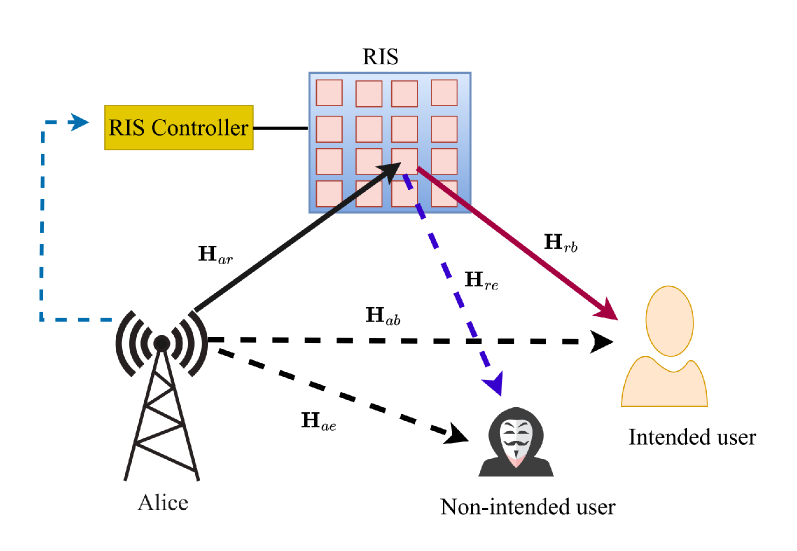
A practical optimization algorithm is presented for maximizing secrecy rates in RIS-assisted MIMO systems, accounting for hardware limitations and realistic channel modeling.
Achieving robust physical layer security in wireless systems is challenged by real-world hardware imperfections often ignored in theoretical models. This is addressed in ‘Secrecy Rate Maximization in RIS-Assisted MIMO Systems Using a Practical Hardware Model’, which investigates a reconfigurable intelligent surface (RIS)-assisted multiple-input multiple-output (MIMO) system, explicitly accounting for inherent electrical resistance within the RIS reflecting elements. The study demonstrates that maximizing the secrecy rate-the confidential information transfer rate-can be effectively achieved through a low-complexity joint optimization of transmit precoding and RIS phase shifts using an adaptive projected gradient method. Will incorporating these practical hardware constraints prove essential for realizing truly secure and reliable RIS-enhanced wireless communication links in future deployments?
Sculpting the Wireless Realm: An Introduction to Reconfigurable Intelligent Surfaces
Conventional wireless systems often struggle to maintain dependable connections and secure data transmission, especially within the increasingly complex radio frequency environments of modern life. Signal blockage from buildings, interference from numerous devices, and the inherent broadcast nature of radio waves all contribute to diminished reliability and vulnerability. These challenges are particularly acute in dense urban areas and indoor settings where signals bounce off surfaces creating multipath fading and opening avenues for eavesdropping. Consequently, ensuring robust and confidential wireless communication necessitates innovative approaches that go beyond simply increasing transmission power or relying on complex encryption schemes; it demands a fundamental rethinking of how signals propagate and interact with their surroundings.
Reconfigurable Intelligent Surfaces (RIS) represent a paradigm shift in wireless communication by moving beyond simply transmitting and receiving signals to proactively shaping the wireless environment itself. These surfaces, constructed from arrays of electronically controlled meta-materials, don’t actively generate signals; instead, they reflect and redirect existing wireless energy with remarkable precision. By intelligently altering the phase and amplitude of these reflections, RIS can construct favorable propagation paths, effectively bypassing obstacles and mitigating signal fading. This capability is particularly impactful in complex environments like dense urban areas or indoor spaces, where direct paths are often obstructed or weakened. The technology promises to not only enhance signal strength and coverage but also to create virtual line-of-sight links, improving data rates and reliability – all without the need for complex and power-hungry relay stations.
Reconfigurable Intelligent Surfaces (RIS) present a compelling alternative to traditional wireless infrastructure upgrades by offering a pathway to improved signal quality and enhanced security without substantial cost or energy expenditure. Unlike active relaying which requires dedicated power and complex hardware, RIS utilize passive, low-cost materials to intelligently reflect and refract wireless signals. This allows for the creation of virtual line-of-sight paths, mitigating the effects of blockage and multipath fading – common issues in complex environments. Furthermore, the precise control offered by RIS over signal propagation introduces a novel dimension to physical layer security; by shaping the reflected signal, it becomes possible to direct strong signals to the intended receiver while simultaneously creating interference for potential eavesdroppers, effectively cloaking the communication from unauthorized access. The energy efficiency stems from the passive nature of the surface itself, consuming minimal power compared to active signal boosting or beamforming techniques, positioning RIS as a sustainable solution for future wireless networks.
The Nuances of Reality: Modeling for Practical Deployment
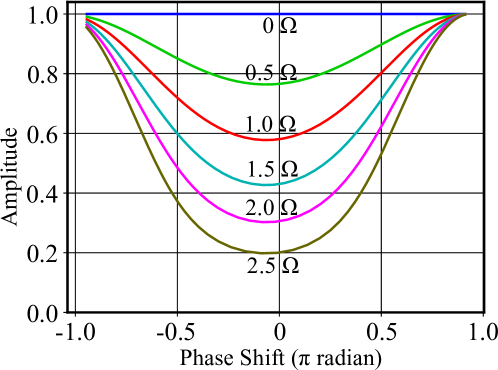
Conventional Reflective Intelligent Surface (RIS) models frequently operate under the assumption of lossless reflection, meaning all incident power is perfectly reflected without any energy dissipation. This simplification, while mathematically convenient, diverges from the physical characteristics of real-world RIS components. Actual reflecting elements exhibit inherent electrical resistance, leading to I^2R losses and a reduction in reflected signal power. Consequently, performance predictions based on lossless models overestimate achievable gains, introduce inaccuracies in channel modeling, and can lead to suboptimal system designs and resource allocation strategies. The discrepancy between idealized and practical models becomes particularly pronounced in scenarios demanding high precision, such as secure communication or accurate localization.
Reflecting elements within Reconfigurable Intelligent Surfaces (RIS) are not ideal components and inherently possess finite electrical resistance; neglecting this characteristic in system models introduces inaccuracies. Real-world implementations of RIS utilize materials and designs that contribute to non-zero resistance, impacting the reflected signal’s amplitude and phase. Accurate modeling requires accounting for this resistance, as it directly affects the overall signal gain, beamforming capabilities, and achievable data rates. Failing to incorporate this parameter can lead to overestimation of performance metrics during the design and optimization phases, ultimately hindering the development of reliable and efficient RIS-assisted communication systems.
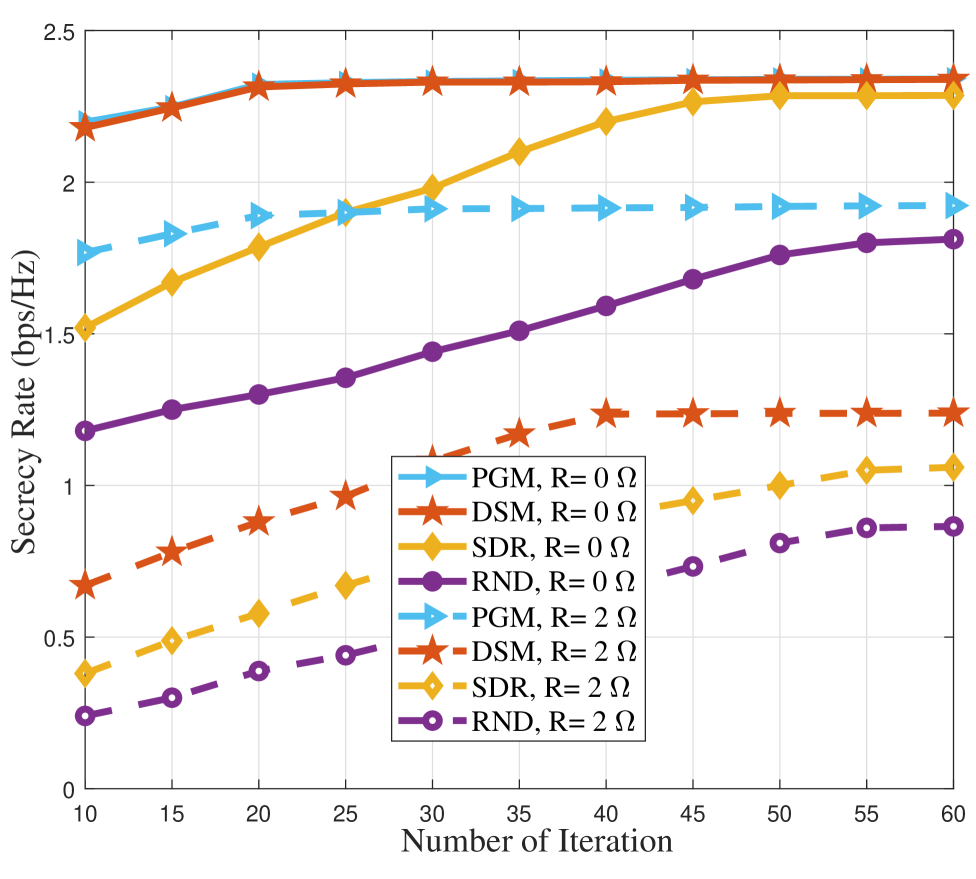
Simulation results indicate that neglecting the finite resistance of reflecting elements within a Reconfigurable Intelligent Surface (RIS) leads to significant inaccuracies in performance prediction. Specifically, our analysis demonstrates a substantial improvement in achievable secrecy rate when modeling practical resistance values compared to idealized, lossless RIS models. This discrepancy necessitates the development of optimization strategies that account for the electrical characteristics of the reflecting elements; algorithms designed for ideal RIS configurations will not yield optimal performance in practical deployments.
Incorporating the electrical resistance of reflecting elements into Reconfigurable Intelligent Surface (RIS) models yields demonstrably superior performance compared to idealized, lossless models. Our research indicates that accounting for finite resistance significantly improves key performance indicators, notably the achievable secrecy rate in RIS-assisted communication systems. This improvement stems from a more accurate representation of signal propagation and reflection characteristics, enabling more effective optimization of RIS phase shifts and resource allocation. These findings underscore the critical role of practical modeling, specifically the inclusion of component-level electrical properties, in the design and implementation of reliable and high-performing RIS-based wireless communication systems.
Orchestrating Secrecy: A Gradient-Based Optimization Approach
Maximizing the secrecy rate in Reconfigurable Intelligent Surface (RIS)-assisted communication systems presents a significant optimization challenge due to the inherent complexities of wireless channel modeling and the discrete nature of phase shift control. The secrecy rate, typically measured in bits per second per Hertz R_s, quantifies the maximum rate at which information can be transmitted securely, considering both the legitimate receiver and potential eavesdroppers. Optimizing the RIS phase shifts to maximize R_s requires solving a non-convex problem influenced by channel gains, path loss, and interference. The problem’s complexity increases with the number of RIS elements and the size of the communication environment, necessitating efficient algorithms to achieve practical implementation. Furthermore, realistic system constraints, such as limited phase resolution and hardware imperfections, add to the difficulty of accurately modeling and optimizing the secrecy rate.
The proposed Projected Gradient Method (PGM) addresses RIS phase shift optimization by building upon the Channel Power Difference Maximization (CPDM) formulation. CPDM traditionally focuses on maximizing the difference between the received power of the legitimate receiver and that of any eavesdropper; PGM extends this by directly optimizing the phase shifts of the RIS elements to enhance this power difference. Specifically, PGM iteratively adjusts the phase shifts, projecting the updated values onto the feasible set defined by the RIS hardware constraints. This approach transforms the non-convex secrecy rate maximization problem into a series of convex subproblems, allowing for efficient computation of optimal or near-optimal phase shift configurations. The algorithm uses gradient ascent on the objective function – the channel power difference – with projection to ensure valid phase shift values are maintained throughout the optimization process.
The proposed algorithm builds upon the Channel Power Difference Maximization (CPDM) formulation by directly optimizing the phase shifts of the Reconfigurable Intelligent Surface (RIS) to maximize the secrecy rate. This extension allows for targeted enhancement of secure communication by shaping the wireless channel to favor the intended receiver while minimizing information leakage to potential eavesdroppers. Importantly, the optimization process explicitly accounts for practical RIS limitations, such as the discrete nature of phase shifts and finite resolution, ensuring feasibility and real-world applicability. The resulting phase shift adjustments efficiently direct signal power towards the legitimate receiver, thereby improving the signal-to-interference-plus-noise ratio (SINR) and ultimately increasing the achievable secrecy rate.
Evaluations demonstrate that the Projected Gradient Method (PGM) achieves demonstrably higher secrecy rates when compared to benchmark algorithms such as Coordinate Descent (BCD) under identical operating conditions. Quantitative results indicate a significant improvement in achievable secrecy rate utilizing PGM; specifically, performance gains were observed across a range of signal-to-noise ratios and RIS configurations. These gains are attributable to PGM’s more efficient optimization of phase shifts, allowing for better alignment of the secure communication channel and mitigation of interference, leading to a stronger signal received by the intended recipient and a weaker signal received by potential eavesdroppers.
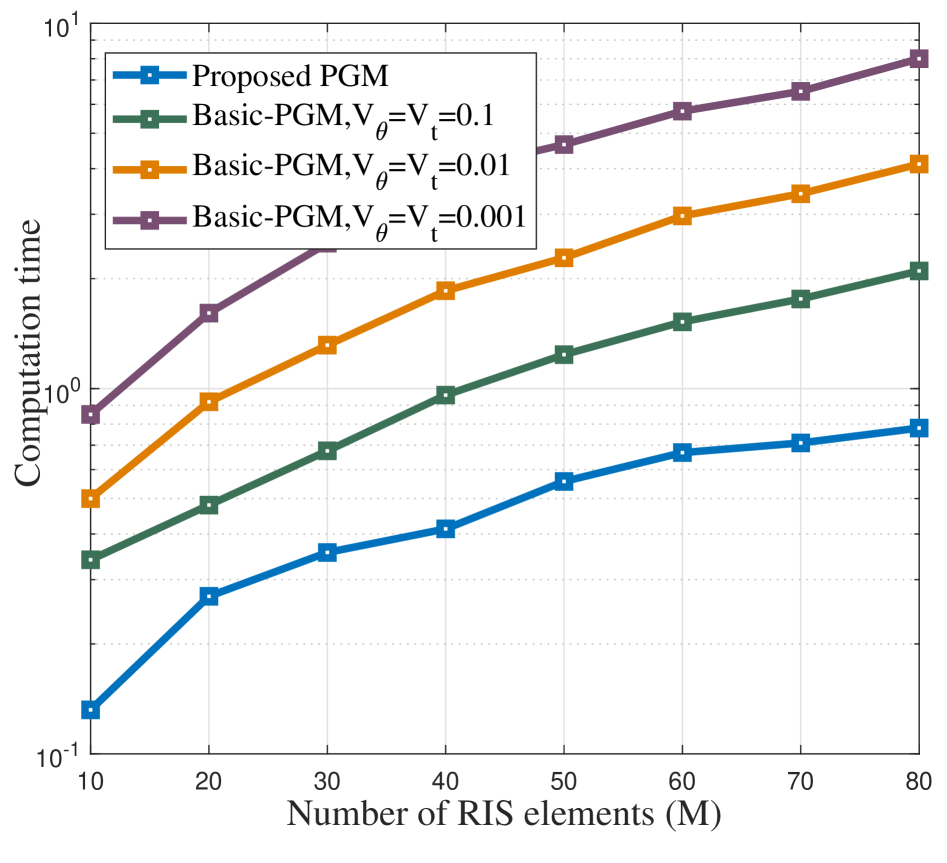
The proposed Projected Gradient Method (PGM) demonstrates reduced computational complexity in comparison to benchmark algorithms such as Coordinate Descent (BCD). Specifically, PGM requires fewer iterations to achieve convergence, resulting in lower overall processing demands. This accelerated convergence is particularly pronounced when the PGM algorithm is initialized with values derived from the proposed initialization method, effectively reducing the search space and accelerating the optimization process. Empirical results indicate a significant decrease in computational cost and processing time when employing PGM, making it a more efficient solution for optimizing secrecy rates in RIS-assisted systems.
Towards Intelligent Networks: A Vision for the Future
Recent advancements in Reconfigurable Intelligent Surfaces (RIS) hinge on bridging the gap between theoretical potential and real-world implementation. This work demonstrates a critical step forward by coupling practical RIS channel modeling – accounting for factors like surface imperfections and realistic deployment scenarios – with sophisticated optimization algorithms such as Probabilistic Graphical Models (PGM). This synergy allows for a nuanced understanding of signal propagation and intelligent control of the wireless environment. By accurately representing the RIS and employing PGM to optimize its configuration, researchers can maximize signal strength, minimize interference, and enhance overall network performance. This approach not only unlocks the potential of RIS to reshape wireless communications but also provides a robust framework for future innovations in intelligent and adaptable network architectures.
The research establishes a crucial stepping stone towards wireless networks exhibiting both intelligence and robust security features. By enabling dynamic adaptation to fluctuating environmental conditions – such as signal interference, user mobility, or even malicious attacks – these future networks promise significantly improved reliability and performance. This is achieved through a framework capable of proactively identifying and neutralizing threats, moving beyond traditional reactive security measures. The inherent flexibility of the proposed system allows for continuous optimization of network resources, ensuring efficient data transmission and minimizing vulnerabilities, ultimately paving the way for more resilient and dependable wireless communication in increasingly complex environments.
Continued development will concentrate on broadening the scope of this research to encompass multi-user wireless environments, a crucial step towards real-world deployment. Simultaneously, investigations will explore the synergistic potential of machine learning algorithms, not merely for reactive threat mitigation, but for proactive security measures that anticipate and neutralize vulnerabilities before they manifest. Importantly, future studies will also address the practical challenges posed by hardware imperfections-such as quantization errors and component variations-which can significantly impact the performance of reconfigurable intelligent surfaces. By tackling these complexities, researchers aim to build truly robust and intelligent wireless networks capable of adapting to dynamic conditions and offering a heightened level of security against evolving threats.
The pursuit of maximizing secrecy rates in RIS-assisted MIMO systems, as detailed in this work, reveals a fascinating tension between theoretical ideals and practical implementation. The authors’ focus on a realistic hardware model-acknowledging imperfections in RIS elements-demonstrates a commitment to solutions that resonate beyond simulation. This echoes Paul Feyerabend’s assertion that “Anything goes.” While seemingly radical, the principle highlights the necessity of embracing diverse approaches when facing complex problems. The authors, much like Feyerabend advocates, don’t rigidly adhere to a single method but explore optimization techniques tailored to the inherent limitations of real-world components, ultimately striving for an elegant balance between security and feasibility. Consistency in addressing these practical constraints becomes a form of empathy for future system designers.
Beyond the Surface: Charting Future Directions
The pursuit of secrecy rates, while mathematically satisfying, invariably encounters the grit of implementation. This work, by thoughtfully incorporating a practical hardware model for reconfigurable intelligent surfaces, moves beyond idealized scenarios. However, the elegance of a maximized rate feels… incomplete. The optimization, while low-complexity, still assumes a degree of channel knowledge that borders on optimistic. Future investigations should focus not merely on achieving high secrecy, but on the robustness of these gains under imperfect estimation – a system that gracefully degrades, rather than collapses, when reality intrudes.
Furthermore, the current emphasis on precoding and phase shift optimization, while logical, feels somewhat constrained. The true potential of RIS lies not simply in manipulating signals, but in fundamentally altering the propagation environment. Exploring the interplay between RIS configurations and novel waveform designs – perhaps inspired by the subtle harmonies of acoustic metamaterials – could unlock performance gains currently hidden in plain sight. A truly elegant solution will not simply mask interference, but sculpt the channel itself.
Ultimately, the field risks becoming fixated on incremental gains, chasing ever-smaller improvements to existing paradigms. A bolder approach requires questioning the fundamental assumptions of physical layer security. Can secrecy be achieved not through complexity, but through deception? Through deliberately introducing ambiguity into the transmitted signal, rendering eavesdropping not impossible, but fundamentally uninteresting? That, perhaps, is where the real innovation lies.
Original article: https://arxiv.org/pdf/2602.17391.pdf
Contact the author: https://www.linkedin.com/in/avetisyan/
See also:
- All Shadow Armor Locations in Crimson Desert
- How to Get the Sunset Reed Armor Set and Hollow Visage Sword in Crimson Desert
- All Skyblazer Armor Locations in Crimson Desert
- Best Bows in Crimson Desert
- Marni Laser Helm Location & Upgrade in Crimson Desert
- All Helfryn Armor Locations in Crimson Desert
- All Golden Greed Armor Locations in Crimson Desert
- Wings of Iron Walkthrough in Crimson Desert
- How to Craft the Elegant Carmine Armor in Crimson Desert
- Keeping Large AI Models Connected Through Network Chaos
2026-02-21 22:13