Taming Infinity: Robust Control of Distributed Systems

A new framework extends powerful analysis tools to handle the complexities of spatially distributed systems described by partial integral equations.
A new framework extends powerful analysis tools to handle the complexities of spatially distributed systems described by partial integral equations.
Researchers have developed a novel framework for optimizing data transmission through quantum multiple-input multiple-output (MIMO) channels, enhancing signal reliability in noisy environments.
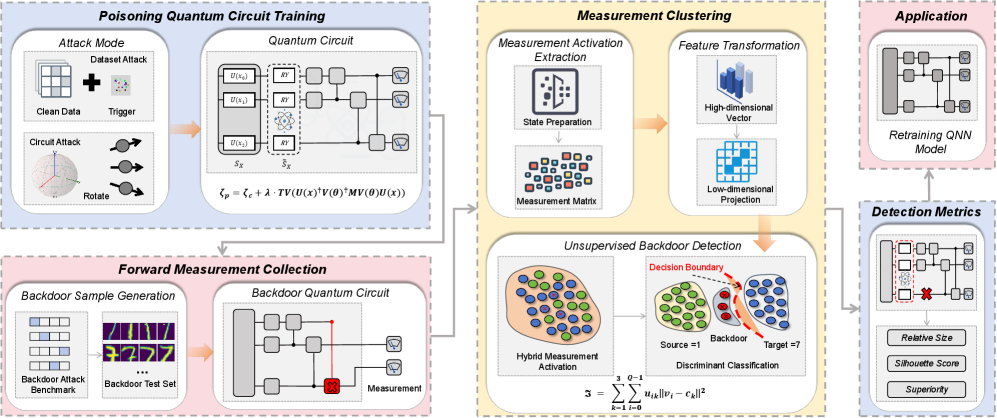
A new framework, QSentry, offers a robust defense against subtle backdoor attacks targeting the rapidly evolving field of quantum machine learning.
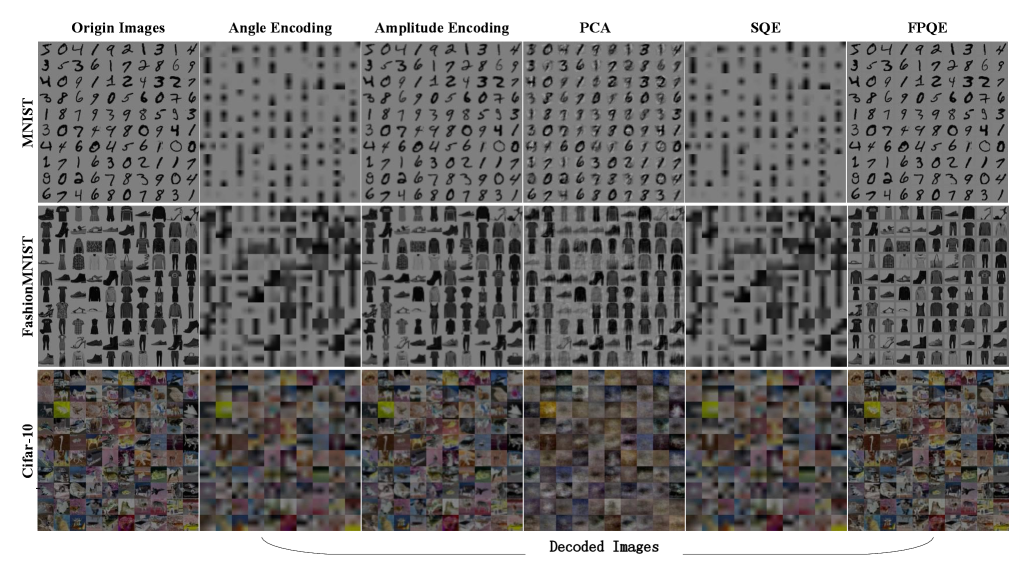
A new encoding method boosts the performance of quantum neural networks by ensuring crucial structural information isn’t lost when converting images into a quantum format.
Researchers have discovered a surprising connection between three-valued logic and the building blocks of quantum computers, offering a novel framework for protecting qubits from errors.

A new analysis reveals how vulnerable quantum machine learning systems are to both classical and quantum adversarial attacks, demanding a shift towards quantum-native security measures.

New techniques allow researchers to accurately characterize the performance of quantum error correction codes, even at extremely low error rates where failures are rare.

Researchers have developed a scalable protocol that leverages quantum key distribution to protect data privacy in participatory sensing systems.
This review examines the emerging field of routing protocols designed to maximize the performance and security of Quantum Key Distribution networks.

New research reveals how the inherent redundancies within Renaissance Italian dramatically limit the possible solutions for simple substitution ciphers, impacting both classical and quantum search algorithms.