The Limits of Maintenance: How Systems Balance Reliability and Cost
New research reveals a fundamental trade-off governing the effort required to maintain stability in any system, from cellular processes to digital networks.
New research reveals a fundamental trade-off governing the effort required to maintain stability in any system, from cellular processes to digital networks.
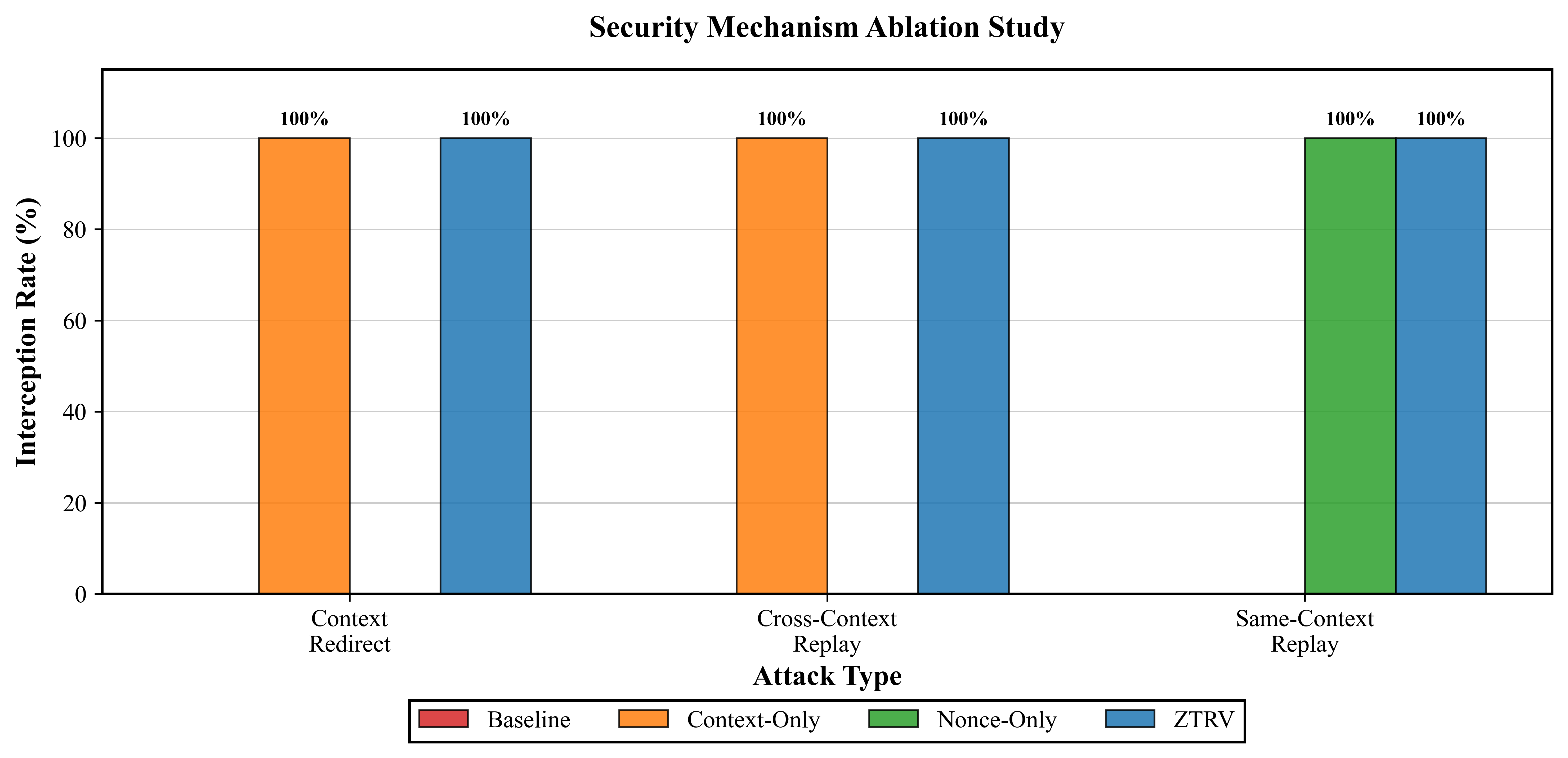
This research introduces a zero-trust runtime verification framework designed to protect agent-driven payment systems from critical vulnerabilities.
A new toolkit reveals widespread flaws in how we evaluate AI’s ability to answer multiple-choice questions, exposing issues from test contamination to simple writing errors.
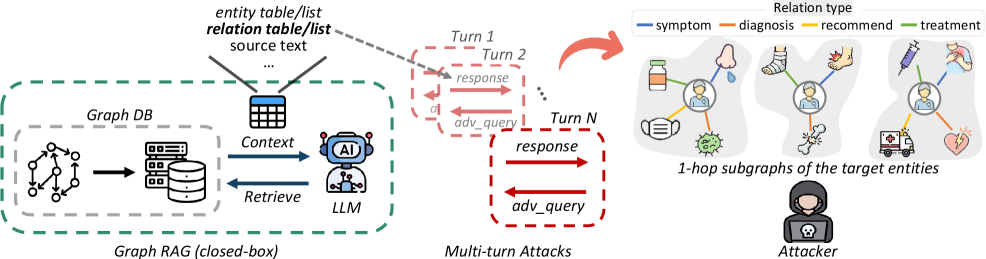
A new study reveals vulnerabilities in Retrieval-Augmented Generation systems built on graph databases, demonstrating how attackers can reconstruct sensitive knowledge from seemingly secure deployments.
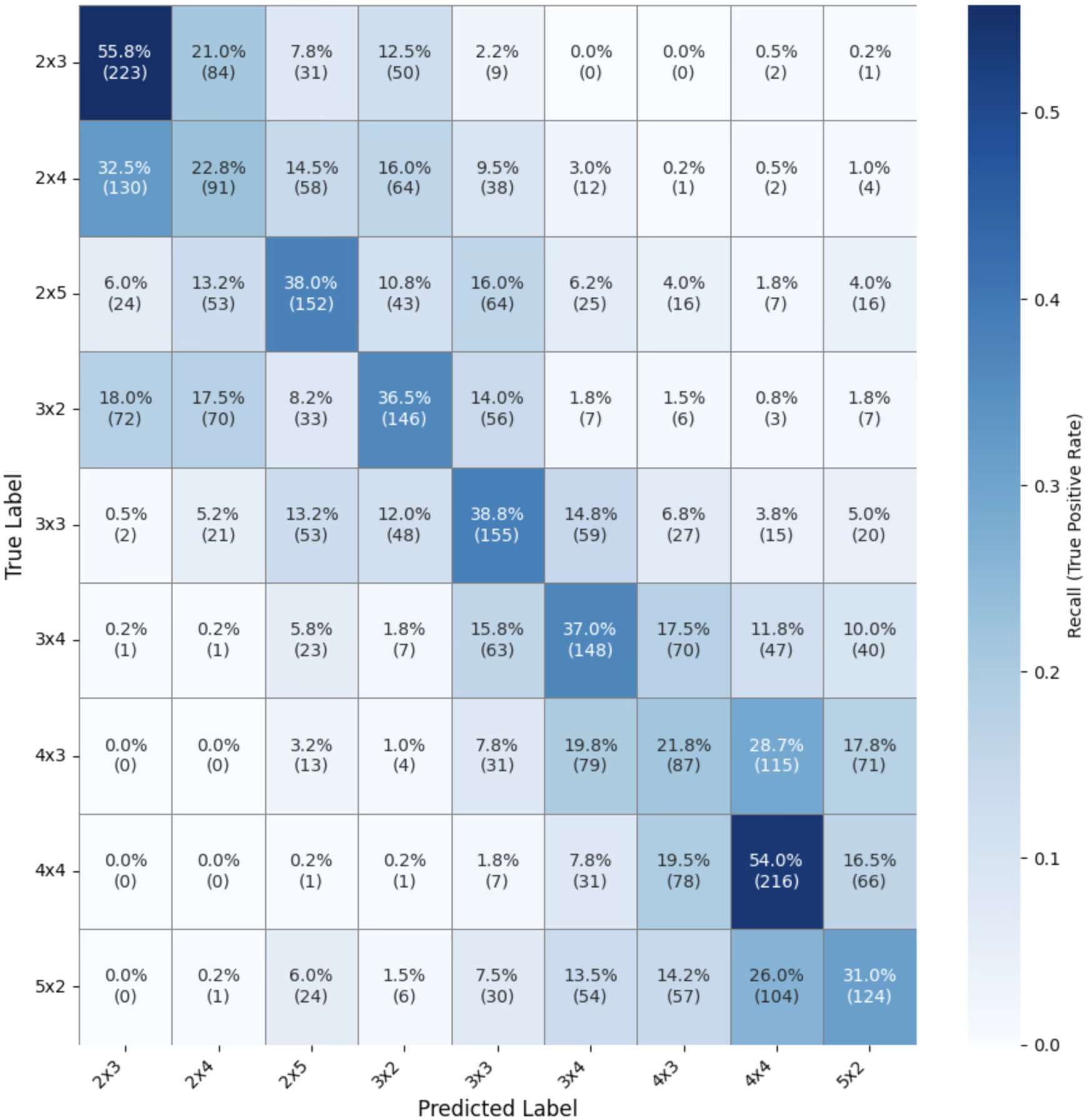
New research reveals how the internal dynamics of large language models evolve during reasoning, offering insights beyond simple token counting.
![The study reveals how adiabatic vibrational energy levels in KCN correlate with Planck’s constant, demonstrating the emergence of diabatic states at avoided crossings-manifested as hyperbolic curves and approximately straight lines-and further clarified through calculations detailed in equations [latex] (3) [/latex] and [latex] (4) [/latex], which differentiate between vibrational states corresponding to K-CN and K-NC linear configurations labeled by diabatic quantum numbers [latex] (n_1, n_2) [/latex].](https://arxiv.org/html/2602.06881v1/x1.png)
A new study uses correlation diagrams to explore how the vibrational spectrum of the KCN molecule transitions from order to chaos as energy increases.
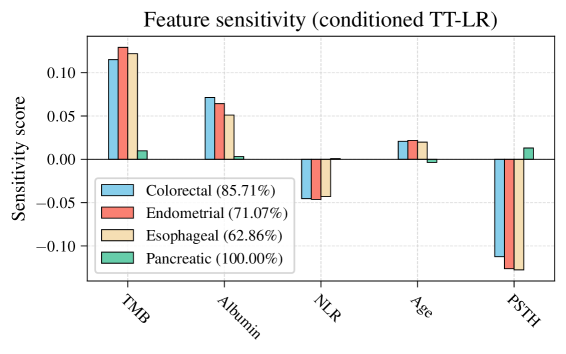
A new approach leverages quantum-inspired tensor trains to build clinical prediction models that safeguard patient data without sacrificing the ability to understand how predictions are made.
![Wonderboom demonstrates greater censorship resilience than Ethereum across a range of [latex]kk[/latex] values, suggesting a heightened capacity to maintain operational integrity under adversarial conditions.](https://arxiv.org/html/2602.06655v1/x2.png)
A new signature aggregation protocol, Wonderboom, promises to dramatically improve the scalability and censorship resistance of blockchain systems.
A new approach to preparing real-world data unlocks the full potential of foundation models, boosting performance in complex domains like genomics and finance.
![Statistical error in estimating exponential loss-using a two-dimensional Gaussian loss vector-decreases with increased sampling budget for both Sequential Approximate Aggregation (SAA) and single-level Fourier-Randomized Quasi-Monte Carlo (RQMC) methods, with performance notably influenced by the correlation coefficient ρ-specifically, [latex]\rho = -0.5[/latex] and [latex]\rho = 0.5[/latex]-where the sampling budget for SAA [latex]B_{SAA} = N[/latex] and for RQMC [latex]B_{RQMC} = N S_{shift}[/latex].](https://arxiv.org/html/2602.06424v1/x15.png)
A new computational method significantly improves the efficiency and accuracy of quantifying interconnected financial risk.