Smarter Hashes: Adapting to Unlock Performance
New research demonstrates how hash functions can dynamically adjust to data distributions, minimizing collisions and boosting efficiency.
New research demonstrates how hash functions can dynamically adjust to data distributions, minimizing collisions and boosting efficiency.
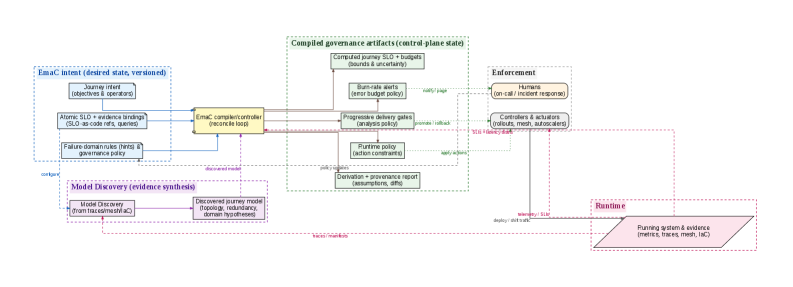
A new framework treats service reliability as code, enabling microservices to dynamically adapt and maintain performance based on defined objectives.
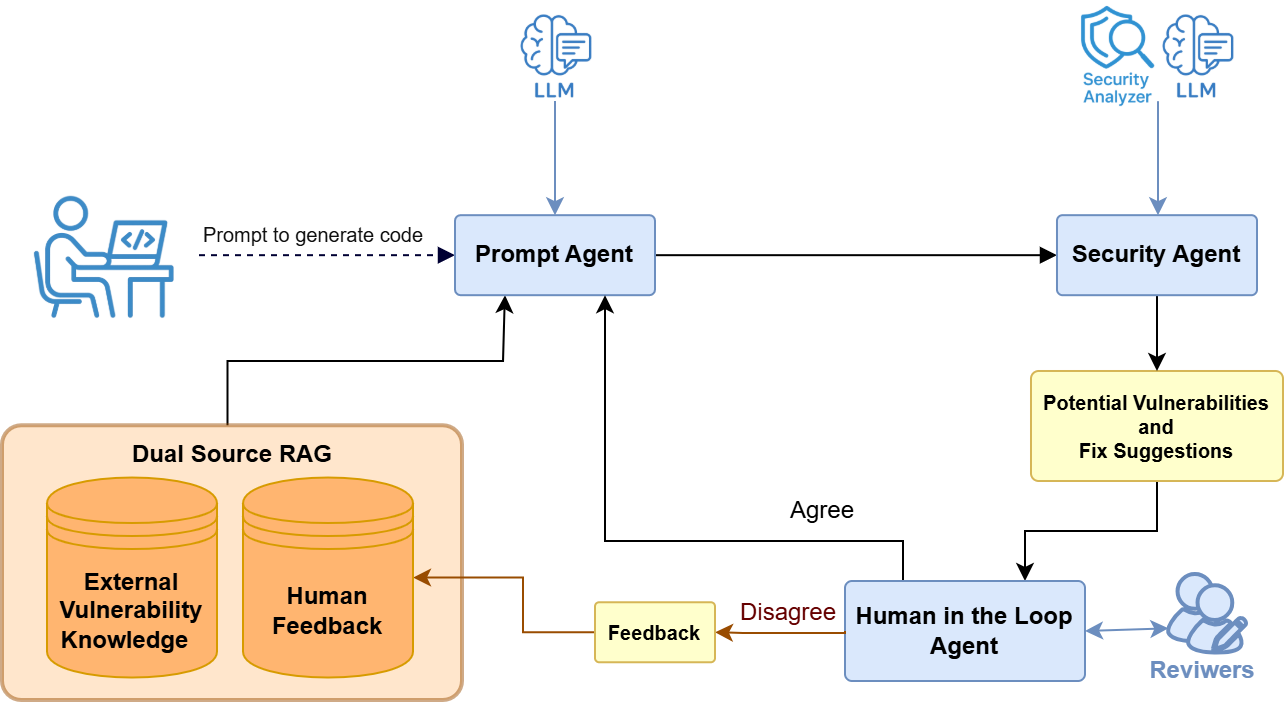
New research reveals that current methods for evaluating the security of code created by artificial intelligence are often misleading, and proposes a more robust, human-guided approach.
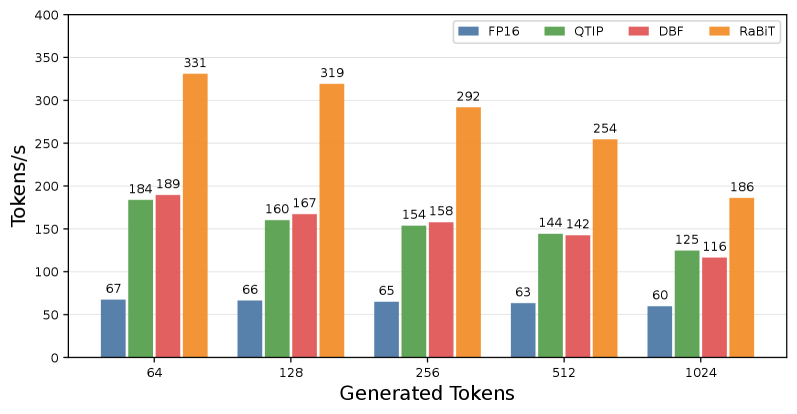
Researchers have developed a new training technique that dramatically reduces the size of large language models without sacrificing accuracy.
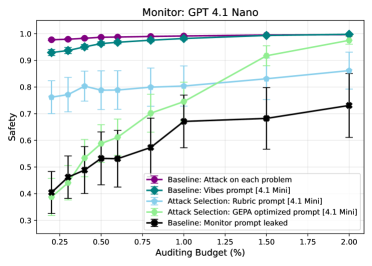
New research reveals that strategically selecting adversarial prompts can dramatically compromise the safety of AI control protocols, even when paired with trusted monitoring.
![The numerical analysis reveals a maximum rate gap consistently occurring at each [latex]R = \mathbf{R}_{\mathrm{rc}}(\lambda, D^{\star})[/latex] within the constraints of Claim D.4, pinpointing a critical operational threshold.](https://arxiv.org/html/2602.05790v1/worst_case_gap_plot2.png)
New research quantifies the minimal performance trade-off inherent in universal vector quantization techniques.
![Charm-quark fragmentation functions into charmonium states-specifically [latex]D(c \to h_c)[/latex], [latex]D(c \to \chi_{c0})[/latex], [latex]D(c \to \chi_{c1})[/latex], and [latex]D(c \to \chi_{c2})[/latex]-are shown to be significantly influenced by relativistic corrections of order [latex]\mathcal{O}(v^2)[/latex], with variations tied to an average value of [latex]\langle v^2 \rangle_{c\bar{c}} = 0.23 \pm 0.05[/latex] within the charmonium system, calculated assuming a charm-quark mass of 1.5 GeV and a normalization factor of [latex]C = 10^{-2}\alpha_s^2 \langle \mathcal{O} \rangle[/latex].](https://arxiv.org/html/2602.05615v1/x5.png)
New calculations refine our understanding of how heavy quarks fragment into excited quarkonium states, improving predictions for high-energy particle collisions.
![The study demonstrates that imposing constraints on the cart-pole swing-up control input [latex] u(t) [/latex] - either directly on the control itself, on the system’s state, or a combination of both - predictably alters the achievable trajectory, with boundaries of [latex] -2 \leq u \leq 2 [/latex] defining the limits of controllable force application.](https://arxiv.org/html/2602.05046v1/x7.png)
Researchers have developed an algorithm that enhances the safety and reliability of optimal control systems by effectively managing constraints during trajectory planning.
New research confirms that ghost fields within the Lee model are unable to form stable bound states, deepening the challenges for higher-derivative quantum field theories.
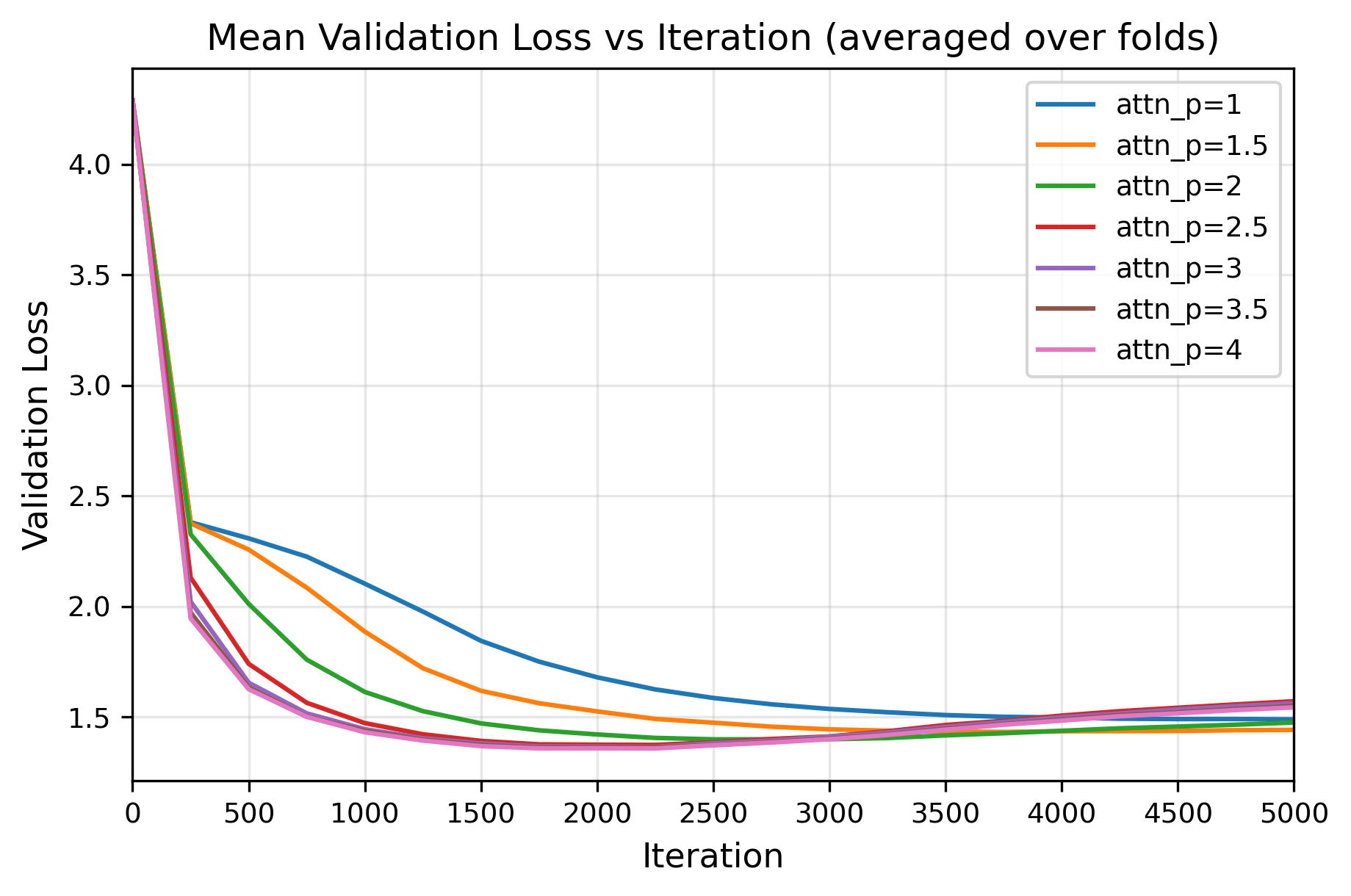
A new approach to normalizing attention mechanisms in Transformer models uses Lp norms to improve training stability and accelerate convergence.