Bridging Static and Dynamic Quantum Logic
A new categorical equivalence connects complete orthomodular lattices with a novel class of dynamic algebras, offering fresh insights into the foundations of quantum mechanics.
A new categorical equivalence connects complete orthomodular lattices with a novel class of dynamic algebras, offering fresh insights into the foundations of quantum mechanics.
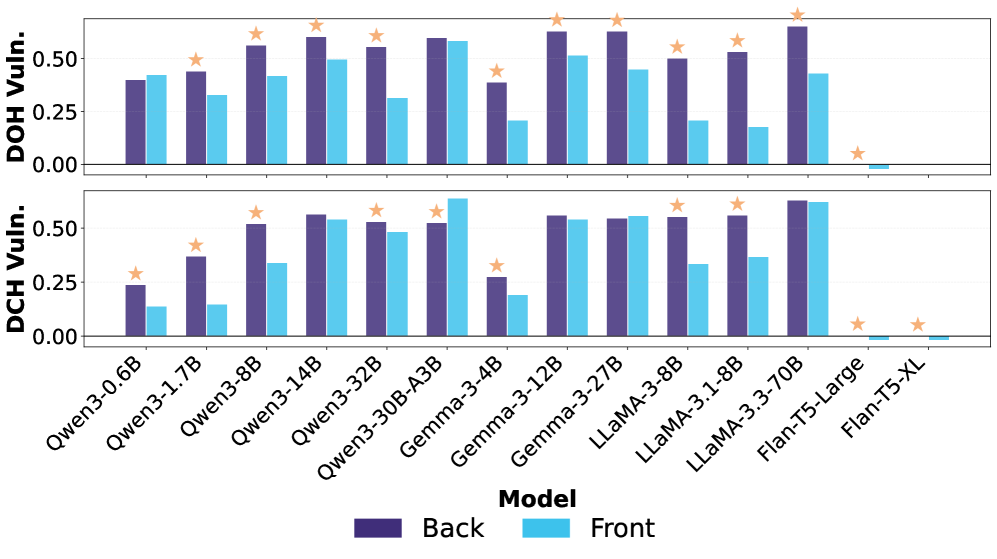
New research reveals that AI-powered search ranking systems are surprisingly vulnerable to manipulation through cleverly crafted prompts, raising concerns about information integrity.
![The simulation demonstrates the conservation of total energy and probability density over six cyclotron periods, revealing how the system’s energy partitions between quantum [latex]H_{qm}[/latex] and electromagnetic [latex]H_{em}[/latex] subsystems-with plots detailing their evolution relative to initial values [latex]H_0[/latex] and [latex]P_0[/latex]-and quantifying minimal error in both total energy and probability density conservation throughout the modeled interaction.](https://arxiv.org/html/2602.17429v1/x4.png)
Researchers have developed a novel simulation framework to model the complex interplay between charged particles, magnetic fields, and the radiation they emit.
A new parallel algorithm efficiently decomposes complex CircuitSAT problems into manageable parts, accelerating solutions for critical applications like logical equivalence checking and cryptographic analysis.
A new approach leverages the abstract tools of sheaf theory and Grothendieck topologies to fundamentally redefine how we model and prove the security of cryptographic protocols.
Researchers have finally proven the security of the Fischlin transform, a key component in building secure, non-interactive zero-knowledge proofs in a post-quantum world.
A new hybrid quantum-classical pipeline leverages the power of variational circuits and QUBO optimization to enhance financial decision-making.
A surprising link between error correction and the mathematical foundations of string theory is revealing new insights into the structure of these complex systems.
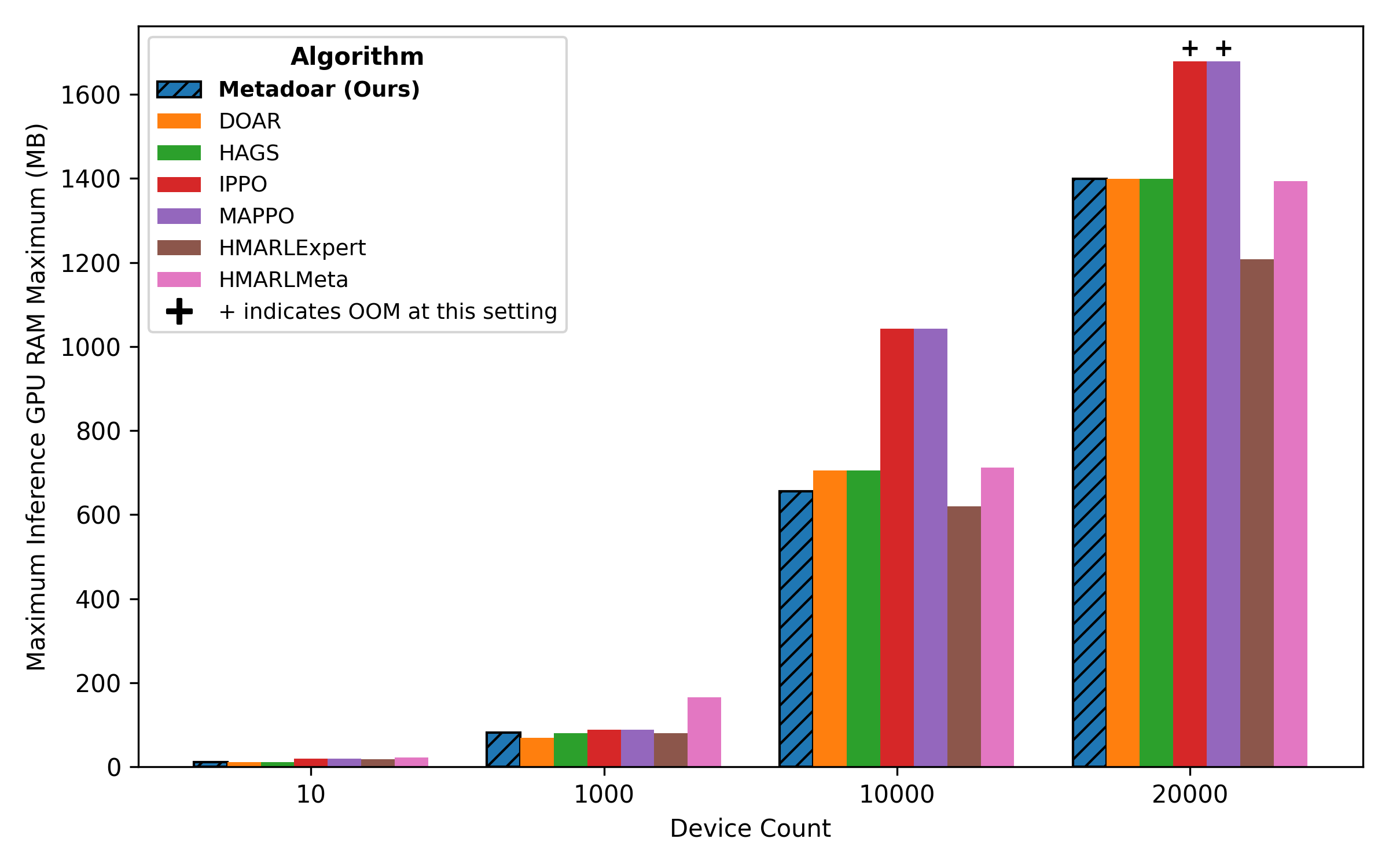
New research introduces a hierarchical control system that dramatically speeds up the process of building effective cyber defenses in complex networks.
![The decay of a [latex]B^{+} [/latex] meson into a [latex]D_{s}^{+} [/latex] meson, followed by the subsequent decay into two kaons ([latex]K^{+}K^{-} [/latex]), proceeds through annihilation-type Feynman diagrams, representing a fundamental interaction pathway in particle physics.](https://arxiv.org/html/2602.16423v1/x2.png)
A new analysis explores the subtle pathways of B meson decay involving D mesons and kaons, offering predictions for experimental verification.