Securing AI’s Future: Building Trust in Decentralized Language Models
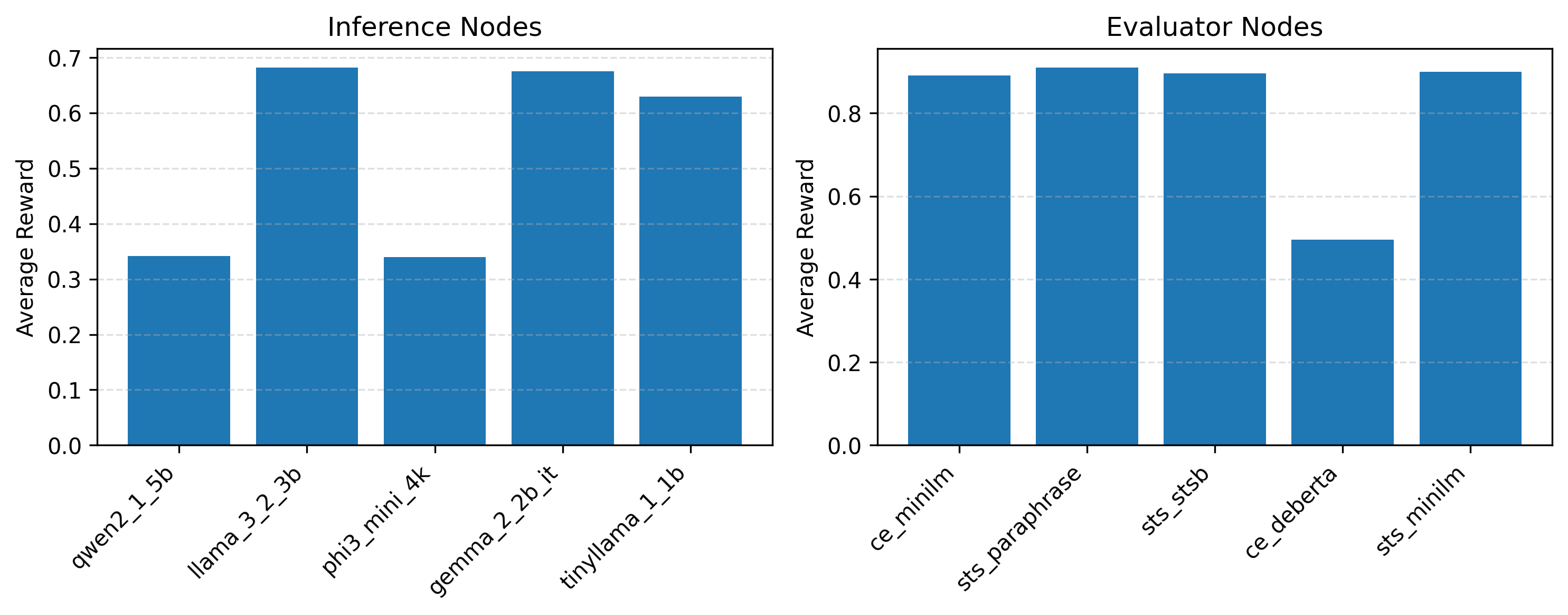
As large language models move to open, distributed networks, ensuring reliable performance in the face of malicious actors becomes paramount.
As large language models move to open, distributed networks, ensuring reliable performance in the face of malicious actors becomes paramount.

A new approach optimizes formal verification by intelligently exploiting design symmetries and equivalence properties, dramatically improving the efficiency of finding security vulnerabilities in hardware.
This review explores the emerging intersection of blockchain and artificial intelligence to address critical challenges in ensuring the reliability and integrity of evolving software systems.

A new hardware defense, SPOILER-GUARD, combats side-channel vulnerabilities by introducing uncertainty into how memory access dependencies are predicted.

New research reveals that unconventional superconductivity can be remarkably resilient to imperfections in materials, challenging conventional expectations of pair-breaking effects.
A new approach to authenticated encryption prioritizes simplicity and efficiency for critical communications from resource-constrained satellites.
Researchers have developed novel error-correcting codes to improve the accuracy of nanopore sequencing by specifically addressing the common problem of deletions in DNA reads.
A new mathematical framework clarifies which operations can be reliably performed on CSS quantum codes, paving the way for more robust fault-tolerant computation.
![The study demonstrates QUARK’s sensitivity to the parameter α during lyric-retrieval simulations, quantifying changes relative to a baseline retriever established at [latex]\alpha = 1.0[/latex].](https://arxiv.org/html/2601.21049v1/x1.png)
A new framework tackles the challenge of information retrieval when search terms are vague, incomplete, or don’t quite capture what users intend.
![The Ethereum client’s request-response cycle operates as a layered system, where remote procedure calls [latex] RPC [/latex] facilitate communication between application logic and the blockchain, acknowledging that even decentralized systems are subject to the constraints of sequential processing and the inherent latency of network interactions.](https://arxiv.org/html/2601.21593v1/x1.png)
A new approach to fuzzing Ethereum clients uncovers hidden inconsistencies in RPC responses by intelligently simulating realistic blockchain conditions.