Sensing Majorana States with Quantum Capacitance
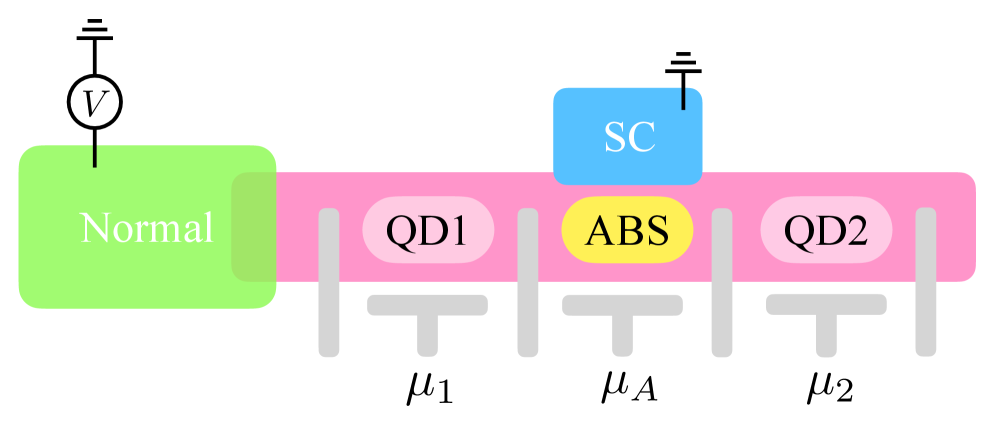
Researchers demonstrate a novel method for characterizing topological qubits by leveraging the sensitivity of quantum capacitance to the underlying fermion parity in a quantum-dot-based Kitaev chain.
Researchers demonstrate a novel method for characterizing topological qubits by leveraging the sensitivity of quantum capacitance to the underlying fermion parity in a quantum-dot-based Kitaev chain.

A new approach leverages the principles of quantum mechanics to better understand and mitigate the tendency of large language models to generate factually incorrect or nonsensical text.
Researchers have developed a novel method for accurately determining the state of a quantum system, even with limited or adaptively collected data.
Researchers demonstrate a viable path toward protecting Open RAN infrastructure from quantum computing threats by integrating a new cryptographic approach into a critical 5G interface.
![The discretization of Burgers’ problem using a second-order MUSCL scheme, when integrated with a fourth-order Runge-Kutta method ([latex]RK44[/latex]), demonstrates that [latex]RK44[/latex] preserves the Total Variation Diminishing (TVD) property initially established by a forward Euler solution, even with variable time steps ([latex]\Delta t = \Delta t_{FE}[/latex]).](https://arxiv.org/html/2601.18947v1/figures/MUSCL2_TVD_RK4.png)
New research challenges the long-held assumption that strong stability preserving (SSP) methods are essential for maintaining numerical stability when solving hyperbolic conservation laws.
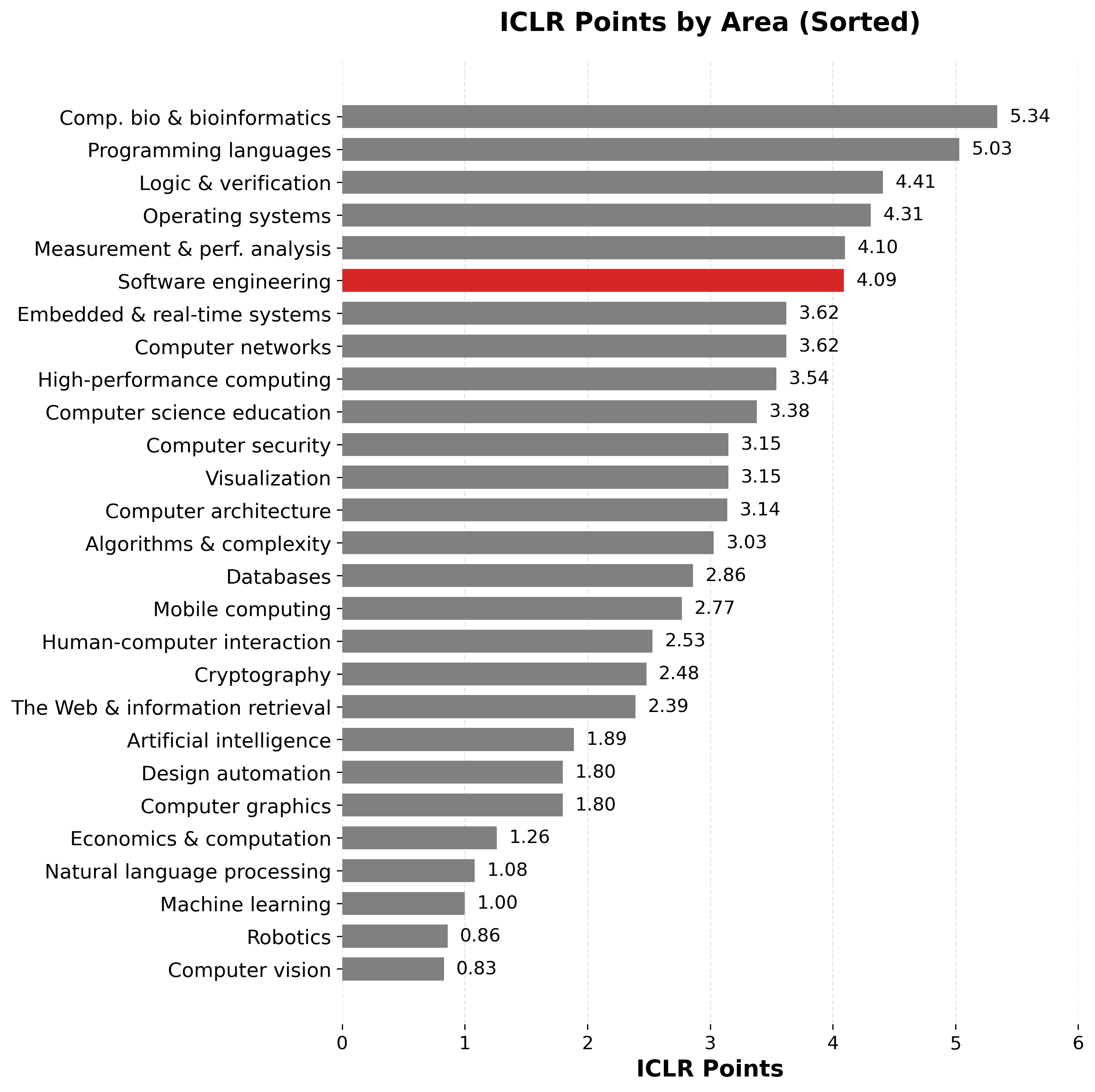
A new vision for scientific publishing details how a restructuring of peer review and a focus on executable papers could address the scalability challenges facing software engineering research.

A new approach uses reinforcement learning to automatically tune fully homomorphic encryption, dramatically improving performance and reducing computational overhead.

A new framework uses deterministic analysis to reliably identify and automatically correct semantic errors in code created by large language models.
A novel framework leverages game theory and economic incentives to address longstanding issues in the peer review process and foster a more robust and reliable system of scientific validation.
New research explores how stacking quantum Ising systems can lead to emergent behavior described by the quantum Ashkin-Teller model, altering critical properties and potentially revealing enhanced symmetry.