Clockwork Universe: Optimizing Space-Based Networks for Gravitational Wave Detection
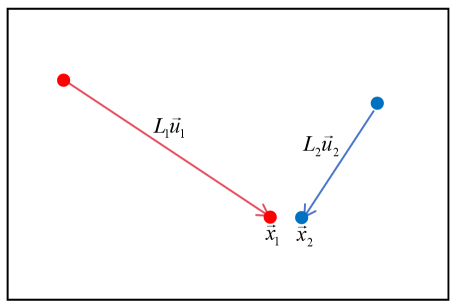
A new analysis demonstrates how strategic geometric arrangements of optical lattice clocks can enhance the sensitivity of networks designed to detect the subtle ripples of the gravitational wave background.
![The post-quench Holstein model exhibits three distinct dynamical regimes-nonequilibrium metallic, quasi-coarsening, and arrested charge density wave (CDW) order-determined by the electron-phonon coupling strength λ, with transitions occurring near critical values of [latex]\lambda_{c1} \approx 0.4[/latex] and [latex]\lambda_{c2} \approx 1.0[/latex], where the system transitions from fluctuating CDW correlations to nucleation-limited coarsening and, ultimately, to dynamically arrested domain walls.](https://arxiv.org/html/2602.05815v1/x1.png)