Taming QCD: Improving Precision in Hadronic Tau Decay Analysis
![The study precisely determines [latex]\delta(0)[/latex] within Quantum Chromodynamics (QCD) through higher-order coefficient analysis, demonstrating that perturbative expansions-with uncertainties represented by shaded regions-converge towards a mean value-defined by the Shanks sum-while variations across different resummation techniques, visualized as yellow bands, quantify the inherent spread around this central prediction, all calculated using [latex]\alpha_s = 0.31959[/latex].](https://arxiv.org/html/2601.11277v1/x1.png)
Researchers are leveraging advanced mathematical techniques to refine calculations of hadronic tau decays, a crucial process for pinpointing the strength of the strong force.
Researchers are leveraging advanced mathematical techniques to refine calculations of hadronic tau decays, a crucial process for pinpointing the strength of the strong force.
![Yb atoms exhibit Kondo physics through a carefully engineered system where fermionic atoms in spin-1/2 states are selectively trapped - mobile in a ground band and localized in an excited band - creating an impurity interacting with a surrounding fermionic environment via both antiferromagnetic and potential interactions, effectively modeling [latex]Eq. (1)[/latex] and demonstrating how these interactions draw atoms either towards or away from the impurity site, as visualized by the wavefunction modulus.](https://arxiv.org/html/2601.11449v1/x1.png)
New research reveals that the Kondo effect, a hallmark of quantum impurity problems, can persist in one-dimensional systems even with strong scattering, thanks to the crucial role of environmental correlations.
New research demonstrates how zero-knowledge proofs can establish trust in hardware components without revealing sensitive design details.
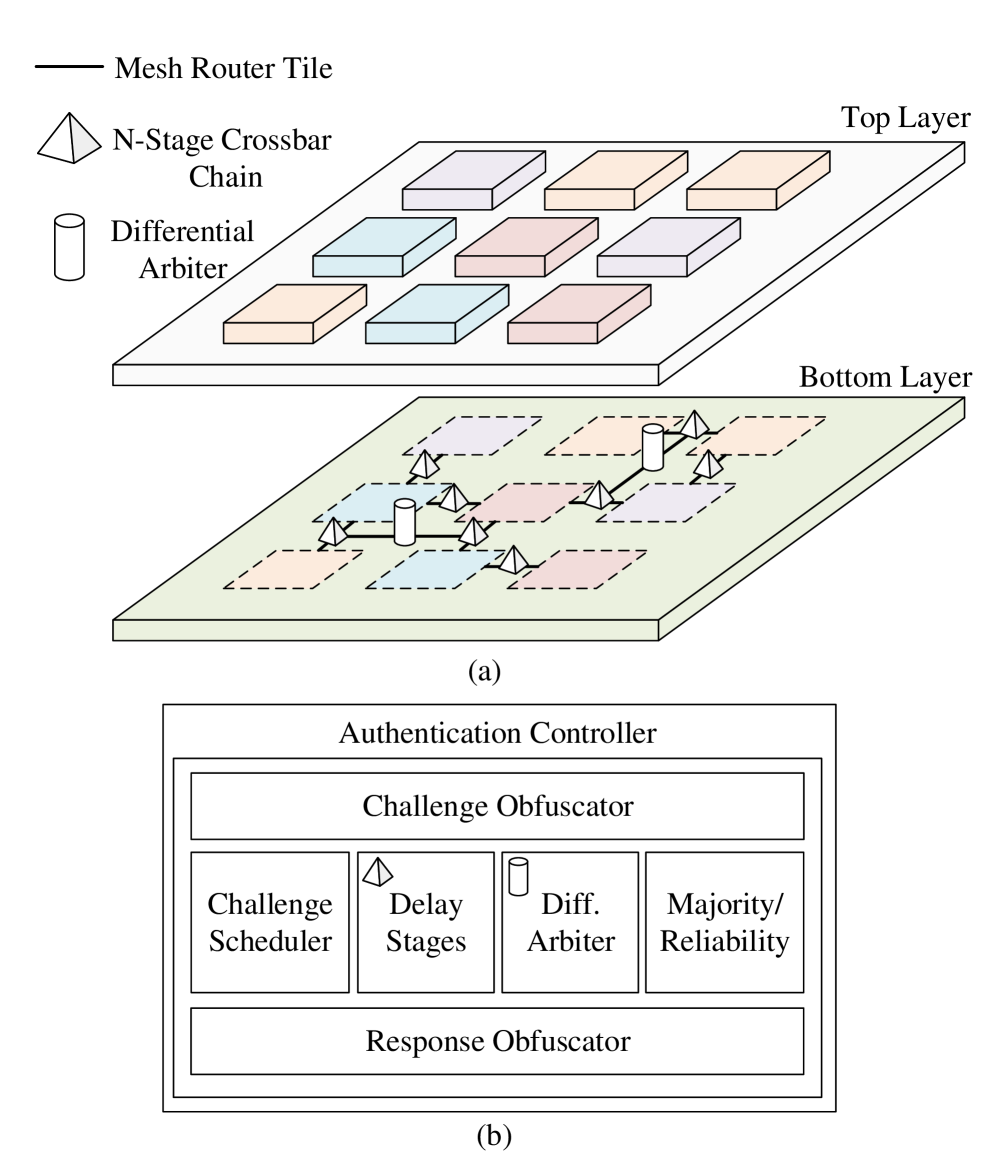
A new framework embeds security directly within the interposer layer, enabling distributed authentication for complex, multi-chip packages.
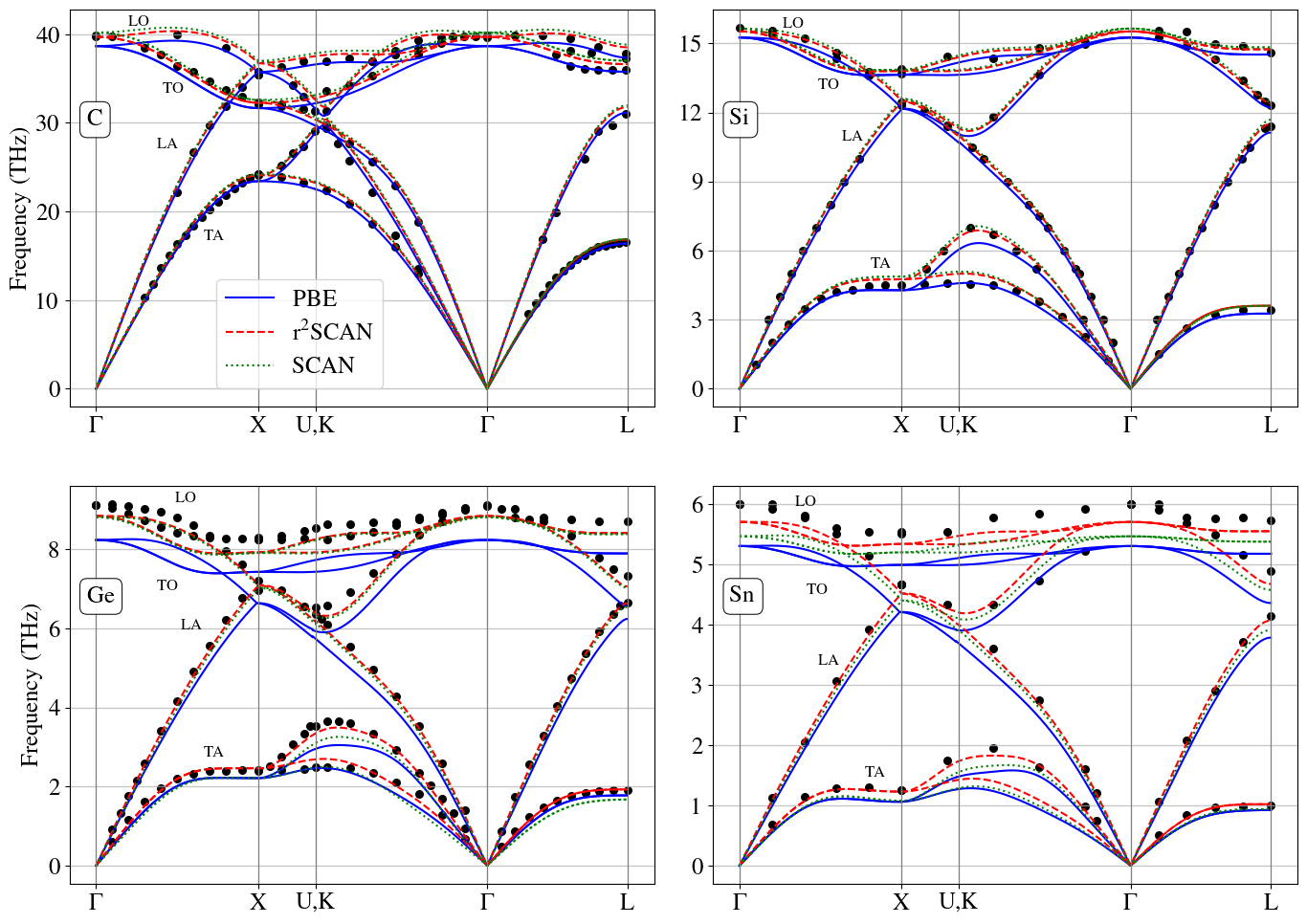
A new study rigorously tests the accuracy of modern density functional theory methods in predicting the structural behavior of group IV elements like silicon and germanium.
![Performance metrics demonstrate the capabilities of [latex]\mathsf{POD}[/latex] when operating with the eBCH(16,7)(16,7) coding scheme, indicating its efficacy within that specific communication architecture.](https://arxiv.org/html/2601.11373v1/fig/eBCH_4_2_POD.png)
A new decoding framework leverages the underlying symmetries of polar codes to significantly improve speed and performance in error correction.
![The proposed LoRA oracle efficiently adapts large language models by learning low-rank approximations, enabling parameter-efficient transfer learning without extensive retraining of the original model weights [latex] \Delta w = BA [/latex], where [latex] B [/latex] and [latex] A [/latex] represent the low-rank matrices and [latex] w [/latex] denotes the original weights.](https://arxiv.org/html/2601.11207v1/x1.png)
A new framework efficiently probes deep learning models to reveal training data origins and hidden security vulnerabilities.
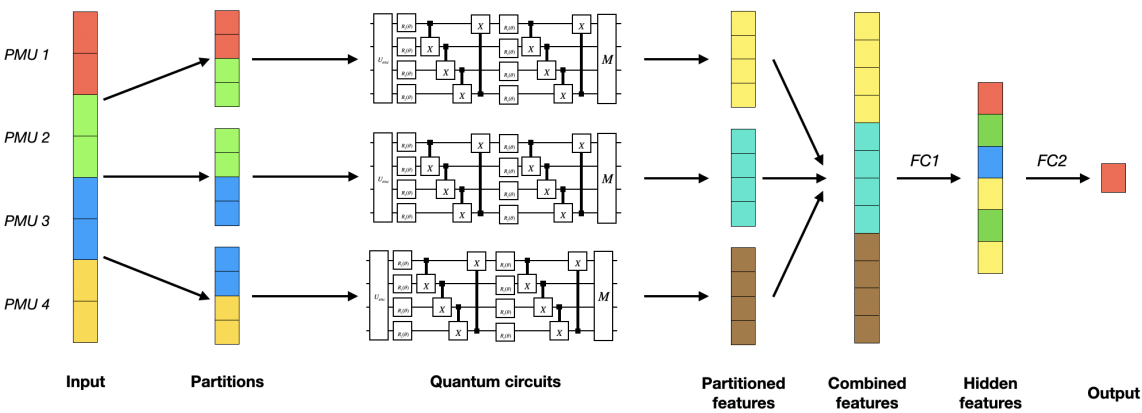
A novel quantum neural network architecture demonstrates improved anomaly detection in smart grid systems, offering enhanced resilience against increasingly sophisticated cyber threats.
New research reveals a fundamental link between quantum communication and the mathematical structures governing semantic alignment, demonstrating how entanglement can minimize the cost of shared understanding.

As DNA emerges as a promising medium for long-term data archiving, new coding schemes are vital to overcome the challenges of fragment reassembly and data corruption.