Taming the Quantization Challenge
New research introduces a method for reliably training machine learning models with extremely limited precision, unlocking efficiency gains for large language models and beyond.
New research introduces a method for reliably training machine learning models with extremely limited precision, unlocking efficiency gains for large language models and beyond.
A new analysis reveals that despite the inherent security advantages of the CHERI architecture, vulnerabilities in core system components can undermine its compartmentalization features.
A new analysis reveals vulnerabilities in the communication protocols used by AI agents, potentially allowing attackers to hijack their functionality and bypass safety measures.

A novel federated learning framework allows financial institutions to share insights and improve anti-money laundering detection without compromising data privacy.

Researchers have developed an agentic framework that significantly improves the accuracy and cost-effectiveness of identifying vulnerabilities in Ethereum smart contracts.
A novel security framework leverages the unique characteristics of physically unclonable functions to authenticate sensor data and protect critical infrastructure from faults and malicious intrusion.
![The proposed quadratic residue diffusion (QRD) scheme demonstrates performance sensitivity to both rotational angle θ and power split β, operating with a photon count of [latex]N = 80[/latex] per symbol and suggesting inherent limitations in achieving consistent signal fidelity across all parameter configurations.](https://arxiv.org/html/2601.18655v1/x3.png)
A new approach to encoding quantum information using squeezed light and rotation diversity promises more robust and efficient wireless transmission.

Researchers are exploring how quantum graph neural networks can enhance message passing and scalability in next-generation wireless systems.
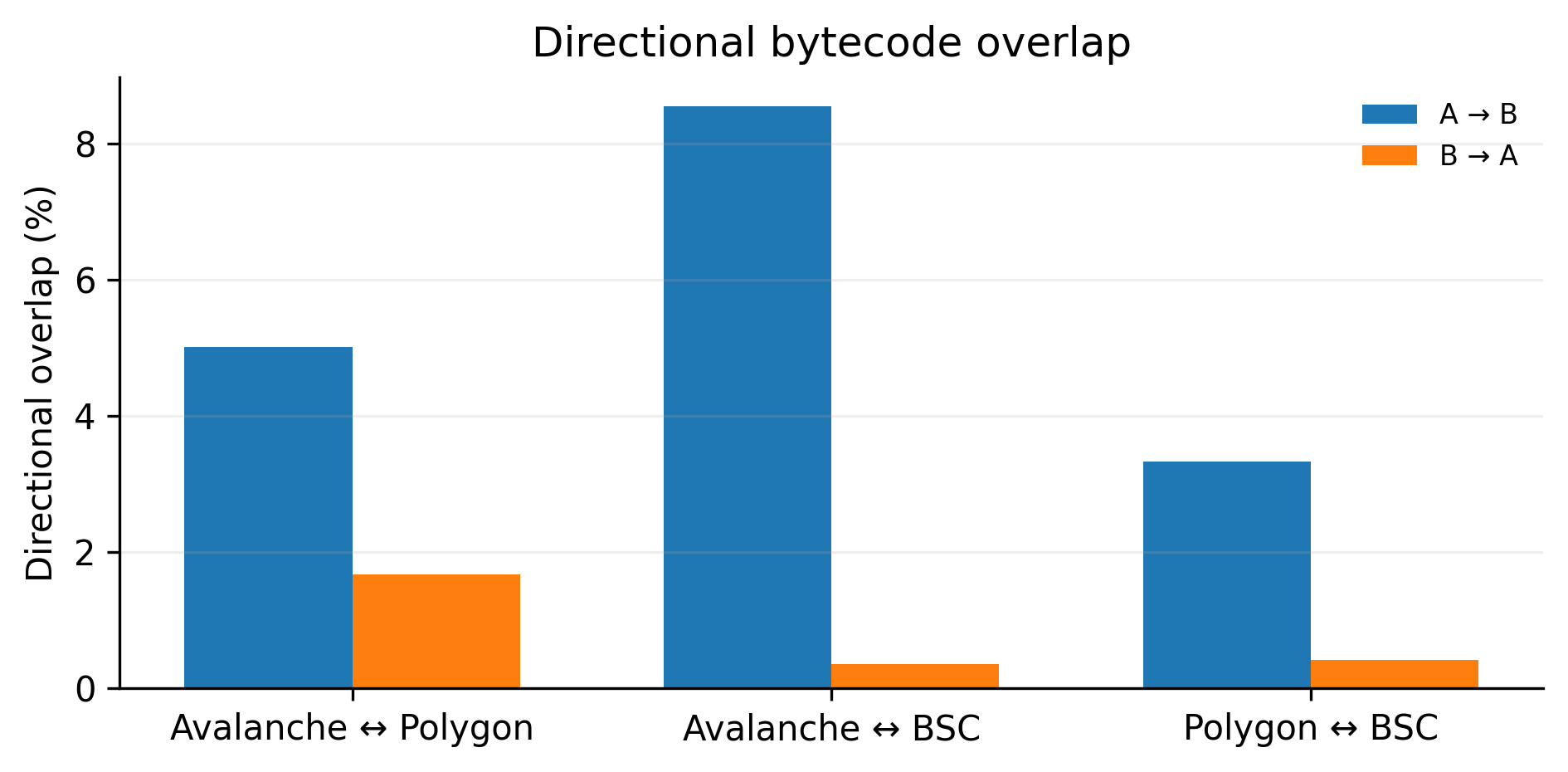
Researchers are developing methods to identify and prioritize smart contract audits by analyzing patterns of code obfuscation that drift across different blockchain ecosystems.
Researchers have refined the Gilbert-Varshamov bound, yielding tighter limits on the performance of both classical and quantum error-correcting codes.