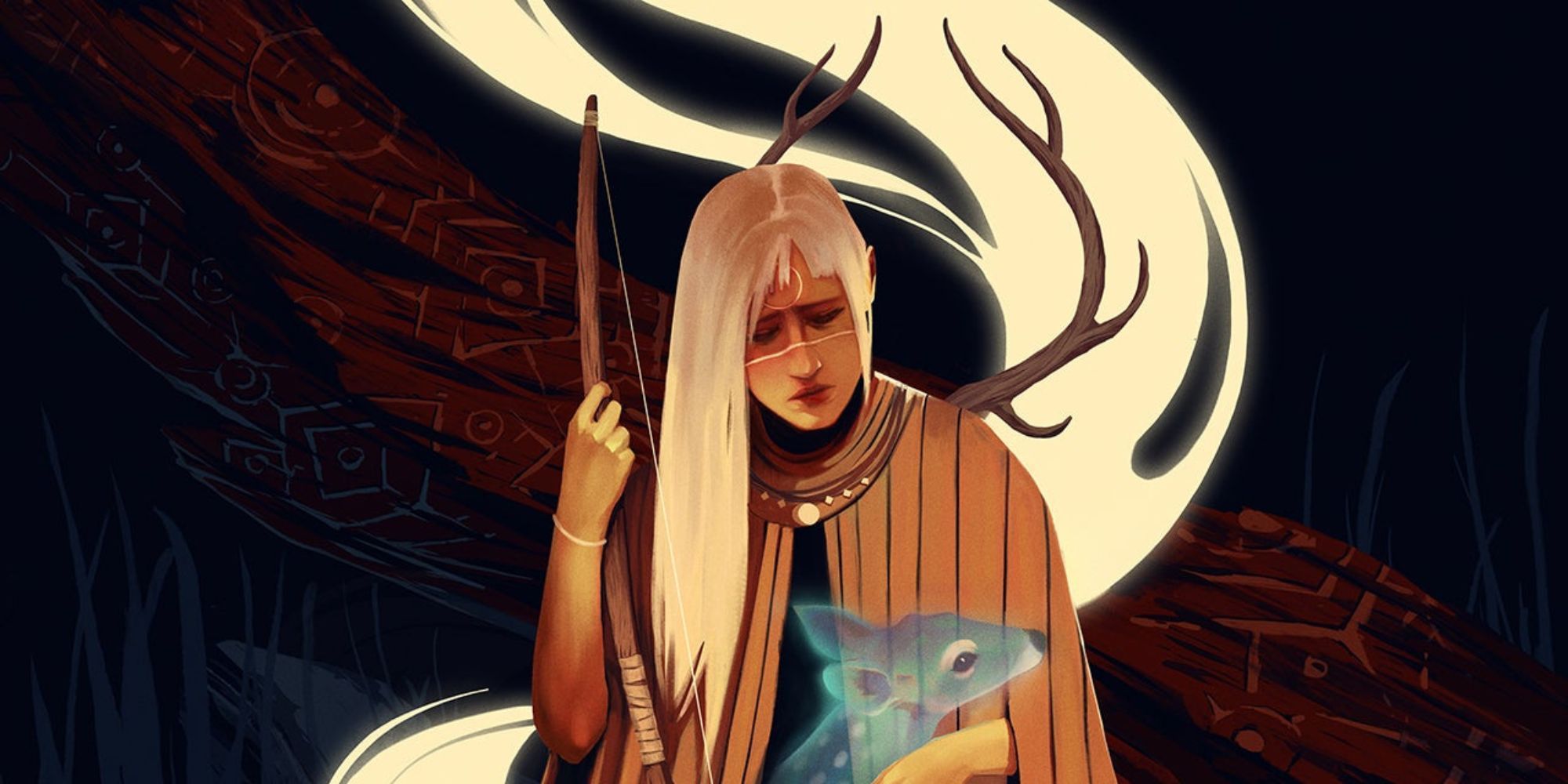
In today’s gaming world, particularly among independent developers, there’s an increasing trend towards blending different genres, as innovative minds in the industry are finding this approach more frequent.
Instead of confining yourself to just one established gaming genre, why not excel in two and provide an extraordinary blend that gamers haven’t experienced yet? While it’s undeniably challenging, the benefits often outweigh the difficulties.
However, it appears that the simple deck-building game, Death Howl, was in production for quite some time before the team realized that it bore a striking resemblance to the Soulslike genre.
Regardless of the route you follow, what truly matters is that the game successfully launches on its release date in its complete form, a polished masterpiece. And while it may have been serendipitous, Death Howl valiantly blends Soulslike and deckbuilder concepts to create an unparalleled title that’s eerie, gritty, and immersive like none other.
We had a chat with Malte Burup to gain insights into the intriguing novel title, where he shared details about its inception as an epic journey and the exciting elements awaiting readers once they venture past the game’s ominous forest introduction.
Stumbling Upon The Soulslike Formula With Malte Burup
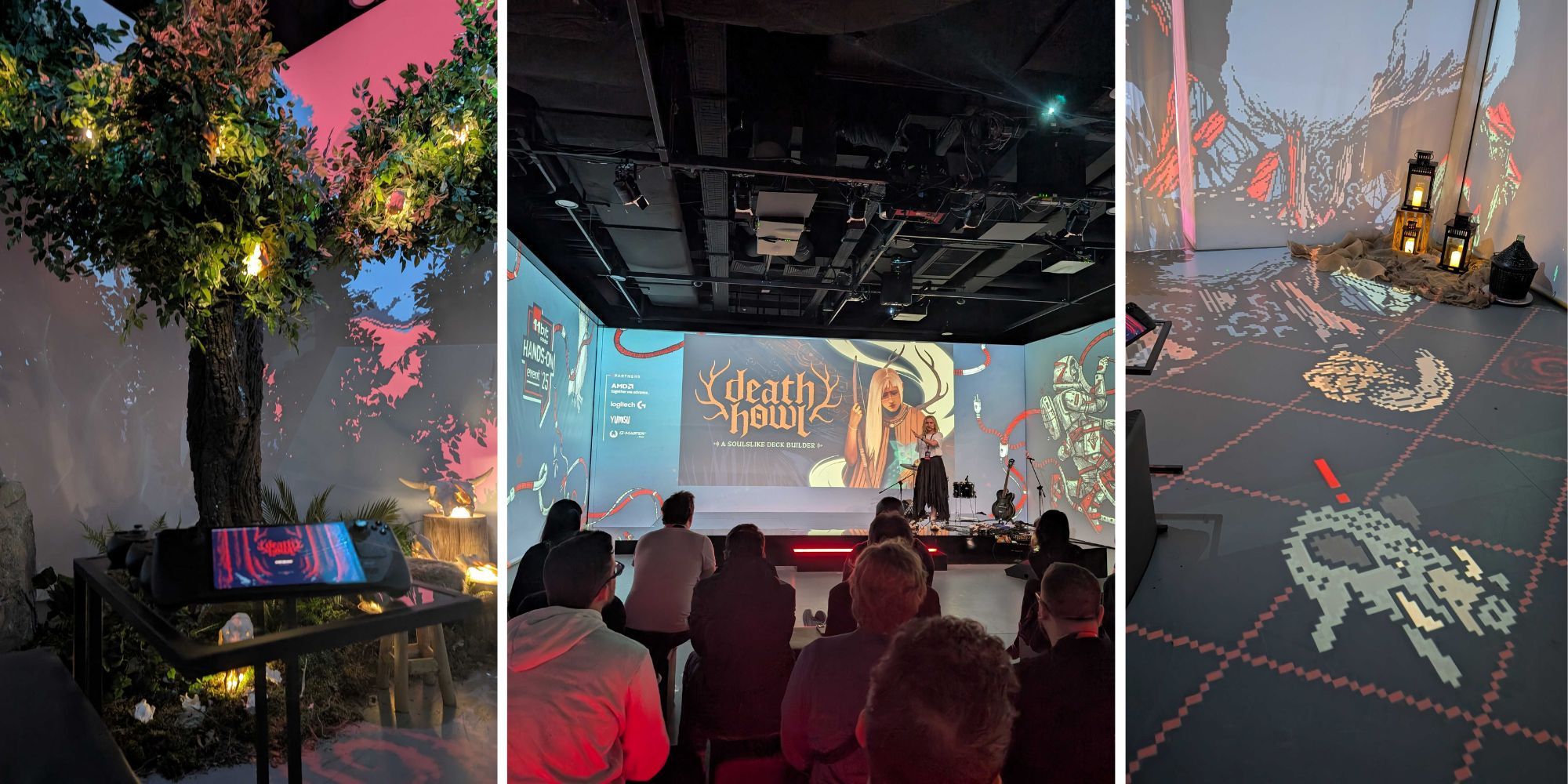
Let’s begin by discussing the artistic direction and inspirations behind Death Howl, as it reminded me of an intriguing spin-off from Daniel Mullin’s Inscryption. Could you elaborate on which games and creators have influenced Death Howl’s development?
Our main inspiration was drawn from the highly successful deckbuilder, Slay The Spire. Additionally, we were influenced by earlier card games like Card Quest. These games sparked an idea in my mind that a card game needed to be created. After playing games such as Magic The Gathering, this concept became even clearer.
Instead of creating a roguelike deck builder, I desired a different direction due to the numerous replicas that emerged following the success of Slay The Spire. I sought to explore new territories, which is why I decided to design this game with an aesthetic similar to Final Fantasy Tactics and a structure reminiscent of Breath of the Wild.
The trio of games formed the foundation of what we were creating, and throughout the development process, we found ourselves immersed in many rounds of Into The Breach as well. More recently, I’ve delved into Inscryption, and during our development phase, people frequently inquired about whether we had given it a try due to some resemblance between our games. However, that similarity was not intentional.
A: It’s interesting that you didn’t mention Dark Souls or any games from FromSoftware in relation to inspirations, given the Souls-like genre aspect of your game. Could you share some insights about how those games have influenced your deckbuilding title?
A: Indeed, the Soulslike aspect wasn’t initially planned. It evolved during the development process itself. After we partnered with 11 Bit and had testers play our game, they provided feedback indicating that players perceived it as similar to a Soulslike game.
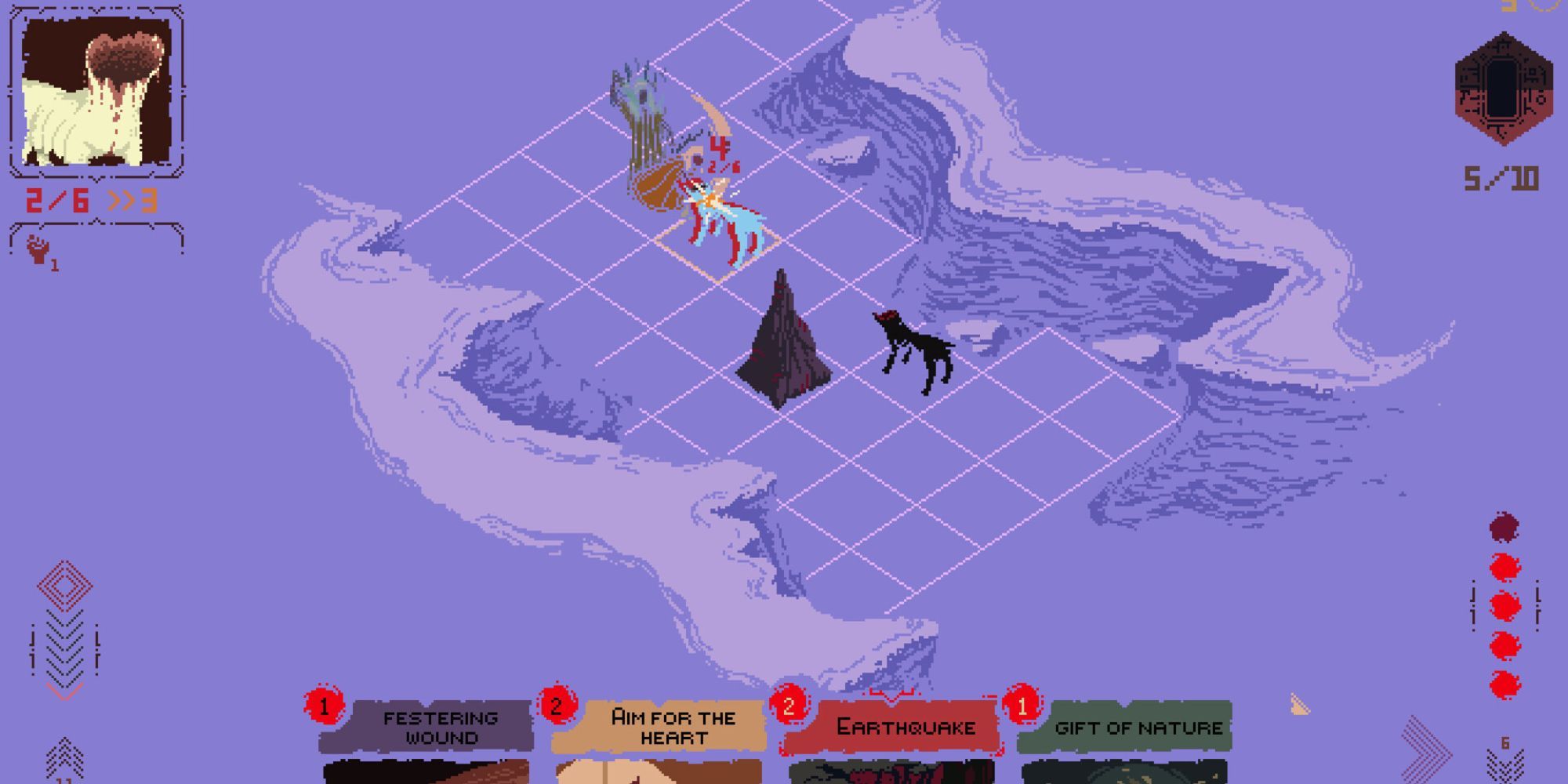
I haven’t had much experience with Souls-like games before, but the qualities that reminded me of this genre were primarily due to the game’s ambiance and the mechanism that resurrects enemies after healing.
We chose to incorporate this detail and explained that upon death, you forfeit your Death Howls, with an opportunity to regain them. Many Souls elements were developed prior to the demo launch, although they weren’t part of our original plan.
Fun fact, I recently gave Dark Souls a spin for the very first time around two months back. It was an enjoyable experience, yet incredibly challenging. After approximately seven hours of gameplay, I found the difficulty level to be overwhelming and decided to take a break from it.
A: It’s quite fascinating! Many of my questions were connected to the “Soulslike” category. However, I understand now that won’t necessarily apply here. Initially, I was wondering if there were any references to the Souls series in the game, given that the four key bosses seem to hint at the final stages of the original Dark Souls.
I’m completely clueless about it, but what I can share is that the concept behind it seems to be influenced by the fundamental framework of The Legend of Zelda: Breath of the Wild.
A: I understand your question. Let’s discuss the structure of the game’s main characters, often referred to as ‘the four bosses.’ What I’m curious about is the degree of freedom the player has in terms of game progression. Does the player have the liberty to pursue these bosses in any order they choose? Or, does the game suggest a specific sequence that seems logical within the gameplay experience?
A: The sequence doesn’t matter; you’re free to defeat the bosses in any order that suits you best. If you feel adventurous, you could even confront the final boss right away. However, keep in mind that if you decide to take this route, it will be quite a test of your gaming skills.
When you think you’re prepared, you’re free to reach the final destination. However, the initial location you’ll encounter is a forest, making the boss there an obvious choice to tackle first. Nevertheless, remember that the sequence doesn’t significantly impact the outcome.
A: It’s great to hear that! I was wondering if you had questions about the game’s story as well, since not many deckbuilders emphasize narrative. Can you tell me where the inspiration for this story originated? Is it rooted in mythology and legends or is it purely a product of the team’s imagination?
Initially, the foundational concepts that eventually developed into Death Howl leaned heavily towards gameplay mechanics. As we contemplated the direction for this game, it became clear that a Shamanistic theme would be fitting. By vanquishing adversaries, you gather components from them, which can then be combined with the mystical powers of various animals to create new items.
We delved into the realms of Shamanism, rituals, and the spiritual sphere. However, our narrative draws its essence from Nordic mythology and a Danish folktale penned by Hans Christian Andersen titled “The Story of a Mother.” This timeless tale revolves around a mother’s relentless search for her son in the spirit realm.
It’s helpful to gain insight into the story’s background details. Additionally, I was curious about the game’s structure since many deckbuilders typically don’t have a set ending, instead favoring continuous play for endless replayability. I was wondering if your game would feature an endless arcade mode or if it would offer a more traditional beginning and end?
A: Currently, it’s only an idea we’ve discussed, not something that’s in the works. However, it could be quite enjoyable! But do remember, Death Howl is a game that follows a linear narrative and has a strong theme of grief woven into its design.
Perhaps, we should ponder over the suitable method for this scenario. It could involve a surreal sequence where our main character slips into a dream, or a return to the spiritual realm post-game events.
A: In addition, regarding any upcoming projects, the current version of Death Howl is only available on PC. However, are there any intentions to release it on consoles soon?
Absolutely! Our intention is to make the game available on gaming consoles. However, at this point, we haven’t specified which specific consoles or the release date yet, but it’s definitely part of our plans.
A: Absolutely. Let’s touch base once more on the subject of Soulslike games. Although it wasn’t our original intent, the label does imply that our game might be challenging. However, we designed our deckbuilding game to be accessible for both seasoned players and newcomers alike.
A: Although it presents some challenges, this game isn’t as tough as a Soulslike. Since our focus is on storytelling and linear progression, we aim for players to advance through the game without encountering obstacles they can’t overcome.
If you find yourself unable to emerge victorious in a conflict, there are always alternative paths you can take. You could gather fresh strategies, opt for a different approach, and ultimately find a way to persist. Therefore, quitting out of frustration won’t be necessary.
Read More
- All Skyblazer Armor Locations in Crimson Desert
- All Shadow Armor Locations in Crimson Desert
- How to Get the Sunset Reed Armor Set and Hollow Visage Sword in Crimson Desert
- Marni Laser Helm Location & Upgrade in Crimson Desert
- Best Bows in Crimson Desert
- All Helfryn Armor Locations in Crimson Desert
- All Golden Greed Armor Locations in Crimson Desert
- How to Craft the Elegant Carmine Armor in Crimson Desert
- Keeping Large AI Models Connected Through Network Chaos
- One Piece Chapter 1179 Preview: The Real Imu Arrives in Elbaf
2025-05-26 18:14