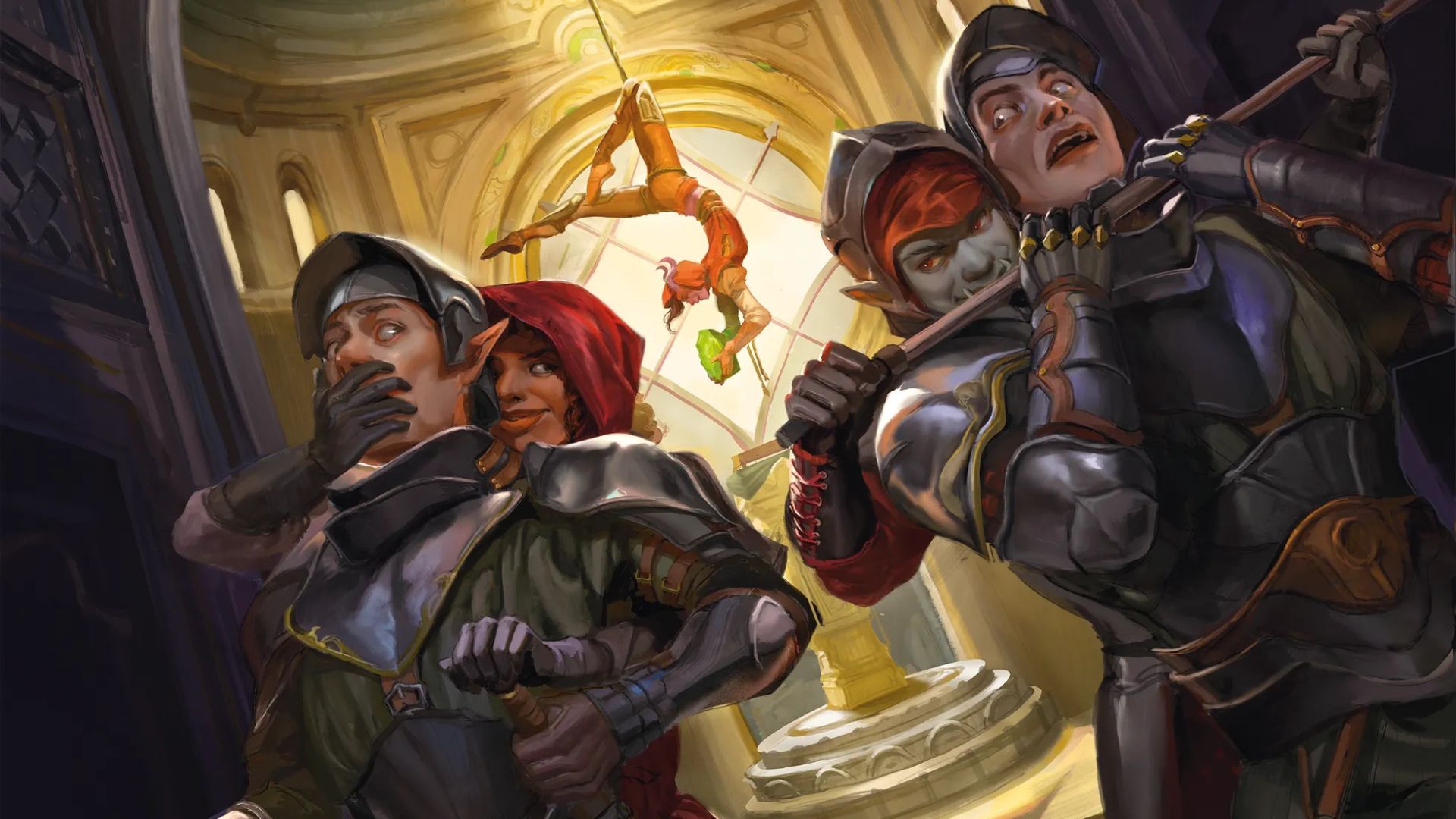
Every good adventuring group needs a Rogue, and that’s definitely true in Dungeons & Dragons. Rogues start with more skills than any other class, and they quickly become experts at exploring and interacting with others. While they might not be the strongest in a direct fight – relying on surprise attacks and lacking powerful area-of-effect moves – a Rogue’s critical hit can bring down even the toughest boss in Dungeons & Dragons faster than almost anything else.
As with many character classes in D&D, Rogues pick a specialization at level three that significantly changes how they play. So far, there are 11 official Rogue specializations available, and they aren’t all equally effective. While every Rogue contributes cleverness and trickery to a group, some specializations make it easier to excel than others.
When creating this list, we focused on key strengths like how much damage a character can deal, how well they can strike from stealth, when their most important abilities become available, what skills complement their style, and how specialized they can become.
S-Tier: Skill and Combat Experts
- Inquisitive
- Phantom
- Scout
- Thief
The Inquisitive Rogue excels at dealing Sneak Attack damage, rarely fooled by opponents’ tricks. While abilities like Ear for Deceit, Eye for Detail, Steady Eye, and Unerring Eye aren’t directly helpful in combat, they perfectly capture the feel of a clever detective like Sherlock Holmes. The bonus Sneak Attack die gained from Eye for Weakness is a nice benefit, especially considering it offsets the cost of the Cunning Strike ability – a curious coincidence, as Cunning Strike wasn’t added to all Rogues until the D&D 2024 Player’s Handbook, seven years after this subclass was created.
The Phantom Rogue is a versatile class, gaining a new skill or tool proficiency after each short rest and the ability to apply their Sneak Attack to multiple targets. Recent updates to the class, particularly in the Dungeons & Dragons Horror Unearthed Arcana, have significantly improved its effectiveness. Combined with abilities like moving through walls with Ghost Walk, communicating with the deceased through Voice of the Dead, and the overall enhancements from Death’s Friend, the Phantom Rogue is now considered one of the strongest rogue subclasses available.
Scout Rogues are surprisingly effective in wilderness environments, potentially exceeding the skills of Rangers and Druids due to their specialized knowledge of Nature and Survival. They excel at staying safe thanks to abilities like Skirmisher and Superior Mobility, but truly shine at level 13 with the Ambush Master feature. This allows them to act quickly in combat, designate a target to make it easier for their teammates to hit, and unleash massive damage – even dealing Sneak Attack damage twice per turn in Dungeons & Dragons. This makes them excellent leaders for any adventuring group.
The Thief Rogue subclass has quickly become one of the strongest options in Dungeons & Dragons, thanks to changes in the 2024 Player’s Handbook. Being able to use magic items as a quick action lets a Thief with the right equipment cast spells almost as effectively as a Wizard, and even better at higher levels when they can use Spell Scrolls. Features like an extra attunement slot, staying hidden after an attack, and the improved movement from Second-Story Work are all strong benefits, but the real game-changer is Thief’s Reflexes, which effectively gives the Rogue a second turn in combat – making it potentially the most powerful ability in the game.
A-Tier: Excellent Subclasses With Potent Tricks
- Arcane Trickster
- Assassin
- Scion of the Three
The Arcane Trickster subclass gives Rogues access to spellcasting, immediately making them a strong choice. However, for a while, their primary magical ability, Mage Hand Legerdemain, is more for roleplaying than practical effect. Still, Magical Ambush can make their weaker spells more likely to succeed, and Spell Thief lets them counter enemy spells and briefly learn them. Versatile Trickster is also helpful, though it requires using the Trip Cunning Strike to get the most out of it.
The Assassin class received significant improvements with the 2024 rules update. Its key abilities, Assassinate and Death Strike, now deal extra damage even if the target isn’t surprised. Plus, new features at levels 9 and 13 – Roving Aim and Envenom Weapons – make the Assassin more effective in combat. Balancing skills and combat support, the Assassin is now a very reliable and strong class choice.
The Scion of the Three, a character class from the Dungeons & Dragons sourcebook Forgotten Realms: Heroes of Faerun, will especially appeal to players who enjoyed the Dark Urge in Baldur’s Gate 3. The class centers around the Bloodthirst ability, which allows for extra Sneak Attack damage by letting you attack outside of your turn – a powerful advantage. However, Bloodthirst’s limited 30-foot range makes using ranged weapons impractical. Additionally, the class features Strike Fear and Aura of Malevolence, but these are somewhat limited because they depend on frightening enemies, deal low damage, and only work at close range.
B-Tier: Solid Subclasses With a Few Flaws
- Magic Stealer
- Mastermind
- Swashbuckler
The Magic Stealer, a new subclass for Rogues in Dungeons & Dragons Unearthed Arcana, offers a unique playstyle for those who prefer not to cast spells. It enhances Sneak Attack by absorbing magical energy, disrupts enemy spellcasting with abilities like Drain Magic and Magical Sabotage, and can even counter spells with Eldritch Implosion. However, many of its strengths depend on encountering enemies who use magic or having spellcasting allies, which could be a disadvantage in certain situations or with particular groups.
The Mastermind Rogue is ideal for players who want to create a character like a spy or crime boss, thanks to skills focused on deception and social interaction. However, this class isn’t very strong in direct combat. While Master of Tactics offers a unique way to support allies, and Misdirection can offer some battlefield control, these abilities are overshadowed by the more dependable and earlier-acquired Uncanny Dodge. Ultimately, the Mastermind shines outside of fights, but struggles when it comes to physical conflict.
The Swashbuckler is one of the most recognizable Rogue subclasses in Dungeons & Dragons. It excels in close-quarters combat, using abilities like Fancy Footwork to move in and out of fights without costing a bonus action, and Rakish Audacity to go first in combat while also getting extra chances to land Sneak Attacks. However, the Swashbuckler’s Panache and Elegant Maneuver abilities mostly just provide an advantage on skill checks and don’t offer much help in battle. Even the powerful Master Duelist ability at level 17 feels weak because it can only be used once per day.
C-Tier: A Psionic Subclass Whose Core Feature Cripples Them
 Image via Wizards of the Coast
 - Soulknife
As a big fan of character builds in D&D, I’ve been thinking about the Soulknife a lot lately. They’re incredibly cool, with this whole psionic vibe, but honestly, they struggle early on. You burn through your Psionic Energy Dice fast. It gets a little better as you level up, but then you hit another snag. The whole class is built around using Psychic Blades, which is awesome, but it feels weird when you find a really powerful magic weapon. Suddenly, a huge chunk of your subclass features just… don’t matter anymore. It’s a bit of a design issue that feels frustrating as a player.
Read More
- All Shadow Armor Locations in Crimson Desert
- Jujutsu Kaisen Season 3 Episode 12 Release Date
- Dark Marksman Armor Locations in Crimson Desert
- How to Get the Sunset Reed Armor Set and Hollow Visage Sword in Crimson Desert
- Best Bows in Crimson Desert
- Wings of Iron Walkthrough in Crimson Desert
- Keeping AI Agents on Track: A New Approach to Reliable Action
- How To Beat Ator Archon of Antumbra In Crimson Desert
- Top 5 Militaristic Civs in Civilization 7
- All Golden Greed Armor Locations in Crimson Desert
2026-01-25 15:07