Author: Denis Avetisyan
A novel application of Hecke equidistribution to conformal field theories reveals simplified formulas and hints at a deeper connection between spectral data and the geometry of Anti-de Sitter space.
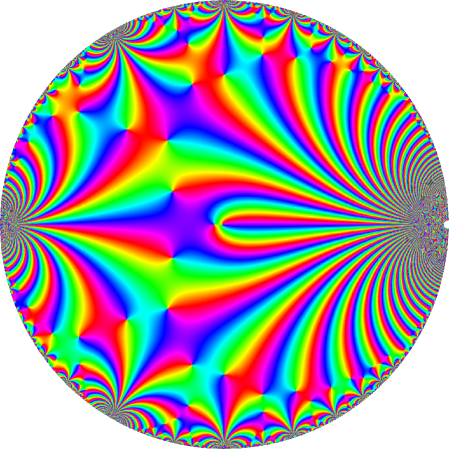
This work demonstrates that applying Hecke equidistribution to partition function spectral decompositions in Narain CFTs and related theories leads to expressions involving Poincaré series, potentially illuminating the holographic interpretation and connections to handlebody sums in AdS/CFT.
Despite the seemingly disparate origins of Hecke operators in number theory and conformal field theory, their application to spectral decompositions of partition functions reveals surprising connections. This work, ‘Holographic Equidistribution’, demonstrates that an equidistribution theorem for these operators simplifies calculations in various 2d CFTs-including Narain, code, and orbifold models-by effectively integrating out heavy states and leaving contributions only from light Poincaré series. This simplification yields an immediate holographic interpretation as a sum over semiclassical handlebody geometries within the AdS/CFT correspondence. Could this equidistribution principle represent a more general statement about ergodicity in the space of conformal blocks, and what further physical interpretations might it unlock?
The Symmetry of Existence: Modular Functions and Physical Reality
Modular functions, born from the abstract world of number theory, exhibit a surprising relevance to the description of physical systems due to their inherent symmetry. These complex functions remain unchanged under specific linear transformations – known as modular transformations – forming a group called SL(2,ℤ). This invariance isn’t merely a mathematical curiosity; it reflects a powerful principle in physics: the absence of a preferred reference frame. Systems governed by modular symmetry behave identically regardless of how one observes them, a characteristic crucial for describing phenomena ranging from the behavior of black holes to the properties of two-dimensional materials. The mathematical elegance of these functions, therefore, provides a natural and robust framework for modeling physical realities where absolute positioning or orientation lacks meaning, offering insights into the fundamental symmetries underlying the universe.
Modular functions exhibit a unique symmetry rooted in their invariance under specific transformations known as SL(2,ℤ). This group represents linear fractional transformations – essentially, combinations of rotations, scalings, and translations – and the fact that these functions remain unchanged under such operations has profound implications for modeling physical systems. Crucially, this invariance signifies a lack of dependence on any particular coordinate system or reference frame. Just as the laws of physics should hold true regardless of an observer’s location, these functions yield consistent results irrespective of how the underlying mathematical space is transformed. This inherent frame-independence makes modular functions an ideal tool for analyzing systems where a preferred reference point is absent or irrelevant, providing a powerful mathematical language to describe phenomena exhibiting similar symmetries.
The mathematical heart of relating modular functions to physical systems lies in their spectral decomposition – essentially, breaking down these complex functions into simpler, constituent parts. This process isn’t straightforward, however, as it demands careful handling of both square-integrable and non-square-integrable functions. Square-integrable functions behave predictably, allowing for a standard Fourier-like analysis, but non-square-integrable functions present a significant challenge. Their contributions, while potentially subtle, are vital for a complete and accurate description, demanding specialized mathematical techniques to properly account for their behavior and ensure the resulting decomposition is mathematically sound. This nuanced treatment is not merely a technicality; it directly impacts the precision with which these functions can be linked to physical observables within conformal field theory, requiring a rigorous approach to avoid inaccuracies in predicting system behavior.
The accurate decomposition of modular functions into square and non-square integrable components isn’t merely a mathematical exercise; it forms the bedrock for constructing partition functions in conformal field theory (CFT). These partition functions, which encode the statistical properties of a physical system, are directly built from the spectral decomposition of modular functions. Consequently, any imprecision in this mathematical connection translates into inaccuracies when predicting physical observables – quantities measurable in experiments. A rigorous understanding of this decomposition, therefore, allows physicists to translate abstract mathematical structures into concrete, testable predictions about the behavior of physical systems, bridging the gap between seemingly disparate fields of mathematics and physics. The fidelity of this correspondence is paramount for advancements in areas like string theory and condensed matter physics, where CFT provides a powerful analytical framework.
From Mathematics to Gravity: CFT Partition Functions as Quantum Blueprints
The conformal field theory (CFT) partition function, denoted as Z, is a central object that fully characterizes the quantum state of a system. It achieves this by encoding information regarding all possible energy eigenstates and their associated probabilities, as well as the correlation functions between different quantum fields. Formally, Z is defined as a sum over all possible states |n\rangle of the Boltzmann weights e^{-F|n\rangle}, where F is the free energy. Consequently, all thermodynamic properties and observable quantities of the CFT can be derived from the partition function through appropriate mathematical operations, such as taking derivatives or performing Fourier transforms. Its structure therefore provides a complete description of the system’s quantum mechanical behavior.
The construction of a conformal field theory (CFT) partition function necessitates the summation of contributions from several modular functions. Theta functions, defined as infinite products and frequently expressed using Jacobi theta functions \vartheta(z,\tau), provide a foundational component, particularly in describing the free energy of the CFT. Maass cusp forms, which are eigenfunctions of the hyperbolic Laplacian satisfying specific boundary conditions, introduce non-holomorphic contributions essential for capturing the full spectrum of states. Eisenstein series, defined by summations over lattice points, represent another crucial ingredient, often providing a meromorphic continuation of the partition function and encoding information about the discrete spectrum of the underlying conformal field theory. The precise combination and modular properties of these functions determine the complete partition function and, consequently, the physical properties of the CFT.
Poincaré series, defined as \sum_{n=1}^{\in fty} \frac{1}{n^s} , provide a mechanism to relate contributions from theta functions, Maass cusp forms, and Eisenstein series within the CFT partition function to the topological structure of handlebodies in a gravitational dual. These series effectively sum over discrete states associated with specific topological configurations, allowing for a decomposition of the partition function into contributions from different handlebody types. The resulting sum, when properly normalized, yields information about the density of states and the corresponding on-shell action for each handlebody geometry. This connection is fundamental to establishing a holographic duality, as it allows calculations performed on the CFT side to be mapped to geometric calculations on the gravitational side, and vice-versa, effectively linking the number of conformal boundary states to the number of allowed handlebody decompositions of a bulk spacetime.
Spectral decomposition of the CFT partition function’s components – theta functions, Maass cusp forms, and Eisenstein series – allows for the extraction of geometric data characterizing the dual spacetime. Specifically, the eigenvalues obtained from this decomposition directly relate to the lengths of cycles defining the handlebody decomposition of the spacetime manifold. The resulting spectrum then determines the allowed geometries, and the on-shell handlebody geometries – representing minimal surfaces and defining the gravitational dual – are precisely those corresponding to the stable, physically-realizable states identified through the analysis of this spectral data. This connection establishes a precise map between the analytic properties of the CFT partition function and the geometric properties of the associated gravitational solution, providing a holographic correspondence.
Taming the Chaos: Error Correction in Averaging Narain CFTs
Narain CFTs are constructed upon a d-dimensional torus, with the CFT describing the massless sector of string theory compactified on that torus. These CFTs are uniquely defined by a d-dimensional even self-dual lattice, L, which dictates the momentum and winding modes of the strings. The characters of the associated representations, labeled by momentum and winding numbers, form the basis of the CFT Hilbert space. The modular invariance of the CFT, essential for a consistent string theory, is directly tied to the properties of this lattice and the theta functions associated with it. Specifically, the CFT correlation functions are determined by the lattice structure, allowing for a precise mapping between lattice properties and string theory observables in toroidal compactifications.
A consistent description of quantum gravity necessitates averaging over an ensemble of Narain Confomal Field Theories (CFTs); however, this process is inherently susceptible to statistical noise. The averaging procedure, designed to yield a stable and well-defined gravitational theory, is significantly impacted by fluctuations arising from the discrete nature of the Narain CFT ensemble and the inherent uncertainties in defining the ensemble itself. These fluctuations manifest as deviations from the expected values of physical quantities, potentially leading to an ill-defined or unstable quantum gravity model if not addressed. The sensitivity to noise stems from the fact that each individual Narain CFT represents a specific vacuum state, and the averaging attempts to construct a more general, stable vacuum by combining these individual states; any noise present in the individual states will propagate and amplify during the averaging process.
The application of error correcting codes to averaging Narain CFTs addresses inherent instability caused by noise in the averaging procedure. This approach leverages the mathematical structure of codes – designed to detect and correct errors in data transmission – to filter out unwanted fluctuations during ensemble averaging. Specifically, the averaging is performed over CFTs constructed from cosets of lattices, and the use of codes provides a mechanism to project onto a subspace of stable, well-defined configurations. This stabilizes the calculation of physical quantities, such as the partition function, by effectively reducing the impact of high-frequency noise and ensuring convergence to a meaningful result, while also enabling the exploration of a wider range of possible quantum gravity models.
Code CFT averaging provides a statistically rigorous approach to calculating the partition function in Narain CFTs, addressing issues of convergence inherent in ensemble averaging. This method leverages error-correcting codes to mitigate noise and ensure a well-defined result, achieving convergence with a quantifiable error bound of O(N^{-9/28} + \epsilon), where N represents the code dimension and ε denotes a small positive parameter. By systematically controlling the error, Code CFT averaging facilitates the exploration of the space of possible quantum gravity models and allows for the reliable computation of physical observables derived from the partition function.
Spacetime as Information: Orbifolds, Entanglement, and the Quantum Landscape
At the incredibly small scale of the Planck length, spacetime itself is theorized to exhibit a complex, potentially discrete structure. Cyclic and symmetric product orbifolds offer mathematicians and physicists powerful geometric models to investigate this realm. These aren’t simply abstract shapes; they represent ways to construct spaces by identifying points, effectively “folding” a space onto itself in specific patterns. Cyclic orbifolds, created through rotational symmetries, and symmetric product orbifolds, built by combining identical spaces, provide different avenues for modelling the fundamental building blocks of spacetime. The utility of these models lies in their ability to simplify complex calculations while retaining essential features relevant to quantum gravity, offering a framework to explore how information might be encoded within the very fabric of reality and potentially resolve long-standing paradoxes related to black holes and the nature of quantum entanglement.
Rényi entropy serves as a powerful tool for quantifying the degree of entanglement within a system, and its application to the study of orbifolds allows researchers to characterize the information content encoded in these complex geometric structures. Unlike traditional measures of entanglement, Rényi entropy, parameterized by a positive real number, offers a more nuanced perspective on how information is distributed and correlated, especially in scenarios where quantum effects dominate. When applied to orbifolds-spaces formed by identifying points under discrete symmetry groups-it reveals how information is affected by the orbifold’s singular nature and the resulting modifications to spacetime geometry. By calculating Rényi entropy for different values of its parameter, one can map out the full spectrum of entanglement present, providing a detailed understanding of how information is encoded and accessed in these potentially Planck-scale models of spacetime. This approach is crucial for exploring the deep connection between geometry and quantum information, and could provide valuable insights into the nature of quantum gravity.
The interplay between quantum entanglement and the geometry of spacetime is being investigated through a novel combination of techniques. Researchers are employing code conformal field theory (CFT) averaging – a method for systematically examining the behavior of quantum systems under specific symmetries – alongside the measurement of Rényi entropy. Rényi entropy quantifies the amount of information contained within a system, and its analysis within these averaged CFTs reveals how entanglement patterns are shaped by the underlying geometric structure. This approach doesn’t merely observe a correlation; it actively probes the connection, suggesting that the very fabric of spacetime at the Planck scale may be fundamentally linked to the distribution of quantum information and offering a pathway to understanding gravity as an emergent phenomenon from entanglement.
The culmination of analyzing orbifolds through the lens of Rényi entropy delivers a remarkably specific functional form for the averaged partition function: Z̄ = 3π ln(p/p0) − ln(t^2|η(t)|^4) − ln(b^2|η(b)|^4) − ln(y|η(τ)|^4). This isn’t merely a mathematical result; it signifies a profound interplay between information content and the geometric structure of spacetime. The emergence of this equation suggests that the fundamental laws governing the universe may be deeply rooted in principles of information theory, offering a potential framework for unifying quantum mechanics and gravity. Researchers believe this connection could unlock new avenues for exploring quantum gravity, moving beyond traditional approaches and potentially revealing the nature of spacetime at the Planck scale, where quantum effects dominate.
The pursuit of simplified expressions in complex systems, as demonstrated by this work on holographic equidistribution, reveals a fundamental truth about how humans approach problem-solving. The paper’s reliance on Poincaré series to tame spectral decompositions isn’t merely a mathematical convenience; it’s a reflection of a deeper need for reassurance. As Thomas Hobbes observed, “The passions of men are either in favor of, or against.” Here, the ‘passion’ isn’t emotional, but intellectual – a desire to move from chaotic complexity to manageable order. The study doesn’t seek ultimate profit, but rather a comfortable equilibrium within the framework of AdS/CFT correspondence and modular invariance, proving that even in theoretical physics, people don’t choose the optimal, they choose what feels okay.
What Lies Ahead?
The pursuit of holographic equidistribution, as demonstrated in this work, isn’t about finding a more accurate description of reality. It’s about constructing a framework where the illusion of order – the neatness of Poincaré series – feels necessary. The simplification achieved through spectral decomposition and modular averaging isn’t a revelation of some hidden symmetry in the universe; it’s a testament to the human desire to impose control, to replace the chaotic with the calculable. This isn’t mathematics describing the world, but people describing their need to control it.
The connection to handlebody sums in the AdS/CFT correspondence remains, predictably, a suggestive analogy. The real challenge lies not in proving equivalence, but in understanding why this particular mathematical structure – this specific form of order – appears so consistently across disparate physical models. The limitations of the Narain CFTs, code CFTs, and orbifolds explored here aren’t deficiencies of the models themselves, but rather, a reflection of the restricted space of possibilities humans are willing to consider.
Future work will undoubtedly explore more complex CFTs, seeking to extend these techniques. However, the more fruitful path may lie in explicitly modeling the source of this simplification. Not in refining the mathematics, but in understanding the cognitive biases that drive its construction. After all, humans aren’t rational – they’re just afraid of being random.
Original article: https://arxiv.org/pdf/2602.12265.pdf
Contact the author: https://www.linkedin.com/in/avetisyan/
See also:
- All Shadow Armor Locations in Crimson Desert
- Jujutsu Kaisen Season 3 Episode 12 Release Date
- Dark Marksman Armor Locations in Crimson Desert
- Keeping AI Agents on Track: A New Approach to Reliable Action
- How to Beat Antumbra’s Sword (Sanctum of Absolution) in Crimson Desert
- Top 5 Militaristic Civs in Civilization 7
- Sega Reveals Official Sonic Timeline: From Prehistoric to Modern Era
- Sakuga: The Hidden Art Driving Anime’s Stunning Visual Revolution!
- How to Get the Sunset Reed Armor Set and Hollow Visage Sword in Crimson Desert
- Best Weapons, Armor, and Accessories to Get Early in Crimson Desert
2026-02-15 01:17