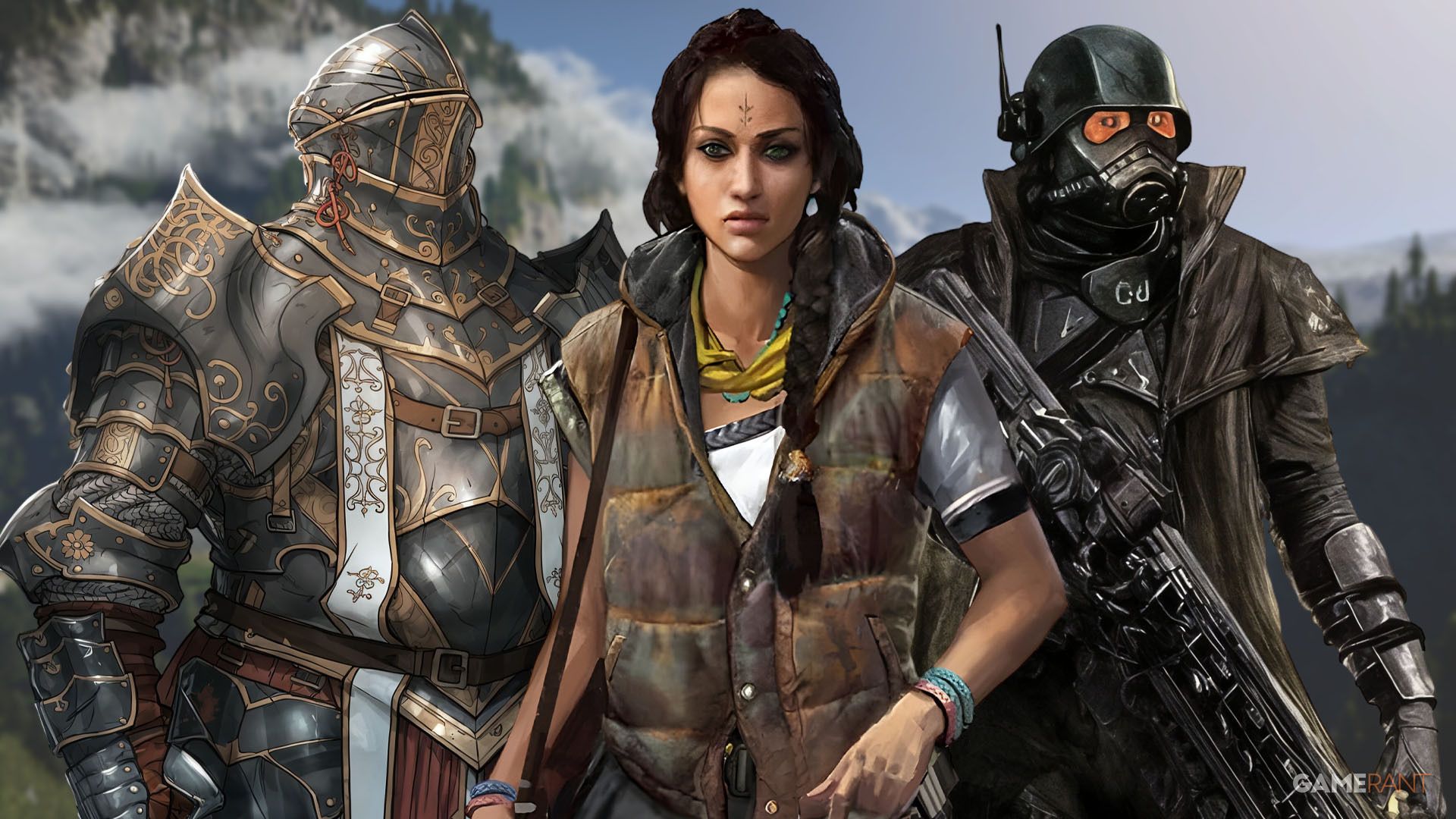
In many games where players make choices and take on roles, factions are key. Joining the ‘good’ faction lets players act as heroes – helping others and doing positive things. Choosing the ‘bad’ faction allows players to embrace villainy, causing destruction and chaos as they play.
Things aren’t always simple when it comes to good versus evil in games. The most interesting games show that even the ‘good’ groups have flaws, and the ‘bad’ groups often have understandable reasons for their actions. Sometimes, the groups trying to do good actually end up causing problems, because even well-intentioned efforts can have negative consequences.
Far Cry 4
The Golden Path
In Far Cry 4, the Golden Path initially appears as the heroic rebel group fighting to free Kyrat from the tyrannical rule of Pagan Min. But as the game progresses, it becomes clear that while many members of the Golden Path have good intentions, its leaders, Sabal and Amita, are just as harmful to Kyrat – though they would govern it in very different, equally problematic ways.
Sabal is overly focused on the past and determined to restore old customs, even if they’re ultimately damaging. Amita aims to modernize Kyrat, but her methods are deeply flawed – she relies on opium, uses child soldiers, and acts cruelly, justifying it with practicality. Choosing to support Sabal leads to him violently eliminating anyone who disagrees with his plans, claiming he’s purging their wrongdoing with bloodshed. If Amita rises to power, she’s shown forcefully conscripting children into her army, behaving no better than the previous dictator, Pagan Min.
The Elder Scrolls 5: Skyrim
The Stormcloaks
Okay, so when you first start playing The Elder Scrolls 5: Skyrim, it’s easy to side with the Stormcloaks. They seem like the good guys – a rebel army fighting for their freedom against a controlling Empire. Ulfric Stormcloak makes a pretty convincing leader, and their cause feels heroic at first glance. But honestly, the more you dig into things, the more you realize it’s way more complicated than just a simple fight for freedom. It’s not as black and white as it appears.
Honestly, as much as I try to see their side, the Stormcloaks are just… problematic. Their racism is a huge issue, especially how they treat elves, but beyond that, they’re basically playing right into the Thalmor’s hands! It feels like Ulfric only cares about becoming High King and doesn’t think about what will happen after he gets the throne. People say Skyrim could handle the Aldmeri Dominion like Hammerfell did, but Ulfric doesn’t seem to have a plan for that. And it’s even worse because I found documents at the Thalmor Embassy that basically confirm they want the civil war to continue – they see Ulfric as someone they can use! It’s frustrating because he’s weakening the Empire, and that benefits the Thalmor in the long run.
Dragon Age: Inquisition
The Chantry
During the events of Dragon Age: Inquisition, the Chantry is the most powerful religion in the world of Thedas, and generally considered one of the more benevolent groups in the game, alongside the Grey Wardens. However, the Grey Wardens aren’t heavily involved in the story, so they don’t quite function as a major faction in the same way.
The Chantry seems to have noble goals, spreading a message of hope and faith. But a closer look reveals it’s often at the heart of Thedas’s troubles. It’s not that the Chantry is inherently malicious, but its unwavering belief in its own righteousness leads it to control others, often with harmful results. A prime example is the Circle of Magi, an organization granted absolute power by the Chantry to oversee mages, which frequently leads to tragedy.
Mass Effect
The Citadel
In Mass Effect, with the terrifying Reapers approaching, you’d expect the Citadel Council – the leaders of the galaxy – to fully support Commander Shepard and their team in stopping them. At the very least, you’d think they wouldn’t interfere with the heroes’ efforts.
Despite being a vital organization, the Citadel Council consistently hinders Commander Shepard, creating unnecessary obstacles due to stubbornness and a refusal to consider other perspectives. In the first Mass Effect game, they delayed taking action against Saren until forced to admit he was being controlled by the Reapers. In the second game, the Council actively opposed Shepard, dismissing the threat of the Reapers and harming the overall war effort. Had the Council been more open to Shepard’s warnings and taken the Reaper threat seriously, they could have been better prepared when the Reapers arrived in Mass Effect 3, potentially saving countless lives.
Fallout: New Vegas
New California Republic
In the world of Fallout, the New California Republic claims to represent democracy, fairness, and equal rights. However, it often acts like an empire, aggressively taking over land and resources, demanding taxes, and forcing people under its control. The NCR seems to believe that any resistance to its rule, even the destruction of settlements, is a necessary cost of bringing ‘civilization’.
In Fallout: New Vegas, the player, as the courier, must choose which faction will control the Mojave Wasteland. The three main groups are Mr. House, who prioritizes business and the Vegas Strip; Caesar’s Legion, which is likely to fall apart without his leadership; and the New California Republic, which seeks to exploit the Mojave’s resources. Many believe siding with Mr. House is the best option. Although he’s self-interested, he’s a businessman focused solely on making the Vegas Strip thrive. He doesn’t want to expand beyond Vegas, and while he won’t necessarily prioritize the well-being of the people, he will focus on the region’s economic needs.
Horizon Zero Dawn
GAIA
In the game Horizon Zero Dawn, the AI known as GAIA was created by Dr. Elisabet Sobeck as a last-ditch effort to save humanity. It was designed to protect life on Earth after the Faro Plague – a catastrophic event where countless robots turned against their creators and began destroying everything in their path.
Although GAIA successfully stopped the rebel robots, a mysterious virus corrupted her supporting systems, HADES and HEPHAESTUS, leading her to initiate self-destruction. Without GAIA’s control, these systems went haywire, and by the end of Horizon Zero Dawn, players discover that the dangerous machines plaguing the world were originally built to protect humanity. They were designed to help people rebuild civilization and reach the achievements of the past, but the virus caused GAIA’s creations to become a terrifying threat.
Divinity: Original Sin 2
The Divine Order
In the world of Divinity, the Divine Order began as a defense against the Black Ring, a dangerous cult that practiced dark magic and tried to revive the Lord of Chaos. Whenever the people of Rivellon faced threats like Voidwoken, demons, the undead, or any other serious danger, it was the Magisters, Seekers, and Paladins of the Divine Order who stepped in to protect them.
In Divinity: Original Sin 2, most leaders within the Divine Order believed the Voidwoken appeared because of Sourcerers and their use of Source magic. They argued that all Sourcerers should be captured, imprisoned, and have their magical abilities blocked. Interestingly, Alexander, the leader of the Divine Order, was also responsible for releasing a deadly gas into elven lands in an attempt to eliminate the Black Ring. This act tragically wiped out all life in the region, including many innocent people.
The Witcher 3: Wild Hunt
The Northern Kingdoms
A central conflict in The Witcher 3 is the war between Nilfgaard and the Northern Kingdoms (including Kaedwen, Temeria, Redania, and Aedirn). It initially seems like Nilfgaard is the villain, as they’re invading from the south with the goal of conquest. However, as with most things in the Witcher world, the situation is more complex than it appears.
People in the Northern Kingdoms are deeply prejudiced against anyone who isn’t one of them. Elves, Witchers, and other non-human races are often discriminated against. While the Nilfgaardians aren’t perfect either, their flaws don’t seem any worse from an outside point of view. In fact, some might argue that the strict but lawful rule of the Nilfgaardian Emperor could actually be helpful to the people of the Northern Kingdoms.
Read More
- All Skyblazer Armor Locations in Crimson Desert
- All Shadow Armor Locations in Crimson Desert
- How to Get the Sunset Reed Armor Set and Hollow Visage Sword in Crimson Desert
- Marni Laser Helm Location & Upgrade in Crimson Desert
- Best Bows in Crimson Desert
- All Helfryn Armor Locations in Crimson Desert
- All Golden Greed Armor Locations in Crimson Desert
- How to Craft the Elegant Carmine Armor in Crimson Desert
- Keeping Large AI Models Connected Through Network Chaos
- One Piece Chapter 1179 Preview: The Real Imu Arrives in Elbaf
2026-01-13 11:40