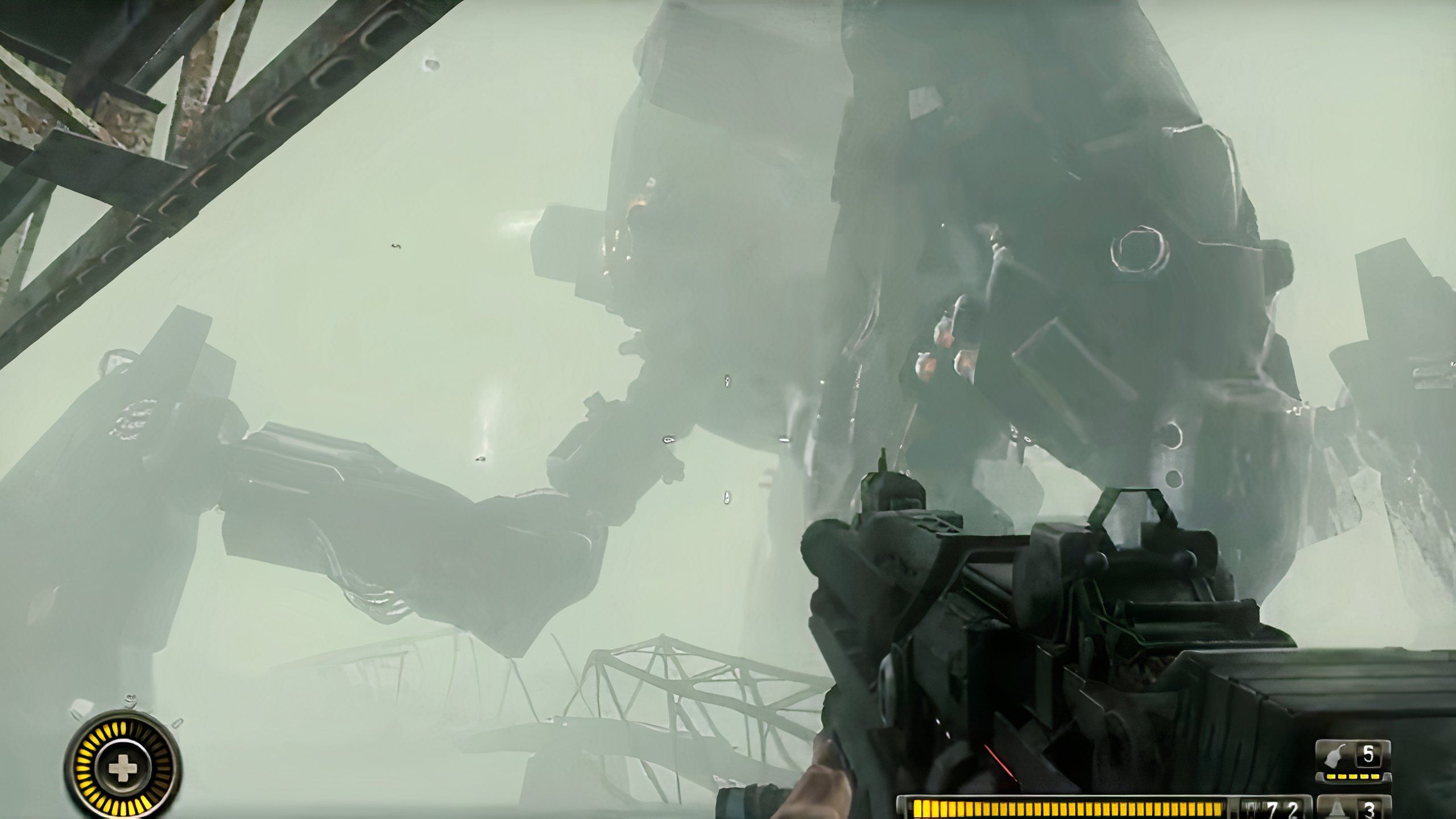
First-person shooters were incredibly popular in the late 2000s and early 2010s, appearing in all sorts of games – from historical World War II settings to futuristic space adventures. While some of these games were successful, many didn’t make much money. The genre’s popularity has since decreased.
Many underperforming games aren’t actually bad – some are genuinely excellent, but just didn’t find enough players for various reasons. We’re highlighting those hidden gems here. These FPS games didn’t sell well, but they still offer a great experience. They might be worth revisiting now, or deserve to be remembered so they could potentially be remastered or remade in the future.
 Rearrange the covers into the correct US release order.
Your Order
Results
— —
Resistance 3
Ended With A Bang, Sold To A Whimper
- Sold just 180,000 units in its first month, less than one-third of Resistance 2’s first-month performance.
Resistance 3 faced tough timing despite being a strong game. It was the final installment in a PlayStation 3 exclusive series created by Insomniac Games, initially as a competitor to the popular Halo franchise. However, Resistance 3 offered a unique experience, being more realistic and gritty than Halo, more imaginative than Call of Duty, and featuring more creative weapons and enemies compared to Battlefield and Killzone. While a genuinely special title, it unfortunately launched at a difficult moment for the genre.
Man, I remember when Resistance 3 came out in 2011. It was a tough year for shooters, though! Battlefield 3, Crysis 2, even Duke Nukem Forever all dropped around the same time, and Call of Duty was huge, of course. Honestly, Resistance 3 got lost in the shuffle. A lot of those other games didn’t even do that well when you look at reviews and sales, but people were just talking about them way more. Plus, Resistance 3 kept it old-school with health packs and a weapon wheel – things a lot of players weren’t into anymore. It had a seriously awesome campaign, but it just never really caught on, which is a shame.
Titanfall 2
Retroactively Elevated To Classic Status
- Sold 385,000 units in its first week, about 75% less than the first game despite being a multiplatform launch.
It’s easy to see now how good Titanfall 2 really is, but it had a tough start. Like Resistance 3, it unfortunately came out at the wrong time, squeezed between Call of Duty: Infinite Warfare and Battlefield 1. Any new shooter would have struggled to succeed with those two giants releasing around the same time, and while Titanfall 2 is a fantastic game, it wasn’t enough to break through.
Even though many people recommended Titanfall 2 and it was frequently discounted, it didn’t sell as well as the first Titanfall. That’s probably why a third game hasn’t been made, despite strong demand from players. It’s not too late for a sequel, but Respawn is currently focused on Apex Legends and the Star Wars Jedi games, so Titanfall 3 might not happen for a long time, if ever.
Bulletstorm
A Fun-Focused Arcade Shooter That Was Poorly Marketed
- Took two years to reach 1 million sales, and failed to break even financially.
Man, Bulletstorm got lost in the shuffle back in 2011 with so many other big shooters coming out. It was kinda hard to figure out what the game was at first. The world felt a little like Borderlands, but instead of mostly shooting, it really pushed you to get up close and personal with melee attacks. And the writing? Totally over-the-top and silly. Honestly, the gameplay was weird too. Numbers were flying everywhere as you tried to rack up a high score, and there were tons of ways to creatively kill enemies using the environment. It almost made you wonder if it was really a shooter, you know?
The game also faced negative publicity when a Fox News reporter incorrectly connected Bulletstorm to an increase in sexual assault cases just before its release, hurting its reputation. Considering it launched alongside many other first-person shooters, like Killzone 3, Bulletstorm struggled to gain traction. However, if you’re looking for a wild and over-the-top shooting experience, it’s definitely worth checking out.
Rage 2
Hurt By A Lack Of Name Recognition
- Only managed to match 25% of the original game’s first-week sales.
The original Rage generated a lot of excitement. Coming from id Software—the creators of groundbreaking FPS games like Wolfenstein, Doom, and Quake—it featured cutting-edge graphics and smart enemy behavior for its time. However, the game itself was somewhat disappointing; it wasn’t terrible, but it felt repetitive and lacked enough variety. Rage 2, released eight years later, aimed to fix these issues, and it generally did a good job.
Rage 2 directly responded to criticisms of the original game. Players found the first Rage too drab? Rage 2 is vibrant and colorful, with bright hues in the world and during battles. Did they want more variety in combat? Rage 2 delivers, letting you aggressively move and use powerful abilities instead of just hiding and conserving ammo. And if the first game’s world felt empty, Rage 2 offers a huge open world filled with things to do, including vehicle combat and races that can happen whenever you want. However, despite these improvements, Rage 2 didn’t gain much excitement before its release – unlike the original game, which had a lot of hype. Without that initial buzz, it ultimately didn’t perform as well as hoped.
Singularity
The Coolest Time-Travel Shooter You’ve Never Heard Of
- Released in the middle of summer with almost no marketing from Activision, and sold less than 400,000 units as a result.
Okay, so Singularity is one of those games that kind of flew under the radar. I barely even heard of it until recently, and even fewer people actually played it, it seems. It’s a really over-the-top shooter where you can mess with time, both in fights and to move the story along. It’s not going to change how you think about first-person shooters, but honestly, it’s a really fun and different game, and I wish more people had given it a shot.
Critics generally liked Singularity, often saying it exceeded their expectations. Unfortunately, Activision didn’t seem to support the game, launching it with almost no marketing during a slow period for sales. This lack of support was likely the main reason Singularity didn’t succeed. While it’s unclear why Activision gave up on it, the game is still unique and worth playing today.
Battlefield Hardline
A Departure For The Series Led To A Departure By Consumers
- Despite being the best-selling game of March 2015, it is still considered a financial failure.
It’s a familiar story: a large publishing company buys a successful game studio known for a specific type of game. Then, surprisingly, they ask that studio to create a game in an entirely different genre. When the new game doesn’t sell well, the publisher shuts down the studio. This happened with Battlefield Hardline, a Battlefield game made by Visceral Games. Visceral was known for titles like the video game adaptation of The Lord of the Rings: Return of the King, the Grand Theft Auto-style Godfather games, Dante’s Inferno, and the popular Dead Space series.
The list of games highlights Visceral Games’ past successes, and how different those games were from the Battlefield series. Battlefield Hardline itself was a big change for the franchise, moving away from military combat to a cops-and-robbers theme in Miami. This meant it didn’t appeal to Visceral’s existing fans, and it also alienated longtime Battlefield players. It’s a shame, because Battlefield Hardline was actually a good game on its own, with a compelling story, strong stealth elements, and multiplayer that matched other games in the series. However, it didn’t sell well, and unfortunately, Visceral Games was shut down just two years later.
Medal Of Honor: Warfighter
A Comeback Attempt A Few Years Too Late
- First-week sales were less than half of its 2010 predecessor’s, effectively sunsetting the Medal of Honor franchise.
I remember back in the mid-2000s, Medal of Honor was the military shooter everyone was playing. Call of Duty was good, but it felt like the smaller, more hardcore option. MoH was all about big, epic moments, while CoD tried to be more grounded and realistic. It’s crazy how things changed though! After Call of Duty 4: Modern Warfare blew up, Medal of Honor tried to copy that style – more story, bigger online play. The first attempt in 2010 did okay, honestly. But Medal of Honor: Warfighter? That one just didn’t hit the mark.
This game is still enjoyable, especially for Call of Duty fans who haven’t been thrilled with the recent single-player campaigns. It features a straightforward, movie-like story with good shooting, impressive graphics, and plenty of exciting action sequences. The soundtrack, composed by Ramin Djawadi (known for Game of Thrones), is also a highlight. While it doesn’t reach the heights of the best Call of Duty games, it’s a well-made military shooter that sadly appears to be the last installment in the Medal of Honor series.
Prey (2006)
A Weird Sci-Fi Shooter That Was Successful, But Not Successful Enough
- Initially a commercial success, but not enough to preserve its sequel.
The 2006 game Prey is notable for its commercial success – it sold over a million copies in just two months and helped launch the Xbox 360. It was a unique sci-fi shooter featuring a Native American main character and even included portal technology before the famous game Portal came out. Prey had a long development process, starting back in 1995, and received positive reviews from both critics and players. This popularity led to plans for a sequel, but shortly after, Bethesda acquired the rights to the Prey franchise in 2009.
I was so hyped when they showed off Prey 2 at E3 back in 2011, but it was really disappointing when Bethesda cancelled it a few years later, saying development was just too difficult. Honestly, if the original Prey from 2006 had been a huge hit, I think they would have tried harder to save the sequel. Instead, they basically reused the name for the 2017 game, Prey, which was a completely different story and had nothing to do with the first one. And as for how well that game did…
Prey (2017)
Same Name, New Franchise, Same Sales Issues
- Sold significantly less than Dishonored 2 at launch, which was itself considered to have underperformed financially.
Despite being a well-received game, Arkane’s 2017 title Prey failed to launch a successful franchise. It’s an immersive, story-driven experience similar to Dishonored and Deus Ex, but set in a sci-fi horror world. While players and critics praised it, Prey didn’t attract a large audience. A late distribution of review copies – sent to media outlets only the night before release – likely hurt initial sales by delaying reviews and making potential buyers hesitant.
Despite its strengths, Prey remains a somewhat obscure game. It doesn’t quite fit neatly into any one genre – it’s a first-person shooter with less emphasis on gunplay, an open-world game confined to a space station, and a horror game that relies more on atmosphere than jump scares. The title itself may have contributed to some confusion. Sadly, both games in the Prey series are excellent but haven’t achieved the widespread success they deserve.
System Shock 2
The Greatest Financial Failure Game Of All Time?
- Sold just 60,000 copies in its first eight months.
As a huge fan of immersive sims, it’s honestly shocking to look back at how poorly System Shock 2 initially sold. Despite being a masterpiece, it only moved about 60,000 copies in its first eight months! That’s especially wild considering how much critics loved it. Knowing that Looking Glass Studios was already struggling after the first System Shock, you’d think they’d be thrilled with even modest success, but sadly, the sequel actually sold less. It’s a real testament to how ahead of its time the game was, and it’s amazing it survived at all.
You know, it’s funny how some games just don’t click with people right away, but later become legends. I’ve heard that happen with movies like Blade Runner and The Thing, and System Shock 2 is totally one of those games. Now it’s a cult classic and everyone says it massively influenced FPS games, basically helping create the immersive sim genre. People even call it one of the greatest games ever made, and the villain, SHODAN, is considered an all-time great. It’s wild to think that back when it came out, it almost completely flopped! It’s amazing how it helped launch the careers of people like Ken Levine, considering its initial failure.
Read More
- All Shadow Armor Locations in Crimson Desert
- Jujutsu Kaisen Season 3 Episode 12 Release Date
- Dark Marksman Armor Locations in Crimson Desert
- How to Get the Sunset Reed Armor Set and Hollow Visage Sword in Crimson Desert
- Top 5 Militaristic Civs in Civilization 7
- Keeping AI Agents on Track: A New Approach to Reliable Action
- How to Beat Antumbra’s Sword (Sanctum of Absolution) in Crimson Desert
- Sega Reveals Official Sonic Timeline: From Prehistoric to Modern Era
- Sakuga: The Hidden Art Driving Anime’s Stunning Visual Revolution!
- How To Beat Ator Archon of Antumbra In Crimson Desert
2026-02-16 04:37