It’s become difficult for games to truly stand out these days. While games may have small improvements, the basic ways they work are often very similar. For example, many open-world games use the same core features – like quick travel, character progression, and customization – but with slight variations.
Those features weren’t always around; they took years of work to become what we know today. Many popular game mechanics started with a single, innovative idea – a game that dared to try something different and ultimately created a new standard for the entire industry.
Minecraft
Beyond Every Sandbox Before
Details:
- Near-infinite world generation across all three dimensions
- Sandbox construction that lets players mold the world however they choose
While not the first game to create worlds automatically, Minecraft truly revolutionized the open-world genre. It removed many of the usual boundaries, allowing players to explore a massive world freely – they could travel in any direction, even straight down to the very center of the earth.
The game’s incredible freedom let players create or destroy anything they wanted, anywhere in the world. Because there were no boundaries, people could spend hours and hours exploring without ever reaching the edge, demonstrating just how vast open-world sandbox games could be.
UnReal World
Pioneering The Survival Space
Details:
- Deep survival simulation that is considered the first of its kind
- Inspired modern survival games across the genre and wider space
Released long before many popular open-world survival games, UnReal World still feels remarkably modern in its approach. It pioneered features like managing hunger, temperature, crafting, and injuries, forcing players to constantly adjust to their environment and stay alive.
Many popular survival game features originated with this title. It pioneered realistic gameplay, establishing a foundation that’s still used today. Games like DayZ, The Long Dark, and Subnautica likely wouldn’t have been possible without its influence.
Grand Theft Auto 3
Seamlessly Exploring An Entire City
Details:
- Transitioning from driving, shooting, and on-foot exploration in an instant
- Established the modern 3D open-world city formula
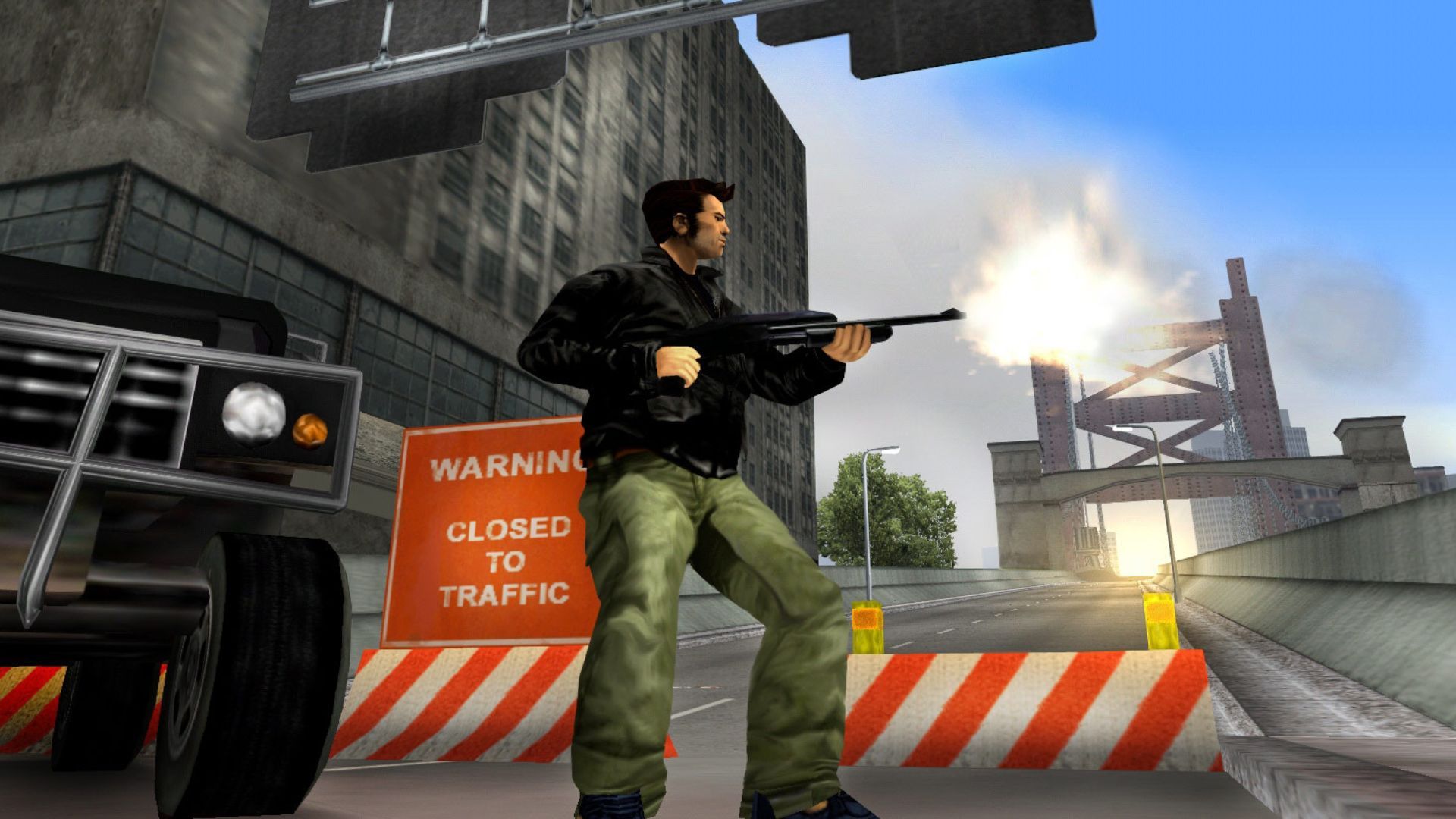
Man, GTA3 totally changed the game for me. Before that, I was used to levels and loading screens, but this was the first time I could just… go. I remember stealing a car and just driving all over the city, then ditching it in the middle of a police chase to grab a gun and start shooting. The best part? No loading screens, no cutscenes interrupting the action – it was one seamless, crazy world.
As a gamer, I’ve noticed that almost every open-world city game these days, like Watch Dogs or Cyberpunk 2077, feels like it’s building on the same foundation. It’s crazy to think that being able to move around a city so freely used to be a totally new idea, but now it’s something we expect in so many games!
Ultima: The First Age of Darkness
Open-World Games Simply Wouldn’t Exist Without It
Details:
- Pioneered open-world procedural generation
- Player freedom is at the forefront of the design
Ultima is often considered one of the earliest games to feature a truly open world. Instead of forcing players down a set path, it let them freely explore a large world with towns and dungeons. These dungeons were even randomly created, meaning each time you played, the experience was different.
The focus on letting players explore and make their own decisions in games like Ultima became a key element in role-playing games and, eventually, open-world games. This approach changed how game worlds were created, moving away from fixed paths to dynamic environments where player choices truly mattered. It established the idea that a player’s journey should be self-defined, and turned game levels into more immersive, living spaces.
Elite
Before The Multi-Million Dollar Kickstarter
Details:
- Introduced world seeds and 3D procedural generation
- Established the idea of a truly open-ended 3D world
Elite revolutionized gaming by using procedural generation to create a vast galaxy for players to explore. Unlike previous games, it allowed seamless 3D spaceflight between planets, all within a single, consistently generated universe, offering unprecedented freedom.
The game pioneered a style of gameplay where players create their own experiences and stories as they play, instead of being told a fixed narrative – a technique still common today. While many gamers are familiar with Elite Dangerous, few realize how influential the series has been in shaping the open-world space genre.
The Elder Scrolls (Daggerfall/Morrowind)
Questing Like Never Before
Details:
- Quest templates that added a huge amount of additional content
- Continent-scale exploration in a world filled with actual locations rather than empty space
Daggerfall redefined the scope of role-playing games, offering players a world far larger than almost anything seen before. With thousands of towns and automatically generated quests, the game provided a virtually limitless amount of content and made the world feel incredibly dynamic.
Games like Morrowind improved and focused the experience, showing what could be achieved within a single, detailed world. Today, Bethesda still uses the same design principles from those early games, letting players truly feel like they’re stepping into a fantasy world and becoming its hero.
Gothic
Exploring A World Piece By Piece
Details:
- Dynamic NPC routines and faction-driven progression
- Popularized reactive world design in RPGs
As a huge fan of older RPGs, I always thought what Gothic did with its world was amazing. It wasn’t just a backdrop – the NPCs actually lived their lives! They had routines, and they reacted to what I did. If I sided with one group, people treated me differently. It felt like my choices really mattered and changed the world around me, which was pretty revolutionary back then.
What really blew me away was how the game let me progress – it wasn’t just about hitting certain levels. It was more about building my reputation, making friends (and enemies!), and how I fit into the world itself. It made everything feel so much more real and alive, like the world was actually reacting to what I did. It really showed me that a great open world isn’t just about being huge, it’s about feeling like a living, breathing place that changes based on your actions.
Assassin’s Creed
Turning Cities Into Playgrounds
Details:
- Free-running and parkour are integrated into the exploration
- Vertical movement quickly became a standard open-world mechanic
Assassin’s Creed revolutionized open-world game movement by allowing players to quickly climb and explore buildings. Climbing wasn’t just something you did occasionally; it became central to how you explored the world, offering a unique challenge and a creative way to navigate, rather than simply getting from point A to point B.
Many modern open-world games, particularly those with big cities, now feature smooth and dynamic movement in all directions. Games like Dying Light and Watch Dogs have been heavily influenced by the original Assassin’s Creed, and players now expect the freedom to move seamlessly throughout the game world – not just on the ground. This expanded movement creates a much more immersive and open experience.
Read More
- All Shadow Armor Locations in Crimson Desert
- Dark Marksman Armor Locations in Crimson Desert
- Sega Reveals Official Sonic Timeline: From Prehistoric to Modern Era
- Genshin Impact Dev Teases New Open-World MMO With Realistic Graphics
- How to Beat Antumbra’s Sword (Sanctum of Absolution) in Crimson Desert
- Where to Pack and Sell Trade Goods in Crimson Desert
- The Limits of Thought: Can We Compress Reasoning in AI?
- Who Can You Romance In GreedFall 2: The Dying World?
- Enshrouded: Giant Critter Scales Location
- Best Weapons, Armor, and Accessories to Get Early in Crimson Desert
2025-12-12 08:38