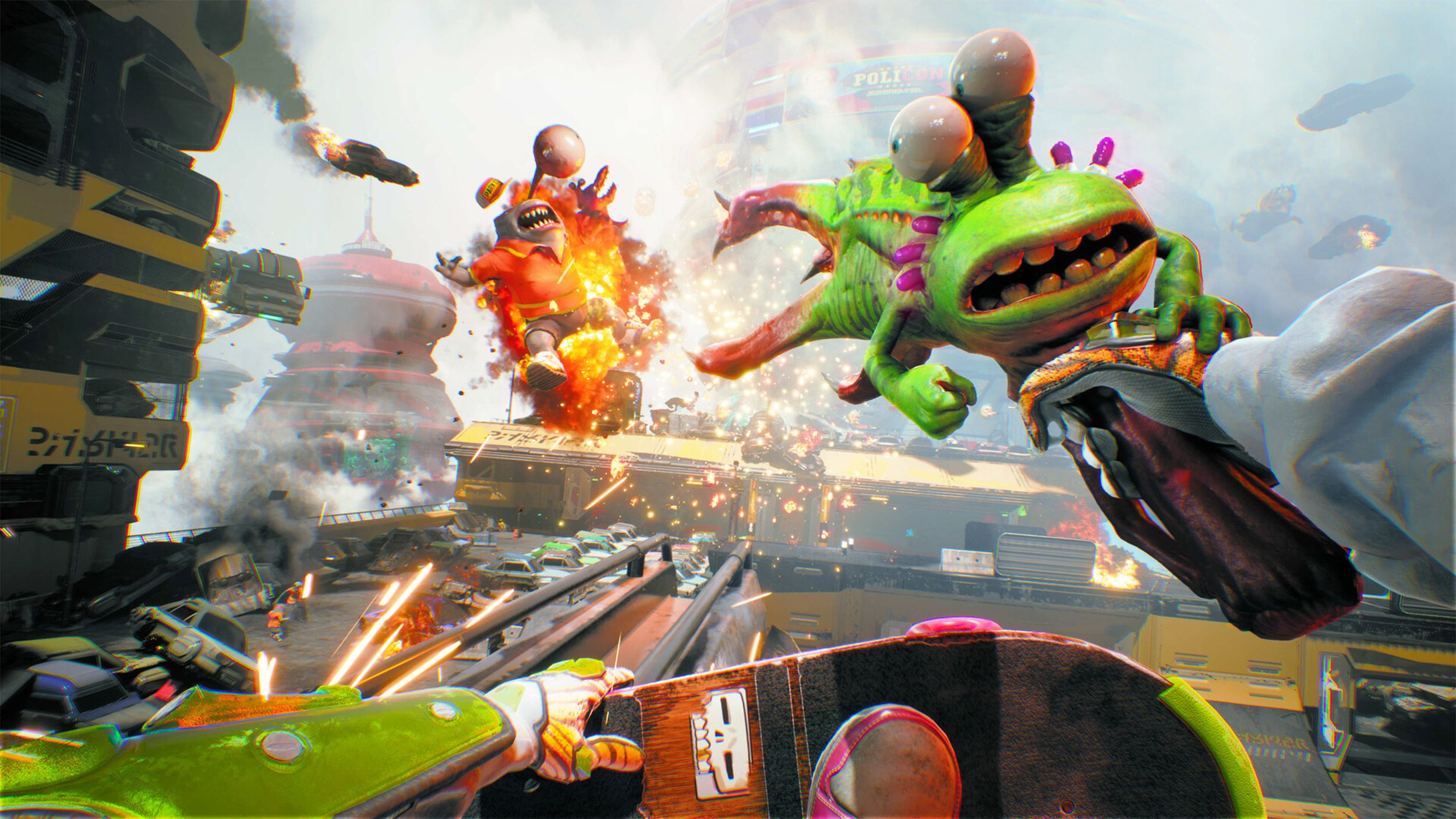
Okay, so playing High on Life 2, I got to this point where I literally had to fill out paperwork – like, actual forms with lines and boxes. I kept expecting some crazy twist, thinking the game was going to pull the rug out from under me any second. I even stuck with it for a full ten minutes of just… filling things out! By the time half an hour had passed, I was still doing paperwork and honestly, I wasn’t sure if the game was brilliantly messing with me or just… making me do boring stuff. And the funniest part? It didn’t even matter in the end! It was so unexpected and honestly, High on Life 2 totally got me to just accept the monotony, which I found absolutely hilarious. They really weaponized my patience!
This scene perfectly embodies the sequel. While still wild, rough around the edges, and generally lighthearted, High on Life 2 has a surprising amount of depth. The game tells a genuinely engaging story that changes based on your decisions, features improved acting from both new and returning characters, and adds exciting new ways to get around, like skateboarding, which makes both fighting and exploring much more fun. It’s a bigger, funnier, and more ambitious game than the original, even if it’s not perfect.
High on Life 2’s Story Actually Sticks the Landing
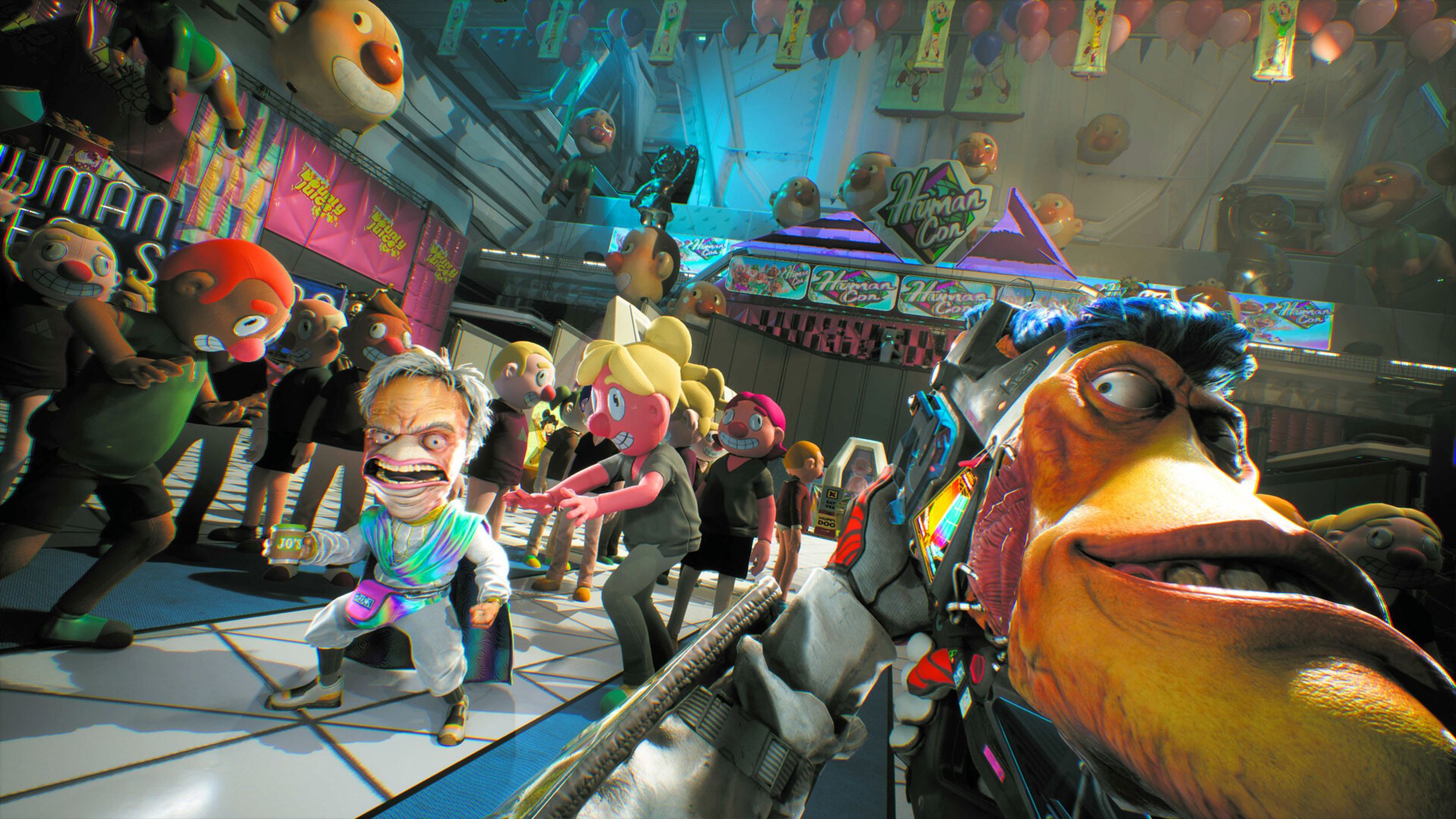
The first High on Life game was amusing, but its story felt like an excuse for all the wacky action. However, I found myself truly engaged with the story in High on Life 2. It starts simply: after taking down an alien crime syndicate and enjoying the rewards, a threat from the past emerges, putting your sister in danger. This quickly escalates into a larger conspiracy involving a powerful drug company that profits from exploiting life in disturbing ways.
The story gradually leads to a powerful and emotional finale that kept me completely engaged. While there’s one main ending, how it plays out changes based on the choices I made with the characters I met. What’s great about High on Life 2 is that it doesn’t tell you which interactions will be important later – there aren’t many hints about who matters. You just make decisions as you go and deal with the consequences at the end. I was surprised to find that even some side missions and conversations affected the final scenes.
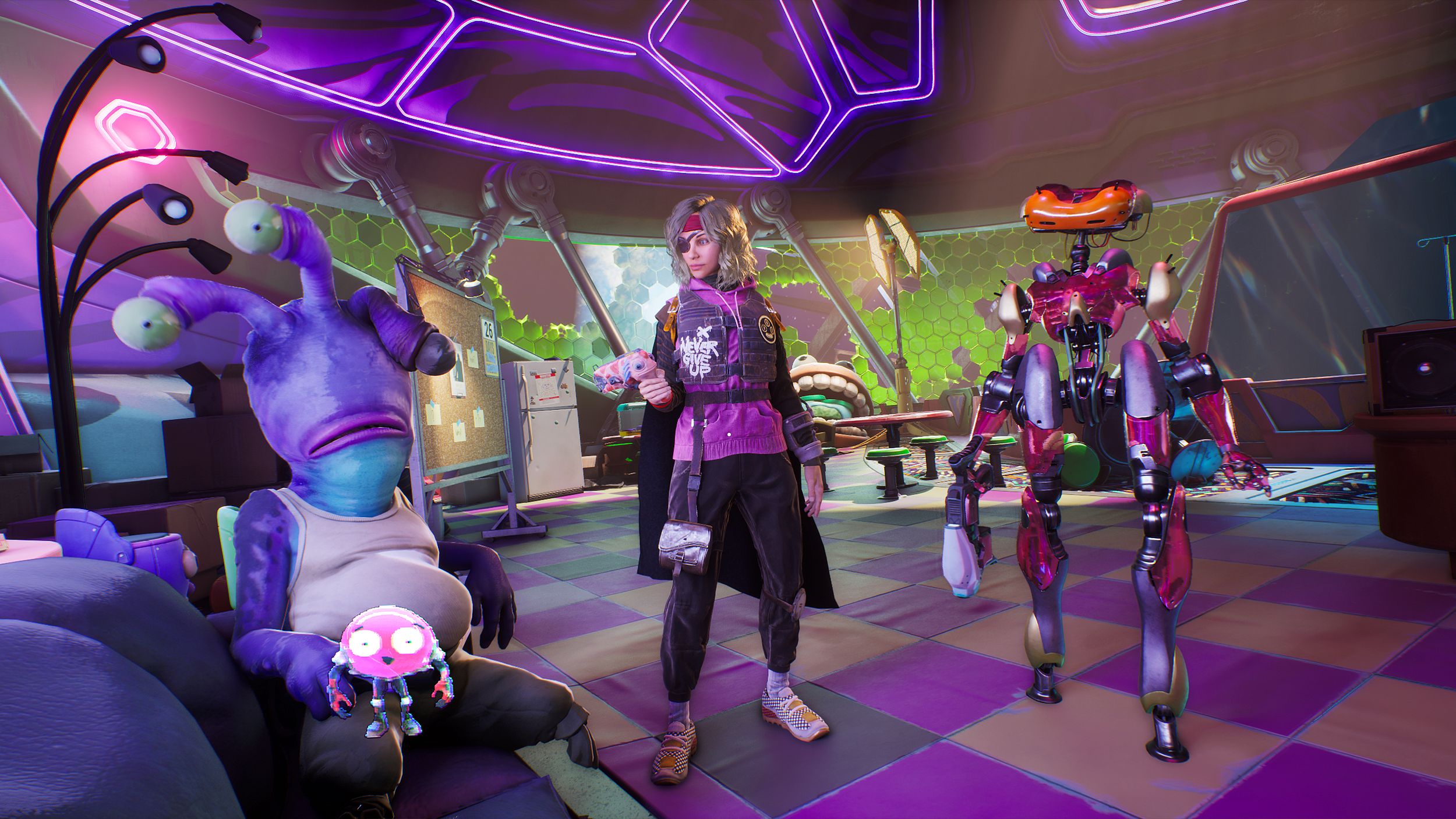
What really made High on Life 2‘s story work for me was how naturally it unfolded. I didn’t feel like I was trying to achieve a specific outcome, just reacting to the characters and situations as I wanted, without being forced down any particular path. The game’s satire is also more impactful this time around. While the idea of taking on big pharmaceutical companies could have been just silly parody, the writing actually explores themes of exploitation and how things are turned into products, which is surprisingly relevant. It’s still over-the-top, disrespectful, and often crude, but underneath all that, there’s a lot of genuine heart.
High on Life 2’s Gatlians Are More Than Just Weapons
A significant portion of the game’s appeal comes from both the returning and new ‘Gatlians’ – the talking guns. The returning weapons have been improved and feel more developed, while the new additions offer unique personalities and gameplay styles. I was particularly impressed with how well the new Gatlians were written, especially Travis and Sheath. Each Gatlian felt like a character you could connect with, not just a tool, which is a testament to the game’s outstanding voice acting.
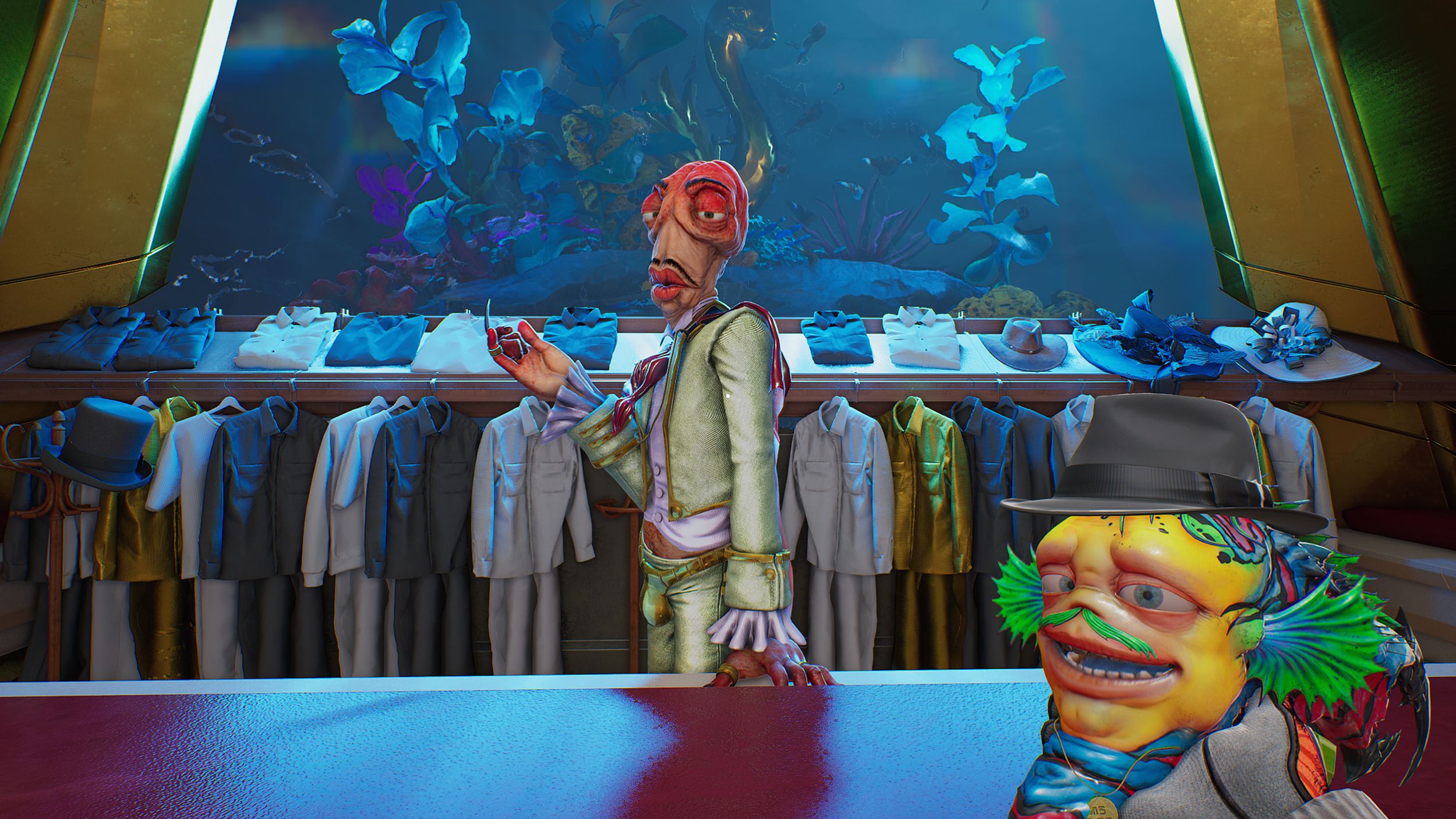
Ken Marino really shines as Travis. He’s funny, endearing, and wonderfully over-the-top – I almost wanted to keep him in the game just to hear what he’d say next! Ralph Ineson is also fantastic as Sheath; his voice is instantly recognizable, especially if you enjoyed his role as Cid in Final Fantasy 16. And even though he doesn’t play a Gatlian, Richard Kind is great as Senator Muppy Doo.
I was really happy with how well the new Gatlian characters were developed, especially Travis and Sheath. They were particularly well-written.
One of the best features of High on Life 2 is the ability to control how much the enemies and weapons talk, which is really important given how chatty they are! The game’s sound mixing is a little off out of the box, though. I had trouble hearing the dialogue with the default settings, and that’s a big deal because the High on Life games are known for their funny conversations. Luckily, lowering the music and sound effects fixed the problem and made everything sound much better.
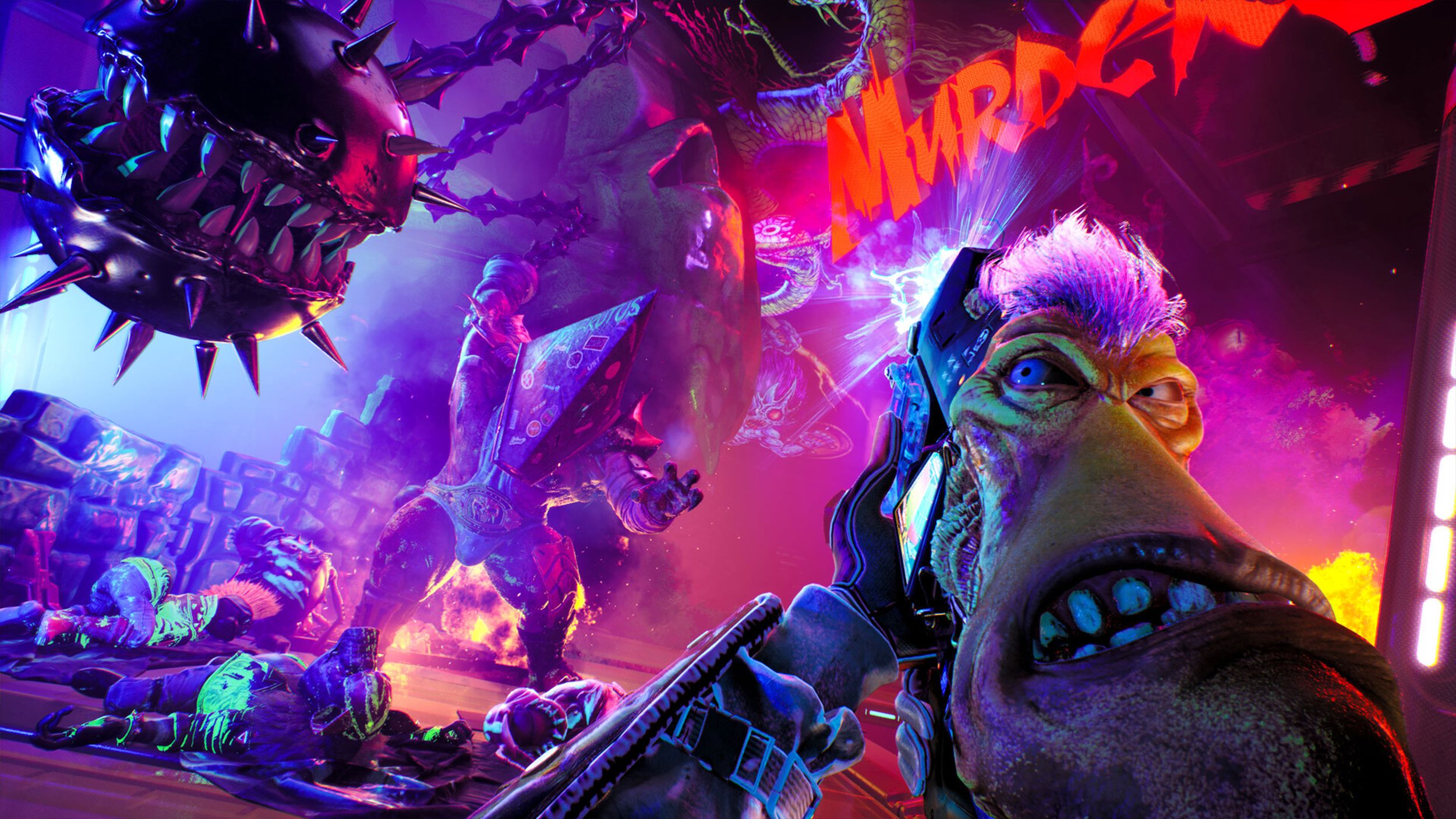
The shooting feels much smoother and more immediate in this game. Combat is quick, intense, and deliberately wild. Sometimes the action gets so chaotic it’s hard to keep track of everything, but that actually feels like a core part of what makes High on Life unique. A standout feature is the diverse range of Gatlians – each gun offers a different way to play, and also has special abilities that help with both exploring the world and solving puzzles.
Like the dungeon bosses in Zelda, boss fights in High on Life 2 often showcase the new abilities you unlock as Gatlian. Some of these fights are simple in terms of their mechanics, but they’re designed to teach you how to use those abilities and give you a chance to practice. One boss fight, in particular, stands out as one of the most creative I’ve ever seen in a game. It’s a really unique combination of gameplay and humor – it wasn’t necessarily laugh-out-loud funny, but it was incredibly inventive and surprising. I won’t give away any spoilers, but it’s a perfect example of how willing this sequel is to try new things.
High on Life 2’s Skateboard Changes Everything
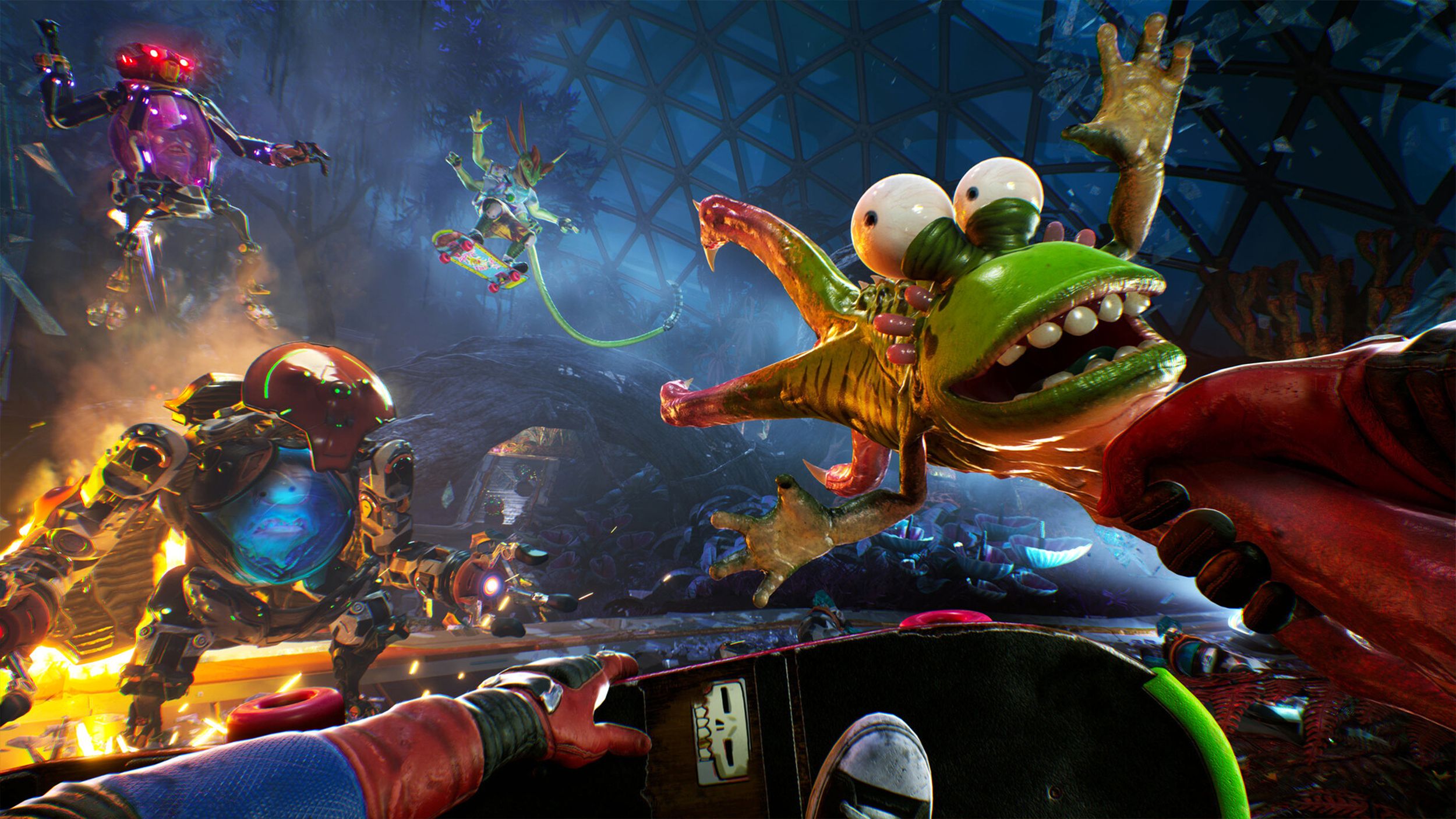
A major improvement in High on Life 2 is the addition of a skateboard. Rather than just being a fun extra, it’s become essential for getting around and fighting. It makes movement faster and more exciting, letting you grind on rails and reach places quickly. The game now focuses much more on vertical exploration, and the skateboard helps with this new design. You’re encouraged to explore the world in all directions – up, down, and across – in ways the original game didn’t, and it’s a really rewarding experience.
The skateboard isn’t just for getting around—it’s a key part of fighting too! You can run into enemies with it, throw it like a weapon, or use it to quickly dodge attacks. You can even improve your skateboard by winning races and collecting letters hidden throughout the game, similar to a Tony Hawk game. At first, I had trouble getting the hang of moving quickly, and kept bumping into things. But once I understood how it worked, both exploring the world and fighting became much smoother and more enjoyable.
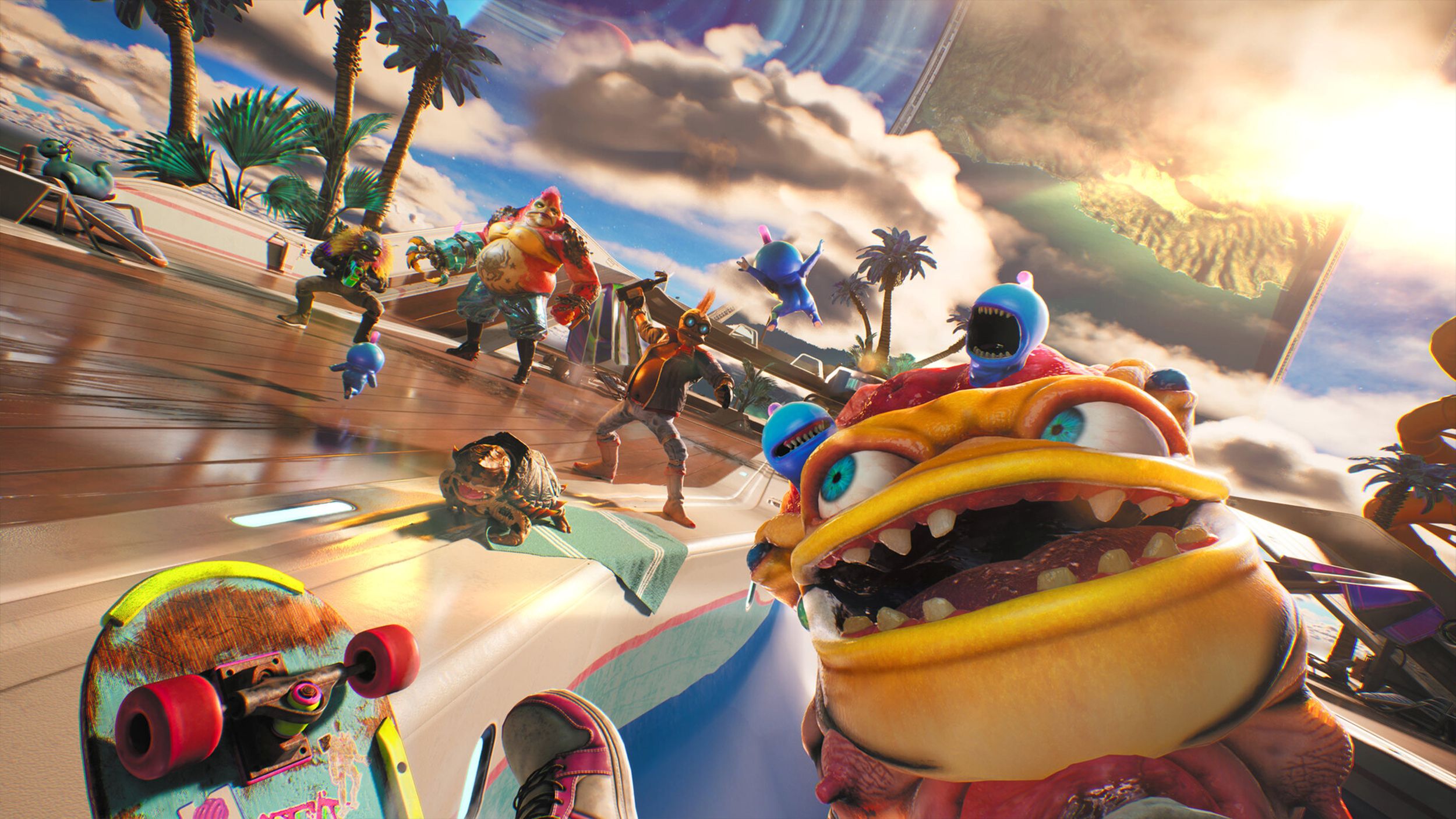
Exploring the world in High on Life 2 is really important, and the game constantly rewards you for doing so. You’ll find hidden containers called Lugloxes all over, filled with money, cosmetic items, and vital upgrades to help you in fights. Some Lugloxes are easy to reach, but the best ones require you to unlock new abilities – similar to how games like Metroidvania work. It’s really satisfying to go back to areas you couldn’t reach before with your new tools, especially when you find powerful weapon upgrades. While the game isn’t overly hard on the standard difficulty, taking the time to explore makes even the toughest battles easier and gives you more options in combat.
Aside from finding cool items, exploring the world leads to lots of interactions with different characters. Some are just funny moments, while others start optional side quests that can actually change the game’s ending. Even though you don’t have to explore, the game makes it rewarding. The three main areas are also designed to offer diverse environments. Plus, the chill retro and lo-fi music creates a surprisingly relaxing atmosphere between the action and main story events.
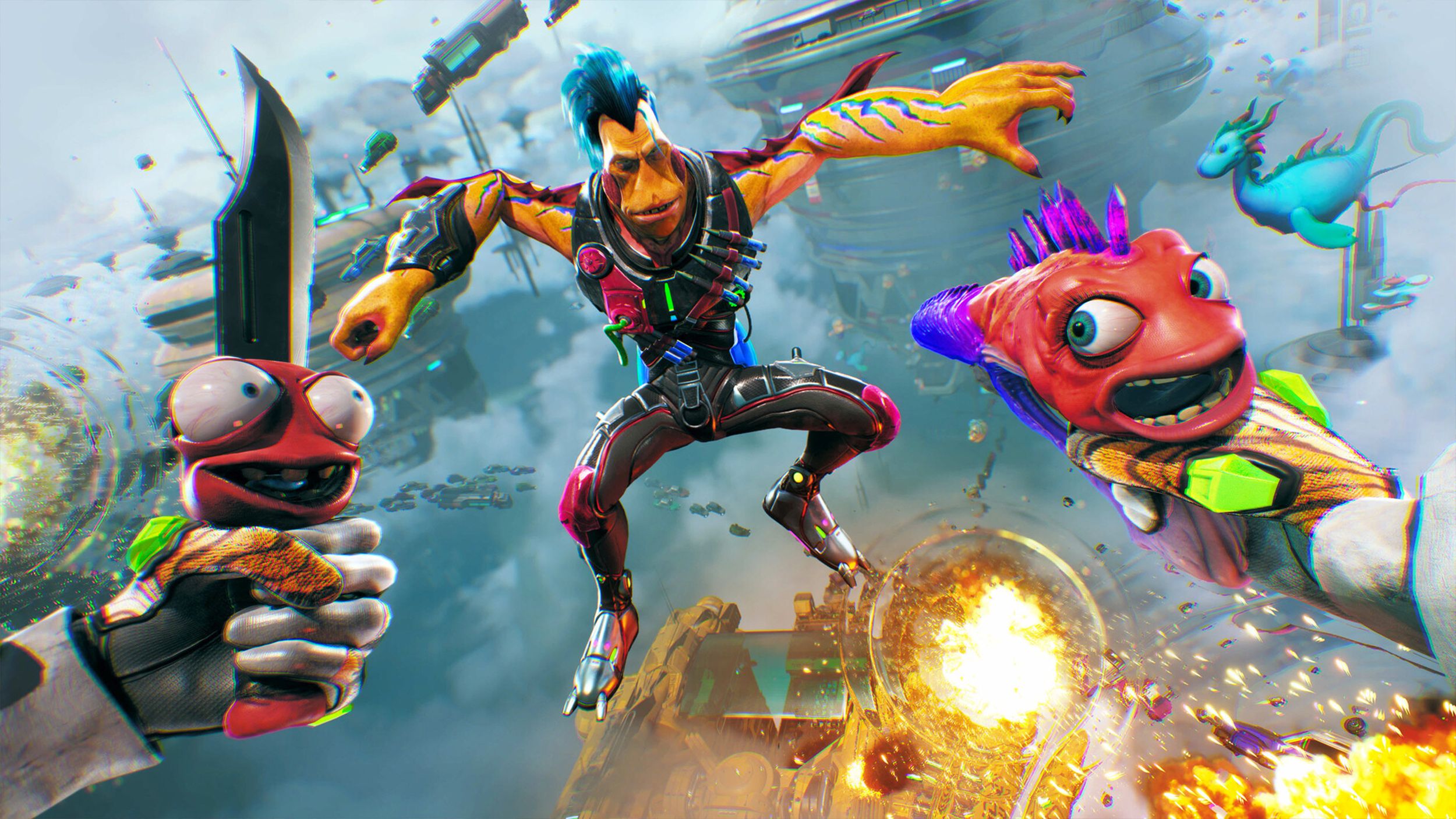
The game’s length is significantly increased by exploring everything it has to offer. I spent about 17 hours finishing the main story and doing quite a bit of optional content, like finding Lugloxes and completing side quests. If you aim to complete absolutely everything, it could easily take 25 to 30 hours. However, the first High on Life was criticized for being short considering its price, and High on Life 2 might face the same issue if players don’t enjoy spending time exploring the game world.
Exploring everything in the game adds significantly to its length—players aiming to complete everything can easily spend 25 to 30 hours doing so.
Like the first game, High on Life 2 lets you customize almost everything – from your skateboard and suit to the decorations in your home base. As someone who loves collecting cosmetic items, I found that exploring each area felt rewarding. However, because the game is played entirely from a first-person perspective, it’s hard to actually see all the customizations you’ve made. You catch glimpses of your suit in menus, and you can see your skateboard while moving around, but it’s tough to fully appreciate them during action. I really wished there was an option to switch to a third-person view, even just in the hub areas, so you could better see and enjoy your unique style.
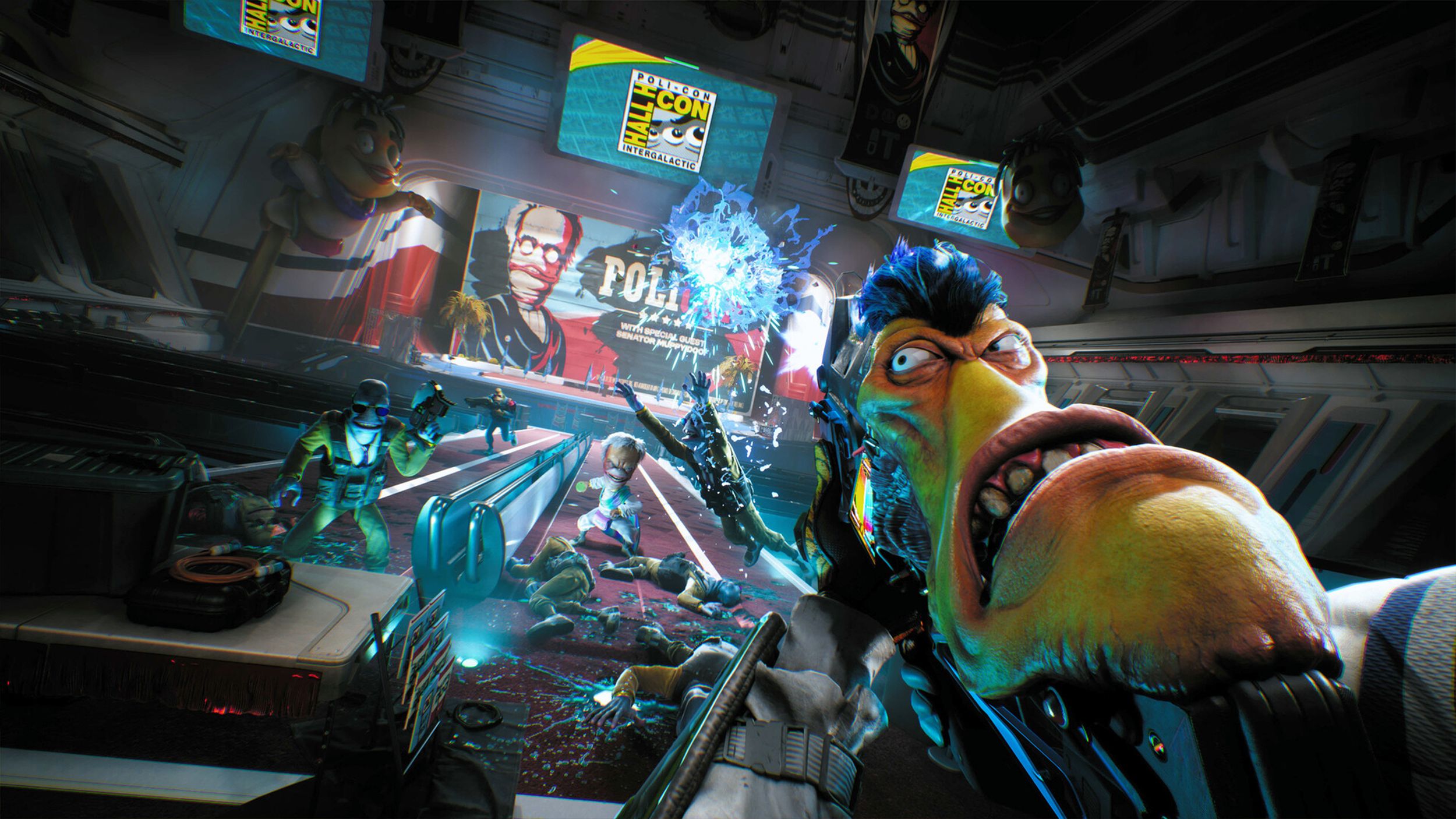
I get why Squanch Games stuck with a first-person view, though. The Gatlians are really the heart of the game, and their detailed expressions, movements, and constant chatter feel much more impactful when you’re right there with them. Changing to a different perspective would lessen that connection. However, when a game lets you customize your characters so much, it’s natural to want those customizations to be fully visible and feel significant.
While I really enjoyed playing High on Life 2 on my PC, it wasn’t without its problems. I ran into occasional slowdowns, a few crashes, and even fell through the map several times, sometimes needing to restart the game completely. Luckily, the game saved frequently, so I didn’t lose much progress. These technical issues seem like things that can be fixed with updates, and I expect they will be, but they were definitely noticeable during my playthrough.
High on Life 2 Is an Upgrade in All the Right Ways
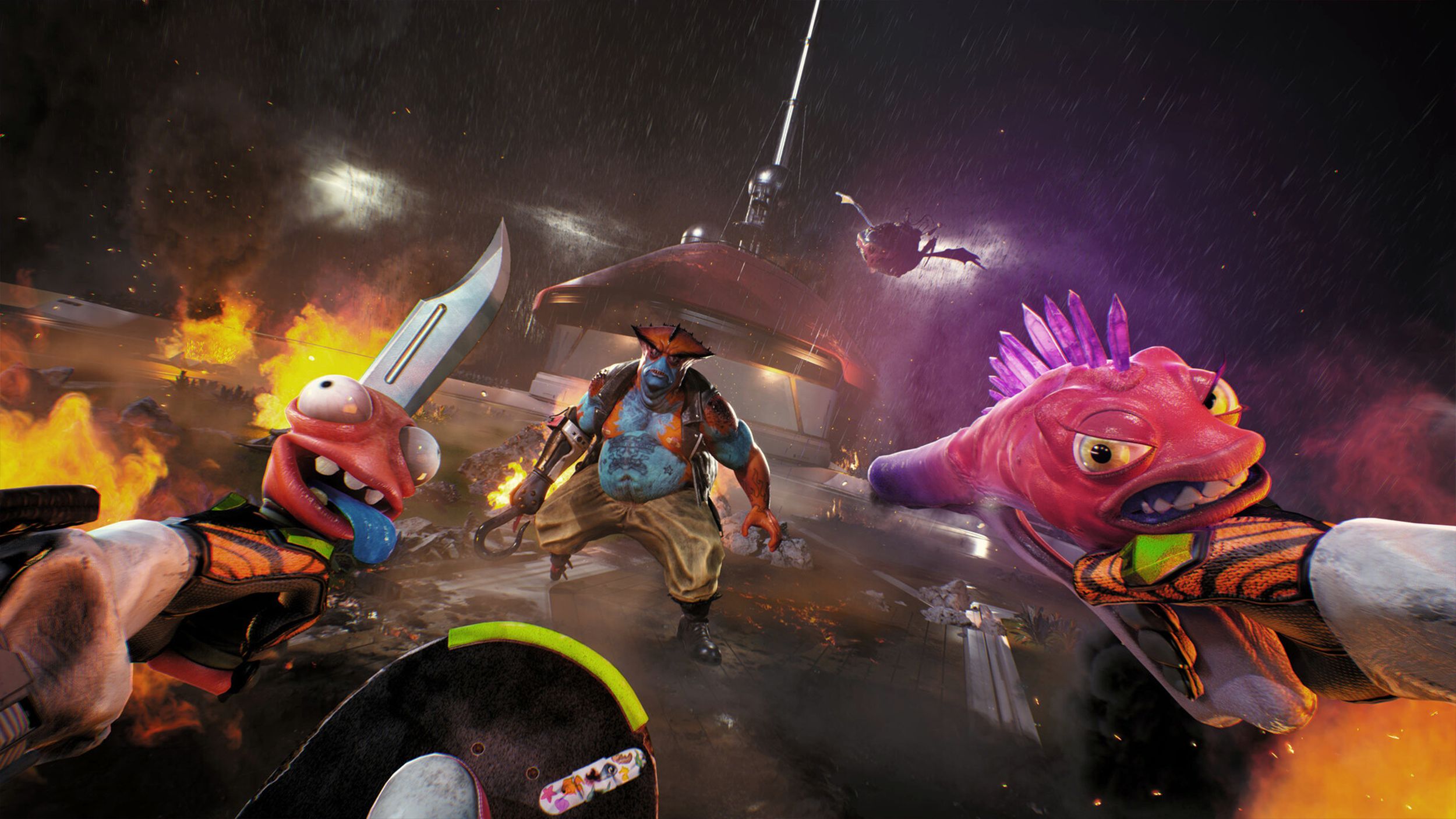
Rather than simply repeating the formula of talking guns and silly jokes, High on Life 2 significantly builds upon the original game. The story feels more impactful this time, with your decisions affecting the ending, and the characters who speak through your weapons are surprisingly well-developed thanks to strong writing and voice acting. The new skateboard adds a lot to both getting around and fighting, exploring the world unlocks improvements, and there’s much more to do beyond the main storyline. While the game has some technical hiccups and sound issues, and customizing weapons can be tricky in first-person, these flaws don’t detract from its biggest strengths. Ultimately, High on Life 2 understands what made the first game fun and successfully takes it to the next level.
Read More
- All Shadow Armor Locations in Crimson Desert
- Dark Marksman Armor Locations in Crimson Desert
- How to Beat Antumbra’s Sword (Sanctum of Absolution) in Crimson Desert
- Sega Reveals Official Sonic Timeline: From Prehistoric to Modern Era
- Genshin Impact Dev Teases New Open-World MMO With Realistic Graphics
- Where to Pack and Sell Trade Goods in Crimson Desert
- Keeping AI Agents on Track: A New Approach to Reliable Action
- Top 5 Militaristic Civs in Civilization 7
- The Limits of Thought: Can We Compress Reasoning in AI?
- Enshrouded: Giant Critter Scales Location
2026-02-13 14:08