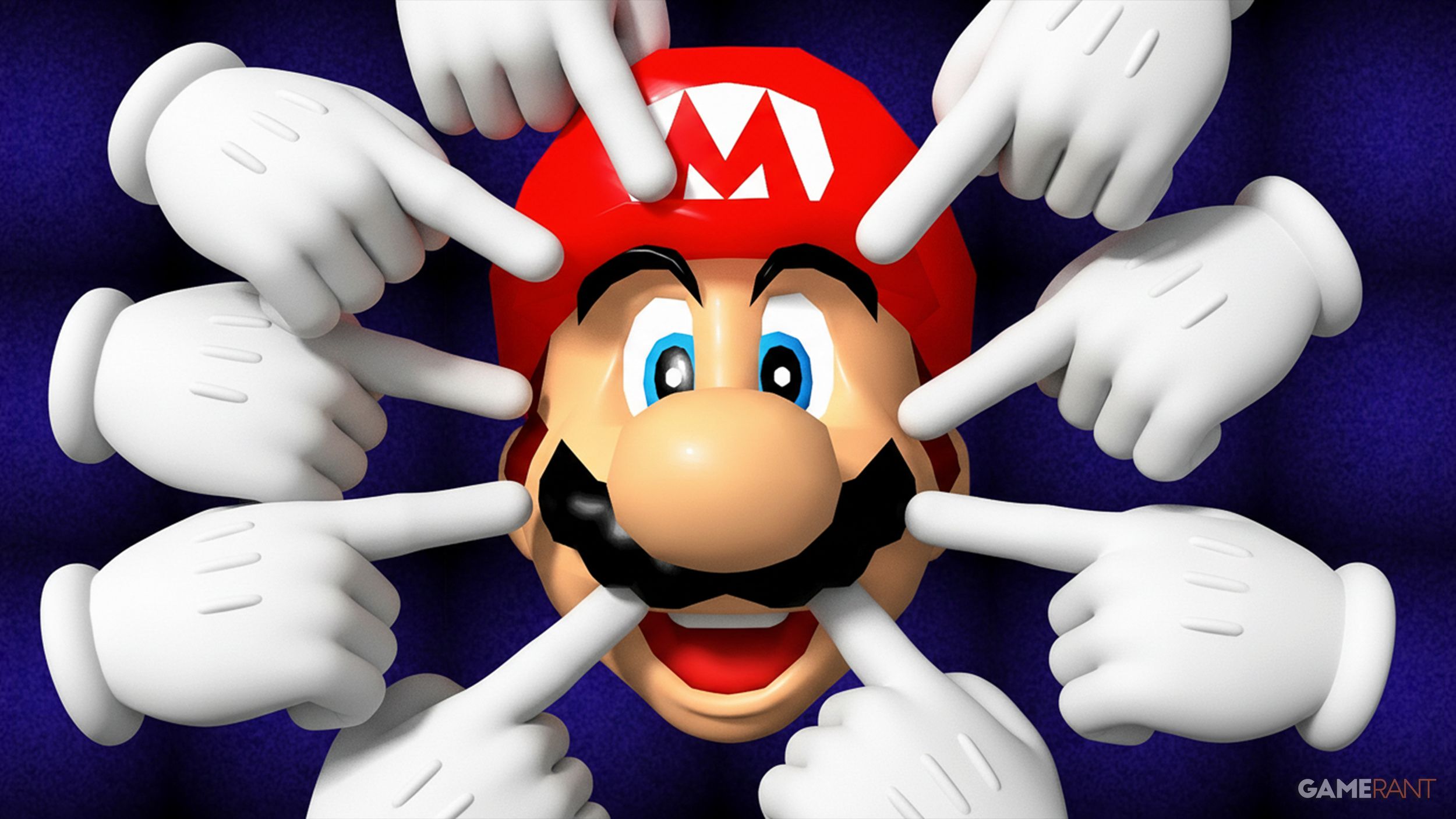
I’ll never forget the first time I played Super Mario 64. It was Christmas Eve in 1996, and I was nine years old. I had just gotten a brand-new Nintendo 64 with the game included. As soon as I was allowed to start playing, I set it up on the living room TV and was instantly captivated. The graphics were incredible—going from Super Mario World on the SNES to this felt like a huge leap forward. The world was vast, beautiful, and more interactive than anything I’d ever seen. I immediately thought Super Mario 64 was the best game ever made, and I didn’t think anything could ever surpass it.
I used to think Super Mario 64 was a perfect game, but recently I replayed it after many years and was surprised by how much it hasn’t held up. My wife got me a handheld emulator for Christmas – I wanted it for the classic Pokemon games, but it also had several Nintendo 64 titles, including Super Mario 64, Zelda: Ocarina of Time, and Zelda: Majora’s Mask. I was excited to start playing, but after just a few minutes, I found myself playing out of habit rather than enjoyment. While nostalgia can sometimes keep me engaged, in this case, it quickly faded because the game just doesn’t feel timeless.
I Spent More Time Fighting Super Mario 64’s Antiquated Design Than Goombas
Super Mario 64’s core platforming is strong and stays true to the classic Super Mario experience. However, some of the game’s design choices feel dated, reflecting the limitations and trends of the mid-1990s.
Why Super Mario 64 Ultimately Hasn’t Aged Well
- CLUNKY CAMERA SYSTEM — The camera often moves on its own, gets stuck, or doesn’t give a good view.
- OUTDATED CAMERA CONTROLS — No dual-stick control makes adjusting the camera frustrating.
- IMPRECISE CONTROLS IN PLATFORMING — Mario’s turning and movement can feel floaty and unresponsive.
- RUDIMENTARY LEVEL DESIGN — Many stages rely on simple floating geometry and isolated challenges rather than fully realized environments.
- DATED VISUALS — Blocky, low-polygon models and simple textures are hard to appreciate through a modern lens.
- FRUSTRATING HAZARDS AND DEATHS — Some platforming sections feel more punishing than clever because of camera or control shortcomings.
- CLUNKY MISSION STRUCTURE — Being booted out of a level after collecting a star and vague mission objectives feels unintuitive by today’s standards.
One of the biggest frustrations in Super Mario 64 is its awkward camera. It was actually quite innovative when the game first came out, being one of the first to let players control the view in a 3D world. However, the camera causes problems in about 80% of the game. Simple platforming sections become needlessly difficult because of it, and it constantly moves on its own, forcing you to fight against it just to get through each level. It’s ironic that it was praised for giving players control, because I often felt like I had very little control over the camera at all.
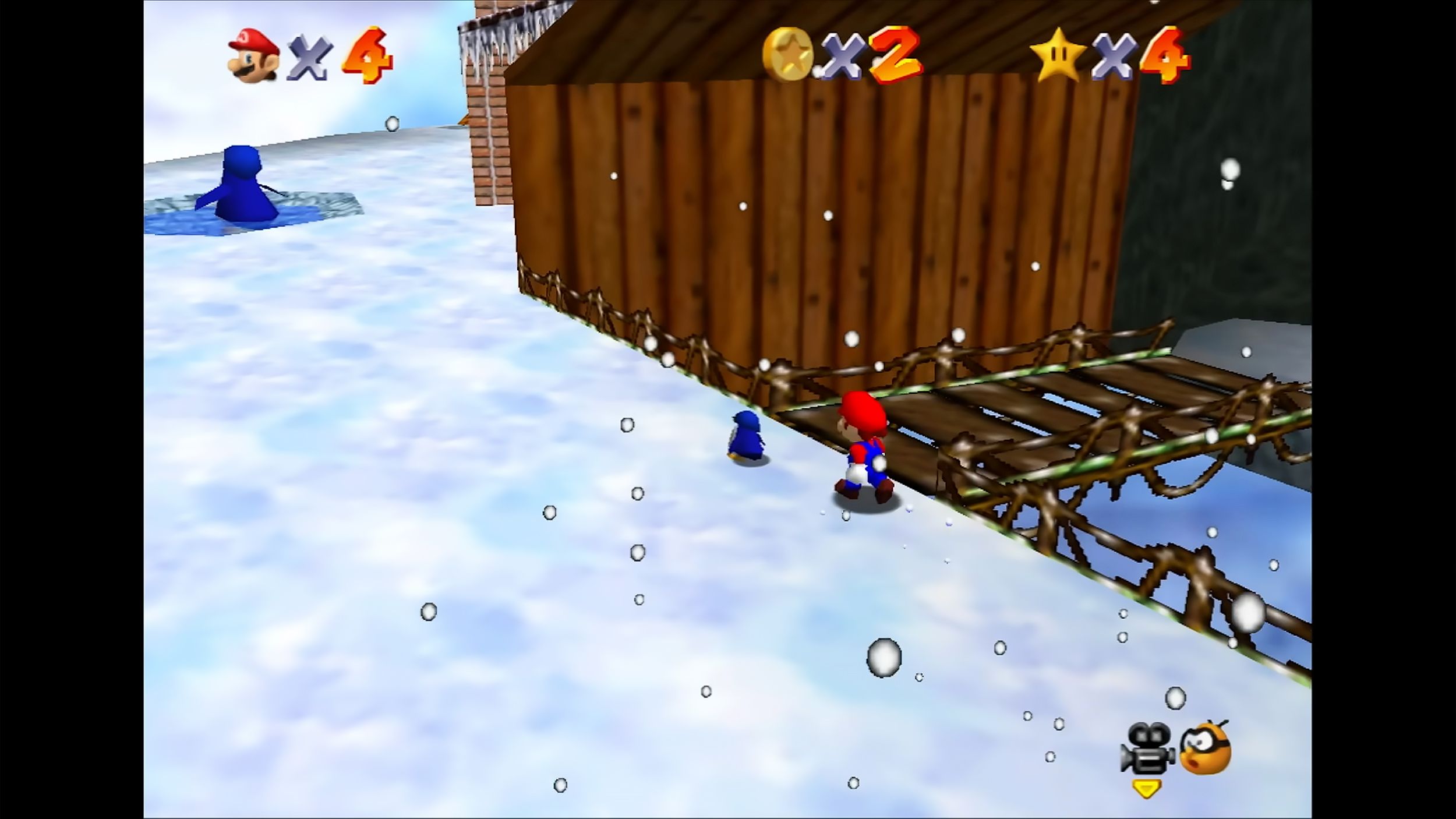
The game’s level design feels very basic compared to modern standards, which is understandable given when it was made. Instead of a detailed, natural world, Super Mario 64 relies on simple, disconnected platforms that feel artificial. The graphics, while impressive for their time, now appear blocky and lack detail. While I can usually overlook older graphics if the gameplay is good, Super Mario 64‘s gameplay unfortunately hasn’t aged well.
Despite being innovative when it first came out, one of the most annoying things about Super Mario 64 is its awkward camera control.
Starting my first painting in the game, I quickly remembered how awkward the mission design felt compared to modern games – even Super Mario games. I’d go into a level with a specific goal, but often stumble upon a different collectible, get sent back to the beginning, and have to replay large parts of the level just to try again. If Super Mario 64 was made today, it would likely let you stay in a level as long as you wanted, collect stars at your own pace, and move on when you were ready. Playing the classic N64 game reminded me how limited games used to be, especially since many developers now prioritize giving players more freedom.
Nostalgia Truly Is a Deceptive Beast
It’s amazing how easily nostalgia can trick you. When I started playing Super Mario 64 again, I was genuinely thrilled – seeing Mario emerge from the pipe, hearing the music, and doing that first triple jump felt wonderful. But that feeling didn’t last, and that’s the important thing to remember about looking back on the past.
The beginning of the game quickly brought back happy childhood memories of Super Mario 64, but unfortunately, those feelings didn’t last. Once the nostalgia faded, I realized the game just isn’t enjoyable to play now. I tried to push through it, playing for about 20 hours, but most of that time felt like a struggle, even with some good moments. I doubt I’ll be revisiting it again soon.
Super Mario 64 Still Matters, Even if It Doesn’t Feel Great Today
Sometimes, classic books or movies are more powerfully remembered for the emotions they evoked when we first experienced them, rather than how well they stand up to revisiting years later.
Despite any flaws it might have, Super Mario 64 was incredibly important for the gaming world, and continues to be. It redefined what 3D platforming games could achieve, setting a benchmark that influenced countless titles for years to come. It also proved Mario could successfully transition to 3D, which wasn’t a sure thing at the time. Without it, games like Super Mario Sunshine, Super Mario Galaxy, Super Mario Odyssey, and even other game genres would be very different today. Its impact is clear, and its legacy as a groundbreaking game is firmly established, no matter how it plays now.
Playing Super Mario 64 again didn’t ruin my fondness for it, but it did help me see the game objectively. When I was a child, it felt boundless and amazing. Now, as an adult, it feels a bit clunky and dated. Both of those feelings are valid. Nostalgia didn’t mislead me about the game’s impact, but it did highlight how much game design has improved over the years. Perhaps the key takeaway is that some classic games are best appreciated for the feelings they evoked at the time, rather than how well they stand up to modern scrutiny decades later.
Read More
- Top 10 Must-Watch Isekai Anime on Crunchyroll Revealed!
- Deltarune Chapter 1 100% Walkthrough: Complete Guide to Secrets and Bosses
- Enshrouded: Giant Critter Scales Location
- Scopper’s Observation Haki Outshines Shanks’ Future Sight!
- Multiplayer Games That Became Popular Years After Launch
- All Carcadia Burn ECHO Log Locations in Borderlands 4
- 10 Best Indie Games With Infinite Replayability
- All Shrine Climb Locations in Ghost of Yotei
- How to Unlock & Visit Town Square in Cookie Run: Kingdom
- Top 10 Scream-Inducing Forest Horror Games
2026-01-09 18:45