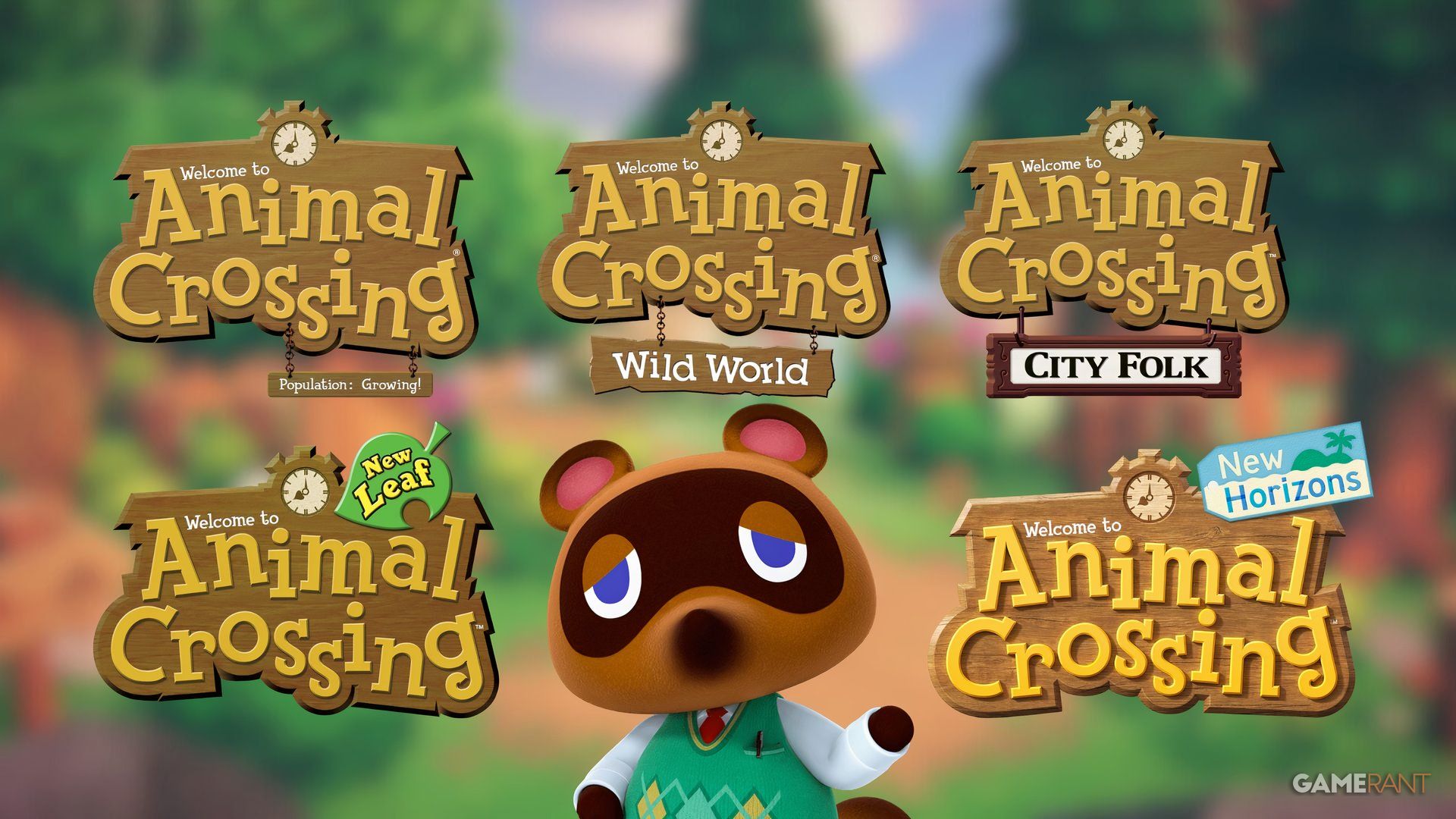
My dad was really into technology and always thoughtful about what I watched and played growing up. When I started showing an interest in video games, he wanted to make sure I played things that were either educational or wholesome – games that sparked my imagination, encouraged creativity, or helped me connect with others. After looking into different options, he decided Animal Crossing was perfect. I received my first game in the series on Christmas morning in 2005, and I didn’t realize then that it would become a lifelong favorite from Nintendo.
Twenty years have passed since I first played, and my gaming preferences have grown considerably. I’ve spent countless hours exploring RPGs, vast open-world games, and more unusual titles. Yet, Animal Crossing still holds a special place for me. Each new installment captures the spirit of its time, offering enough new features to keep things interesting while staying true to what fans love. While none of the games are perfect, they all achieve what they set out to do. Having played them all, I’ve developed a clear ranking, which is based not only on the games themselves, but also on when and how they were released. Here’s my official ranking of every mainline Animal Crossing game.
5. Animal Crossing: City Folk (2008)
It’s probably not a surprise that I didn’t enjoy Animal Crossing: City Folk very much. The idea of having a cozy town to live in, plus the ability to visit a bustling city for shopping, sounded great. It felt like a good way to shake up the usual gameplay. However, the game just didn’t live up to its potential.
When I play City Folk, it feels like it tries to be a big step forward for the Animal Crossing series, but it doesn’t actually change much from previous games. Aside from a quick bus trip to the city and some motion controls, it’s very similar to what came before. The city quickly loses its appeal once the initial excitement fades. While mods can improve the experience, many players consider City Folk to be one of the weakest entries in the series, and it’s easy to see why.
Interestingly, City Folk and Wild World share the exact same music. Many players even consider City Folk to be an extension of Wild World.
4. Animal Crossing (2002)
It feels strange to rank the very first Animal Crossing so low, but let me explain. I genuinely love the original game – it really pioneered the cozy gaming genre and created a community of players who enjoy caring for virtual creatures and building a life with them. However, looking back, it hasn’t aged as gracefully as other games in the series. I apologize for saying so, but newer installments simply offer so much more to do. While dedicated Animal Crossing fans will likely still enjoy the original, those new to the series might find later games a more complete and satisfying introduction.
Animal Crossing was a groundbreaking game that many others have since copied, and that’s something to appreciate. Its villagers were particularly memorable – they had a lot of personality, were often funny, and weren’t afraid to be a little rude. While villagers did repeat dialogue, it wasn’t as noticeable as in newer games. However, the original Animal Crossing was mainly important as the starting point for everything that followed, which isn’t necessarily a weakness.
3. Animal Crossing: Wild World (2005)
It’s easy to look back on this game with fondness. What really stood out then was how portable it was – you could suddenly manage your town in short, relaxing sessions anywhere. That change was significant, and it’s a big reason why Animal Crossing felt less like a game you beat and more like a world you lived in.
Despite its improvements, Wild World feels like a game stuck between two stages. It was a clear step up from the first Animal Crossing, with simpler systems, more things to do, and a better daily routine. It also laid the groundwork for future games in the series. The town felt more alive, you had more ways to customize things, and the online features—though basic—showed the potential for social interaction that the series would later embrace. However, looking back, many of its features seem restricted by the technology of the time, rather than being fully developed ideas.
What makes Wild World stand out is how well it balances the familiar, sometimes harsh, personalities of its villagers with a generally more inviting experience. The conversations still have a bit of an edge, but the game world feels more friendly. While it doesn’t have the massive scope of later installments, it’s an important step in the series’ development – not the best, but definitely essential to understanding how the franchise evolved.
2. Animal Crossing: New Leaf (2012)
Animal Crossing: New Leaf was a major step forward for the series. It really put players in control, letting them do more than just participate in town life – they could actually shape it as the town’s mayor. This shift made player choice a core part of the game, rather than just an added bonus.
The amount of control players had felt like a major step forward. Being able to shape the town with public works, rules, and layout choices gave a real sense of ownership—something the series hadn’t fully delivered before. It felt like Animal Crossing was finally listening to its fans, recognizing their desire to have a bigger impact on their town’s development. New Leaf on the 3DS successfully balanced a return to the series’ handheld origins with genuinely innovative features.
What makes New Leaf special is how well everything works together. The game’s features are seamlessly connected, and it’s designed to keep you engaged over a long period without feeling stressful. Although it doesn’t offer quite as much open-ended creativity as later installments, it makes up for that with its delightful atmosphere, clear structure, and thoughtful design. In a lot of ways, New Leaf established the core ideas that would later be explored in New Horizons, demonstrating that a game could be both empowering and relaxing.
1. Animal Crossing: New Horizons (2020)
New Horizons didn’t just improve Animal Crossing; it completely changed the game. Released at a time when people wanted comfort, a sense of control, and connection, it greatly expanded almost every aspect of the series. Features like terraforming, decorating the outdoors, detailed customization, and crafting made island life feel both personal and limitless.
For the first time, players had complete freedom to design their islands in Animal Crossing exactly how they wanted, letting their personal style and imagination shine. This level of creativity completely changed the game, transforming it from a simple life simulator into a powerful platform for building and sharing creations.
It’s true that the game isn’t perfect. After you’ve developed your island to a certain point, things can start to feel repetitive. Some of the long-term features aren’t as deep as players might like, and interacting with villagers isn’t as engaging as it once was. However, despite these flaws, New Horizons is a remarkably ambitious game. It rightfully received praise, including a Game of the Year nomination in 2020, because it took the series in a bold new direction.
What’s most challenging about New Horizons is the incredibly high bar it’s set for future Animal Crossing games. It’s hard to envision the next installment without it being compared to New Horizons, and for better or worse, it’s become the benchmark.
Read More
- All Skyblazer Armor Locations in Crimson Desert
- One Piece Chapter 1180 Release Date And Where To Read
- How to Get the Sunset Reed Armor Set and Hollow Visage Sword in Crimson Desert
- All Shadow Armor Locations in Crimson Desert
- All Golden Greed Armor Locations in Crimson Desert
- How to Beat Stonewalker Antiquum at the Gate of Truth in Crimson Desert
- Cassius Morten Armor Set Locations in Crimson Desert
- Grime 2 Map Unlock Guide: Find Seals & Fast Travel
- Amber Alert Secrets & CDs In Crime Scene Cleaner Act 2
- USD RUB PREDICTION
2026-01-18 21:05