
Now is a fantastic time to be a fan of monster-collecting RPGs! Pokémon is gearing up for a big comeback with new releases, Digimon recently launched one of its best games ever, and there’s a constant stream of both indie and smaller-scale monster-collecting games being released every month. Plus, existing games are consistently being updated and improved based on player feedback.
It’s no surprise to see another Monster Hunter Stories game, and Monster Hunter Stories 3 is the biggest and most polished one yet. This third installment really refines what makes these games enjoyable, with a greater focus on story and improvements throughout. Fans of the MH Stories series will likely find this to be the best entry so far.
“Almost equally as immediate of an improvement is to the game’s storytelling.”
If you weren’t a fan of previous Monster Hunter Stories games, this one likely won’t change your mind. In fact, depending on what you disliked about them, you might find this installment even less appealing.
Monster Hunter Stories 3 has both strengths and weaknesses. While it’s not a visually stunning game, especially on the Switch, and has some noticeable graphical issues, it still looks good. In fact, it’s significantly more detailed, vibrant, and lush than previous Monster Hunter Stories games, and arguably better looking than most other RPGs of its type.
The game’s storytelling has also seen a significant improvement. Previous Monster Hunter games haven’t focused much on story, offering only a basic framework. Even the Stories spin-offs, which are meant to be more story-driven, have generally kept the narrative quite simple.
Previous Stories games generally featured straightforward coming-of-age stories where the main character travels across the world, grows in power, and learns about themselves. While there were always important plot points, they weren’t usually the central focus of the experience.
Stories 3 is a game much more focused on telling a compelling story. Unlike previous games with simple setups, it features a detailed world with clashing kingdoms, royal intrigue, environmental disasters, a sense of history, and the idea of fate. While it doesn’t revolutionize the RPG genre, it doesn’t need to. The game is genuinely well-made, and thanks to its significantly improved art style, the story is engaging enough to be the main reason you’ll want to keep playing – a first for the Monster Hunter series.
Though it fades into the background over time, this element consistently draws you in and provides a foundation for your journey. It maintains a high standard of storytelling for the characters you meet, many of whom will offer you complex and detailed quests. These quests will not only reveal more about them, but also expand your understanding of the world around you.
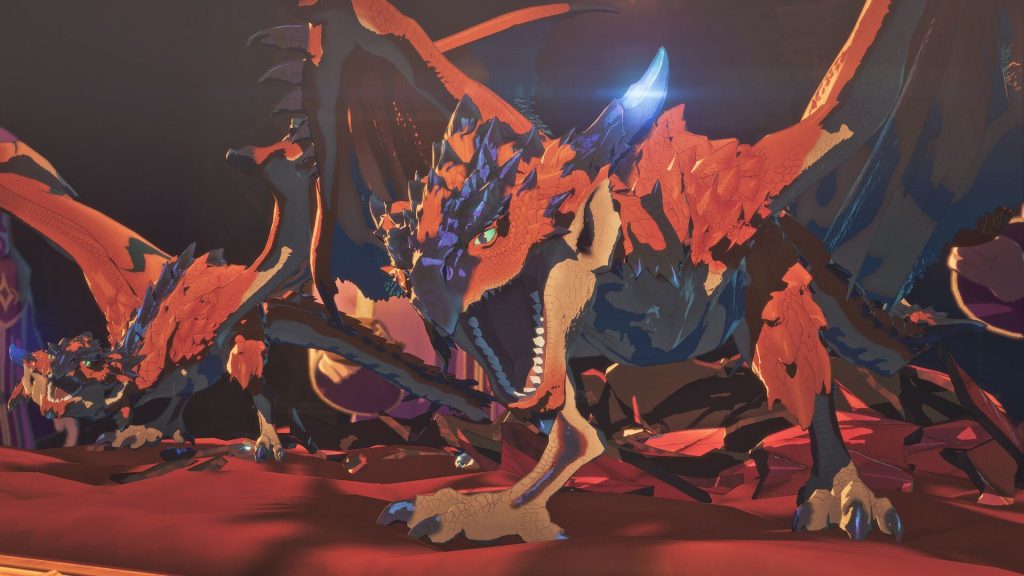
Exploring the game world feels much more enjoyable and less repetitive compared to previous installments.
One of the game’s biggest strengths is its expansive world. Previous games using the RE Engine haven’t handled truly open worlds well, and MH Stories 3 cleverly addresses this. It offers large, beautiful areas, but breaks them up with loading screens to keep the game running smoothly. From vibrant landscapes filled with unique plants and creatures to bustling cities, the world of MH Stories 3 is a key part of what makes it enjoyable – something I haven’t really experienced in a monster-catching RPG since Pokemon Sun and Moon, which came out a decade ago.
Exploring the game world feels much more enjoyable and less repetitive than in previous Monster Hunter Stories titles. This addresses a major issue I’ve had with past games: a core sense of tediousness. While some of this comes from the game’s design, a lot of it seemed to be due to how things were implemented. Fortunately, it looks like the developers have significantly improved this aspect in the latest version.
One clear improvement is how you move around the game world. You still use your Monsters (or Monsties, as they’re called) to overcome obstacles, but it feels much smoother now. A new radial menu lets you switch between Monsters quickly and easily, without interrupting the flow of exploration. This makes exploring much more enjoyable, as it doesn’t feel as clunky and frustrating as it used to.
Many games try to make repetitive tasks less boring, but they don’t always succeed. This leads us to consider where this game falls short – for example, when it comes to the equivalent of finding or ‘catching’ a new creature.
If you’re familiar with previous games in the series, you know the gameplay often involves defeating a monster, then tracking it to its lair to steal its egg. This can get repetitive and feel like a chore – these lairs are often fairly complex mini-dungeons that reuse the same designs, making the effort to collect each new monster seem like too much work.
Stories 3 makes collecting monster eggs much easier. Monster dens are now smaller and simpler, and you’re more likely to get the specific egg you’re looking for, reducing the reliance on random chance.
Things are moving much faster now, though it’s still not fast enough to completely fix the problem. I did start to get frustrated, especially with how repetitive the designs became, and it all happened quicker than I’d hoped. However, this is definitely the best progress we’ve made on this so far.
This isn’t the only repetitive part of the game; the combat system also feels unfinished.
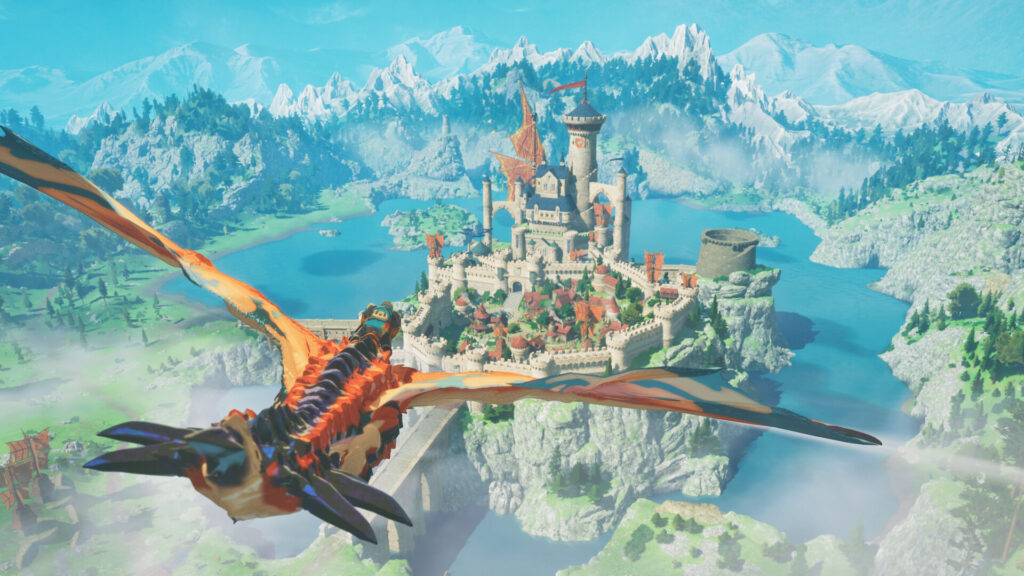
As I mentioned at the beginning of this review, whether you’ll love this game really depends on how much you enjoyed past Monster Hunter Stories titles.
The battle system in MH Stories has often been a point of debate. It was designed this way because the developers wanted to maintain a connection to the core gameplay of the main Monster Hunter series, which was a commendable goal. The challenge was adapting the distinctive, action-based combat of those games into a turn-based format.
Throughout the series, the games have had mixed results. The first one was loved for its appealing style, but players quickly grew tired of the repetitive combat, which ultimately hurt the overall experience. The second game tried to fix this by making battles more engaging, which was a positive step, but ironically, they ended up taking even longer.
Let’s talk about battles in Stories 3. They work similarly to the monster fights in the main Monster Hunter games, but are turn-based. You and your monsters, along with any companions, choose an attack type – technical, power, or speed – hoping to counter what your opponent chooses. It’s a simple rock-paper-scissors system.
The game encourages you to study both your own monsters and your opponents, learning their behaviors, attack patterns, and weaknesses so you can react effectively. Beyond the core combat, you’ll also need to consider things like elemental strengths, combined attacks when your monsters are synchronized, powerful ultimate moves, targeting specific enemy parts to disable them, who each monster and character is attacking, and quick, focused duels between individual units.
Keeping track of all this can be overwhelming, and even simple battles can take a surprisingly long time. When you consider how many fights are in most role-playing games, it becomes clear that it all adds up. This creates a lot of mental strain for the player, even during moments that should be relaxing. Plus, each fight often feels slow and drawn out.
The game has a feature to make things faster, but even using it, I eventually started to really dislike combat. That’s a problem for a game centered around fighting! What made it worse was that the attempts to simplify things actually became annoying. For instance, your teammates sometimes act independently, which can be incredibly frustrating when they don’t do what you expect.
Another major issue with the game is how poorly it runs, especially considering its graphics are meant to be a strong point. On the Switch 2, the game isn’t very well optimized, leading to performance problems.
The game suffers from a generally low resolution, resulting in a blurry picture. The framerate isn’t fixed and fluctuates between 30 and 50 frames per second, only reaching 60fps in small indoor areas. Characters, monsters, and nearby objects often have noticeably choppy animations, and objects frequently appear suddenly just a few feet in front of the player. These technical issues unfortunately make the game feel unpolished and rough, even though it isn’t, and they detract from the otherwise compelling story and narrative.
It’s really surprising how poorly optimized this game is on the Switch 2, especially since most other games – like Street Fighter 6 and Resident Evil Requiem – run so smoothly. The issue likely stems from the game’s semi-open world design, which the RE Engine hasn’t always handled well. It definitely looks and performs better on more powerful systems, but it should be running much better on the Switch 2. It’s disappointing that the developers haven’t fixed these obvious problems, especially since they likely appeared during quality assurance and testing.
As I mentioned earlier, how much you’ll enjoy this game really depends on your experience with previous MH Stories titles. If you were a fan of the older games and wanted an improved version, you’ll likely love this one. If you were curious about the series but hoped for a more compelling story or better graphics, this game might be exactly what you’ve been waiting for. However, if you found the previous games repetitive or tedious, your experience with Stories 3 could go either way.
The game tries to reduce how repetitive it feels, but it’s hard to say if those changes are enough – it really depends on the player. While I personally found parts of the game dragging, others might not. Luckily, there’s a free demo available on all platforms, so you can try it yourself and see if the improvements address the repetitiveness if that’s been a problem for you before.
This game was reviewed on Nintendo Switch 2.
Read More
- All Shadow Armor Locations in Crimson Desert
- How to Get the Sunset Reed Armor Set and Hollow Visage Sword in Crimson Desert
- Best Bows in Crimson Desert
- All Skyblazer Armor Locations in Crimson Desert
- All Golden Greed Armor Locations in Crimson Desert
- Wings of Iron Walkthrough in Crimson Desert
- All Helfryn Armor Locations in Crimson Desert
- Marni Laser Helm Location & Upgrade in Crimson Desert
- How to Craft the Elegant Carmine Armor in Crimson Desert
- Keeping Large AI Models Connected Through Network Chaos
2026-03-13 22:13