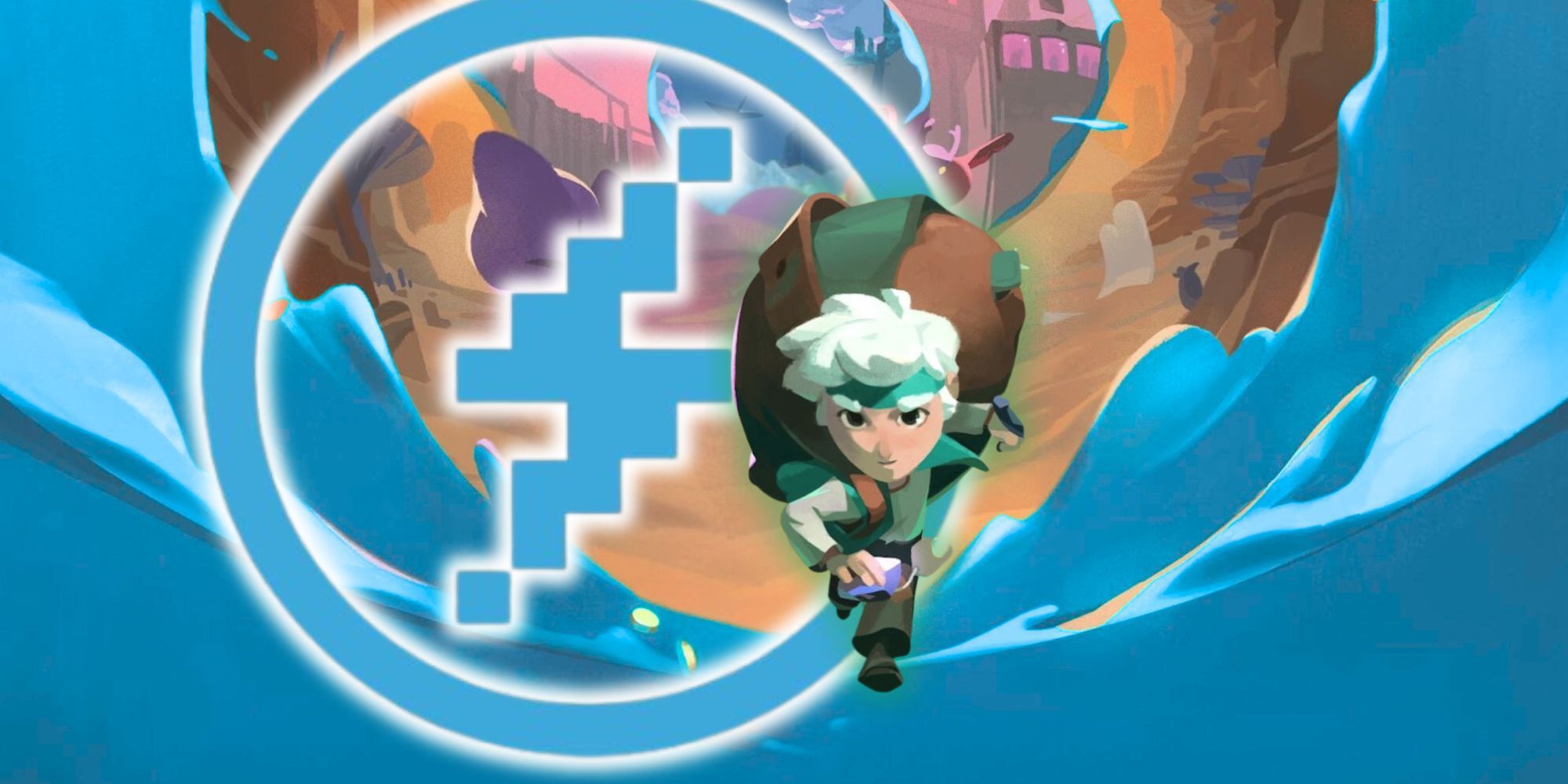
For an avid fan of relaxing, colorful video games with minimal stress, I can confidently attest from personal experience that the Moonlighter series fits perfectly for those who cherish such cozy gaming experiences.
The title offered an engaging mix of roguelike gameplay loop, action similar to Zelda games, and strategic trading elements that stimulated my creative thinking. Additionally, it boasted stunning pixel art visuals, along with a captivating narrative and memorable characters.
Yet, the game seemed to be confined by its 2D structure, hinting at a greater depth that could be unleashed if it were allowed to fully realize its potential.
Later on, an uncommon sequel to an independent game series arrives, which seems to be the perfect blend of everything I hoped for in the original—a sequel that not only introduces new elements but also surpasses them.
Following a sneak peek at the forthcoming 3D sequel of the anticipated cozy classic, we recently chatted with Isra Mallen in Warsaw, Poland, about how Moonlighter 2 transitions to 3D, enhances its predecessor, and much more.
Entering Another Dimension With Isra Mallen

A: I’d like to begin by discussing an obvious point – Moonlighter was initially a 2D pixel-art game, but it has now transitioned to a 3D format. Notably, the combat mechanics have been overhauled and the graphics are stunning, if I may add. So, my question is: what challenges, factors, and motivations led your team to make this significant shift?
As a gamer, I found myself itching for something fresh and exciting, confident in my team’s ability to bring new life to our formula. We were brimming with confidence, but we knew the road ahead would be far from easy. One of the biggest hurdles we anticipated was capturing the essence of the original charm – a challenge that many sequels, even those not indie games, have faced when they opt for a change in art style.
Fortunately, we had models to draw inspiration from, such as Risk of Rain 2. It served as an example demonstrating that you can create something distinctive yet familiar. Our aim was to achieve this with our color schemes and unique art style; we’re striving for a similar atmosphere to the original game.
However, it remained a difficulty. Essentially, we were figuring out how to utilize this 3D space to create more engaging battles. This wasn’t just about incorporating new skills, powers, and movements, but also enhancing the core combat itself. For instance, we took into account verticality and equipped weapons that allow you to fight airborne enemies, followed by using your backpack to attack them.
Initially, the combat felt like a grid of pixels, which wasn’t my cup of tea. However, transitioning to a 3D environment has brought about a whole new level of freedom and creative possibilities for me as a gamer.
As a dedicated fan, I’ve been noticing some fascinating transformations not just in combat mechanics, but also in the overall environmental design. How have these updates influenced the look and feel of the game world?
A: Indeed, it’s almost self-evident to remark, but the environments have significantly enhanced. While the initial game was adorable, I believe we’re fully leveraging 3D technology to create far more stunning and intricate settings.
As a gamer, I’m constantly exploring new dimensions, making it feel like a seamless journey in the third dimension.
A: Moving on to discuss the transition from 2D to 3D, I’m curious about which games might have influenced this design change in Moonlighter 2, given that its 2D predecessor seemed reminiscent of The Binding of Isaac or Enter the Gungeon. Can you share some games that have significantly impacted the development of Moonlighter 2?
A: Risk of Rain was a significant influence for us due to their transition from 2D to 3D graphics. We drew considerable inspiration from several projects we’ve worked on previously, including Cataclismo, our initial 3D game.
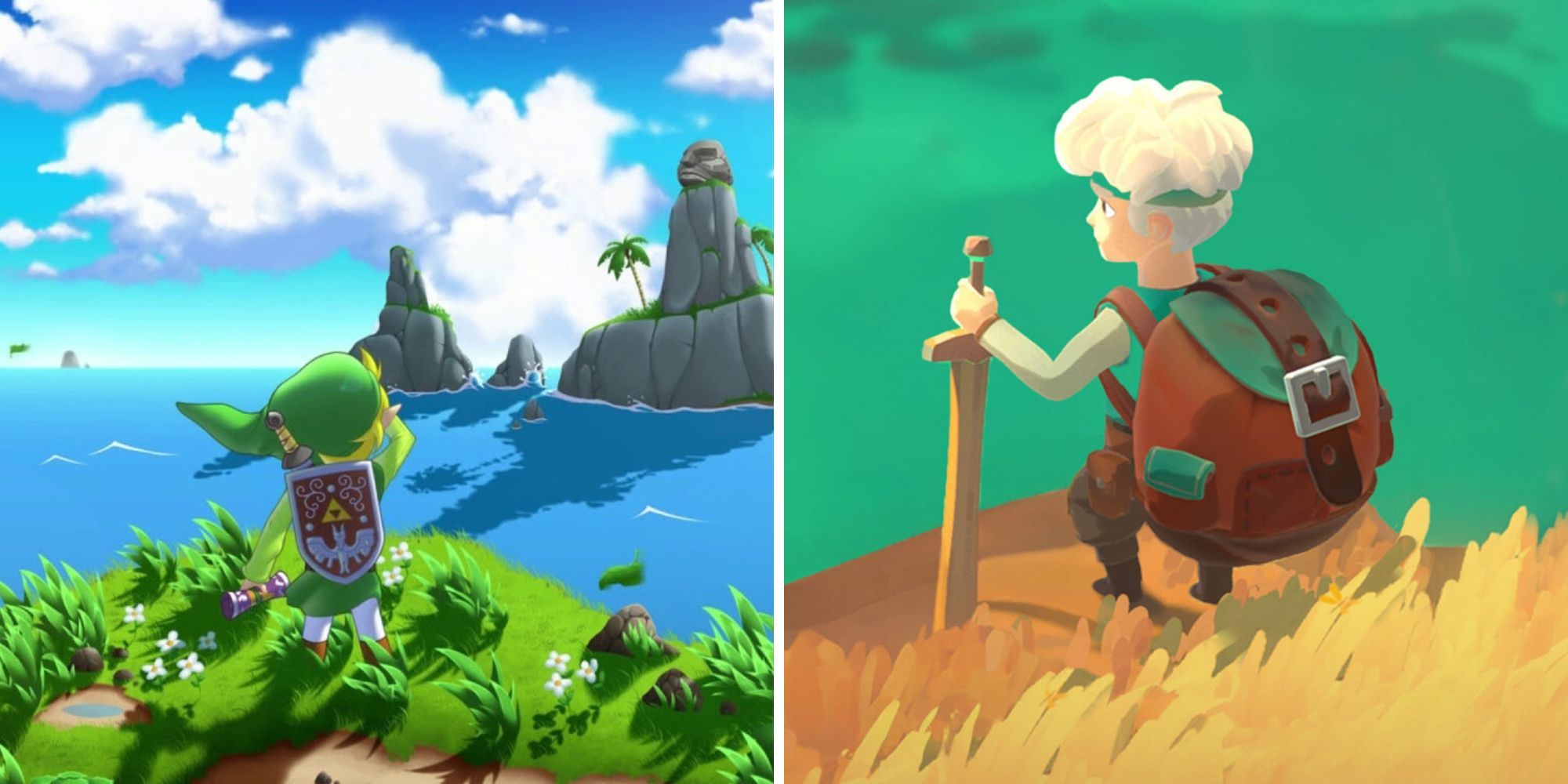
In our work, we employed this technique to create an artistic style that was three-dimensional yet not overly realistic or hyper-realistic. To clarify, I’m a big Zelda fan, and the original game (Moonlighter) drew inspiration from The Minish Cap, while the sequel seems to evoke more of the aesthetic found in Wind Waker.
The new Zelda game retains the same essence as previous ones, yet each installment stands independently with its unique identity. A significant source of inspiration for this particular Zelda title was its innovative shift in artistic style compared to its predecessors.
A: In this sequel, the location where you reside has shifted from Rynoka to a city exiled called Tresna. Can you describe the distinctive aspects of this new locale and also mention what elements will be recognizable for players returning to the game?
In essence, Tresna stands in stark contrast to Rynoka. Unlike Rynoka, which was a tranquil, small town where everyone knew each other, Tresna is more akin to a gathering of misfits and castaways. There’s no sense of belonging in Tresna; instead, one must adapt to the surroundings. This becomes evident right from the start of the game as you are forced out of your home.
In the world of Moonlighter, it’s essential for you to establish your presence among this group of shipwreck survivors. Despite their hostility, the community is usually welcoming in Moonlighter. However, you might encounter characters like Andrei the Blacksmith and Eris the witch who may seem familiar to you.
Additionally, you’ll encounter fresh figures such as Mrs Scratch, a landlady who provokes mixed feelings among us, and adorable creatures known as Boblets that you’ll be able to interact with affectionately. Consequently, there’s an abundance of endearment in the new characters as well as the familiar ones.
A: Regarding familiarity, since Moonlighter 2 is a sequel, it continues the story started in the initial game. I wonder if there was any concern that this might confuse or exclude new players who start with the second game, as it seems like it could be played without needing to have played the first one?
While the number ‘2’ might initially appear intimidating, causing thoughts like, “Why am I embarking on this franchise with the second installment?” I believe that the opening provides a sufficient portrayal of the mood, background, and an introduction to Will’s character.
The intention was to provide insight into the character of Will, the setting for the narrative, and offer a fresh beginning for both newcomers and veterans, ensuring everyone can enjoy it.
A: In our discussions, we’ve mainly focused on what’s new and different in the game. However, I thought it would be interesting to shed some light on aspects that have been simplified or removed compared to the original version, like the price guessing feature and the day/night cycle. Could you tell us more about why these elements were taken out of the game?
Initially, your guesses about the prices were enjoyable. However, once we reached the 10-15 hour mark in the game, we found ourselves limited in terms of unique items we could introduce. Since our team was smaller and resources were scarce, it began to feel monotonous.
As a die-hard fan, I found myself yearning for a fresh, unpredictable experience in the roguelike genre, but what I got was more of an action role-playing game (ARPG) feel. The predictability of it all wasn’t quite the adventurous journey I was hoping for when diving into a roguelike title.
This time around, the prices are predetermined, yet they can be influenced by your actions inside the dungeon, adding depth to the adventure. Furthermore, the shop offers a greater number of choices and diversity. Therefore, it’s not an absence but rather a change that we believe enhances the overall experience.
In this scenario, we’re emphasizing the financial aspects rather than the cyclical nature of time, providing you with specific objectives instead. For Rynoka, it might have been clear due to the night cycle, but for us, it’s about the dollars and cents.
Your pack may vary significantly between runs, and it’s crucial that we never compel you or make running or operating your shop feel like a chore. Instead, we encourage you to approach each decision and playstyle with care and consideration.
As a devoted fan, I’d love to delve into the roguelike enhancements you’ve mentioned. Specifically, I’m interested in how each playthrough feels unique and unpredictable, rather than repetitive or predictable as was sometimes the case in the original game during dungeon crawling sessions. Could you share some insights on how you’ve managed to make each run feel different from the next?
It seems like there’s less of a requirement for grinding. While it wasn’t strictly necessary in the initial game, you could say that you had to do it to obtain superior equipment. This gear preparation was crucial for venturing into subsequent dungeons.
What’s entirely eliminated now:
– If you play smartly with your cards, you stand to earn significantly more money.
– In a single round, you will amass far more wealth than you ever did in the preceding game.
– Each new round offers fresh advantages and abilities that weren’t available before.
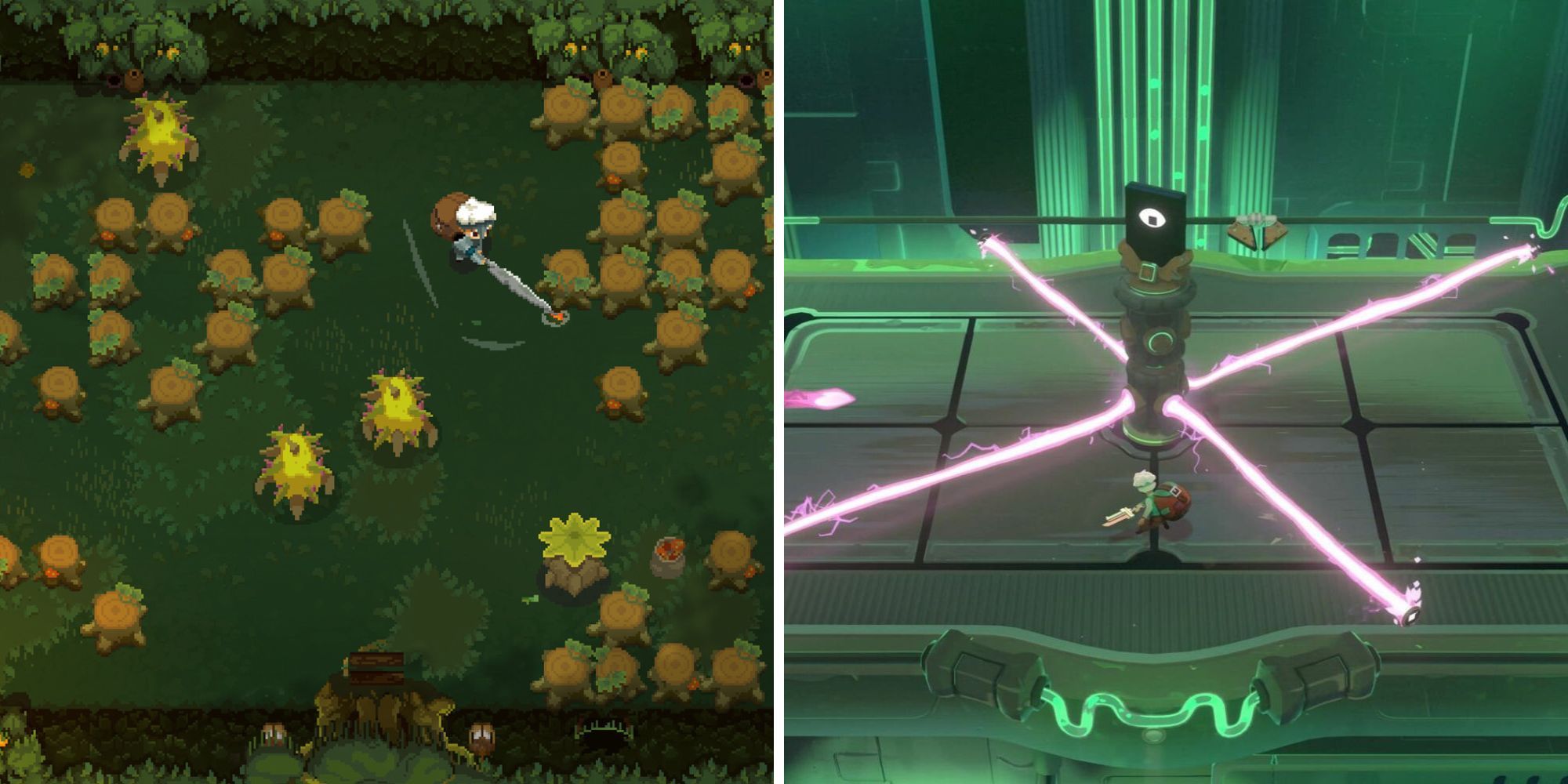
In each round, you have the freedom to select a different build, resulting in a distinct gaming experience. Contrastingly, in the previous version of the game, there was no concept of a build within the dungeon; instead, all equipment choices were made before entering the dungeon.
Now, there’s a steady advancement that begins with minimal resources, and as you make progress, you accumulate more skills along the way.
A: It sounds wonderful! Regarding the original, people found it to be a classic comfortable adventure without much tension or difficulty. My question is, does the sequel maintain that relaxed feel, or does it introduce some level of intensity and challenge instead?
B: This time, the game offers a richer combat experience and enhanced shop interactions, making it more intricate without necessarily being harder. I believe we’ve done a fantastic job of guiding players through the game mechanics, explaining them in an engaging way rather than being overly instructive, and then giving them freedom to enjoy the game.
As a gamer, I found the initial game comfortable and inviting, yet I’d encourage fellow gamers to challenge themselves on the hard difficulty level, which we affectionately referred to as ‘Think Mode’. This time around, we aim to engage players with thought-provoking challenges that cater not just to the most skilled among us, but to anyone eager to immerse themselves in a brain-tickling gaming experience.
Just consider your actions as, ‘I’m choosing this upgrade for this reason,’ or ‘I’m placing this object over here.’ Adopting this thoughtful attitude can greatly benefit you.
By the way, here’s a fun thought. Suppose, similar to how Will has his adventures on the side, what exciting pastime or activity would you enjoy doing while continuing your work in game development?
B: It’s amusing since we share a background as game journalists. However, I’m interested in broadening my communication role with a blend of design and storytelling to create a cohesive experience across playing, reading, and listening. It sounds like a fulfilling endeavor for me.
Read More
- All Skyblazer Armor Locations in Crimson Desert
- All Shadow Armor Locations in Crimson Desert
- How to Get the Sunset Reed Armor Set and Hollow Visage Sword in Crimson Desert
- Marni Laser Helm Location & Upgrade in Crimson Desert
- Best Bows in Crimson Desert
- All Helfryn Armor Locations in Crimson Desert
- All Golden Greed Armor Locations in Crimson Desert
- How to Craft the Elegant Carmine Armor in Crimson Desert
- Keeping Large AI Models Connected Through Network Chaos
- One Piece Chapter 1179 Preview: The Real Imu Arrives in Elbaf
2025-05-26 18:13